
Persian Wedding Traditions: From Khastegari to Aroosi, Step by Step
What happens at a Persian wedding, and in what order? Follow each tradition from the first family visit and the Hanabandan to the Sofreh Aghd, the knife dance and the celebrations after the wedding.
Persian wedding traditions follow a clear arc: the families meet, the engagement is announced, the couple marry at the Aghd in front of a Sofreh Aghd, and everyone celebrates at the Aroosi with music, food and dancing.
This guide walks through each of those Persian wedding traditions in the order they unfold, from Khastegari and Hanabandan to sugar rubbing, the knife dance and the gatherings that follow the wedding. Every family keeps its own version, so treat the sequence as a map rather than a rulebook: some couples keep every step, others choose the moments that mean the most to them.
The final sections look at how these traditions translate to a destination wedding, with a sample order of events and a Persian wedding Ramarossi planned in Antalya.
Persian Wedding Traditions at a Glance
Encyclopaedia Iranica divides an Iranian wedding into three phases: the betrothal, the Aghd marriage contract ceremony and the Aroosi wedding celebration. The smaller customs sit around those three pillars. The table below shows the full sequence and the role each step plays today.
| Tradition | What happens | Place in the sequence |
|---|---|---|
| Khastegari | The groom’s family visits the bride’s family to ask for her hand | First formal step |
| Baleh Boran | Both families meet to announce the agreement and discuss the wedding | Shortly after the proposal |
| Namzadi and Shirini Khoran | Engagement celebration with tea, sweets and gifts | Weeks or months before the wedding |
| Hanabandan | Henna night with music, sweets and close family | The day or evening before the wedding |
| Aghd | The marriage ceremony before the Sofreh Aghd | Wedding day, or a separate earlier date |
| Aroosi | Reception with dinner, music, dancing and the knife dance | After the Aghd, on the same day or later |
| Patakhti and Pagosha | Gift-giving party and welcome dinners for the newlyweds | The days and weeks after the wedding |
The groom’s family visits the bride’s family to ask for her hand.
First formal step.
Both families meet to announce the agreement and discuss the wedding.
Shortly after the proposal.
Engagement celebration with tea, sweets and gifts.
Weeks or months before the wedding.
Henna night with music, sweets and close family.
The day or evening before the wedding.
The marriage ceremony before the Sofreh Aghd.
Wedding day, or a separate earlier date.
Reception with dinner, music, dancing and the knife dance.
After the Aghd, on the same day or later.
Gift-giving party and welcome dinners for the newlyweds.
The days and weeks after the wedding.
Where Persian Wedding Traditions Come From
Many of the symbols at a Persian wedding are older than Islam. The Iranian wedding grew out of Zoroastrian custom, and later religious practice changed the legal meaning of marriage while leaving much of the ceremony in place. The mirror and candles on the Sofreh Aghd, for example, reflect light and fire, two elements held sacred in Zoroastrian belief, and the burning of espand (wild rue) is a long-standing way to ward off the evil eye.
That shared heritage is why Persian Muslim, Zoroastrian, Jewish and secular families can all recognise the same Sofreh Aghd, even when the words spoken at the ceremony differ. We look at two of those variations in depth in Zoroastrian influences on Persian wedding rituals and Persian-Jewish wedding traditions.
Regional customs differ too. Weddings in different parts of Iran have their own songs, foods and gestures, and families in the diaspora blend traditions from both sides of a marriage. The core, though, stays recognisable: family consent, the Aghd and a joyful Aroosi.
Before the Wedding: Khastegari, Baleh Boran and Namzadi
Khastegari, the formal proposal
Khastegari is the visit in which the groom’s family calls on the bride’s family, bringing flowers and sweets, to ask for her hand. The hosts serve tea, fruit and pastries, and the families get to know each other. For couples who have already decided to marry, Khastegari is now a warm formality that brings both families into the plan.
Baleh Boran, saying yes
Baleh Boran, named after baleh, “yes”, follows the proposal. Elders and close relatives gather to announce the couple’s intention to marry, and the practical questions are discussed: the date, the guest list, the scale of each event and the mehrieh, the marriage gift agreed for the bride and recorded in the marriage contract. Traditionally the groom’s family gives the bride a ring at this stage.
Namzadi and Shirini Khoran
The engagement party, Namzadi, is a celebration in its own right, and Shirini Khoran (“eating sweets”) wishes the couple a sweet life with tea, bamieh, nan-e berenji rice cookies and ajil (mixed nuts and dried fruit). Our guide to the differences between Persian engagement and wedding ceremonies explains how the two occasions relate.
A few days before the wedding some families also hold Jahaz Baran, when the bride’s jahaz, her trousseau and gifts from her family, is carried to the groom’s home on large decorated trays. Couples can simplify it today, but it shows how central family generosity is to the whole celebration.
Hanabandan: The Persian Henna Night
Hanabandan is the henna night, held the day or evening before the wedding, traditionally at the bride’s home and among women. Henna sent by the groom’s family is prepared in a bowl, the bride is welcomed with songs, and henna is applied to her hands. In some families coins or a piece of gold are placed in her palm first, as a wish for prosperity.
Today the evening ranges from an intimate family gathering to a full party with music and dancing, and destination couples can turn it into the welcome event of the wedding weekend. Its customs, music and food are covered in more detail in Hanabandan and Persian henna night traditions.
The Aghd: The Heart of a Persian Wedding
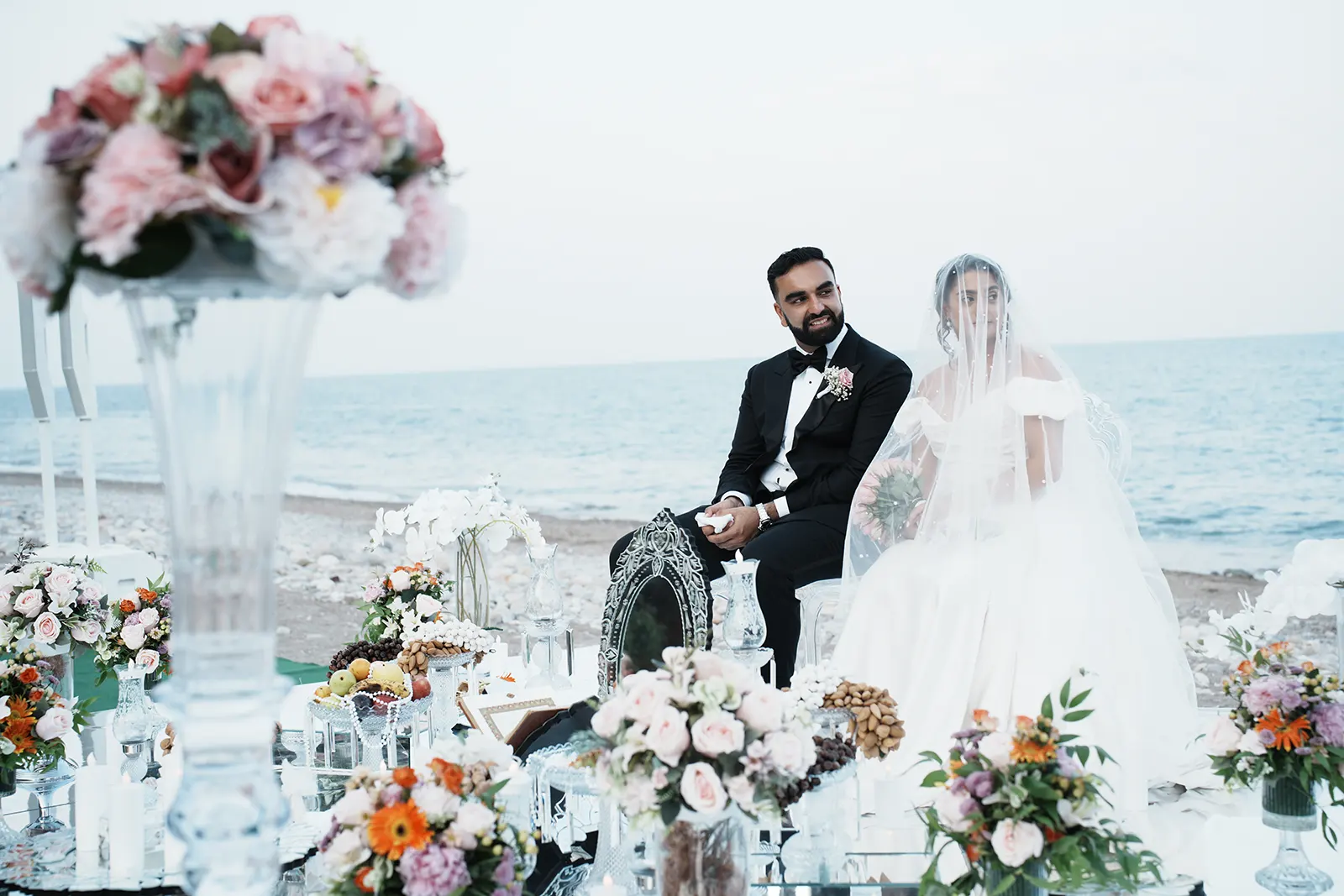
The Aghd is the marriage ceremony itself. The couple sit side by side before the Sofreh Aghd, facing a mirror, with family gathered around them. An officiant reads the marriage contract, the aghd-nameh, and asks the couple for their consent.
The groom answers first. When the bride is asked, tradition has her stay silent, and the question is repeated three times. Meanwhile her friends call out playful replies, such as “the bride has gone to pick flowers” or “the bride has gone to bring rosewater”. In some families the groom’s mother places a gold coin or a piece of jewellery in the bride’s hand at each asking. On the third request the bride says “baleh”, yes, and guests answer with cheers and ululation.
Once the contract is agreed, the couple feed each other a little honey, a wish for a sweet life together, and gifts are presented. Traditionally the bride receives jewellery that remains hers, and the groom receives gifts from the bride’s family. Our guide to Persian wedding ceremony gifts explains the custom, and our article on writing Persian wedding vows helps couples who want to add their own words.
At a destination wedding the Aghd is planned as a cultural ceremony, and any legal steps are handled separately according to the couple’s own situation. Couples who also want to marry legally in Turkey can read our guide to marriage in Turkey for foreigners.
What Is on the Sofreh Aghd?
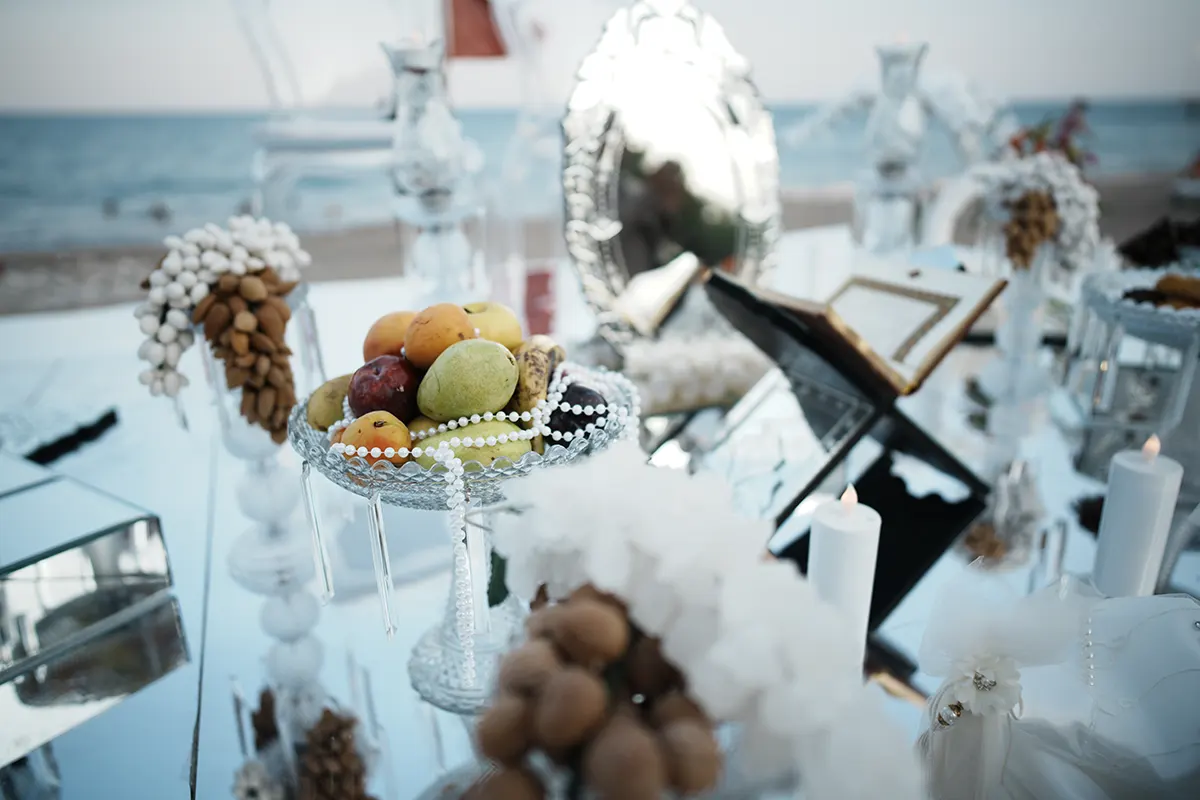
The Sofreh Aghd is the decorated spread laid out for the ceremony, traditionally on a fine cloth of silk or termeh. Each object carries a wish for the couple’s future, and families add or leave out items according to their own heritage.
| Item on the Sofreh Aghd | What it stands for |
|---|---|
| Mirror and two candelabra (Aineh va Shamdan) | Light and a bright future; the first image the groom sees in the mirror is his bride |
| Decorated flatbread (Nan-e Sangak) with feta and herbs | Prosperity and a home that never lacks food |
| Decorated eggs, almonds, walnuts and hazelnuts | Fertility and new life |
| Honey and sugar cones (Kalleh Ghand) | A sweet life together |
| Pomegranates, apples and grapes | “Heavenly fruits”, a wish for abundance and a joyful future |
| Gold or silver coins | Wealth and prosperity |
| Espand (wild rue) and frankincense | Protection from the evil eye |
| Needle and coloured thread | Sewing the families together |
| Rosewater and pastries such as noghl and baklava | Fragrance, welcome and sweetness for the guests |
| A holy book (Qur’an, Avesta, Bible or Torah) or poetry such as Hafez or the Shahnameh | Blessing and wisdom for the marriage |
Light and a bright future; the first image the groom sees in the mirror is his bride.
Prosperity and a home that never lacks food.
Fertility and new life.
A sweet life together.
“Heavenly fruits”, a wish for abundance and a joyful future.
Wealth and prosperity.
Protection from the evil eye.
Sewing the families together.
Fragrance, welcome and sweetness for the guests.
Blessing and wisdom for the marriage.
Designing the spread is one of the most personal parts of the wedding. Some couples keep a classic silver-and-white Sofreh Aghd, others match it to the colours of the venue or add family heirlooms. Our Sofreh Aghd guide explains each item and set-up idea, and couples marrying in Antalya can see our Sofreh Aghd rental in Antalya.
Sugar Rubbing, the Cloth and the Needle and Thread
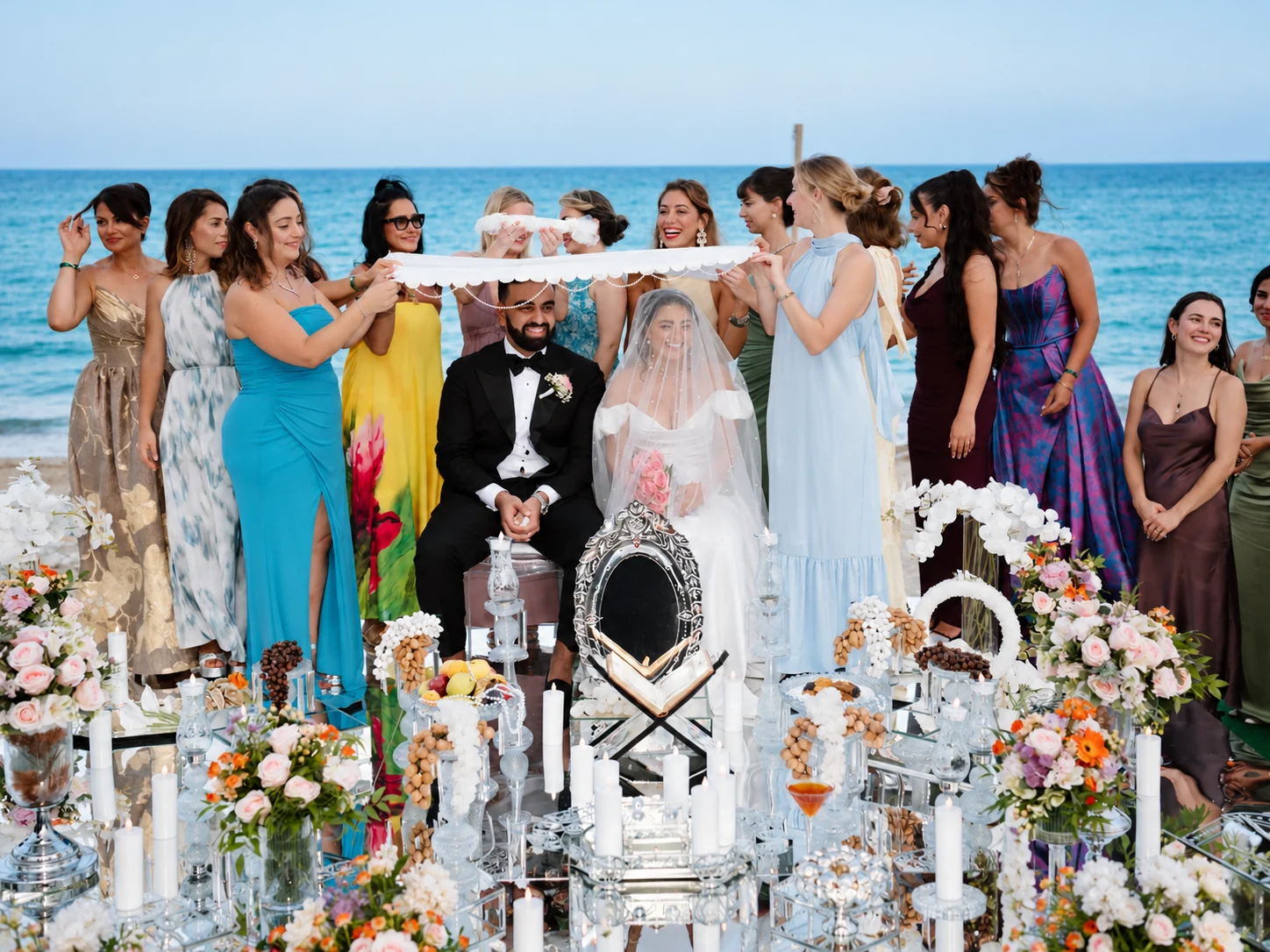
During the Aghd, female relatives hold a fine cloth or shawl above the couple’s heads while a happily married relative rubs two sugar cones together over it, so that the sugar falls like snow: a wish for sweetness in the marriage. Historically the cloth was green, a colour cherished in Zoroastrian tradition; today white or the couple’s chosen colour is common.
Another relative may make a few stitches in the cloth with a needle and coloured thread, traditionally with seven colours of thread: a playful wish to “sew shut” the mother-in-law’s tongue so that only kind words are spoken, and a symbol of the lasting bond between the two families. These small, tender moments make some of the loveliest photographs of the day. Our article on the sugar-rubbing ceremony in Persian weddings covers the meaning of the sugar cones and who traditionally takes part.
What the Bride and Groom Wear
A white gown is the classic choice for the Aghd, sometimes with a veil, so that the groom’s first sight of his bride is her reflection in the mirror. Some brides change into a second dress for the Aroosi, and colour, embroidery and gold jewellery play a large role in Persian bridal style. Our guides to Persian wedding dress colours, Persian wedding jewellery and Persian bridal makeup go into each in detail.
The groom wears a tailored suit or tuxedo, sometimes with a detail that nods to Persian heritage. See our guide to styling the Persian groom. Guests who are attending a Persian wedding for the first time can read what to wear to a Persian wedding abroad.
The Aroosi: Music, Dance and the Knife Dance
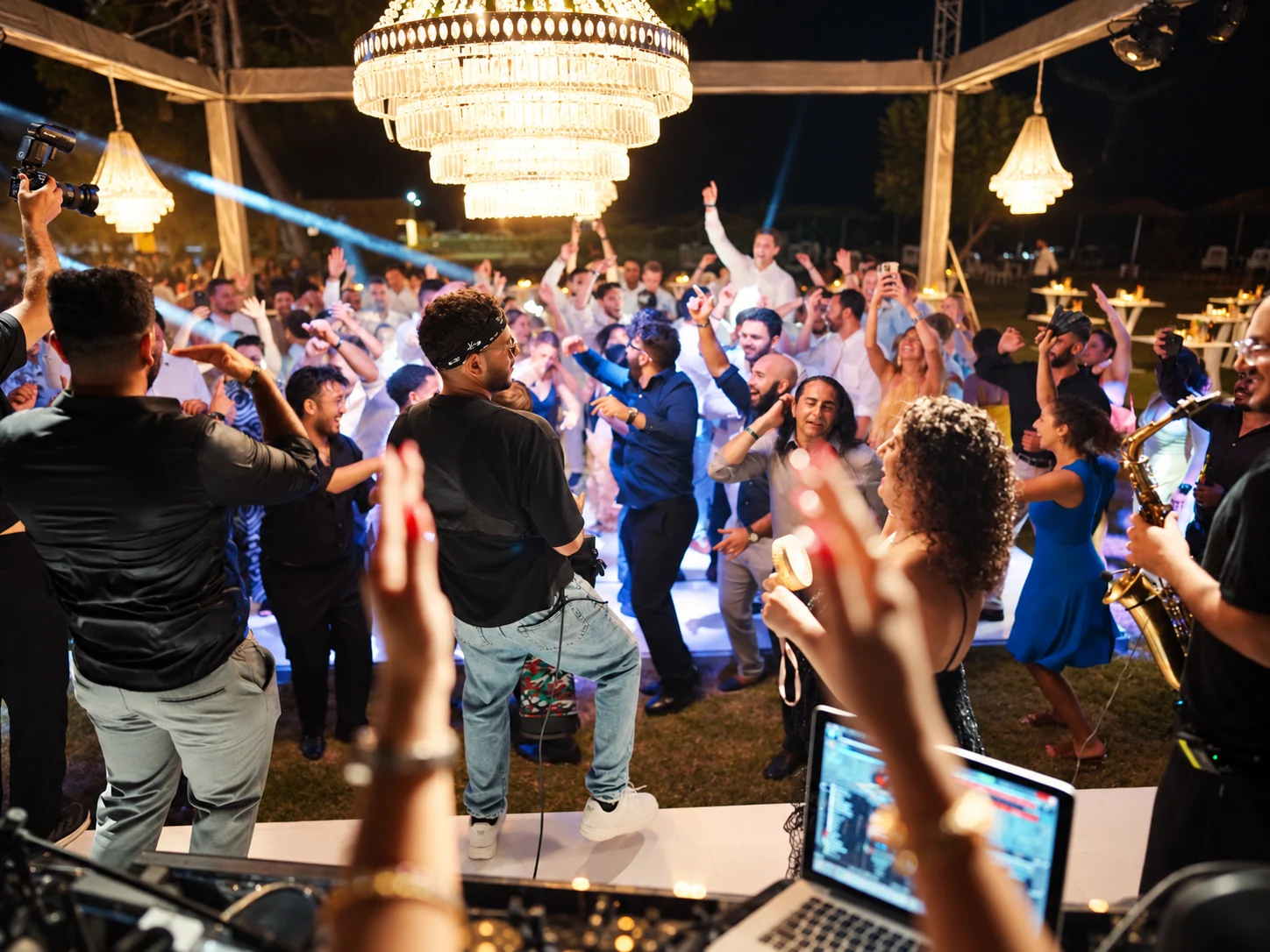
The Aroosi is the wedding celebration, and it is where a Persian wedding is at its most exuberant. Guests welcome the couple’s entrance with cheers and music, dinner is served, and the dance floor fills up, with Persian pop, classic songs such as “Bada Bada Mobarak Bada” and traditional rhythms shared across generations. Read more about the songs and styles that bring everyone to their feet in Persian wedding dance.
One of the best-loved reception customs is the knife dance, Raghs-e Chaghoo. When it is time to cut the cake, a friend or relative takes the cake knife and dances with it, refusing to hand it over until the couple pay a playful “ransom”. The knife passes from dancer to dancer, the price rises, and the couple earn the right to cut their cake only when someone finally gives in.
The food matters just as much. A Persian wedding dinner can include saffron rice dishes such as shirin polo (sweet rice with orange peel, carrots, almonds and pistachios), kebabs and stews, followed by fruit, Persian sweets and tea late into the night. Guests may also shower the couple with noghl, coins or petals, and on the dance floor relatives may throw money over the couple’s heads, a joyful custom called shabash.
After the Wedding: Patakhti, Pagosha and the Honeymoon
The celebrations do not end with the reception. Patakhti is a party held soon after the wedding, where relatives bring gifts for the newlyweds and the evening turns into another round of food and dancing. Pagosha is a series of welcome dinners hosted by relatives in the weeks that follow, a gesture of acceptance for the new couple. In some families the groom also visits his mother-in-law the morning after the wedding with a gift, a custom called Madarzan Salam.
Then comes Mah-e Asal, the honeymoon, literally the “month of honey”. Antalya and Alanya are popular honeymoon destinations for Iranian newlyweds, which is one reason Antalya feels so natural as a Persian wedding destination too. Our honeymoon in Antalya guide has ideas for the days after the wedding.
A Sample Order of Events for a Persian Wedding Day
When the Aghd and Aroosi take place on the same day, the running order below gives a clear structure. Exact timings depend on the venue, the season and the size of the guest list, and the order can be reshaped around each family’s traditions.
| Stage | What happens | Good to know |
|---|---|---|
| Preparation | The Sofreh Aghd is set, the couple get ready and portraits begin | A shaded or indoor spot keeps the spread and candles safe |
| Guest welcome | Guests arrive, receive refreshments and take their seats for the Aghd | A welcome drink and sweets set a festive tone |
| Aghd | Consent, honey, sugar rubbing and gifts before the Sofreh Aghd | Seating close to the couple lets elders take part |
| Congratulations | Family greetings, photographs and sweets | Golden hour at a seaside venue is ideal for portraits |
| Aroosi entrance | The couple enter the reception to music and cheers | A favourite Persian song makes the entrance memorable |
| Dinner and dancing | Dinner, speeches, Persian music and the dance floor | Live music or a DJ who knows Persian songs keeps everyone dancing |
| Knife dance and cake | Raghs-e Chaghoo before the couple cut the cake | Small notes ready for the “ransom” add to the fun |
| Late celebration | More dancing, tea and sweets until the venue’s finish time | Arranging guest transport home in advance ends the night smoothly |
The Sofreh Aghd is set, the couple get ready and portraits begin.
A shaded or indoor spot keeps the spread and candles safe.
Guests arrive, receive refreshments and take their seats for the Aghd.
A welcome drink and sweets set a festive tone.
Consent, honey, sugar rubbing and gifts before the Sofreh Aghd.
Seating close to the couple lets elders take part.
Family greetings, photographs and sweets.
Golden hour at a seaside venue is ideal for portraits.
The couple enter the reception to music and cheers.
A favourite Persian song makes the entrance memorable.
Dinner, speeches, Persian music and the dance floor.
Live music or a DJ who knows Persian songs keeps everyone dancing.
Raghs-e Chaghoo before the couple cut the cake.
Small notes ready for the “ransom” add to the fun.
More dancing, tea and sweets until the venue’s finish time.
Arranging guest transport home in advance ends the night smoothly.
When the Aghd and Aroosi are on different days
Encyclopaedia Iranica notes that the Aroosi could follow the Aghd by a week, a month or even years; today some couples hold both on the same day. Some couples hold an intimate Aghd for close family and a larger Aroosi for everyone; others build a wedding weekend with a henna night, the Aghd and Aroosi on the main day, and a relaxed gathering afterwards. Clear invitations that show which events each guest is invited to keep everyone comfortable.
Celebrating Persian Wedding Traditions in Antalya
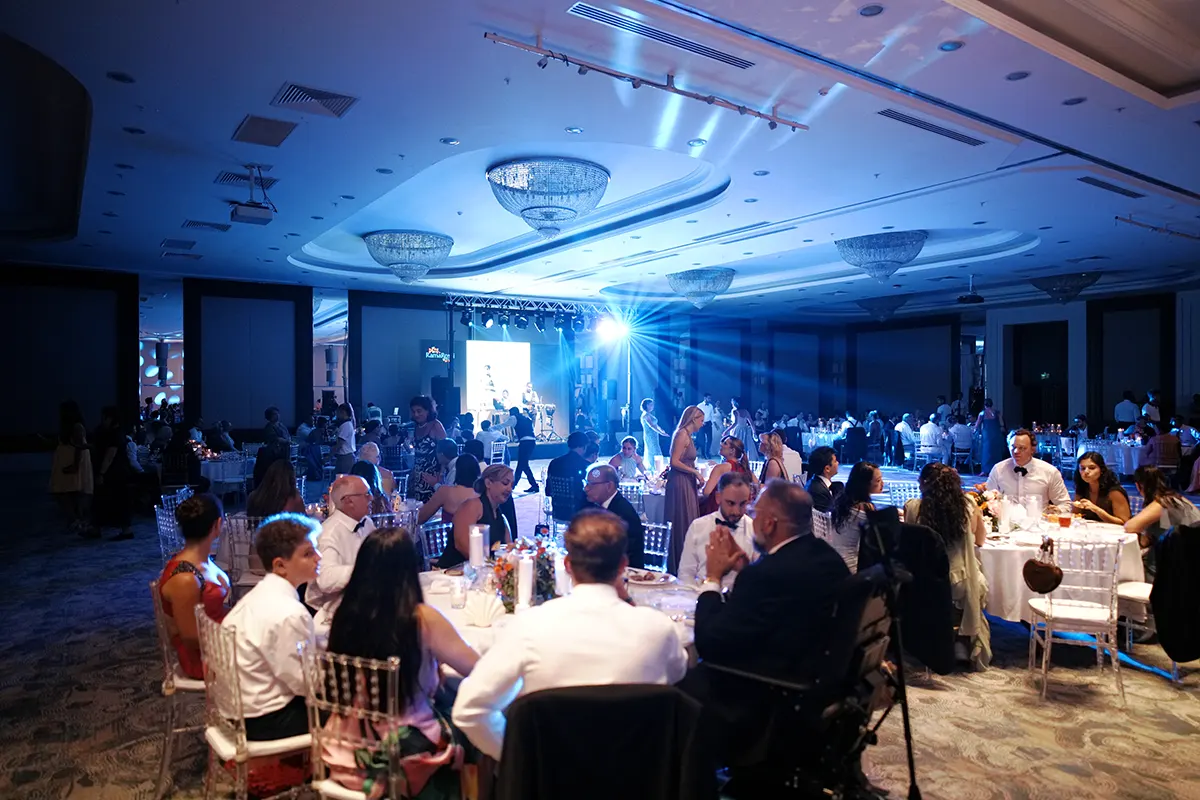
Antalya combines what Persian families value most at a wedding: good flight connections for relatives travelling from Iran, Europe and further afield, warm evenings by the sea, and venues large enough for a full guest list with room to dance. A Sofreh Aghd set on a terrace above the Mediterranean, followed by an Aroosi that continues under the stars, brings the traditions in this guide together in one unforgettable setting.
In August 2025 Ramarossi planned a four-day Persian wedding for 166 guests at a five-star beach resort in Antalya, opening with a welcome dinner for 164 guests. Ramarossi’s founder speaks Persian, so families can talk through their traditions in their own language. To learn more about Persian weddings on the coast, visit our page on working with a Persian wedding planner in Antalya, and our guide to who pays for a Persian wedding answers another question families ask early on.
Planning a Persian Wedding in Antalya?
Tell Ramarossi your preferred date, approximate guest count, the traditions you want to include and the atmosphere you imagine. Together we can start shaping a bespoke celebration, from the Sofreh Aghd to the last dance of the Aroosi.
Follow our celebrations
Discover beautiful weddings, private events, styling ideas and behind-the-scenes moments from Ramarossi in Turkey.
Persian Wedding Traditions: Frequently Asked Questions
What are the main Persian wedding traditions?
The main stages are Khastegari (the formal proposal), Baleh Boran and the engagement, an optional Hanabandan henna night, the Aghd ceremony before the Sofreh Aghd, and the Aroosi reception. Customs such as sugar rubbing, honey tasting and the knife dance take place within the Aghd and Aroosi.
What is the difference between the Aghd and the Aroosi?
The Aghd is the marriage ceremony, where the contract is read and the couple give their consent before the Sofreh Aghd. The Aroosi is the celebration that follows, with dinner, music and dancing. They can be held on the same day or on different dates.
Why does the bride say yes on the third time?
By tradition the bride stays silent the first two times she is asked, while friends call out playful replies such as “the bride has gone to pick flowers”. Waiting until the third request is a light-hearted custom that shows the groom pursuing his bride.
What is on the Sofreh Aghd?
A mirror and two candelabra, decorated flatbread, eggs and nuts, honey and sugar cones, fruit, coins, espand, a needle and thread, rosewater, pastries and a holy book or poetry. Each item carries a wish for the couple’s future.
What is the Persian knife dance?
Raghs-e Chaghoo is a reception game in which friends and relatives dance with the cake knife and ask the couple for a playful “ransom” before handing it over. It takes place just before the cake is cut.
How long is a Persian wedding?
The Aghd itself can be short, while the Aroosi continues late into the evening. With a henna night and post-wedding gatherings, families can celebrate across several days, and a destination wedding can become a full wedding weekend.
Can we hold a Sofreh Aghd outdoors in Antalya?
Yes. Terraces, gardens and beach settings in Antalya suit a Sofreh Aghd beautifully. The spread works best where candles and flowers are sheltered from wind and strong sun, with seating close enough for family to take part.
Do guests bring gifts to a Persian wedding?
Yes. Gifts are given at the Aghd and at the Patakhti, and money or jewellery is a traditional choice. Our guide to Persian wedding ceremony gifts explains the custom.
Can Ramarossi plan a Persian wedding in Antalya?
Yes. Ramarossi plans Persian weddings in Antalya, from the welcome dinner and Hanabandan to the Sofreh Aghd and the Aroosi, with a Persian-speaking founder and a celebration designed around each couple’s traditions.