

Who Pays for a Persian Wedding? Traditions and Modern Budget Sharing
Does the bride’s family or the groom’s family pay for a Persian wedding? Explore documented customs, changing family expectations and ways to agree on a realistic wedding budget.
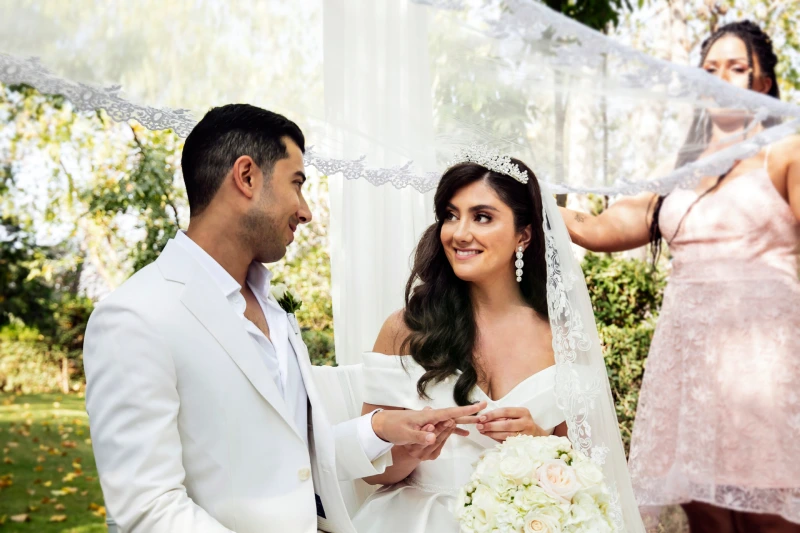
Who traditionally pays for a Persian wedding? Historical descriptions of Iranian wedding customs often place much of the aroosi (wedding celebration) and its hospitality with the groom’s family, while the bride’s family may contribute jahizieh (household goods or furnishings) and other gifts. That is not a universal rule for Persian weddings today. Many couples and families choose their own arrangement, whether one side contributes more, both families share costs, or the couple funds the celebration themselves.
The distinction matters because an old article can easily turn a regional or historical practice into an obligation that today’s families do not recognise. Expectations differ by household, community, location, financial capacity and the scale of the wedding. The most useful answer is therefore twofold: understand the documented customs, then agree clearly on who will fund the actual event you intend to hold.
This article discusses family budgeting and wedding celebration customs, not legal marriage procedures, personal financial advice, or a fixed rule about which relatives must pay.
Who Pays for a Persian Wedding? The Short Answer
There is no single answer that works for all Persian and Iranian families. In some traditional accounts, the groom’s household is associated with hosting much of the wedding celebration and the bride’s family with bringing household items into the marriage. Elsewhere, relatives exchange gifts or sponsor separate events. Contemporary couples may split the celebration budget, accept optional help from parents or pay independently.
The important distinction is custom versus agreement. A family tradition may inform the conversation, but it should not be used to presume that parents owe a particular amount, that one family must pay for every supplier, or that elaborate spending is a condition of respecting Persian culture.
The practical process begins by establishing what the couple wants to celebrate: a family-centred gathering, a Sofreh Aghd followed by dinner, a large reception, or a multi-day destination wedding. When the guest count, approximate budget and event model are understood, the families can discuss whether and how they wish to contribute.
What Historical Persian Wedding Customs Actually Say
The most useful historical reference is not a general claim that “the bride’s parents pay for the wedding.” In the Encyclopaedia Iranica entry on aroosi, the author describes traditional Persian wedding celebrations in which much of the event is associated with the groom’s family. The account also documents negotiation and exchanges of gifts between households and explicitly discusses differences between local customs.
That scholarship describes particular periods and communities. It should not be read as a survey of every Iranian family in 2026, including families living in Europe, the Gulf, North America or Turkey. A regional historical account can explain the origins of a tradition without determining a couple’s current spending responsibilities.
Aghd and aroosi are not the same expense
In Persian wedding vocabulary, aghd and aroosi can refer to distinct occasions. The former is associated with the marriage ceremony and Sofreh Aghd traditions, while the latter is the wider wedding celebration. Historically, they could take place at different times. Consequently, relatives might agree to support different occasions rather than sharing a single invoice. For further cultural context, see Encyclopaedia Iranica’s account of aghd.
Today, some couples combine the ceremony and reception in one event, others keep them separate, and some plan a destination celebration after a more private family occasion. This difference changes venue needs, guest count, food service, décor and who chooses to sponsor which element.
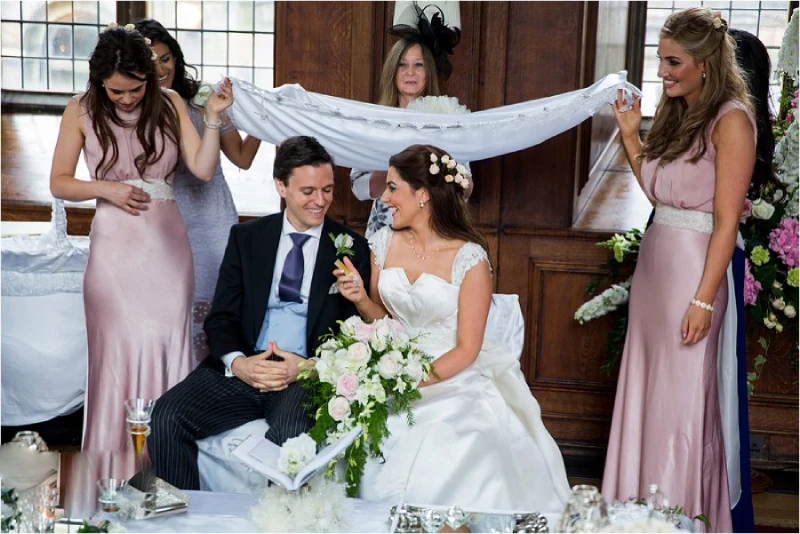
Traditional Roles of the Bride’s and Groom’s Families
Contributions associated with the groom’s family
Documented traditional practices in some Iranian communities connect the groom’s family with wedding celebration hospitality, festivities and certain gifts to the bride. Research on marriage practices in Gilan, for example, describes expenses and gift exchanges that differ in important details from other Iranian regions. None of these examples means every Persian groom or parent of the groom now pays for the venue, catering or music.
Contributions associated with the bride’s family
The term jahizieh is often associated with household goods, furnishings and items brought into married life. Historical accounts describe the scope as varying greatly according to place and family means. Supporting that household setup is different from paying for a modern hotel’s wedding reception, floral production or photography package.
Why real families may depart from both patterns
Couples can have parents living in different countries, blended families, different religious or cultural backgrounds, or simply different preferences. A family may prefer to offer a fixed gift rather than finance an entire event. Some parents are happy to host guests, while the couple takes responsibility for design and production decisions. Others provide no financial contribution, and the couple arranges a celebration within its own means.
These arrangements are not evidence that a wedding is less authentically Persian. A successful conversation honours family relationships while allowing the couple to define a realistic budget and retain clarity over decisions.
Jahizieh, Mehriye, Gifts and Wedding Expenses Are Not the Same Thing
Wedding-budget discussions become confusing when very different cultural terms are treated as one financial obligation.
| Term | What it broadly refers to | Why it matters for budgeting |
|---|---|---|
| Aroosi | The wedding celebration or festive gathering | Venue, hospitality, music, décor and event services may fall into this budget |
| Aghd / Sofreh Aghd | The marriage ceremony and its cultural setting | Its hosting, styling and guest scope may be separate from the reception |
| Jahizieh | Household goods or furnishings traditionally associated with the bride’s household in some communities | Do not confuse household contributions with venue or supplier costs |
| Mehriye / mahr | A separate marriage-related financial commitment in relevant traditions | Not a wedding-planner fee or general catering/decor budget category |
| Family gifts | Jewellery, money or other personal gifts | Clarify whether these are separate gifts or intended to support event invoices |
The event costs families may choose to share.
Potentially separate hosting and styling expenses.
Distinct from the cost of a wedding venue or suppliers.
Not a catering, planning or floral supplier quote.
Clarify whether the contribution is for an invoice or a personal gift.
The customs described here are cultural context. If a family needs advice about a binding personal financial obligation, the relevant qualified professional or authority—not a wedding planning article—must address it.
Who Pays for the Venue, Catering, Sofreh Aghd and Other Wedding Costs?
Rather than assigning each expense to a relative based on a stereotype, agree who is funding and approving each part of the actual wedding. The following table gives practical discussion prompts, not traditional rules or prices.
| Wedding expense | Typical question to settle | Why agreement matters |
|---|---|---|
| Venue and event spaces | Who will pay the agreed venue charges? | Spaces, exclusivity, minimums and date affect scope |
| Food and beverage | Who pays for each guest and any added hospitality? | Guest numbers and service format may change totals |
| Sofreh Aghd setup | Is it a separate family contribution or in the wider event budget? | Styling and location depend on actual ceremony plans |
| Flowers and design | Who approves the design scope and any changes? | The final setting and surfaces determine practical requirements |
| Photography and film | Which coverage and deliverables are agreed? | Multiple locations and days change requirements |
| Music and entertainment | Who is funding performers and technical production? | Performance conditions differ between venues |
| Guest accommodation | Are guests self-funding or will someone host rooms? | A room block is different from paying for every room |
| Guest transport | Which transfers, if any, are hosted? | Airport, hotel and event transport are separate decisions |
| Other celebrations | Who is hosting any welcome dinner or next-day event? | Each added occasion expands the scope |
Who pays the agreed venue charges?
Date, event spaces, minimums and exclusivity affect the scope.
Who funds hospitality for each guest?
Headcount and catering format change totals.
Is this funded separately or from the overall budget?
Scope depends on the actual ceremony setting.
Who approves the final look and variations?
Specific venue architecture and surfaces determine needs.
Who pays for the required coverage?
Multiple days and venues change the scope.
Who funds performances and production?
Sound restrictions and space affect the plan.
Are hotel rooms hosted or self-funded?
Booking a room block does not necessarily pay for rooms.
Which transfers are being funded?
Airport, hotel and event transfers are distinct services.
Who hosts welcome dinners or extra events?
Additional functions increase the total budget.
It is possible for a family member to offer to pay for an element without managing its suppliers or having unlimited decision-making authority. Agree whether each contribution is a capped sum, reimbursement, direct payment or a gift to the couple. Also agree who approves any increase before it is committed.
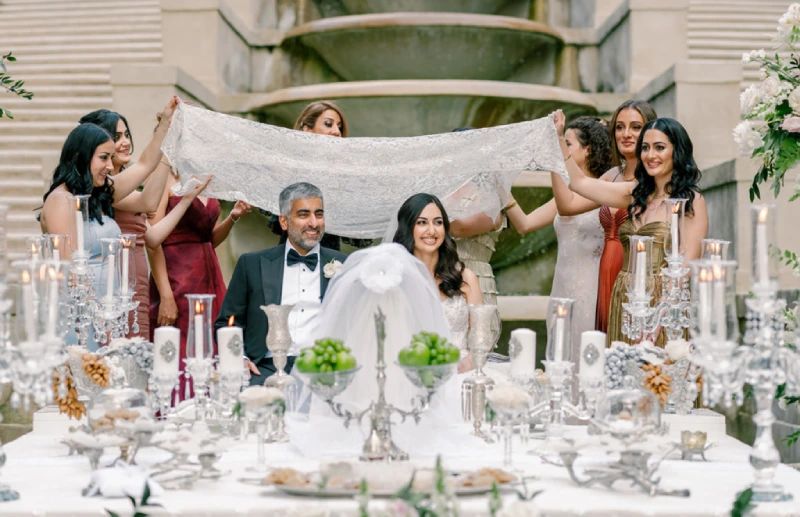
Five Ways Contemporary Families Can Share a Persian Wedding Budget
- The couple pays. The couple defines the spending limit, makes the principal decisions and accepts any family help as an optional gift.
- Both families contribute a fixed amount. Each household offers what it is comfortable providing, and the couple plans within the combined budget.
- Responsibilities are divided by event. One family may host the Aghd gathering while another hosts the wedding dinner, if everyone agrees.
- Contributions are allocated by category. Parents might choose to pay for particular supplier categories, with limits and approval arrangements documented clearly.
- A hybrid plan. The couple funds the core celebration, relatives contribute gifts or support specific extras, and no contribution is assumed before it is confirmed.
None is inherently more traditional, fair or sophisticated than the others. What makes an arrangement workable is whether it is explicit and consistent with the couple’s priorities, family relationships and available resources.
The Family Budget Conversation to Have Before Booking a Venue
A calm conversation before deposits and supplier proposals can prevent misunderstanding later. Rather than asking only “Who is paying?”, work through the decision-making structure as well. If a parent contributes to the reception but the couple wants a different wedding style, it helps to know early who can approve changes.
Define the guest count before requesting figures
Guest count influences the appropriate venue model, seating, catering and event flow. Families may wish to invite different numbers of guests, especially when relatives will travel from several countries. Agree the working guest estimate, who can add guests and how additional costs will be handled before comparing offers.
Set a total funding ceiling and distinguish confirmed money from hoped-for contributions
Do not treat a relative’s possible contribution as available money before it is agreed. Keep household or personal gifts separate from event-service funds, and leave an agreed margin for scope changes or genuine contingencies.
Agree who chooses and who pays for optional extras
The couple’s priorities might include a larger Sofreh Aghd setting, live Persian music, premium photography or a welcome dinner. If a relative wants to sponsor an additional service, clarify who will approve the supplier and what happens if the preferred version costs more than the offered amount.
Choose the venue before finalising design and flowers
At Ramarossi, the suitable venue comes before detailed decoration pricing. Architecture, ceremony positions, reception zones, backdrops, guest flow and supplier access differ between Antalya venues. It is therefore unrealistic to promise a universal décor package—or divide its exact cost—before the place and plan are known.
How Paying for a Persian Wedding Abroad Changes the Discussion
A Persian destination wedding in Turkey may bring guests from Iran, Europe, the Gulf and other countries. Beyond the celebration itself, families need to decide whether guest travel, accommodation, private transfers and additional gatherings will be self-funded or hosted. These are choices, not obligations that apply to every Persian wedding abroad.
For example, the couple might fund the venue and main reception while guests book their own travel and hotel rooms. Another family may choose to host a welcome dinner or provide group transport. Whichever approach is agreed, communicate clearly in invitations and guest information so that no one assumes flights, rooms or transfers are included.
Different currencies and payment schedules add another practical layer. Identify who is making each supplier payment and which costs are estimates rather than confirmed offers. If relatives contribute from different countries, discuss the timing of funds and who is responsible for keeping the event budget consistent. This is an organisational recommendation, not financial or banking advice.
For information on what changes actual destination wedding spending, read Ramarossi’s wedding cost guide for Turkey. If the event is specifically in Antalya, explore Persian destination wedding planning in Antalya for the wider cultural and planning context.
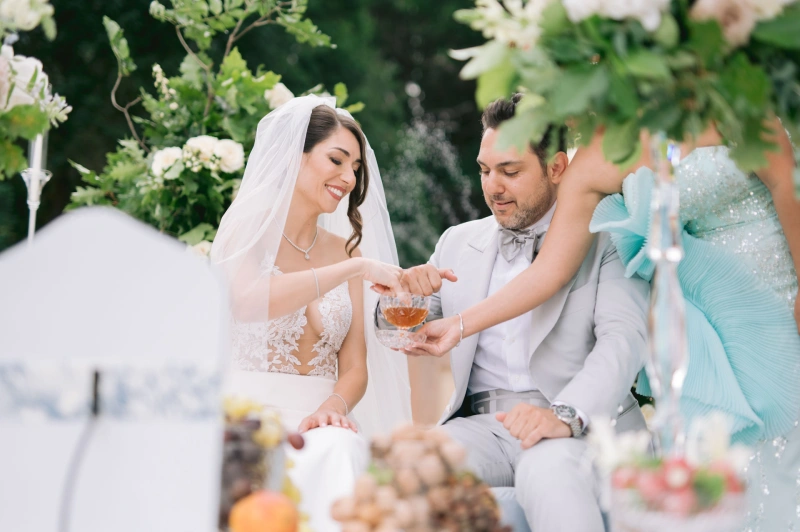
How Ramarossi Supports Couples Planning a Persian Wedding in Turkey
Ramarossi is a full-service destination wedding planning company, not a service that allocates family financial obligations. For couples planning a substantial Persian or multicultural celebration in Antalya, our work can begin with the couple’s date, approximate guest count, intended programme, spending expectations and venue priorities. From those decisions, we assess suitable settings and develop a tailored planning scope with the suppliers and logistics required for the agreed event.
Ramarossi does not offer one standard Persian wedding package to every couple. A 50-person dinner and a multi-day 200-person celebration involve different venues, staffing, production and guest logistics. The families are responsible for deciding funding arrangements; Ramarossi coordinates the wedding services within the planning scope that the clients actually approve.
Planning a Persian Wedding in Antalya?
If you are planning the celebration—not simply looking for a cultural rule—start with your preferred date, guest count, venue style, priorities and an agreed overall budget. Ramarossi can discuss the complete planning process and help establish a wedding scope that fits the actual venue and celebration you want to deliver.
Follow our celebrations
Discover beautiful weddings, private events, styling ideas and behind-the-scenes moments from Ramarossi in Turkey.
Who Pays for a Persian Wedding? FAQs
Does the bride’s family pay for a Persian wedding?
Not as a universal rule. Historical Iranian traditions vary, and some documented customs place much of the wedding celebration with the groom’s family. Today’s families may agree on a shared budget, a contribution from one side, or a couple-funded celebration.
Does the groom’s family traditionally pay for the reception?
In some documented traditional practices, yes: the groom’s family is associated with much of the aroosi hospitality. That describes particular cultural contexts, not an obligation that automatically applies to every Persian wedding today.
Who pays for the Sofreh Aghd?
It depends on the family’s arrangement and whether the Aghd is a separate occasion or part of the main celebration. Confirm who is funding the setup, venue and any styling before commissioning services.
Is jahizieh the same as paying for the wedding?
No. Jahizieh traditionally refers to household items or furnishings contributed in some families. It is distinct from venue, catering, music and wedding planning expenses.
Is mehriye part of the wedding budget?
Mehriye is a distinct marriage-related financial concept, not the same as the cost of flowers, catering or event planning. This article does not advise on personal or legal financial commitments.
Can Persian couples split the cost between both families?
Yes. Families can choose fixed contributions, separate event sponsorship, a category-by-category approach or another arrangement they all agree to. Clear limits and decision-making responsibilities are more useful than assumptions.
Who pays for destination wedding guest flights and hotels?
There is no automatic rule. Couples may host certain travel services, reserve rooms without paying for them, or ask guests to arrange their own travel. Invitations should state clearly what is included.
Does Ramarossi decide how much each Persian family should pay?
No. Families and the couple decide on contributions. Ramarossi provides bespoke full-service wedding planning within the agreed scope for celebrations in Turkey; it does not determine family obligations or offer personal financial advice.