
Persian Wedding Sugar-Rubbing Ceremony: Meaning, Sugar Cones and Traditions
Why do relatives rub two sugar cones above a Persian bride and groom? Discover the meaning of kalleh ghand, the ceremonial cloth and how this Sofreh Aghd tradition is performed.
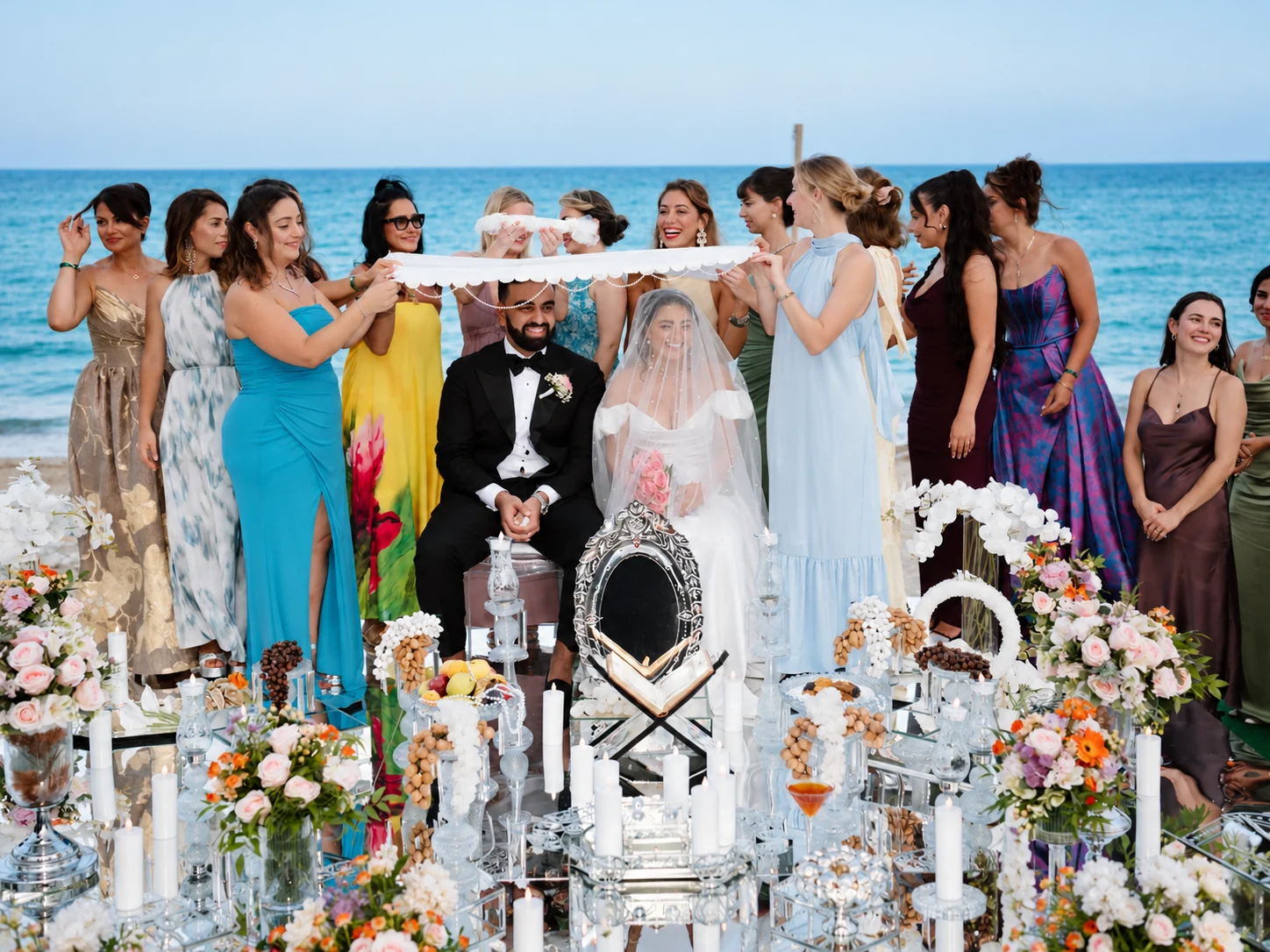
What is the sugar-rubbing ceremony at a Persian wedding? During some Sofreh Aghd ceremonies, relatives hold a light cloth above the couple while two decorated sugar cones—called kalleh ghand or kalla-ye qand—are gently rubbed together above it. The falling sugar lands on the cloth, rather than directly on the couple’s heads. The gesture expresses a family’s hope for sweetness and happiness in the marriage.
In English, people call the ritual Persian wedding sugar rubbing, sugar grinding or the Persian sugar-cone ceremony. These descriptions usually refer to the same recognisable action. Its details are not identical in every Iranian family: who holds the cloth, who rubs the cones, when it happens and whether it is included at all depend on the couple’s traditions.
This cultural guide focuses on that one meaningful moment, rather than explaining every Sofreh Aghd object or offering a rigid script. Ramarossi’s role as a destination wedding planner is to coordinate the approved event environment when it forms part of a full wedding plan—not to determine which traditions a family must observe.
What Does Sugar Rubbing Symbolize in a Persian Wedding?
The essential meaning is a wish for the couple’s shared life to be sweet. As participants gently rub the cones together, sugar may fall onto a cloth held over the couple during the Aghd. Many families understand this as a blessing offered with affection by the relatives or friends taking part.
The best historical source here is the Encyclopaedia Iranica account of the Aghd. It describes a white cloth held by female relatives and the rubbing of two decorated sugar cones, expressing hopes for a sweet future. This is a documented cultural practice, not scientific evidence that a physical ritual will determine a marriage’s success.
Sugar and sweets feature in several other Iranian wedding customs. Some families also share honey, serve sweets after the ceremony or include candied almonds among the symbolic foods. These practices can belong to the same wider celebration without being identical to sugar rubbing.
It would be misleading to tell every Persian couple that the ritual guarantees wealth, children, good luck or harmony with in-laws. Such statements may reflect the folk meanings attributed to certain regional customs in historical writings; the sugar-rubbing moment itself is more responsibly described as an affectionate expression of sweet wishes.
Kalleh Ghand: The Sugar Cones and the Cloth
The sugar cones are often called kalleh ghand, kaleh ghand or kalla-ye qand, depending on transliteration. These are the familiar cone-shaped loaves of sugar used in the wedding custom. The cones may be decorated with fabric, ribbons or other detailing, but those choices are not universal rules.
The cloth above the couple is sometimes described in English as a sugar cloth or cloth of unity. It is distinct from the table or spread beneath the Sofreh Aghd objects. The overhead cloth creates the surface that catches the sugar and separates the rubbing action from the bride’s hair, outfit and face.
In photographs, people may see what looks like a veil stretching above the seated couple. It should not be confused with the bride’s own veil, and the sugar cones should not be described as being rubbed directly above an uncovered head. The Iranica discussion of marriage customs in Gilan independently records a sugar-related ritual over a protective canopy, while also showing how details can vary between communities.
The size, material and position of the cloth can influence the practical ceremony layout. At an outdoor venue, its holders need a secure place to stand and sufficient control in the wind. At an indoor property, the couple, relatives and overhead fabric should fit without blocking exits, candles or delicate decorations.

How Is the Persian Sugar-Rubbing Ceremony Performed?
Families do not all follow an identical running order. A commonly recognised version of the ritual has the following sequence. Treat it as an explanation of what guests may observe, not a prescription for a couple’s religious ceremony.
- The couple takes its place. The bride and groom are positioned at the Sofreh Aghd or another agreed ceremony setting. The programme and any officiated elements are established separately.
- Relatives hold the overhead cloth. Selected family members or friends stand in places where they can support the fabric safely and keep it above the couple without crowding the ceremonial objects.
- The sugar cones are brought forward. Two cones are held above the cloth. Some families present or decorate them in a special way; others keep the objects simple.
- The cones are rubbed gently together. Small quantities of sugar fall onto the cloth while relatives express wishes for the marriage. Participants should take care not to shake sugar into the couple’s faces or onto uncovered equipment.
- The cloth is removed or the ceremony proceeds. The participants follow the family’s planned sequence, which may include further blessings, an exchange or another cultural gesture.
The rubbing may take place while the officiating portion of an Aghd is underway in some documented accounts. Other families choose a distinct cultural moment. The bride’s consent and any formal proceedings should never be staged or changed simply for photographs. The person responsible for any religious or formal ceremony should agree its sequence independently.
For guests, the appropriate response is straightforward: watch respectfully, give the participants enough room and do not approach to hold the cloth or cones unless invited.
Who Holds the Cloth, and Who Rubs the Sugar Cones?
Historical descriptions frequently mention women from the bride’s family, including happily married female relatives, holding the cloth or rubbing the sugar. This reflects particular recorded customs. It does not establish a requirement for every contemporary Persian wedding, nor does it mean that all guests should participate one after another.
Some families may invite the mothers, sisters or close friends of the couple. Others adapt roles to include their own important relatives or use a simpler ceremonial arrangement. The family may also prefer privacy rather than making the gesture a public performance. The decision should be made by the couple and the relatives involved, not based on a generic supplier checklist.
The people holding the cloth need enough room to stand comfortably without leaning over candles, mirrors or fragile Sofreh Aghd elements. When many relatives want to participate, clarify the number beforehand so the setup can accommodate them. A ceremony that is meaningful to the family should not become awkward because the room does not permit its participants to stand safely.
Where Does the Persian Sugar-Cone Tradition Come From?
Iranian wedding customs have changed over centuries and across regions, and sugar-related practices appear in historical and ethnographic accounts. The scholarly description of Aghd documents the sugar-cone gesture alongside a symbolic wedding spread and other family customs. These accounts provide a credible basis for discussing the practice’s heritage, but they do not establish one precise starting date or a version unchanged since ancient Persia.
In the Iranica Aghd article, the bride is traditionally covered by a cloth held by female relatives as the cones are rubbed. Its descriptions of dress, participants and other objects draw on specific sources and periods. The regional Gilan account records related practices with local interpretations of sweetness and union.
That regional evidence matters: there is no reason to assume an Iranian family living in Antalya, London, Tehran or Los Angeles uses exactly the same objects or role assignments. A contemporary couple may retain the sugar-cone symbolism while choosing a different seating layout, ceremony length or guest arrangement.
Some online descriptions give the ritual unfamiliar names or imply that every step is obligatory. Established terminology includes the Aghd, its Sofreh Aghd context and the kalleh ghand sugar cones. Pronunciations and English spellings vary, so it is better to explain the gesture clearly than insist on a single transliteration.
Is Sugar Rubbing the Same as the Honey Tradition?
No. The sugar-cone gesture takes place over a cloth supported above the couple; a separate honey ritual may involve the bride and groom sharing honey as a sweet beginning to married life. Historical accounts also mention sugared almonds, sweet foods and other items placed on or served around the Sofreh Aghd.
Families can include sugar rubbing, honey sharing, both or neither. Neither activity should be conflated with the legal marriage contract or presented as an obligatory ingredient of every Persian ceremony. For a fuller explanation of the ceremonial arrangement, visit Ramarossi’s Sofreh Aghd traditions and symbolism article.
How to Position the Sugar Cloth for a Comfortable Ceremony
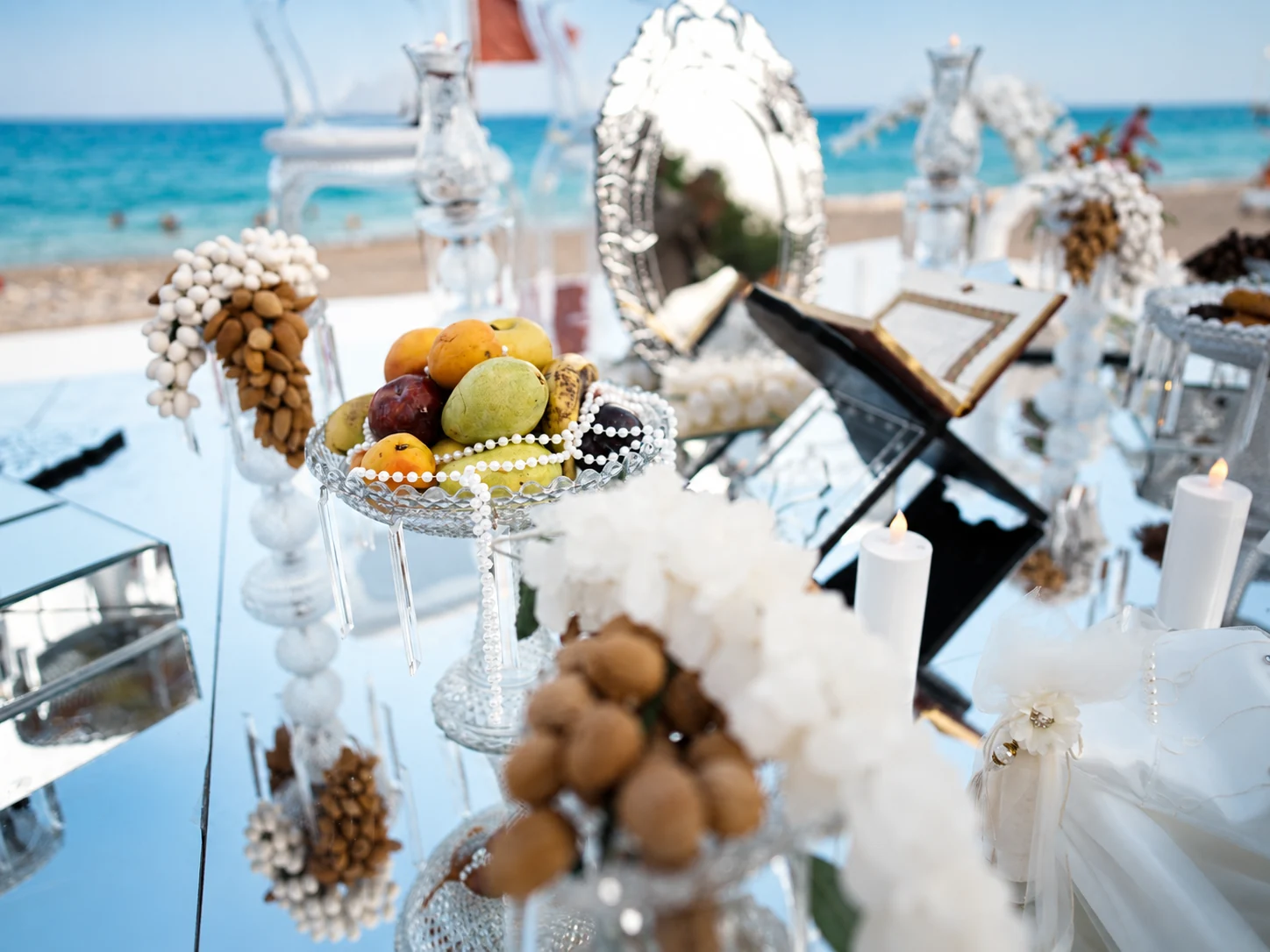
For an event planner, the first question is not which fabric looks best online; it is how the cultural moment will work in the selected venue. The ceremony surface, couple’s seating, the number of cloth holders, the height of floral installations and guest sightlines all affect what can be arranged safely.
Leave room beside and behind the couple
Participants need space to hold the fabric without stepping on a bride’s train, catching jewellery or blocking access routes. Photograph positions should be agreed with the family before the ceremony so the photographer can capture both the couple and the action above them without obstructing guests.
Be careful with wind, flames and fragile objects
Wind on a Mediterranean terrace can make a light cloth difficult to hold steady; a sheltered ceremony location may work better than an exposed viewpoint. Decorative candles, glass, mirrors and nearby installations also need care. Sugar cones should not be positioned where pieces could fall into open flames or onto electrical equipment.
Use a short, unhurried window in the running order
The gesture can be photographed beautifully without forcing relatives to hold a cloth for an unnecessarily long time. Agree who carries the sugar cones, when the participants step forward and how they leave the ceremony space. Do not publish a universal number of minutes, since the ceremony length depends on the actual family programme and venue.
These logistics are not cultural rules. They are the difference between copying a ritual’s appearance and making it comfortable for the people taking part.

Modern Sugar-Rubbing Traditions at Persian Weddings Abroad
Contemporary Persian-heritage couples may adapt the ceremony to suit family preferences, different languages, blended cultures and the realities of a destination event. One couple might request a family-centred Aghd with sugar cones and a traditional spread; another might have a simple cultural blessing during a wider international ceremony. Both can be meaningful to the people involved.
At a Persian wedding in Antalya, architecture and ceremony logistics vary significantly between a hotel ballroom, a lawn, a beachfront property and a private event space. That is why Ramarossi approaches venue selection before detailed floral and decoration proposals. The location determines the backdrop, surfaces, participant positions and available technical options.
Ramarossi provides bespoke full-service destination wedding planning for couples arranging suitable wedding celebrations in Turkey. When a Persian sugar-rubbing tradition belongs in the couple’s approved ceremony programme, its practical requirements can be considered alongside venue layout, suppliers, guests and overall event delivery. We do not sell a standard sugar-rubbing package, supply religious officiation through this article or decide the family’s cultural practices.
For a complete wedding celebration in the Antalya region, see our Persian Wedding in Antalya page. For the broader event sequence, see the updated Persian wedding timeline from Aghd to Aroosi. Those resources serve different intents and do not replace this specific cultural explanation.
Common Misconceptions About Persian Wedding Sugar Rubbing
| Common claim | What the evidence and practice support |
|---|---|
| “Sugar is poured directly over the bride and groom.” | The traditional cones are rubbed above a protective cloth held over the couple. |
| “Every guest must take a turn.” | Selected family members or friends may participate; practice varies. |
| “Every Persian wedding must include it.” | It is a cultural option, not a universal requirement. |
| “The ritual guarantees luck or prosperity.” | Its meaning is symbolic: a wish for sweetness in marriage. |
| “The honey ritual and sugar-cone ritual are identical.” | They are different gestures, though both use the language of sweetness. |
| “The same setup works at every venue.” | Wind, pathways, seating, safety and the number of participants change the arrangement. |
Onto a cloth held above the couple.
Selected family members or friends; roles vary.
No. Couples choose whether to include it.
A symbolic wish for a sweet marriage.
Related themes, different cultural gestures.
Based on the chosen ceremony venue and participants.
Planning a Persian Wedding in Antalya?
If your celebration will include an Aghd and family traditions such as sugar rubbing, Ramarossi can discuss the complete destination wedding plan around your preferred date, guest count, venue style, cultural priorities and overall budget. We develop the planning and design scope around the suitable venue and the actual wedding programme, not a one-size-fits-all package.
Follow our celebrations
Discover beautiful weddings, private events, styling ideas and behind-the-scenes moments from Ramarossi in Turkey.
Persian Sugar-Rubbing Ceremony: Frequently Asked Questions
Why do Persian weddings include sugar rubbing?
In families that observe it, the gesture expresses a wish for sweetness in married life. Two cones of sugar are rubbed above a cloth held over the couple at the Sofreh Aghd.
What are the Persian sugar cones called?
The cones are commonly called kalleh ghand, kaleh ghand or kalla-ye qand in transliteration. They are shaped loaves of sugar and may be decorated for the wedding.
Does sugar fall onto the couple’s heads?
Traditionally, the cones are rubbed above a light cloth held over the couple, and the cloth catches the sugar. The gesture is not intended to pour sugar directly onto their hair or faces.
Who usually rubs the sugar cones?
Historical accounts often describe married female relatives or close friends, but actual participation differs among families. A modern couple can choose who takes part.
Is sugar rubbing required at every Persian wedding?
No. The practice is familiar in many Sofreh Aghd ceremonies, but not all couples or families include it, and it is not a universal requirement.
What is the difference between sugar rubbing and honey sharing?
Sugar rubbing involves two sugar cones and an overhead cloth. Honey sharing is a separate gesture between the couple in some traditions. Both can symbolise sweetness but are not the same ritual.
Can this tradition be included at a wedding in Antalya?
It can be considered when the couple wants it and the selected venue provides a suitable ceremony setup, safe positioning for participants and the necessary event conditions.
Does Ramarossi arrange sugar rubbing as a stand-alone service?
No standard stand-alone sugar-rubbing package is offered through this guide. Ramarossi is a full-service destination wedding planning company; agreed cultural elements can be considered within the complete wedding programme.