

Persian Wedding Rings and Jewellery: Customs, Styles and What to Wear
When rings change hands at a Persian wedding, what goes into the bridal set, which Iranian crafts to look for, and how to wear and carry your pieces for a celebration in Antalya.
Persian wedding rings belong to two moments: baleh boroon, when the groom’s family brings a ring once the match has been agreed, and the Aghd, when the couple slip bands onto each other’s fingers after the bride has said yes.
Around those two moments sits a whole collection of pieces, from the matching set presented to the bride to filigree, turquoise and enamel made by Iranian craftspeople. This guide from Ramarossi follows each piece in order, explains where customs differ between families, and covers the practical side of wearing and carrying precious things to a wedding in Antalya, Turkey. You will see the word spelled jewelry in American sources; here we use the British jewellery.
Persian Wedding Rings, Stage by Stage
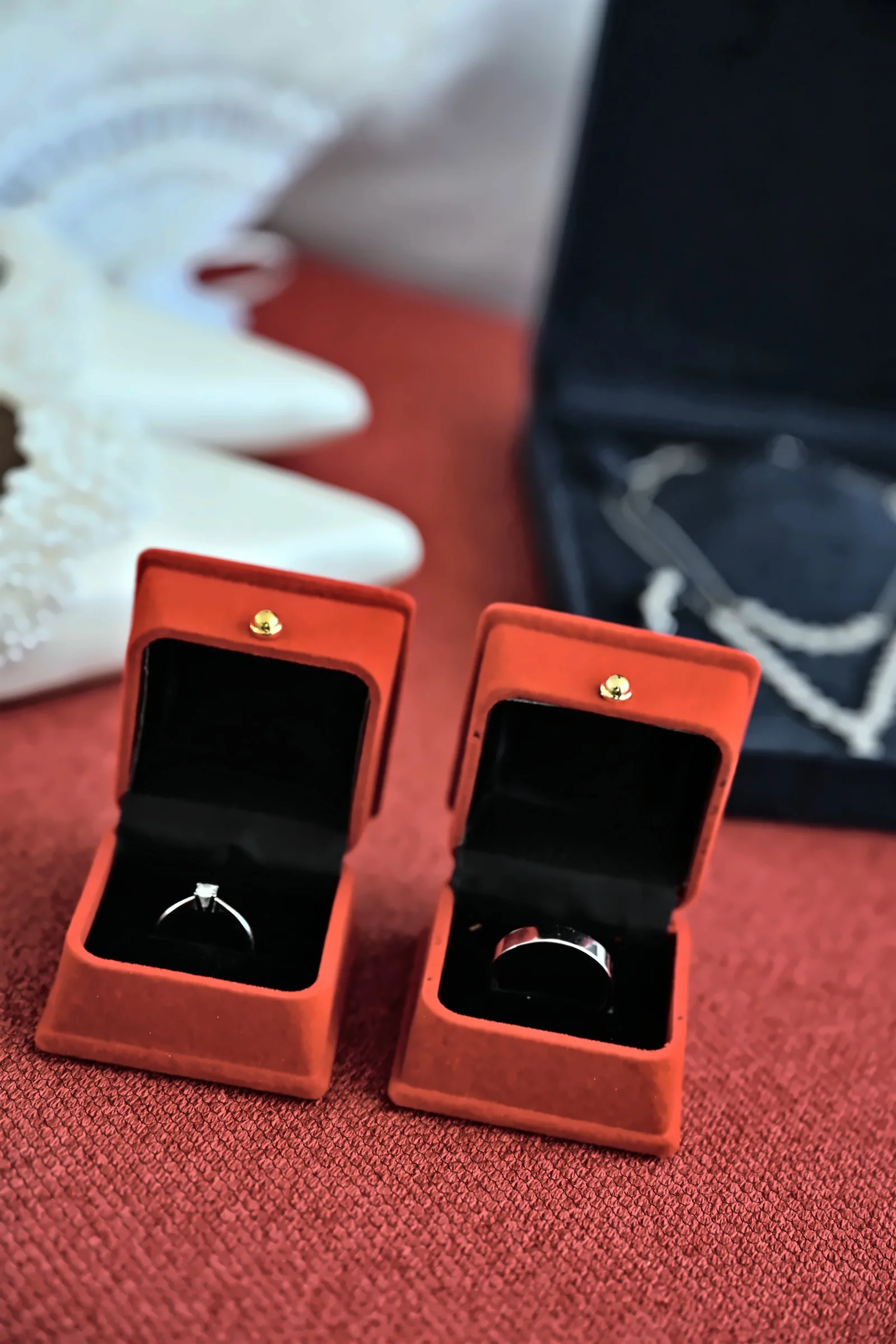
Baleh boroon follows the formal proposal: the two families meet to confirm the match and begin preparations, and the traditional present from the groom’s side is a ring. In older custom, women of the groom’s family carried it to the bride’s home. The Iran Chamber Society describes engagement rings of that kind as modest, plain gold with no stones, and the ring the bride receives at the wedding as the grander one, set with precious stones. Couples today can follow that order or reverse it, with a diamond solitaire at the engagement and a slimmer band for the Aghd.
Before the marriage is formalised, the couple go shopping for their wedding rings, on their own or with their mothers. The bride’s ring can be elaborate, and diamonds are a favourite. The bands then come out at the Aghd itself. Once the bride has given her consent and the contract and mehrieh are signed, the couple exchange rings and feed each other honey for a sweet life together, with the order of those two gestures differing from one family to the next, and close relatives come forward with gold and jewellery. Our Sofreh Aghd guide explains the spread in front of which all this happens, and the separate occasions of engagement and wedding are compared in Persian engagement and wedding ceremonies.
If you are choosing rings from abroad, with the families in different countries, a simple order of decisions keeps things calm:
- Decide on one ring or two. Agree whether the bride wears a separate engagement ring or a single ring that carries through to the Aghd.
- Settle the groom’s metal. Ask early whether he will wear gold, since this decides whether the bands can match.
- Choose the bands together. Look at how the bride’s band sits beside her engagement ring, and whether the two need a curved or notched shape.
- Size for a warm climate. Fingers can swell in summer heat, so try the fit at the end of a warm day and ask about a comfort-fit band.
- Allow time for engraving. Initials, the date or a short line in Farsi all need time with the jeweller, and the rings must be ready before you fly.
Every Piece and When It Appears
The table follows each piece through the celebrations, with a styling tip for a wedding by the Mediterranean.
Brought by the groom’s side at baleh boroon or the namzadi party
Pick a setting you can wear every day, since it stays on long after the wedding
Placed on each other’s hands at the Aghd, after the contract is signed
Make sure the bride’s band sits flush beside her engagement ring
Presented to the bride at the Aghd as a matching set
Balance the necklace against the neckline of the dress
Added to the set by some families
Try it with the veil and hairstyle at the trial
Worn into the Aghd and lifted when the bride sits beside the groom
Choose a soft edge that will not catch on earrings or a tiara
A watch is the classic gift from the bride’s family; both are worn on the day
Check the metal against the family’s preferences
| Piece | When it is given or worn | Style tip |
|---|---|---|
| Engagement ring | Brought by the groom’s side at baleh boroon or the namzadi party | Pick a setting you can wear every day, since it stays on long after the wedding |
| Wedding bands | Placed on each other’s hands at the Aghd, after the contract is signed | Make sure the bride’s band sits flush beside her engagement ring |
| Necklace, earrings and bracelet | Presented to the bride at the Aghd as a matching set | Balance the necklace against the neckline of the dress |
| Tiara or brooch | Added to the set by some families | Try it with the veil and hairstyle at the trial |
| Veil | Worn into the Aghd and lifted when the bride sits beside the groom | Choose a soft edge that will not catch on earrings or a tiara |
| Groom’s watch and cufflinks | A watch is the classic gift from the bride’s family; both are worn on the day | Check the metal against the family’s preferences |
Which Hand Do Iranians Wear the Wedding Ring On?
There is no single Iranian rule. Some couples wear the band on the left ring finger, as people do in the UK and North America, and others choose the right hand for religious or family reasons. Two families in Tehran and Toronto may each answer the question differently.
Agree on the hand between yourselves, then tell whoever leads the ceremony and your photographer. If the engagement ring already sits on the chosen finger, move it to the other hand for the Aghd so the band can go on first, then stack the two afterwards.
Gold, Platinum and Precious Stones
Gold is the traditional metal for Persian bridal jewellery, sometimes set with diamonds or coloured stones. Yellow gold glows warmly against an ivory or champagne gown, while white gold and platinum give a cooler, brighter look that suits the clear white stones in the sets above.
The groom’s band needs a separate conversation. Many Muslim grooms avoid gold for religious reasons, and because white gold is still gold, they choose platinum, palladium or silver instead. Other grooms are happy to wear gold. Platinum for him and white gold for her can look almost identical in photographs, so a matching pair remains possible either way. Style ideas for his outfit are in our guide to Persian groom style.
The Bridal Jewellery Set
The centrepiece of Persian bridal jewellery is a matching set: a necklace, a pair of earrings and a bracelet, sometimes joined by a ring designed to go with them, and in some families a brooch or tiara too. The set, which the groom or his family traditionally buys, is handed to the bride at the Aghd; where it fits among the other presents is explained in our guide to Persian wedding ceremony gifts. Couples can pick it on the same shopping day as the rings, so that metals and stones agree.
Choose the set with the dress in mind. A high or heavily embroidered neckline sits well with drop earrings, a bracelet and a fine chain, while a strapless or sweetheart neckline leaves space for a fuller collar. Our article on Persian wedding dress colours and styles covers the gown side. Think about weight as well: earrings worn from the morning photographs to the final dance should feel light by evening.
Traditional Persian Jewellery: Filigree, Turquoise and Enamel
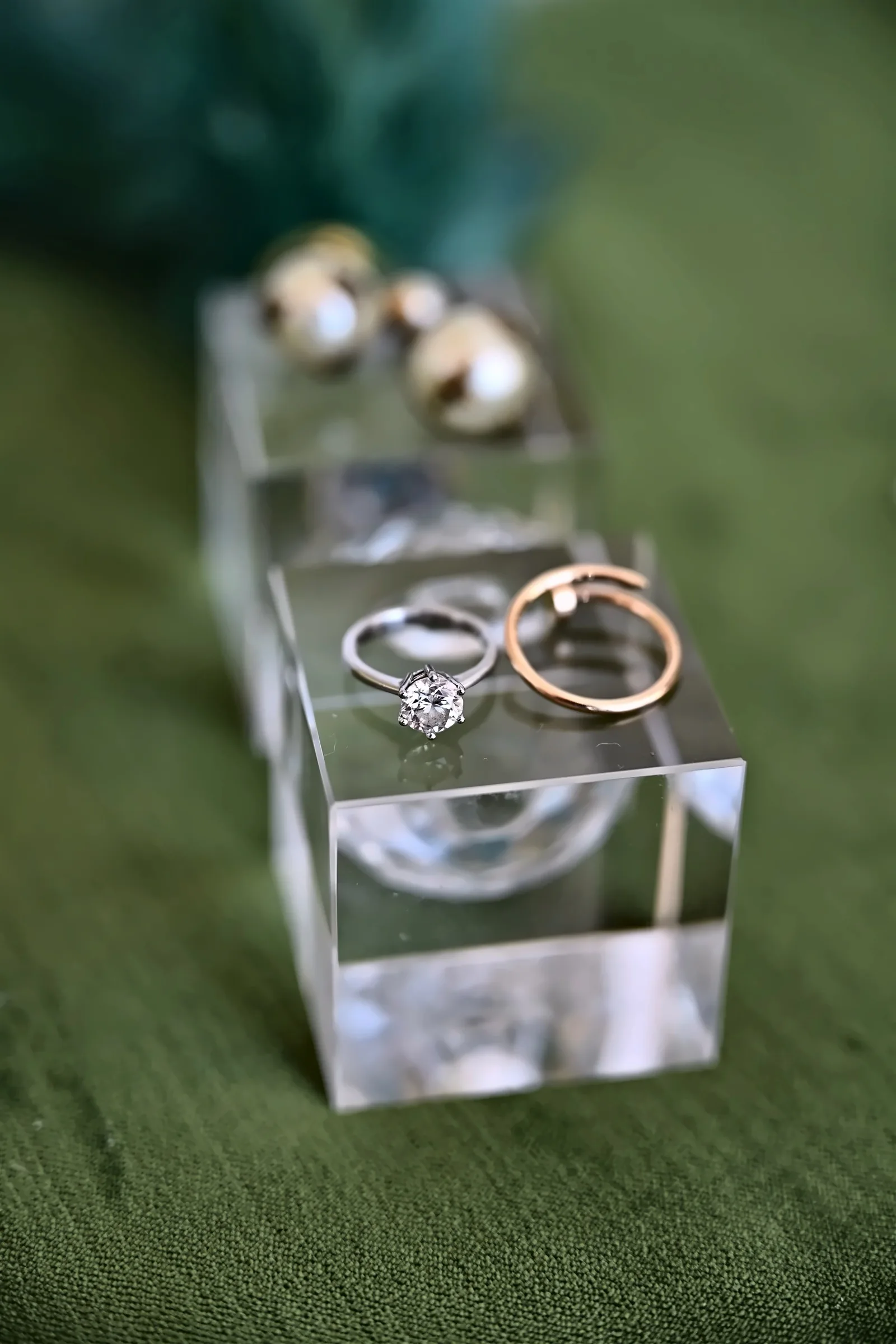
For a piece that speaks of Iran rather than any high-street counter, three crafts deserve a look. The ring itself can carry heritage too: Persian jewellers make bands engraved with Farsi script or carved with ancient motifs such as the reliefs of Persepolis.
Filigree. Malileh is the filigree of Zanjan, where silver, and occasionally gold, is drawn into hair-fine wire, then twisted, bent and soldered into lace-like patterns. Workshops in the city have produced it since at least the sixteenth century, and in 2019 the World Crafts Council named Zanjan the World City of Filigree. Filigree earrings or a pendant feel airy to wear and catch the light.
Turquoise. Persian turquoise, firouzeh, is linked above all to the mine near Neyshabur in Razavi Khorasan, which the Gemological Institute of America reports has supplied much of Iran’s turquoise for more than a thousand years. The colour ranges from vivid sky blue to greenish blue, and stones are polished into smooth domed cabochons for rings and pendants. A large share is treated to stabilise it, while untreated stones are prized but delicate, so ask the jeweller which you are buying and put turquoise on after perfume and sun cream.
Enamel. Minakari is enamel fired onto copper, silver or gold, and Isfahan is its main centre in Iran. Blue dominates the palette, and in the jewelled style called morassa, precious stones are set into the enamel surface itself. A small minakari pendant or a pair of cufflinks brings a flash of colour, and for a British or American bride with Iranian family, a turquoise or minakari piece makes a meaningful something blue.
Headpieces, Tiaras and Veils
The bride enters the Aghd veiled, and when she takes her seat beside the groom she lifts it, so that the first thing he sees in the mirror is her reflection. Because the veil is handled at such a close and photographed moment, plan it with the jewellery: claw-set earrings and pronged tiaras can snag fine tulle, so a softer edge or a comb placed below the crown helps. Wear the veil, headpiece and earrings together at your hair and makeup trial; our guide to Persian bridal makeup has ideas for the face that frames them.
A tiara that suits the Aghd can feel heavy by midnight. Some brides change to a lighter hair vine, slides or a single jewelled pin for the reception, and a shorter veil or none at all once the dancing starts. On a terrace by the sea, a breeze can lift a long veil, so ask your stylist for extra pins. Bridesmaids can echo the bride’s metal with simple earrings, as suggested in our guide to bridesmaid dresses for a Persian wedding.
Accessories for the Groom
A fine watch is the traditional present to the groom from the bride’s family, and it deserves a place in the getting-ready photographs. Cufflinks, a tie bar or a lapel pin finish the look. A groom who avoids gold for his band may prefer silver, platinum or steel cufflinks too, perhaps with a minakari or turquoise inlay, and Iranian jewellers also make silver men’s rings set with turquoise or agate. Keep his pieces in one box with the rings until the ceremony.
Styling Jewellery for the Sofreh Aghd and the Reception
The Aghd is an intimate, seated ceremony, and photographers come close: hands, rings and the honey all appear in detail shots. Fresh nails, clean stones and a bracelet that does not slide over the knuckles all show. Fuller pieces look graceful here, because the bride moves little and sits in soft light.
The reception asks for something different. Dancing loosens clasps and swings long earrings, so check every fastening, choose a bracelet with a safety catch and consider a lighter second pair of earrings for the evening. Ramarossi plans a Persian wedding in Antalya in English, Turkish and Persian, and photographs of both looks, the Aghd and the party, make a lovely pair for the family album.
Travelling to Turkey With Your Jewellery
Whether you fly in from London, Toronto, Dubai or Beirut, a few precautions let you enjoy your pieces without worry.
- Hand luggage and customs. Keep rings, the set and any heirloom boxed in your hand luggage, and look at the official Turkish customs information for visitors on declaring high-value belongings shortly before you travel, since the rules can change.
- A visual record. Photograph each piece and keep receipts or valuations on your phone and in an email to yourself.
- Insurance abroad. Check whether your home or travel policy covers jewellery overseas, and the limit for a single item.
- The journey home. Check your own country’s allowances before flying back, particularly for anything bought in Turkey.
For everything else to pack, from steamers to spare buttons, see our destination wedding packing checklist.
Renting or Buying
Rings and the bridal set are bought to keep. For pieces worn for a few hours, such as a statement tiara or a pair of reception earrings, hiring or borrowing from a relative is a sensible option. Ask how a hired piece is insured and when it must be returned, which matters if you fly home the morning after.
Heirlooms carry their own meaning. A grandmother’s necklace can be worn as it is or reset to suit the dress, and a jeweller can check clasps and settings before it travels. Afterwards, keep each item in its own soft pouch, clean it with mild soap and warm water, and dry it fully before storing.
Tell us about your Aghd and reception
Share your dates, guest numbers and the customs your families want to keep, and Ramarossi will come back with ideas for a celebration that gives every ring and every gift its moment.
Prefer another email service? Write to info@ramarossi.com using Antalya Wedding Enquiry as the subject.
Follow our celebrations
Discover beautiful weddings, private events, styling ideas and behind-the-scenes moments from Ramarossi in Turkey.
Frequently Asked Questions
When are rings given at a Persian wedding?
A ring is the traditional present from the groom’s side at baleh boroon, the gathering that follows the formal proposal. The couple then choose wedding bands before the marriage is formalised and place them on each other’s fingers at the Aghd.
Do Persian couples exchange rings at the Aghd?
They can. After the bride says yes and the contract is signed, the couple exchange bands and share honey, in whichever order the family follows, and relatives then come forward with jewellery and gold.
Which hand is a Persian wedding ring worn on?
Practice varies between families. Some couples choose the left ring finger, as in the UK and North America, and others prefer the right hand for religious or family reasons. Agree it together and tell your officiant before the ceremony.
Can a Persian groom wear a gold wedding ring?
It depends on the groom and his family. Many Muslim grooms avoid gold, white gold included, for religious reasons and wear platinum, palladium or silver. Others are happy with a gold band, so ask before ordering.
What is in a Persian bridal jewellery set?
A necklace, earrings and a bracelet, sometimes with a matching ring, and in some families a brooch or tiara as well. Gold is the traditional metal, set with diamonds or other stones.
Which traditional Persian jewellery crafts can a bride wear?
Silver filigree from Zanjan, known as malileh, turquoise from the Neyshabur mine in Razavi Khorasan, and minakari enamel, whose main centre is Isfahan, all make beautiful wedding pieces.
Can we bring valuable jewellery to Turkey for our wedding?
Yes. Keep it in your hand luggage, confirm your insurance covers it abroad, and read the official Turkish customs information on declaring high-value belongings shortly before you fly.