
Sofreh Aghd: Meaning, Items and the Persian Wedding Ceremony
What Aghd means, every item on the Iranian wedding spread with its Farsi name, a labelled layout, the ceremony from the first question to the honey, and ideas for setting one up today.
Sofreh Aghd is the spread of symbolic objects laid before a Persian couple at the moment they marry: a mirror between two candelabras, then sugar, honey, bread, eggs, a holy book and more, each one a wish for the life they are about to begin together.
This guide explains what Aghd means, lists every item with its Farsi name and transliteration, shows a labelled layout and follows the ceremony in order, from the first question to the taste of honey. It closes with modern ideas, practical advice and a checklist. It is written by Ramarossi, a destination wedding planner on the Turkish coast since 2011.
What Is Sofreh Aghd?
In Persian, a sofreh (سفره) is a cloth spread out for a meal or a special occasion. Encyclopaedia Iranica places the wedding spread among the presentational sofrehs, alongside the Haft-Sin of Nowruz: spreads arranged to be looked at and to carry meaning, rather than laid simply to eat from.
Sofreh Aghd (سفره عقد) is the spread for the marriage ceremony. The couple sit before it, the mirror and candelabras stand at its head, and every object on the cloth speaks for a hope: light, sweetness, plenty, children, protection from the evil eye and harmony between two families. Iranian families of different faiths keep the tradition, in Iran and across the diaspora, and it has become the visual heart of a Persian wedding day.
In English you will meet several spellings for the same thing: Sofreh-ye Aghd, with the linking ye that joins the two words, Sofre Aghd, Sofreye Aghd and Sofreh Aqd. It is also described simply as the Persian or Iranian wedding sofreh.
Aghd Meaning: The Aghd and the Aroosi
Aghd (عقد) comes from the Arabic ʿaqd, a tying or a knot, and so a binding pledge. In Persian the word names the ceremony at which a couple are joined, seated in front of the Sofreh Aghd with their closest family around them. It is a solemn, emotional moment, but also a lively one, full of teasing, laughter and sugar.
A Persian wedding has two main parts. The Aghd is the ceremony. The Aroosi (عروسی) is the party afterwards, with a dinner, Persian music and a full dance floor, and it may follow the Aghd within hours or on a separate day. Iranica’s entry on the Aghd notes that in the past a city bride might wear green for her Aghd and keep white for the Aroosi. Our Persian wedding timeline shows where each custom falls, from Khastegari through to the final dance.
How to pronounce Sofreh Aghd
Say it roughly as sof-REH-yeh AGHD. Sofreh has two syllables with the stress on the second, and the linking yeh slides into the next word. Aghd is a single syllable: a short a, close to the a in cat, then gh, a soft sound made at the back of the throat close to the French r, and a light d at the end.
Sofreh Aghd Items: The Complete List with Farsi Names
No two spreads are identical. Families add the pieces their own parents and grandparents used and leave out others, so treat the list below as a full menu rather than a rule. The meanings follow Encyclopaedia Iranica, the Iran Chamber Society and the customs Persian families describe for their own weddings.

آینه بخت
Aayeneh-ye Bakht
Light and a bright future. Traditionally a gift from the groom: when the bride’s veil is lifted, he first sees her reflected in it. Iranica notes it should be the first object moved into the couple’s new home.
شمعدان
Shamdan
Light and fire. Iranica describes the pair as gifts from the groom that flank the mirror, one standing for the bride and one for the groom.
قرآن، اوستا، انجیل، تورات
Ghoran, Avesta, Enjil or Towrat
God’s blessing on the marriage. The book follows the couple’s faith and sits open in front of them, at the centre of the cloth.
دیوان حافظ
Divan-e Hafez
Wisdom and love in verse. Hafez or Ferdowsi can sit beside the holy book, or take its place for a couple who prefer poetry.
ترمه
Termeh
A fine hand-woven Persian textile with paisley motifs, laid at the heart of the spread. An heirloom piece ties the couple to the generations before them.
جانماز
Jaa-namaz
A reminder to pray, sometimes with a prayer stone (mohr) and prayer beads (tasbih). Iranica records wheat or salt sprinkled under the cloth for blessing (barakat); families of other faiths may leave it out.
نان سنگک
Nan-e Sangak
Plenty and feasts to come. The bread carries the words Mobarak Bad (مبارک باد), congratulations, in decorative calligraphy.
نان و پنیر و سبزی
Nan-o Panir-o Sabzi
The simple food that keeps a household going. A platter of it is shared with guests once the ceremony is over.
تخممرغ
Tokhm-e Morgh
Fertility. Eggs may be painted, gilded or beaded and gathered in a basket or bowl.
آجیل
Ajil: gerdoo, badam, fandogh
Fertility and abundance. Walnuts, almonds and hazelnuts can be gilded, piled in dishes or strung into clusters.
نقل و شیرینی
Noghl, Shirini
Sweetness to share. Noghl may be showered over the couple, and the pastries are offered to guests.
عسل
Asal
A sweet beginning. The newly married couple each dip a little finger in the honey and feed the other.
شاخ نبات
Shakh-e Nabat
Crystallised sugar on a stick, one more wish for a sweet married life.
کله قند
Kalleh Ghand
Two decorated cones, rubbed together over the cloth held above the couple so that fine sugar falls on it as a blessing.
سوزن و نخ هفترنگ
Soozan-o Nakh-e Haft-Rang
Harmony with the new family. The playful stitch is known as sewing the mother-in-law’s tongue.
اسپند / اسفند
Espand or Esfand
Seeds burned on hot coals to keep away the evil eye and purify the air around the couple.
سینیِ عاطل و باطل
Sini-ye Atel-o-Batel
Protection from the evil eye. The seven are listed as poppy seeds, rice, angelica, salt, nigella seeds, black tea and frankincense.
انار
Anar
One of the heavenly fruits on the spread, with apples and grapes. Zoroastrians place a pomegranate or an apple on the tray held over the groom’s head.
سیب
Sib
Another of the heavenly fruits, piled with pomegranates and grapes in a bowl or on a stand.
گلاب
Golab
Fragrance. A cup or flask of rosewater perfumes the air around the spread.
کاسه سکه
Kaseh-ye Sekkeh
Wealth and prosperity for the new household, in gold or silver coins.
سکه طلا
Sekkeh-ye Tala
Prosperity. Families may use real gold coins or coins stamped with Mobarak Bad or Shabash, which guests keep for luck. A gold coin can also be the bride’s zir-e lafzi gift.
ماهی قرمز
Mahi-ye Ghermez
A glass bowl with a goldfish, once with a green leaf of narenj (bitter orange) floating in it; the Iran Chamber Society describes the custom as fading. A goldfish also swims on the Nowruz Haft-Sin.
قیچی
Gheychi
Zoroastrian custom: scissors lie with a needle and thread on the tray held over the groom’s head, where two pieces of cloth are joined.
حلقه
Halgheh
The wedding rings rest on a small tray on the spread until the couple exchange them.
گل
Gol
They frame the spread and carry its colour theme. Roses are a classic choice.
| Item | Farsi | Transliteration | Meaning |
|---|---|---|---|
| Mirror of fate | آینه بخت | Aayeneh-ye Bakht | Light and a bright future. Traditionally a gift from the groom: when the bride’s veil is lifted, he first sees her reflected in it. Iranica notes it should be the first object moved into the couple’s new home. |
| Candelabra (a pair) | شمعدان | Shamdan | Light and fire. Iranica describes the pair as gifts from the groom that flank the mirror, one standing for the bride and one for the groom. |
| Holy book | قرآن، اوستا، انجیل، تورات | Ghoran, Avesta, Enjil or Towrat | God’s blessing on the marriage. The book follows the couple’s faith and sits open in front of them, at the centre of the cloth. |
| Book of poetry | دیوان حافظ | Divan-e Hafez | Wisdom and love in verse. Hafez or Ferdowsi can sit beside the holy book, or take its place for a couple who prefer poetry. |
| Termeh cloth | ترمه | Termeh | A fine hand-woven Persian textile with paisley motifs, laid at the heart of the spread. An heirloom piece ties the couple to the generations before them. |
| Prayer rug | جانماز | Jaa-namaz | A reminder to pray, sometimes with a prayer stone (mohr) and prayer beads (tasbih). Iranica records wheat or salt sprinkled under the cloth for blessing (barakat); families of other faiths may leave it out. |
| Decorated flatbread | نان سنگک | Nan-e Sangak | Plenty and feasts to come. The bread carries the words Mobarak Bad (مبارک باد), congratulations, in decorative calligraphy. |
| Bread, feta and herbs | نان و پنیر و سبزی | Nan-o Panir-o Sabzi | The simple food that keeps a household going. A platter of it is shared with guests once the ceremony is over. |
| Decorated eggs | تخممرغ | Tokhm-e Morgh | Fertility. Eggs may be painted, gilded or beaded and gathered in a basket or bowl. |
| Nuts | آجیل | Ajil: gerdoo, badam, fandogh | Fertility and abundance. Walnuts, almonds and hazelnuts can be gilded, piled in dishes or strung into clusters. |
| Sugared almonds and pastries | نقل و شیرینی | Noghl, Shirini | Sweetness to share. Noghl may be showered over the couple, and the pastries are offered to guests. |
| Honey | عسل | Asal | A sweet beginning. The newly married couple each dip a little finger in the honey and feed the other. |
| Rock candy | شاخ نبات | Shakh-e Nabat | Crystallised sugar on a stick, one more wish for a sweet married life. |
| Sugar cones | کله قند | Kalleh Ghand | Two decorated cones, rubbed together over the cloth held above the couple so that fine sugar falls on it as a blessing. |
| Needle and seven-coloured thread | سوزن و نخ هفترنگ | Soozan-o Nakh-e Haft-Rang | Harmony with the new family. The playful stitch is known as sewing the mother-in-law’s tongue. |
| Wild rue | اسپند / اسفند | Espand or Esfand | Seeds burned on hot coals to keep away the evil eye and purify the air around the couple. |
| Tray of seven spices | سینیِ عاطل و باطل | Sini-ye Atel-o-Batel | Protection from the evil eye. The seven are listed as poppy seeds, rice, angelica, salt, nigella seeds, black tea and frankincense. |
| Pomegranate | انار | Anar | One of the heavenly fruits on the spread, with apples and grapes. Zoroastrians place a pomegranate or an apple on the tray held over the groom’s head. |
| Apples | سیب | Sib | Another of the heavenly fruits, piled with pomegranates and grapes in a bowl or on a stand. |
| Rosewater | گلاب | Golab | Fragrance. A cup or flask of rosewater perfumes the air around the spread. |
| Bowl of coins | کاسه سکه | Kaseh-ye Sekkeh | Wealth and prosperity for the new household, in gold or silver coins. |
| Gold coins | سکه طلا | Sekkeh-ye Tala | Prosperity. Families may use real gold coins or coins stamped with Mobarak Bad or Shabash, which guests keep for luck. A gold coin can also be the bride’s zir-e lafzi gift. |
| Goldfish bowl | ماهی قرمز | Mahi-ye Ghermez | A glass bowl with a goldfish, once with a green leaf of narenj (bitter orange) floating in it; the Iran Chamber Society describes the custom as fading. A goldfish also swims on the Nowruz Haft-Sin. |
| Scissors | قیچی | Gheychi | Zoroastrian custom: scissors lie with a needle and thread on the tray held over the groom’s head, where two pieces of cloth are joined. |
| Rings | حلقه | Halgheh | The wedding rings rest on a small tray on the spread until the couple exchange them. |
| Flowers | گل | Gol | They frame the spread and carry its colour theme. Roses are a classic choice. |
The heart of a small Sofreh Aghd
If space or travel limits what you can bring, keep the core: the mirror and its two candelabras, a holy book or a volume of poetry, honey, the two sugar cones with the cloth, bread, and the needle and thread. With these, every key moment of the ceremony can still happen. Everything else adds richness, colour and family memory.
Sofreh Aghd Layout: A Labelled Diagram
Layouts change with the family and the setting, but the logic stays steady. The mirror of fate stands at the head of the spread, centred on the couple, with a candelabra on each side. The holy book or poetry lies open just in front of the mirror on its termeh or prayer rug. The items the couple will touch during the ceremony, above all the honey and the rings, sit nearest to them, and the rest are arranged in balanced groups on either side.
- Holy book or book of poetry, open on its stand
- Termeh or prayer rug beneath it
- Nan-e Sangak with Mobarak Bad
- Bread, feta and herbs
- Decorated eggs
- Nuts: walnuts, almonds and hazelnuts
- Noghl and pastries
- Honey, within reach of the couple
- Rock candy (Shakh-e Nabat)
- Two sugar cones for the cloth
- Needle and seven-coloured thread
- Esfand (wild rue)
- Atel-o-Batel tray of seven spices
- Pomegranates and apples
- Cup of rosewater
- Bowl of coins
- Goldfish bowl, if the family keeps one
- Scissors, in Zoroastrian custom
- Tray with the rings
- Flowers
- Gold coins and the zir-e lafzi gift
The Aghd Ceremony, Step by Step
Every family runs its Aghd a little differently, and the readings, the language and who speaks will follow your own faith and customs. The sequence below is a common pattern, gathered from Persian sources, that you can adapt.
- Wild rue for the arrival. As the couple arrive, Esfand seeds may be scattered on hot coals so their smoke keeps the evil eye away.
- Taking their seats. The couple sit side by side at the foot of the spread, facing the mirror, the groom traditionally on the bride’s right. Sources differ on the direction: Zoroastrian custom and the Iran Chamber Society describe the couple facing the sunrise and the light, while Iranica records the bride facing the qibla in Muslim households. When the bride’s veil is lifted, the groom first sees her in the mirror.
- The officiant begins. The aghed (عاقد), the person leading the ceremony, opens with prayers or readings from the couple’s holy book. Couples who prefer poetry can choose lines from Hafez, Rumi or Saadi.
- The cloth and the sugar. Female relatives and friends raise a fine white or silk cloth above the couple’s heads, and a happily married woman of the family rubs the two sugar cones together over it. The gesture has its own story, told in our article on the sugar-rubbing ceremony.
- Needle and thread. A relative stitches a corner of the cloth, or two pieces of fabric, with seven-coloured thread. Known as sewing the mother-in-law’s tongue, it is a joke with a sincere wish inside it: peace between the two families.
- The questions. The aghed asks the bride whether she consents. She stays silent, and the guests answer for her with playful excuses such as “Aroos rafteh gol bechineh” (عروس رفته گل بچینه): the bride has gone to pick flowers. The reading is repeated a second and a third time.
- The zir-e lafzi. Before the third answer, the bride may receive her zir-e lafzi (زیرلفظی), a gift from the groom or his parents, such as a gold coin or a piece of gold jewellery, given to coax out her word.
- Baleh. At the third asking the bride replies “Ba ejazeh-ye pedar o madaram va bozorgtar-ha, baleh” (با اجازه پدر و مادرم و بزرگترها، بله): with the permission of my parents and the elders, yes. The groom is asked in turn and answers, and the room fills with cheers and showers of noghl.
- Honey. The couple join right hands, then each dips a little finger in the bowl of honey and feeds it to the other, so married life begins with something sweet.
- The rings. The rings are taken from their tray on the spread and placed on each other’s fingers.
- Signing. The couple sign the document the aghed has read.
- Gifts and congratulations. Close family come forward one by one with gifts, from gold Persian wedding jewellery to coins and keepsakes, then guests follow to kiss and congratulate the couple. Our article on Persian wedding ceremony gifts explains what each kind of present means.

History and Roots
The tradition reaches back to Iran’s Zoroastrian past. According to the Iran Chamber Society, the spread once faced the sunrise and the ceremony took place in daylight, because light belonged to goodness and darkness to hostile spirits. The mirror and the candelabras carry that idea of light and fire into every Sofreh Aghd today, and the cloth held over the couple was once green, a colour cherished in Zoroastrian custom, before white was adopted as well. The Iran Chamber Society also links the sewing of two pieces of cloth during the Aghd to an older rite in which the couple’s ceremonial belts (koshti) were tied and sewn together.
Centuries of Islamic, Jewish and Christian life in Iran layered new meanings onto the same cloth. The holy book changed with each faith, the prayer rug joined Muslim spreads, and local foods and charms found their way onto the termeh. What stayed constant is the language of wishes: sugar for sweetness, eggs and nuts for children, bread for plenty, Esfand and spices for protection.

Sofreh Aghd and the Haft-Sin of Nowruz
Persian families recognise the Sofreh Aghd at once as a cousin of the Haft-Sin, the spread laid for Nowruz. Both are ceremonial sofrehs with a mirror, candles, eggs, coins, sweets and a holy book or Hafez, and both are set out so that the family can gather around them. Couples planning a Nowruz wedding in Antalya can even celebrate both spreads within the same week.
The Aghd, the ceremony at which a couple marry
Nowruz, the Persian New Year at the spring equinox
The mirror of fate between two candelabras
Seven items whose Persian names begin with the letter sin (S)
Mirror, candles, decorated eggs, coins, a holy book or Hafez, sweets and sometimes a goldfish
Mirror, candles, painted eggs, coins, a holy book or Hafez, pastries and a goldfish
Sugar cones, honey, needle and thread, Nan-e Sangak with Mobarak Bad
The seven S items: sabzeh, samanu, senjed, serkeh, sib, somagh and sir
Light, sweetness, children and harmony for one couple
Growth, health and plenty for the whole family in the year ahead
| Element | Sofreh Aghd | Haft-Sin |
|---|---|---|
| Occasion | The Aghd, the ceremony at which a couple marry | Nowruz, the Persian New Year at the spring equinox |
| Centrepiece | The mirror of fate between two candelabras | Seven items whose Persian names begin with the letter sin (S) |
| Shared symbols | Mirror, candles, decorated eggs, coins, a holy book or Hafez, sweets and sometimes a goldfish | Mirror, candles, painted eggs, coins, a holy book or Hafez, pastries and a goldfish |
| Defining items | Sugar cones, honey, needle and thread, Nan-e Sangak with Mobarak Bad | The seven S items: sabzeh, samanu, senjed, serkeh, sib, somagh and sir |
| The wish | Light, sweetness, children and harmony for one couple | Growth, health and plenty for the whole family in the year ahead |
Regional and Faith Variations
Regional customs
Each region of Iran adds its own habits to the Sofreh Aghd. Iranica records that in Shiraz a lamp of honey and oil was lit so the couple would get along like honey and oil, the bride wore a skein of green silk threads for green luck (sabz-bakht), and small bundles of bread, cheese and herbs were handed to each guest.
Families from Gilan and Mazandaran in the north, from Azerbaijan, from Kurdish regions or from the south bring their own songs, dress, dishes and blessings to the day. Ask the elders on both sides which pieces they remember from their own weddings: the answers can make your spread feel unmistakably yours.
Faith variations
Muslim families place the Quran on the prayer rug, sometimes with a prayer stone and prayer beads, and may set the spread so that the bride faces the qibla.
Zoroastrian families place the Avesta on the spread and keep the mirror, fire and light close to their original meaning. The Iran Chamber Society describes a tray held over the groom’s head on which two pieces of cloth are joined, with a needle, thread, scissors, a raw egg, a pomegranate or apple, dried marjoram and white sweets, all under a green kerchief, while priests lead the prayers. Read more on how Zoroastrian traditions shape Persian wedding ceremonies.
Persian-Jewish families can set a Sofreh Aghd with the Torah alongside the chuppah and the ketubah, as our guide to Persian-Jewish wedding traditions describes.
Christian families, such as Armenian and Assyrian Iranians, can place a Bible at the centre of the spread.
Mixed-faith and multicultural couples can place a holy book from each tradition side by side, or choose a book of poetry that both families love. A partner who is not Persian is warmly welcomed into the ritual, and a short printed guide on the guests’ chairs helps everyone follow each moment.
Modern Sofreh Aghd Ideas
A modern Sofreh Aghd keeps every meaning and changes the frame. These ideas help it suit the setting, the season and the couple.
Floor or table
The classic spread is laid at ground level on a cloth over a Persian carpet, with the couple seated just behind it. A raised table lets standing guests see every detail and is easier for older relatives to approach. Glass tables, mirrored platforms and clear acrylic stands make the items appear to float, while a low table keeps something of the old intimacy.

Outdoors: beach, garden and terrace
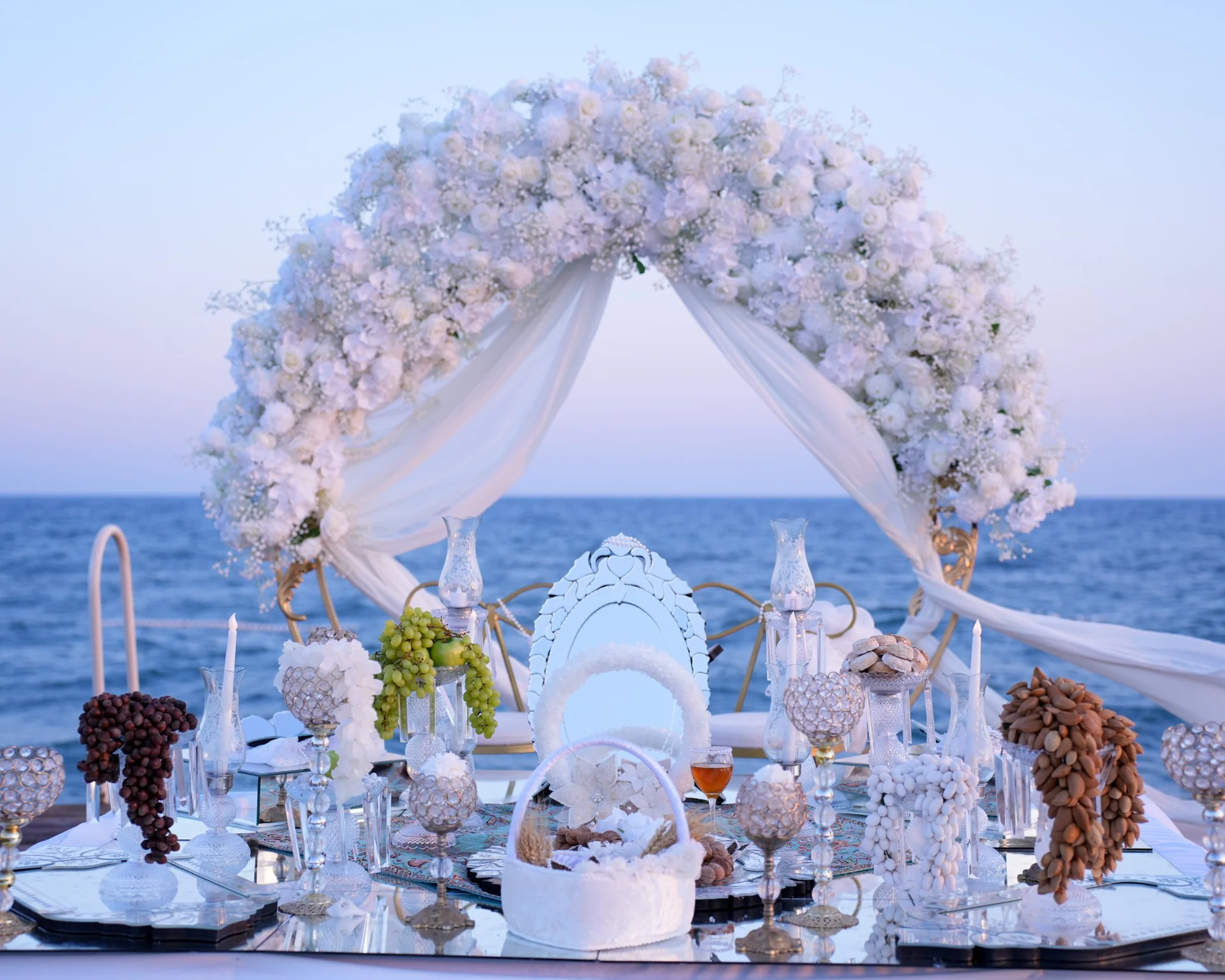
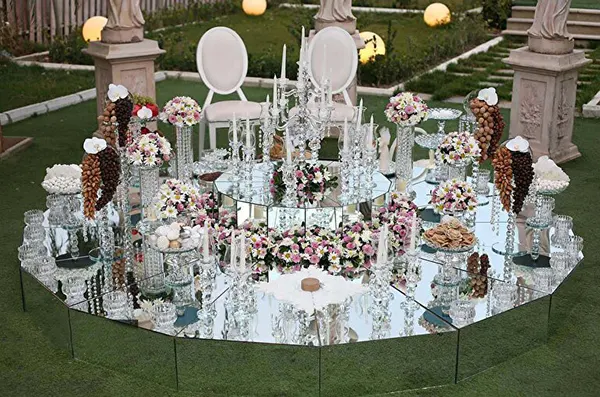
Outdoor spreads let the sea, a lawn or an old stone terrace become part of the design. A round or octagonal mirrored platform suits a garden; a long, low arrangement suits a pier or a sea-view terrace. A floral installation behind the couple frames the mirror for photographs, and you can combine a Sofreh Aghd with a floral ceremony arch without losing anything of the tradition.
Small and minimalist
For an intimate Aghd, a single table with the essentials, one colour of flowers and a few beautiful family pieces can feel more personal than a large display. Leave space around each object so its meaning reads clearly.
Sustainable and heirloom pieces
Reuse a mother’s mirror, a grandmother’s candlesticks or a family termeh, rent the glassware and stands, and plan for the bread, fruit and pastries to be served to guests after the ceremony so that nothing on the spread goes to waste.
Personal touches
Add your names or a line of Hafez in calligraphy, framed photographs of grandparents, or a dish or textile from each family. Let the spread echo the venue too: crystal and gold for a ballroom, natural linen and greenery for a garden, white and silver beside the sea.
Colour Themes and Flowers
Choose the palette with the setting and the light in mind, then let the flowers and fabrics frame the mirror, candles and sugar rather than hide them.
- White and gold. Calm and luminous, with gilded nuts, white roses and gold-rimmed glass. It glows beside the sea and in late afternoon light.
- Blush and coral. Soft pinks warmed with peach and coral flowers, lovely on a terrace at sunset.
- Blue and lilac. Hydrangeas, pale roses and silver for a fresh coastal look.
- Green and ivory. A quiet nod to green luck and the green cloths of the past, with herbs and foliage woven through.
- Jewel tones. Emerald, ruby and sapphire with gold details for an evening ceremony indoors.
The bride’s look can complete the scheme: our guides to the colours of a Persian wedding dress and to Persian bridal makeup help tie the spread, the dress and the details together.

Planning Tips: Light, Wind, Timing and Heirlooms
Position it for light and photographs
Decide early where the couple will face, then check how the light falls at the hour of the ceremony. Strong sun behind the mirror can turn it into a glare, and sun straight in the couple’s eyes makes them squint. Leave room in front of the spread for the photographer and space behind the couple for the women holding the cloth.
Wind and heat outdoors
Protect candle flames with tall glass chimneys or hurricane vases, weigh down the cloth and runners, and keep honey, pastries and chocolate in the shade until the last moment. Ask the venue whether open flames and burning Esfand are allowed in the space you have chosen.
Set-up time
Allow time for the spread to be set before guests arrive, and for detail photographs of the finished Sofreh Aghd. Fresh items, bread, herbs, fruit and flowers, go on last; sugar cones, coins, the spice tray and dry goods can be prepared well ahead.
Who brings what
Write a simple list of every item and who is responsible for it: family heirlooms, the holy book, the rings, the zir-e lafzi gift and the needle and thread. Name one calm relative to keep the small but vital pieces safe until the ceremony.
Buying or renting
Buying suits couples who want to keep a complete set as an heirloom. Renting suits a destination wedding, since mirrors, candelabras and glass stands stay where they are needed. If you are marrying on the Turkish Riviera, read about renting a Sofreh Aghd in Antalya.
Travelling with heirlooms
Carry irreplaceable pieces, a mirror, candlesticks or a termeh, in your hand luggage, wrapped in clothing or padding, and check your airline’s cabin size rules before you pack. Photograph each piece at home so the stylist can plan the spread around it.
Sofreh Aghd Checklist
Use this list to prepare everything in good time. Copy it, share it with both families and tick each line as it is settled.
- Mirror of fate and a pair of candelabras, with candles and spares
- Holy book for your faith, or a volume of Hafez or other poetry
- Termeh, prayer rug or main cloth, plus the spread itself
- Nan-e Sangak with Mobarak Bad, and bread, feta and herbs
- Decorated eggs, walnuts, almonds and hazelnuts
- Noghl, pastries and rock candy
- Honey in a small bowl within the couple’s reach
- Two decorated sugar cones and the fine cloth to hold above the couple
- Needle and seven-coloured thread
- Esfand, a small brazier or burner and the venue’s permission for it
- Atel-o-Batel tray of seven seeds and spices
- Pomegranates, apples and other fruit
- Rosewater in a cup or flask
- Bowl of coins, gold coins and the zir-e lafzi gift
- Wedding rings on a small tray
- Flowers in your chosen colours
- Names of the officiant, the women holding the cloth, the sugar rubber and the person who sews
- A plan for wind, sun and the ceremony time
- Printed notes for guests explaining the items
Planning a Persian Wedding in Antalya, Turkey
Antalya, Turkey, gives a Sofreh Aghd a striking frame: piers and beaches on the Mediterranean, gardens and terraces in the city and its resorts, and villas with sea views along the coast to Kalkan. It is a natural meeting point for families travelling from Iran, Europe, North America and the Gulf.
Ramarossi plans in Persian, English and Turkish, and has set the Sofreh Aghd on beaches, piers and villa terraces across the region. If you would like a Persian wedding planner who understands every item on your spread, we would love to hear about your plans.
Tell us about your Sofreh Aghd
Share your dates, guest count and how you picture your Sofreh Aghd, and we will come back with ideas for a setting where the mirror, the light and your family all come together.
Prefer another email service? Write to info@ramarossi.com using Antalya Wedding Enquiry as the subject.
Follow our celebrations
Discover beautiful weddings, private events, styling ideas and behind-the-scenes moments from Ramarossi in Turkey.
Frequently Asked Questions
What is Sofreh Aghd?
Sofreh Aghd is the decorated spread set in front of a Persian couple during their Aghd, the ceremony at which they marry. A mirror stands at its head between two candelabras, and items such as honey, sugar cones, bread, eggs, nuts, wild rue and a holy book or poetry are arranged on the cloth, each carrying a wish for the marriage.
What does Aghd mean?
Aghd (عقد) comes from the Arabic ʿaqd, a tie or knot. In Persian it names the ceremony at which the couple are joined, held around the Sofreh Aghd. The celebration with dinner, music and dancing is the Aroosi.
What items go on a Sofreh Aghd?
A full Sofreh Aghd items list includes the mirror of fate, a pair of candelabras, a holy book or Hafez, a termeh or prayer rug, Nan-e Sangak, bread with feta and herbs, decorated eggs, nuts, noghl and pastries, honey, rock candy, two sugar cones, needle and thread, wild rue, the Atel-o-Batel spice tray, pomegranates and apples, rosewater, a bowl of coins, gold coins, the rings and flowers. Some families add a goldfish bowl, and Zoroastrian custom adds scissors.
Which direction should the Sofreh Aghd face?
Sources differ. Zoroastrian custom and the Iran Chamber Society describe the couple facing the sunrise and the light, while Encyclopaedia Iranica records the bride facing the qibla in Muslim households. Ask the elders of both families which custom they follow, then fit it to the light and the view of the setting.
Who holds the cloth over the couple?
Female relatives and friends of the couple hold the cloth above their heads, and a happily married woman of the family rubs the sugar cones together over it. Families decide together who takes each role.
Why are sugar cones rubbed over the couple?
Rubbing two sugar cones together over the cloth lets fine sugar fall on it, a blessing for a sweet married life. The sugar lands on the cloth rather than on the couple.
How is the Aghd different from the Aroosi?
At the Aghd the couple marry, seated before the Sofreh Aghd with close family around them. The Aroosi is the party afterwards, with a dinner, Persian music and dancing, held a few hours later or on another date.
What is the difference between Sofreh Aghd and Haft-Sin?
Both are Persian ceremonial spreads and share symbols such as a mirror, candles, eggs, coins and a holy book or Hafez. The Sofreh Aghd is set for a wedding ceremony and centres on the mirror of fate, while the Haft-Sin is set for Nowruz and centres on seven items whose names begin with S.
Can a non-Persian or mixed couple have a Sofreh Aghd?
Yes. Couples from two backgrounds can place a holy book from each faith, or a book of poetry, on the spread, add pieces from both families and print a short guide so every guest understands what each item means.
What goes on a Zoroastrian Sofreh Aghd?
A Zoroastrian Sofreh Aghd centres on the Avesta, the mirror and the candles, whose light and fire carry the oldest meanings of the spread. The Iran Chamber Society describes a tray held over the groom’s head on which two pieces of cloth are joined, with a needle, thread, scissors, a raw egg, a pomegranate or apple, dried marjoram and white sweets, all under a green kerchief. Priests lead the prayers.
How long does the Aghd ceremony take?
The ceremony itself can take around half an hour to an hour, depending on readings, music and how many family members take part. Allow extra time afterwards for gifts, congratulations and photographs at the spread.
Should we rent or buy a Sofreh Aghd?
Renting suits couples marrying abroad, since fragile mirrors, candelabras and glassware do not need to travel. Buying, or bringing family pieces, suits couples who want heirlooms to keep. Couples can also combine the two: a rented spread with a few treasured family items added.