
Turkish Wedding Traditions: From the First Coffee to the Last Halay
The salty coffee, the red ribbon cut by an elder, the red sash, the gold pinned on the couple and the dance that pulls every guest in: what each custom means, and how to bring it to a wedding in Antalya.
Turkish wedding traditions follow a couple from the first family visit, when the bride serves Turkish coffee to her future in-laws. From there they move through the promise, the engagement and the henna night, to the wedding day, when guests pin gold on the newlyweds and the halay pulls everyone onto the dance floor.
Turkey is a large country and every region keeps its own version of these customs. A village wedding in Eastern Anatolia can still run over several days with drums in the street, while a city wedding in Istanbul or Antalya may fit the civil ceremony, the gold and the dancing into one evening at a hotel. This guide explains the main customs, what each one means, and how couples marrying in Antalya, whether one partner is Turkish or both simply love the culture, can bring them into their own celebration.
Turkish Wedding Traditions at a Glance
A traditional Turkish marriage is a series of family occasions rather than a single day. The two families meet, agree, celebrate the promise, celebrate the engagement and only then come to the wedding itself. The order below is the classic one; modern couples may merge stages or skip some, and that is perfectly normal.
Kız isteme
The groom’s family visits; the bride serves coffee; the request is made
Söz
Rings tied with a red ribbon; an elder cuts it
Nişan
A larger party with rings, gifts and the first gold
Kına gecesi
The women’s evening of songs, candles and henna
Gelin alma
Drums, the red sash and the convoy to the ceremony
Nikah
The civil marriage, the signatures and the family booklet
Düğün
The gold pinning, the meal and the halay
| Stage | In Turkish | What happens |
|---|---|---|
| Asking for the bride | Kız isteme | The groom’s family visits; the bride serves coffee; the request is made |
| The promise | Söz | Rings tied with a red ribbon; an elder cuts it |
| The engagement | Nişan | A larger party with rings, gifts and the first gold |
| The henna night | Kına gecesi | The women’s evening of songs, candles and henna |
| Collecting the bride | Gelin alma | Drums, the red sash and the convoy to the ceremony |
| The ceremony | Nikah | The civil marriage, the signatures and the family booklet |
| The celebration | Düğün | The gold pinning, the meal and the halay |
Kız İsteme: Asking for the Bride’s Hand
The first formal step is kız isteme, literally “asking for the girl”. The couple may have known each other for years, but tradition still sends the groom’s parents and close elders to the bride’s home to ask her family for permission. They arrive with flowers and a box of chocolates, the families talk about everything except the reason for the visit, and the bride is expected to make and serve the Turkish coffee.
The Salty Coffee
Here comes the playful twist of a Turkish courtship. The bride may put salt, and in some families pepper, into the groom’s cup instead of sugar. He is expected to drink it without pulling a face. The prank is read as a test of his patience and good humour, and as a small sign from the bride that she has a say in the matter. A groom who finishes the cup and smiles has passed.
The coffee itself carries weight. Its place in Turkish life is recognised by UNESCO, whose listing for Turkish coffee culture and tradition singles out engagement ceremonies as one of the occasions it belongs to. Serving it well, with the right foam and a glass of water, is part of how a bride welcomes her future in-laws.

The Formal Request
Once the cups are cleared, the most senior man on the groom’s side makes the request. In religious families he uses a set phrase, “Allah’ın emri, Peygamber’in kavliyle”, “by God’s command and the Prophet’s word”, before asking for the daughter’s hand for their son. Secular families keep the formality with plainer words. The bride’s father may give his blessing on the spot or, by custom, ask for a little time, even when everyone already knows the answer.
Söz and Nişan: The Promise and the Engagement
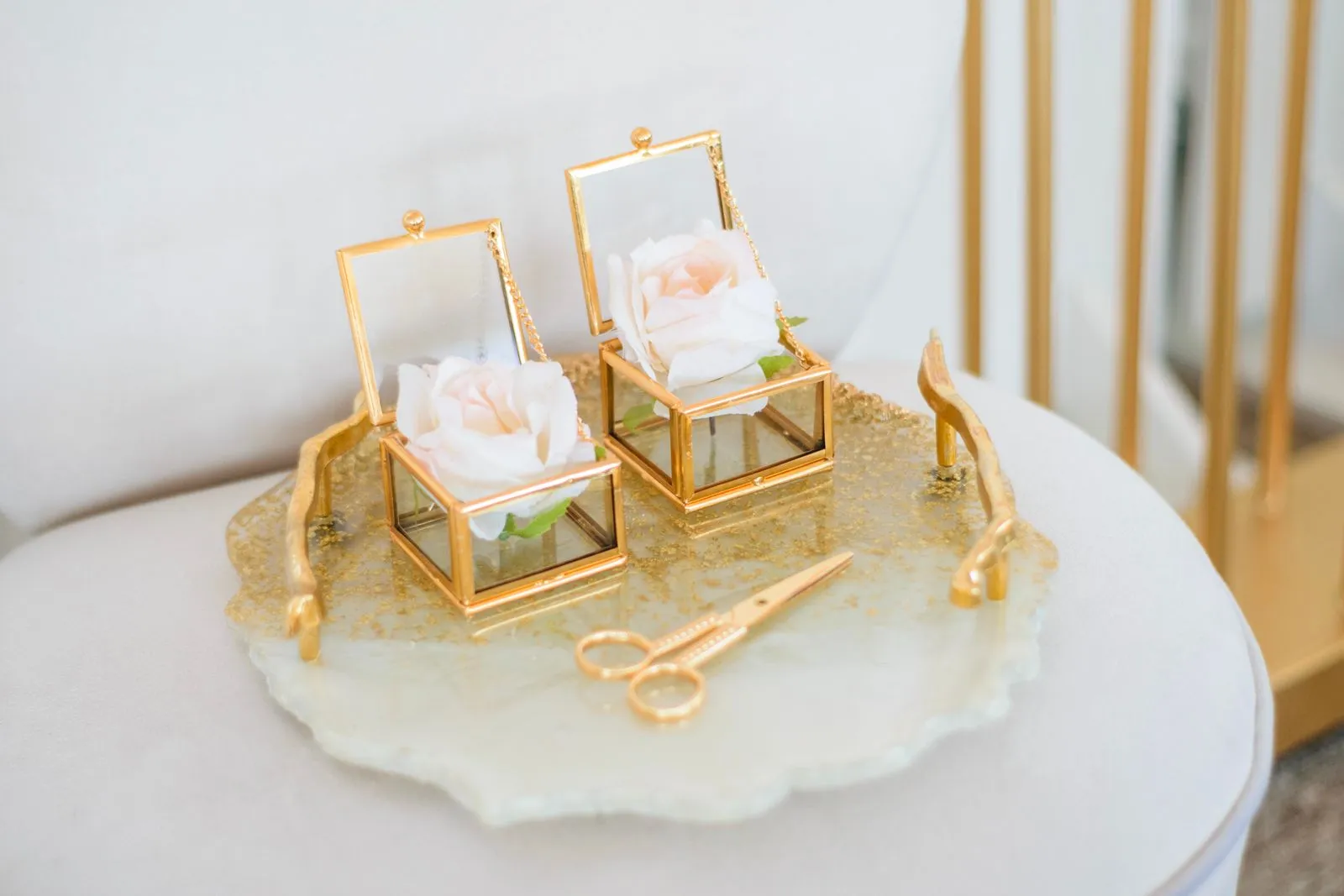
A “yes” leads to the söz, the promise. It can be held on the same evening as the request or a few weeks later, and it is an intimate occasion for the two families. Two plain rings are joined by a red ribbon and placed on a tray. The couple put them on, an elder says a few words of blessing and then cuts the ribbon, and the couple are promised to each other. Glasses of şerbet, a sweet cordial, or chocolates are passed round so the new relationship begins on a sweet note. The couple then kiss the hands of their elders and touch them to their foreheads as a sign of respect.
The nişan, the engagement party, is the larger and more public celebration. Relatives and friends are invited, the bride wears an engagement dress, the engagement rings are tied with red ribbon and an elder cuts it in front of everyone, and the first gold gifts are given to the bride. The families also exchange a nişan bohçası, a bundle of gifts wrapped in an embroidered cloth: clothes, scarves, perfume and sweets chosen with care for the other side.
Couples who live abroad can hold the söz with the families at home and turn the nişan into a party of its own, sometimes in the same city where the wedding will be. Our guide to an engagement party in Antalya covers settings and ideas for that evening.
Before the Wedding Day: Çeyiz, Kına and Hammam
The Çeyiz, the Bride’s Trousseau
Traditionally a Turkish girl’s family began preparing her çeyiz, her trousseau, long before any proposal: hand-embroidered linens, lace, towels and household textiles kept in a carved chest called the çeyiz sandığı. In some regions the trousseau is still laid out for relatives to admire before the wedding, an occasion known as çeyiz serme. Today shopping lists for a new home can take the chest’s place, but embroidered pieces made by a grandmother remain treasured gifts. When the trousseau is carried to the couple’s new home, a younger brother of the bride may sit on the chest and refuse to let it go until he is given a tip.
The Henna Night
The kına gecesi brings the women of both families together on the eve of the wedding. The bride wears a bindallı, a velvet gown embroidered with gold, under a red veil; candles are carried round her and the slow songs of farewell are sung. She keeps her hand closed until her mother-in-law presses a gold coin into it, and only then is the henna placed in her palm. It is a deeply emotional evening and has a full guide of its own: the Turkish henna night and how to host one in Antalya.
The Bridal Bath
In Ottoman times the bride spent an afternoon in the hammam with her female relatives and friends before the wedding, with music, food and plenty of laughter, and some families keep the custom today. Our guide to the gelin hamamı, the bride’s Turkish bath ceremony, explains the ritual and how a modern version fits into a wedding week.
The Wedding Day: Gelin Alma and the Red Sash
The Groom’s Shave
In parts of Anatolia the wedding morning begins with the damat tıraşı, the groom’s shave. His friends gather, a barber shaves him in the middle of the group, music plays and the friends tease him about his last morning as a bachelor before dressing him for the day.
Gelin Alma: Collecting the Bride
Gelin alma, collecting the bride, is the moment the groom’s side goes to the bride’s home to bring her to the wedding. In villages and small towns it still comes with the davul, a large double-headed drum, and the zurna, a loud reed pipe, so the whole neighbourhood knows a wedding is on its way. The groom is attended by his sağdıç, the Turkish best man, and the bride by her yenge, a married woman of the family who stays at her side through the day. Go Türkiye, Turkey’s official tourism site, describes the davul and zurna, the car convoy and the halay in its guide to what a Turkish wedding is like.
The procession has to pay its way in. A younger brother or cousin of the bride may hold the door and refuse to move until the groom’s side hands over a tip. On the road, children sometimes stretch a rope across the street and stop the convoy until the driver pays them too. Both customs are played for laughs, and the groom’s side comes prepared with cash.
The Red Sash
Before the bride leaves her parents’ home, a male relative, traditionally her father or her brother, ties a red sash or ribbon around the waist of her white dress. Known as the kırmızı kuşak, or bekaret kuşağı, a name that refers to the bride’s purity, it is spoken of today as a blessing for luck, a fertile and happy marriage, and a sign that she leaves her father’s house with his love and protection. It is an emotional, quiet moment before the noise of the convoy. Some brides wear the sash all day, others take it off after the ceremony; it is entirely the bride’s choice.
The Convoy
The bride then rides to the ceremony at the head of a convoy of decorated cars, horns sounding through the streets. In the past she travelled on horseback and in some villages she still does. Spend a summer weekend in Turkey and you may well hear a convoy before you see it.
The Nikah: The Civil Ceremony and Its Customs
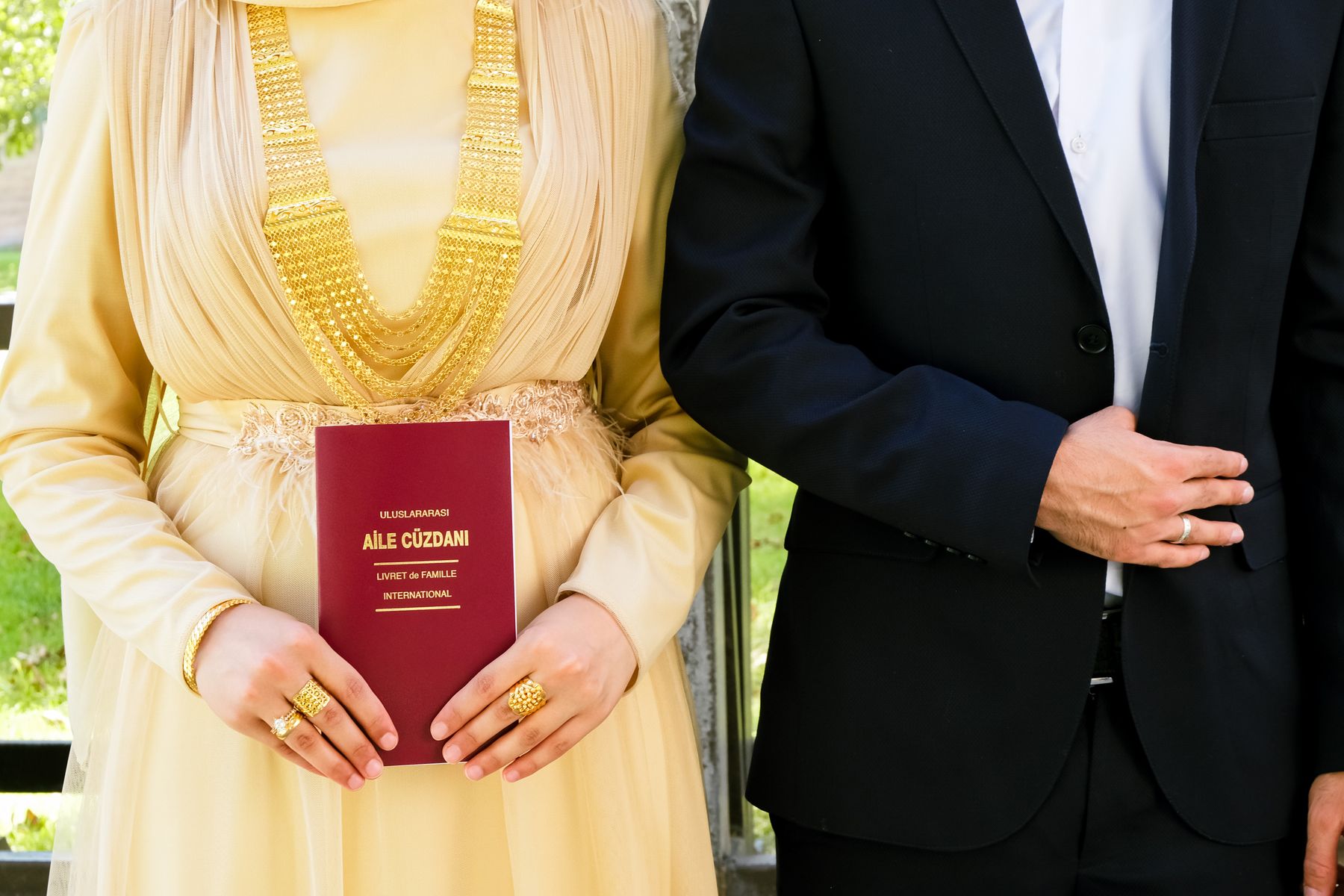
A legal marriage in Turkey is a civil ceremony performed by a municipal marriage officer. It takes place in a municipal wedding hall or, with permission, at the wedding venue, before two adult witnesses. The officer asks each of the couple whether they wish to marry the other of their own free will, each answers “Evet”, “Yes”, and the couple and witnesses sign the register. The officer then hands over the aile cüzdanı, the family booklet, and by a well-loved custom it goes to the bride.
Who Steps on Whose Foot
A much-watched moment of the nikah comes as the couple sign the register. Bride and groom race to tread on each other’s toes under the table, and whoever lands first is said to rule the home. Guests cheer for their side, brides practise their timing, and grooms who want peace at home sometimes let it happen.
Names on the Bride’s Shoes
Before the ceremony, the bride’s single friends write their names on the soles of her wedding shoes. By the end of the night some names have worn away, and the friends whose names have disappeared are said to be the next to marry. It is a small custom that makes a lovely photograph and needs nothing but a pen.
Nikah Şekeri
Guests leaving the civil ceremony receive nikah şekeri, small wedding sweets wrapped in tulle or packed in tiny boxes, such as sugared almonds or chocolates with the couple’s names and date. They are Turkey’s own version of the wedding favour, and our guide to wedding favours and gifts in Turkey has ideas for presenting them.
The Religious Nikah
Muslim couples may also hold a religious nikah with an imam. It has no legal effect on its own, and Turkish law requires the civil marriage to come first. For couples who want both, our guide to a Muslim wedding in Turkey explains how the two ceremonies fit together.
The Reception: Takı, Music, Dance and Food
Takı: Pinning the Gold
The takı töreni, the gold ceremony, is a highlight of the reception. After the first dance, or at a moment the families choose, the couple stand together, wearing a red ribbon or sash across them, and guests come forward one by one to pin on their gifts: gold coins such as the çeyrek, the quarter coin, the yarım, the half, or the full Cumhuriyet altını, gold bracelets for the bride, and banknotes. Close family give the heaviest gold, sometimes whole sets of jewellery, and in some weddings a host announces each family’s gift so the whole room can applaud.
The gold is far more than decoration. It is the couple’s start in life and the bride’s security, a custom that turns the reception into a moment when the whole community invests in the new family. Couples from outside Turkey who love the custom can keep the gesture and change the gift, for example inviting guests to pin small gold charms or envelopes on the ribbon.
Davul, Zurna and the Wedding Band
The davul and zurna that led the bride’s procession can return for the couple’s entrance and the first rounds of dancing. Indoors, a band or DJ can take over, switching between Turkish pop, folk tunes and international music. Our guide to wedding music in Antalya compares live bands, DJs and the right moment for traditional instruments.
The Halay and Regional Dances
Sooner or later the halay begins. Guests link little fingers or hold hands in a long line, follow a simple pattern of steps, and the halaybaşı, the leader at the front, sets the pace and twirls a handkerchief. The line grows as it moves, drawing more guests from their seats. It is an easy dance for foreign guests to join because you simply copy your neighbour.
Each region adds its own dance. The Black Sea coast has the fast, shivering horon, the Aegean has the slow and proud zeybek, and in the Teke region around Antalya, Burdur and Isparta, wedding guests dance the teke zortlatması, a lively 9/16 rhythm that imitates the leaps of a mountain goat. City dance floors also love the roman havası, an improvised, joyful style that anyone can try.
The Wedding Table
Traditional wedding meals traditionally open with düğün çorbası, wedding soup, a lemony meat broth thickened with egg yolk, followed by rice pilaf and slow-cooked meat. In rural Anatolia the centre of the feast can be keşkek, wheat and meat pounded and cooked for hours in huge cauldrons. UNESCO recognises the ceremonial keşkek tradition for the way whole communities prepare it together for weddings. Baklava, Turkish delight and a tiered wedding cake complete the table.
After the Wedding
When the groom first lifts the bride’s veil in their new home he gives her the yüz görümlüğü, a piece of jewellery “for seeing her face”. On reaching her new home, the bride may break a clay jug or throw a pomegranate at the threshold, wishes for abundance that differ from region to region. In the days that follow, relatives visit the newlyweds with gifts, and in some regions the bride’s family sends trays of food to the new home.
Guest Etiquette at a Turkish Wedding
If you have been invited to a Turkish wedding, a few simple points will help you feel at home:
- Dress smartly and colourfully. Evening wear suits a Turkish reception. Leave white to the bride, and if the family is conservative, choose covered shoulders.
- Bring gold or money. A gold coin or bracelet in a small red pouch, or banknotes in an envelope, is the classic gift. Gold coins for takı are sold with a red ribbon and pin attached; for banknotes, bring a safety pin.
- Learn one blessing. “Mutluluklar” wishes the couple happiness. “Allah bir yastıkta kocatsın”, may God let you grow old on one pillow, is the traditional wish to the newlyweds, or simply “Bir yastıkta kocayın”.
- Join the halay. Link fingers, watch the leader and copy the person next to you. Joining is a compliment to the family.
- Follow the family on drinks. Some Turkish families serve alcohol and some celebrate without it. Take your lead from the hosts.
Our full guide to destination wedding etiquette for guests travelling to Turkey covers travel, timings and gifts in more detail.
Regional Differences and Modern Turkish Weddings
The customs in this guide are shared across the country, but each region tells them in its own accent. Weddings in the east and south-east can still last several days with large village feasts, while on the Black Sea coast, around Trabzon and Ordu, the bride’s family may by custom politely turn down the first visits before saying yes. Along the Mediterranean coast, the Teke region’s folk tunes sit alongside the polished style of Antalya’s resort weddings.
In the big cities a wedding can look quite different. The civil ceremony and the reception may share one evening in a hotel, a garden or a seaside venue, and the henna night may become a separate party with friends. Couples pick their favourite customs from the long list: the coffee, the ribbon, the gold, the halay. Tradition and modern style sit side by side, and each couple chooses the customs that matter to them.
Bringing Turkish Wedding Traditions to Your Wedding in Antalya
Antalya is a natural place to bring these customs together. Couples with one Turkish partner may want the Turkish family to see their traditions honoured while guests from abroad experience them for the first time. Other couples have no Turkish family at all and are drawn to the coffee, the music and the warmth of a Turkish celebration. In both cases a few well-chosen customs give a destination wedding a sense of place that no décor can.
Some ideas for a wedding in Antalya:
- A Turkish coffee welcome. Coffee served on silver trays with Turkish delight when guests arrive, or a coffee station during the reception.
- A ribbon moment at the welcome dinner. Two rings tied with red ribbon and cut by a grandparent, a lovely way to honour the elders of both families.
- A henna night. A kına evening for the bride and the women of both families, or a mixed party with henna for everyone.
- Davul and zurna at the entrance. Traditional musicians leading the couple into the reception before the band takes over.
- A halay for all guests. The quickest way to bring two families onto one dance floor.
- A gold or ribbon moment. A traditional takı for Turkish relatives, or a gentler version where guests pin wishes or small charms.
- Turkish flavours on the menu. Wedding soup, meze, baklava and nikah şekeri as favours alongside your own family’s dishes.
Mixed couples can combine these customs with traditions from the other side of the family. A Turkish and Pakistani couple might pair a Turkish henna night with a Mehndi, and a Turkish and British couple might follow the ribbon-cutting with a speech and a toast. Our guide to an interfaith wedding in Antalya shows how two traditions can share one ceremony, and a multi-day wedding in Turkey gives each custom its own evening.
Setting matters too. A courtyard in Kaleiçi, the old town, gives Turkish customs a historic setting; read our guide to a wedding in Antalya Old Town. Each venue sets its own music times and sound limits, so check Antalya venue music curfews before you plan a late halay.
For the legal side, foreign couples can marry in a civil ceremony in Antalya; our guide to marriage in Turkey for foreigners lists the documents. Couples who marry at home first can enjoy every custom in this guide at a symbolic wedding in Turkey. Working with a wedding planner in Antalya who speaks Turkish and English makes it easy for both families to be heard.
Planning a wedding with Turkish traditions?
Tell us your date, your guest count and the customs that matter to your families, Turkish or from anywhere else, and we will help you bring them together in one beautiful celebration in Antalya.
Prefer another email service? Write to info@ramarossi.com using Turkish Traditions Wedding Enquiry as the subject.
Follow our celebrations
Discover beautiful weddings, private events, styling ideas and behind-the-scenes moments from Ramarossi in Turkey.
Frequently Asked Questions
What are the main Turkish wedding traditions?
The main Turkish wedding traditions are kız isteme, when the groom’s family asks for the bride’s hand over Turkish coffee; the söz and nişan, when an elder cuts the red ribbon that joins the couple’s rings; the kına gecesi, or henna night; gelin alma, when the bride is collected with drums and wears a red sash; the civil nikah; and the reception, with the gold pinning ceremony and the halay.
Why does the bride put salt in the groom’s coffee?
At the kız isteme visit the bride may serve the groom Turkish coffee with salt instead of sugar. He is expected to drink it without complaint. It is a playful test of his patience and good humour, and a small sign that the bride has her own say.
What is the difference between söz and nişan?
The söz is the promise: a small family gathering where two rings joined by a red ribbon are put on and an elder cuts the ribbon. The nişan is the engagement party: a larger celebration with relatives and friends, an engagement dress, gifts and the first gold for the bride.
What does the red sash on a Turkish bride mean?
Before the bride leaves her family home, her father or brother ties a red sash around the waist of her dress. Also called the bekaret kuşağı, a name that refers to her purity, it is seen today as a blessing for luck and a happy marriage, and as the father’s farewell to his daughter.
What is the takı ceremony at a Turkish wedding?
Takı is the gold ceremony at the reception. Guests come forward one by one and pin gifts on the couple, such as gold coins, gold bracelets or banknotes, pinned to a red ribbon or sash. The gold helps the newlyweds start their life together.
What do you give as a gift at a Turkish wedding?
Gold is the classic gift: a gold coin such as a çeyrek, or a gold bracelet for the bride. Money in an envelope is also welcome. If the family holds a takı ceremony, guests pin the gift on the couple at the reception.
What do you say to the couple at a Turkish wedding?
Mutluluklar, which wishes the couple happiness, is the simplest blessing. The traditional wish is Allah bir yastıkta kocatsın, which means may God let you grow old on one pillow.
What is the halay?
The halay is a Turkish line dance. Guests link little fingers or hold hands, follow a simple step pattern and the leader at the front sets the pace, waving a handkerchief. It is easy for foreign guests to join by copying the person next to them.
Is a religious ceremony required for a wedding in Turkey?
No. A legal marriage in Turkey is a civil ceremony performed by a municipal marriage officer before two witnesses. A religious nikah with an imam is optional, has no legal effect on its own and is held after the civil marriage.
Can we include Turkish wedding traditions in a destination wedding in Antalya?
Yes. Couples with a Turkish partner and couples who simply love the culture can include a Turkish coffee welcome, a ribbon-cutting moment, a henna night, davul and zurna musicians at the entrance, a halay for all guests, a gold or ribbon moment and Turkish dishes on the menu, alongside traditions from their own families.