
Wedding Favours and Gifts: Ideas for Guests at a Destination Wedding in Turkey
What a favour is, where the sugared almond came from, Turkish and cultural ideas, and how to choose thank-you gifts that survive the summer sun and the flight home.
Wedding favours are the small presents a couple gives each guest as thanks for coming, and at a destination wedding they carry extra weight: your guests have crossed borders, booked flights and given up days of holiday to be with you.
This Ramarossi Journal guide covers the meaning and origins of the custom, how favours differ from wedding gifts, ideas with a Turkish character, cultural traditions from Persian to Pakistani, and the practical side of planning a wedding in Antalya: heat, packing, customs and timing.
What Are Wedding Favours? Meaning and Origins
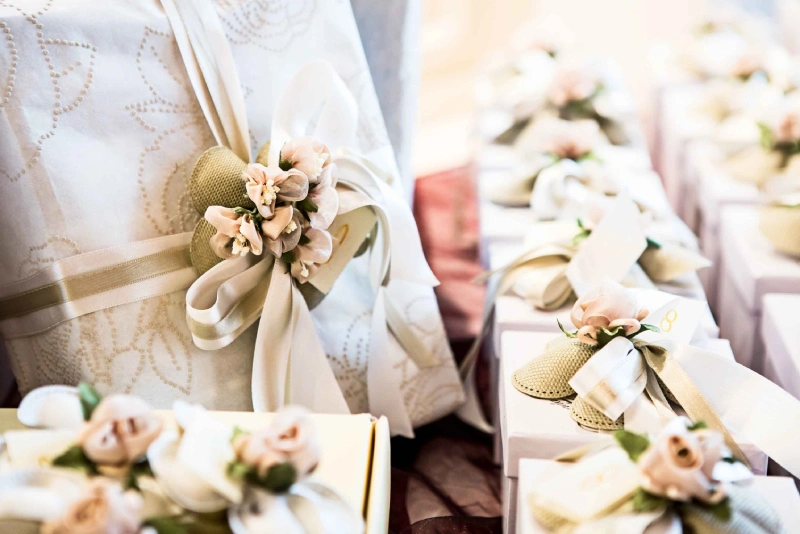
A favour is a keepsake or treat handed to each guest, set at their place or collected from a table on the way out. It says thank you without words, and a well-chosen one brings the day back to mind each time it is opened, eaten or used.
The custom is old. The French word bonbonnière means a container for sweets, and its forerunner, the drageoir, was used in the Middle Ages and the Renaissance to hold dragées, almonds coated in hard sugar. The first wedding favours are thought to have been small boxes of crystal or porcelain that European aristocrats filled with sugar confections, and as sugar became more affordable, almonds took their place.
In Italy the sugared almond, confetto, remains the heart of the bomboniera. Italian tradition reads meaning into the count: a single almond for the uniqueness of the marriage bond, three for a future child, and five for happiness, fertility, longevity, health and wealth. The five-almond bag tied in tulle is now a familiar favour far beyond Italy.
Favours and Wedding Gifts: The Difference
The two are easy to confuse, but the gifts move in opposite directions.
- Wedding gifts. What guests give the couple: a present from a list, money, or something personal.
- Wedding favours. What the couple gives every guest: small, matching and identical or close to it.
- Thank-you gifts. Separate, more personal presents from the couple to parents, the wedding party, an officiant or anyone who helped.
If you are a guest choosing a present, a few principles help. Think about the couple’s tastes and the home they are building, let your closeness to them shape how personal you go, and stay within your own means. For a destination wedding, remember they must carry everything home: money, a voucher or a gift sent to their address afterwards spares them excess baggage. Something connected to where they live, or to a shared interest such as travel, can feel more thoughtful than an item chosen in a hurry.
Favours With a Turkish Flavour
Guests flying in from London, Toronto, Beirut or Dubai can enjoy a favour that tastes or smells of the place where they watched you marry. Turkey offers plenty of choice, and several items are light enough to fit in a jacket pocket.
Lokum, known in English as Turkish delight, is a soft sugar-dusted jelly flavoured with rosewater, lemon, mint or nuts. UNESCO recognises Turkish coffee culture on its intangible heritage list, calling the tradition a sign of hospitality and friendship that also plays a part at engagement ceremonies. Small bottles of olive oil, bars of olive oil soap, tins of spices such as sumac or pul biber, and the blue nazar bead, a traditional Anatolian charm believed to ward off the evil eye, complete the list.
A sweet taste of Turkey in rosewater, lemon or pistachio
Keep boxes closed until the table is set so the sugar coating stays dry
Linked with hospitality, and a ritual guests can repeat at home
Choose sealed packs so the aroma lasts until it is brewed
Useful in the kitchen and tied to the Mediterranean table
It counts as a liquid at airport security, so suggest guests pack it in checked bags
Practical, lightly scented and pleasant to unwrap
A solid bar avoids liquid limits in hand luggage
A lucky keepsake with a story behind it
Glass can chip, so wrap it in tissue or pick a ceramic version
Turkish flavours to cook with long after the trip
Sealed tins travel well; guests should check food rules for their own country
Familiar and loved by children and adults alike
Melts in summer; store it in a cool room and hand it out at the end of the night
| Favour | Why guests like it | Tip for Antalya heat or travel |
|---|---|---|
| Lokum (Turkish delight) | A sweet taste of Turkey in rosewater, lemon or pistachio | Keep boxes closed until the table is set so the sugar coating stays dry |
| Turkish coffee | Linked with hospitality, and a ritual guests can repeat at home | Choose sealed packs so the aroma lasts until it is brewed |
| Olive oil | Useful in the kitchen and tied to the Mediterranean table | It counts as a liquid at airport security, so suggest guests pack it in checked bags |
| Olive oil soap | Practical, lightly scented and pleasant to unwrap | A solid bar avoids liquid limits in hand luggage |
| Nazar charm | A lucky keepsake with a story behind it | Glass can chip, so wrap it in tissue or pick a ceramic version |
| Spice tins | Turkish flavours to cook with long after the trip | Sealed tins travel well; guests should check food rules for their own country |
| Chocolate | Familiar and loved by children and adults alike | Melts in summer; store it in a cool room and hand it out at the end of the night |
Pairing two items works nicely: a little coffee with a piece of lokum, or a soap tied to a nazar charm. A short card explaining what each one is turns a sweet into a small story about Turkey.
Welcome Bags for Destination Guests
A welcome bag waiting in the room is a favour given at the start of the weekend instead of the end, and it can be the more useful of the two. Think about what a guest needs after a flight and a transfer on a warm afternoon.
- Something cold to drink. Water and a soft drink or juice for the first evening.
- A weekend card. Times, dress codes and the meeting points for transfers, with a contact number.
- Sun and heat helpers. A paper fan, a sun hat or a travel-size sun cream bought locally.
- A local treat. A box of lokum or a bag of dried apricots or figs.
- A personal note. A few lines in your own handwriting, which guests may keep longer than anything else in the bag.
If guests are staying in more than one place, ask each property how bags can reach rooms at check-in, and keep a list of names with arrival dates. Our guide to Antalya wedding guest accommodation explains room blocks and where guests can stay.
Cultural Favours: Persian, Arab, Pakistani and Turkish Civil Weddings
Couples marrying in Antalya, Turkey, bring their own family customs with them, and favours are a simple place to honour those traditions.
Persian weddings
At Persian weddings, noghl, almonds coated in rosewater sugar, can be showered over the couple, and sugar cones have their own place in the ceremony. The meaning of each item is explained in our article on Persian wedding ceremony gifts.
Lebanese and Arab weddings
Lebanese couples may choose decorated chocolates, dragées or traditional sweets presented on trays or in favour boxes, with presentation treated as part of the décor. At Gulf celebrations, personalised chocolates, candles or small keepsakes in elegant boxes are lovely choices. Planning a Lebanese celebration here is covered in our guide to a Lebanese wedding in Antalya.
Pakistani weddings
Sharing mithai, traditional sweetmeats, is closely tied to celebration in Pakistan. Families may serve it straight after the nikah, and guests can receive a wrapped box to take home, sometimes with chocolates or cakes alongside. Our guide to a Pakistani wedding in Turkey covers the wider celebration.
Civil wedding favours in Turkey
In Turkey, guests at a civil ceremony can receive nikah şekeri, sweets made specially to be handed out at the nikah. They might be chocolates or sugared almonds wrapped in tulle or placed in tiny boxes, sometimes finished with a ribbon and the date. A legal marriage in Turkey is a civil ceremony performed by a municipal marriage officer, as our guide to marriage in Turkey for foreigners explains, so nikah şekeri fits naturally if you also marry legally here.
Edible Favours in the Antalya Heat
Summer on the Turkish Riviera is warm well into the evening, so test edible favours against the conditions of your date. Hard sweets, sugared almonds, lokum in sealed boxes, dried fruit, nuts and biscuits cope well. Chocolate, fresh pastries and anything with cream need a cool room and a late hand-out, or suit a spring or autumn wedding better. Our guide to the time of year to marry in Antalya helps you match ideas to the season.
Allergies deserve a line on the tag. Nuts, sesame and dairy can appear in Turkish sweets, so list the main ingredients, or offer a nut-free alternative and tell guests where to find it.
Packaging, Labels and Presentation
The wrapping is what guests see first, and it should belong to the rest of your styling. Choose colours and textures from your flowers and table linen, and our article on wedding decoration ideas in Antalya can help you build that palette.

Decide early where favours will sit. On each place setting they double as table décor and guarantee one per guest. On a table near the exit, they become a final moment of the night, with a sign inviting guests to take one. Order the same number as your confirmed guest list, plus a few spares for breakages.
For labels, a short line of thanks and the date are enough. Tags in two languages are a kind touch when families speak Turkish, Persian, Arabic or Urdu as well as English.
Taking Favours Home: Hand Luggage and Customs
Every favour you give will be carried through an airport, so choose with security and customs in mind. Liquids are the common snag. UK government guidance on liquids counts oils, perfumes, honey and jam as liquids, explains the 100ml container limit, and notes that some airports now accept larger containers, so guests should check their own departure airport. Solid gifts such as soap, coffee, sweets and charms avoid the question altogether.
Food rules differ by country. Guidance on bringing food into Great Britain allows chocolate and confectionery from any country, apart from items made with a lot of unprocessed dairy, while meat, dairy, fruit, nuts and seeds carry restrictions. Guests travelling to the United States, Canada, the Gulf, Lebanon or the European Union should look at their own country’s customs advice. A line in your wedding website or welcome card saves them the guesswork.
Eco-Friendly Favour Ideas
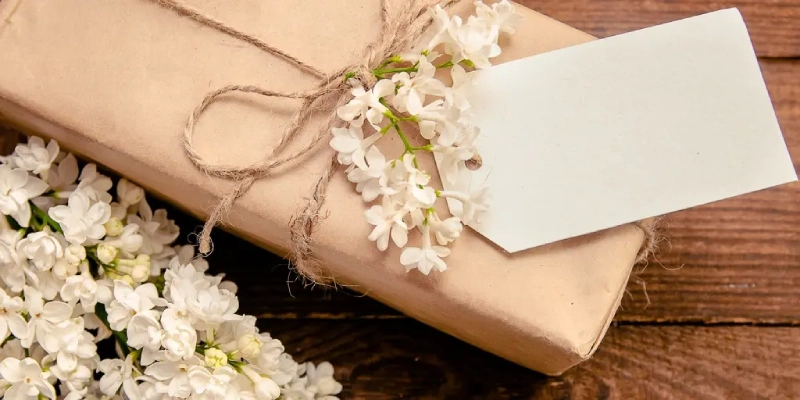
A favour that is eaten, used or passed on leaves no waste behind. Edible treats, soap, coffee and spices all disappear naturally. For wrapping, kraft paper, cotton bags and twine look lovely and can be reused, and they suit a garden or rustic style.
Some couples skip individual items and make a donation to a cause close to their hearts instead, with a card at each place explaining it. Seed packets and small plants are pretty, but seeds and plants face border controls in Great Britain and elsewhere, so check before you choose them for guests travelling abroad.
What Shapes the Favour Budget
The cost of favours depends less on the idea than on the details around it. These are the points to weigh:
- Quantity. One per guest, one per couple or household, and how many spares.
- Contents. Local sweets and soaps compared with imported or handmade items.
- Personalisation. Printed tags, ribbons, custom boxes or engraving.
- Sourcing. Buying in Antalya compared with shipping or carrying favours from home.
- Assembly and delivery. Time to fill and tie each one, and getting welcome bags to rooms.
Favours are one line in a wider plan, and our guide to the cost of a wedding in Turkey shows how the rest fits together. When you brief Ramarossi, mention favour ideas alongside décor and guest arrivals, so all three can be shaped together.
When to Order Wedding Favours
Favours are easy to leave late, yet personalised items need time. A simple order of steps keeps them on track:
- Once the guest count is clear. Settle on the idea and ask for samples.
- A few months before. Confirm quantities with spares and place the order, allowing extra time for printing or engraving.
- When names and dates are final. Approve tags, labels and any translations.
- Before you travel. Decide whether favours are sourced in Antalya or come with you, and how they reach the venue.
- The week of the wedding. Count, assemble and store them somewhere cool and dry.
- On the day. Agree who sets them out and at what point in the evening.
Thank your guests with a touch of Turkey
Share your dates, guest count and where your guests are flying from, and Ramarossi can suggest favour and welcome bag ideas that suit your season and style.
Prefer another email service? Write to info@ramarossi.com using Antalya Wedding Enquiry as the subject.
Follow our celebrations
Discover beautiful weddings, private events, styling ideas and behind-the-scenes moments from Ramarossi in Turkey.
Frequently Asked Questions
What is a wedding favour?
A small gift the couple gives each guest to say thank you for attending, such as sweets, a keepsake or something useful. In American English it is spelled “favor”.
Do you need wedding favours?
No, they are optional. Some couples prefer a welcome bag, a donation to charity or a special treat at dinner instead, and each of these says thank you just as well.
What are traditional Turkish wedding favours?
At civil ceremonies guests can receive nikah şekeri, sweets wrapped in tulle or small boxes. Lokum, Turkish coffee, olive oil soap and nazar charms also make favours with a Turkish character.
Why are sugared almonds given at weddings?
They date back to the dragées served in Europe when sugar was a luxury. In Italian tradition, five sugared almonds stand for happiness, fertility, longevity, health and wealth.
What favours suit Persian, Arab or Pakistani weddings?
Persian weddings feature sweets such as noghl, Lebanese couples may choose decorated chocolates or dragées, and Pakistani families can give boxes of mithai. The Persian items are covered in our article on ceremony gifts.
What are good favours for a civil wedding?
Nikah şekeri suits a civil ceremony in Turkey: chocolates or sugared almonds in tulle or tiny boxes, handed to guests at the ceremony, sometimes with the date on a ribbon or tag.
Can guests take wedding favours home on the plane?
Solid items such as soap, coffee, sweets and charms are simple to carry. Oils, perfumes and honey count as liquids at airport security, and food rules differ by country, so guests should check their own.
When should we order wedding favours?
Choose the idea once the guest count is clear and place the order a few months ahead, allowing extra time for printing, engraving and delivery to Antalya.