

Henna Night: Turkish Kına Gecesi Traditions and Planning One in Antalya
What happens at a henna night, why the Turkish bride keeps her hand closed until a gold coin is placed in it, how other cultures celebrate and how to host a kına gecesi of your own on the Turkish coast.
A henna night is the evening before a wedding when the bride’s hands are coloured with henna, surrounded by the women of her family and her closest friends, with music, food, candles and more than a few tears.
The custom belongs to many cultures. In Turkey it is called kına gecesi, and it has rituals all of its own: a red veil, a tray lit with candles, slow songs that make the bride cry and a gold coin pressed into her palm. This guide explains each of those traditions, how the night differs in Persian, Pakistani and Arab families, and how to host a henna night in Antalya, Turkey, with Ramarossi, whether your family is Turkish or you simply love the idea.
What Is a Henna Night?
A henna night is a celebration held shortly before a wedding, traditionally on the very last night, at which a paste of henna is applied to the bride’s hands and sometimes her feet. Henna is a reddish-brown dye made from the dried leaves of a shrub called Lawsonia inermis. Its stain is temporary, so the colour on the bride’s hands fades gradually after the wedding.
Henna appears in the marriage customs of Muslim, Jewish and other communities across a wide region, from Turkey and Iran to the Arab world, North Africa and Pakistan. Each culture has its own name, music and order of events, but the heart is shared: the people closest to the bride gather to bless her and celebrate before the bigger, more formal wedding day.
The Turkish Henna Night: What Happens at a Kına Gecesi
The kına gecesi is a deep-rooted Turkish wedding ritual and the evening of the wedding week when laughter and tears sit closest together. Customs change between regions and families, so read what follows as the traditional shape of the night. Turkey’s official tourism portal gives a short summary of Turkish wedding customs, including the henna night.
Who Hosts and Who Comes
Traditionally the henna night takes place at the bride’s family home, on the night before the wedding, and it began as a gathering of women only: mothers and grandmothers, aunts, sisters, cousins, neighbours and friends. The groom’s mother and his female relatives come as well, because his mother has a part to play at the key moment. Men were welcomed over time, and a modern henna night can be mixed, with the groom and his friends joining once the henna ritual is over.
In some regions, such as around Ödemiş in İzmir province, the groom’s family buys the dry henna and sends it to the bride’s house with female relatives ahead of the night. In some Anatolian customs the bride also has a bath ceremony with her friends before the henna night; our guide to the bride’s Turkish bath ceremony describes it.
The Red Dress and the Red Veil
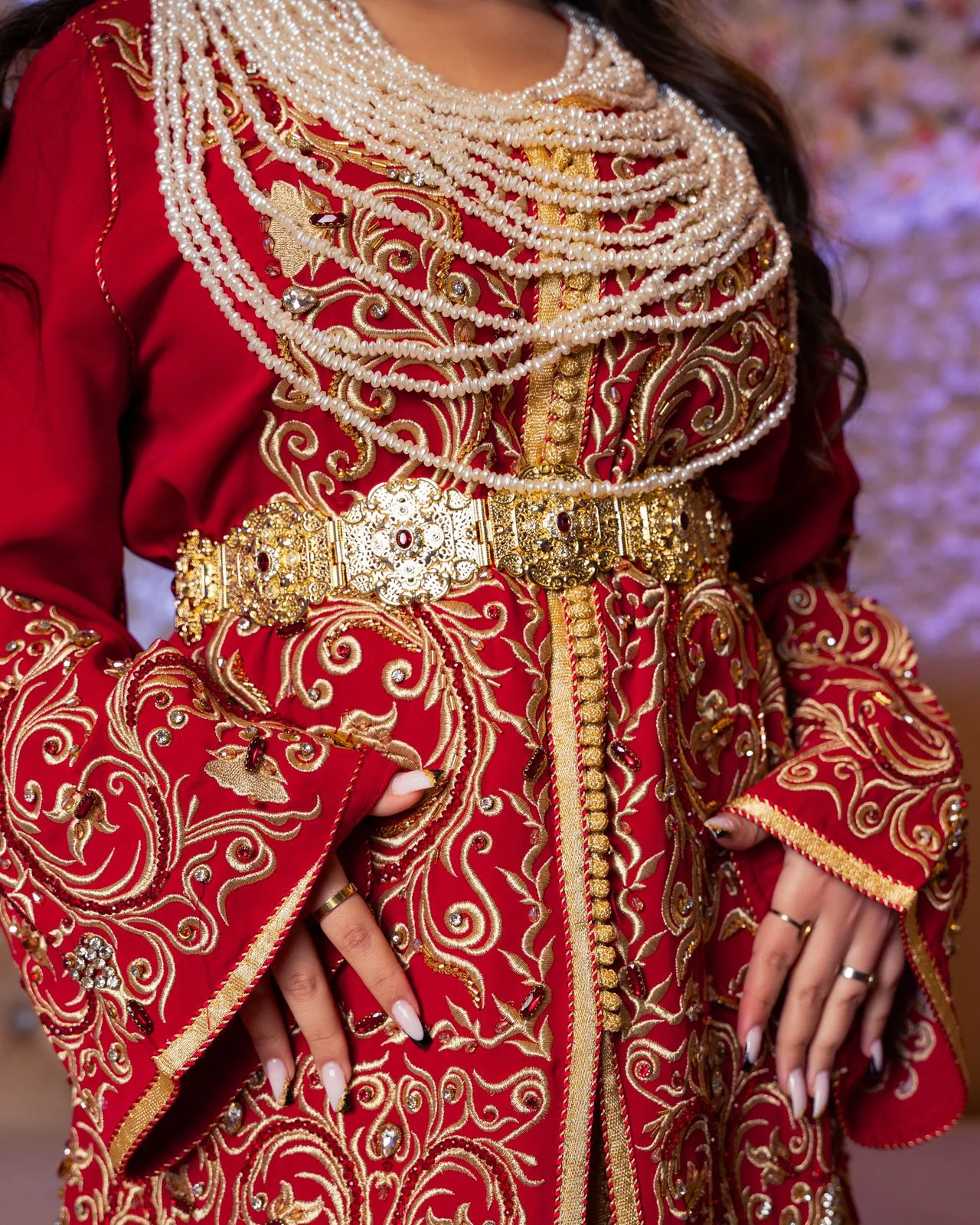
The bride traditionally wears a red henna dress, and the classic version is the bindallı: a velvet gown or kaftan embroidered with branch and leaf motifs in gold thread. Deep red velvet is the colour that comes to mind first, although green versions exist too. Over her head she wears a red veil, traditionally of tulle with beads or sequins, which covers her hair and in some versions her face as well. Red is said to stand for love and belonging, and it runs through the whole evening.
The Henna Tray, the Candles and the Circle
The henna is traditionally mixed in a copper bowl and set on a tray decorated with candles. The honour of preparing and applying it can go to a woman whose own marriage is happy and settled.
When the moment comes, the lights go down. The tray is carried in by a family elder or, in some families, by the bride’s sister or closest friend, and the young unmarried women walk slowly in a circle around the seated bride, each holding a candle, while the songs begin. Some families now use battery candles, which are safer around veils and long sleeves.
The Songs That Make the Bride Cry
As the candles circle, slow folk songs about leaving the family home are sung or played. “Yüksek Yüksek Tepelere” is widely sung at henna nights: a lament of a bride married off to a faraway place, longing for her mother and her village. “Kınayı Getir Aney” is another traditional henna song.
An old part of the tradition is to make the bride cry, her tears showing her sorrow at leaving her parents, and the room waits for them. Some of the guests may cry with her, and then the music lifts and the dancing starts.
The Gold Coin and the Closed Hand
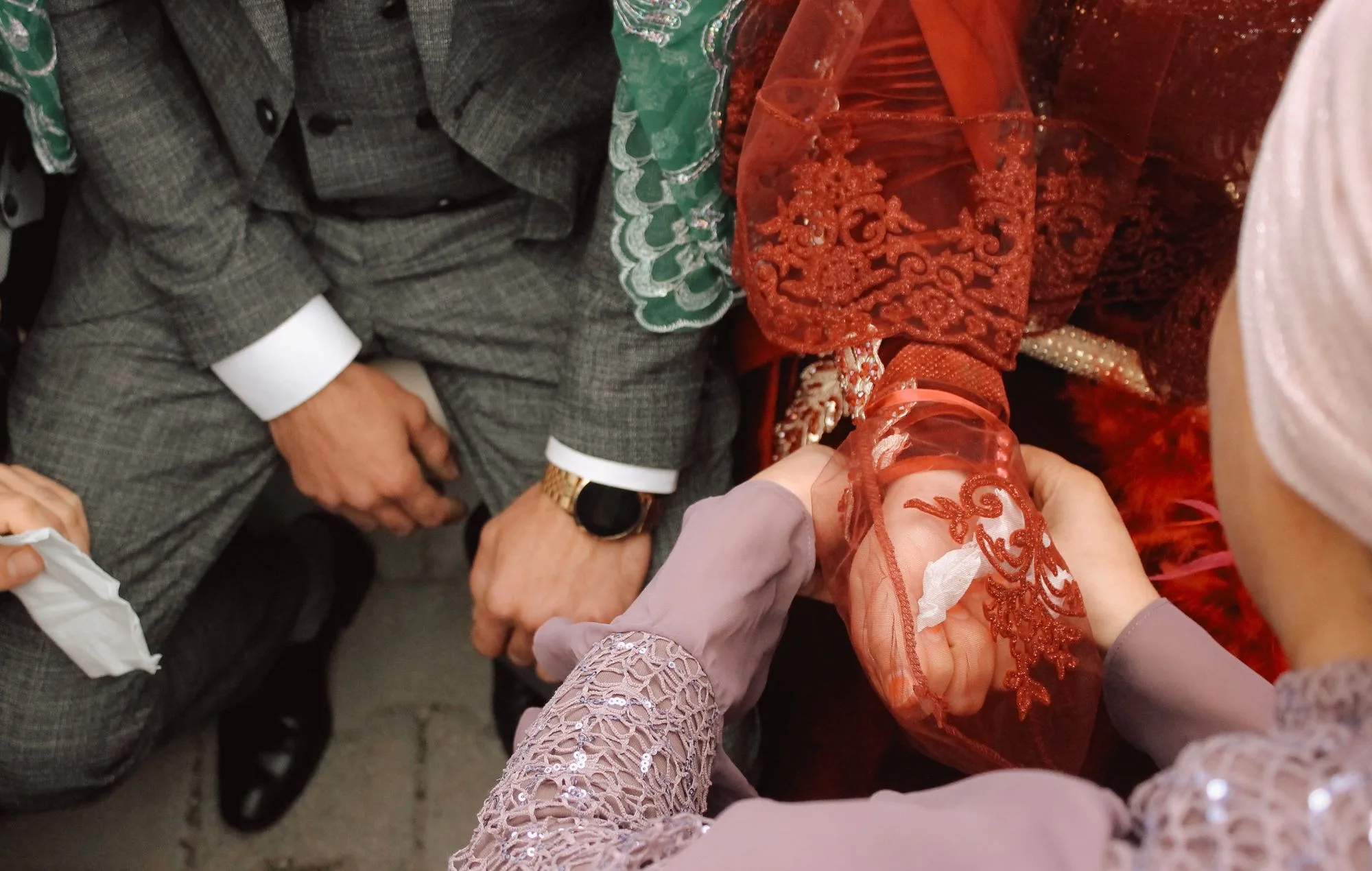
This is the moment guests remember. The bride keeps her right hand closed in a fist. The woman applying the henna announces to the room, “Gelin elini açmıyor”: the bride will not open her hand. The groom’s mother then steps forward and places a gold coin in her palm as a henna gift. Only then does the bride open her hand, and the henna is laid in her palm together with the coin.
The coin is read in two ways: as a wish for the couple’s prosperity, and as a pledge that the groom’s family now takes the bride under its care. Once the henna is on, her hand is wrapped in a handkerchief or a fine muslin cloth, and a glove goes over it while the colour sets.
Henna for the Guests and the Groom
After the bride, the guests take their turn. A little henna is offered to everyone, on a fingertip or in the palm, and in some regions it is thought impolite to say no. The groom traditionally receives a small touch on his little finger before leaving the women to their evening; in some families today it goes on his index finger and thumb instead.
In some parts of Turkey the evening also includes testi kırma, a playful moment for the couple: the groom sits on a chair while the bride dances around him holding a clay pot wrapped in red fabric and filled with money, sweets and chocolate, then throws it down so it breaks, which is believed to bring the new family lifelong happiness.
What the Henna Means
Families explain the henna in different ways, and these are the meanings Turkish tradition gives it. Some couples today keep the ritual mainly for its beauty and warmth.
- Devotion. Henna on the bride’s hand is believed to stand for her devotion to her husband and her new home. Some folklore writers link it with the old custom of colouring a sacrificial animal red, and describe the bride as giving herself to her future household.
- Protection. Henna is believed to guard against the evil eye and envy, and to keep harm away from the couple.
- Honour. In Turkish custom henna marks honour: it has been applied on religious holidays and to young men leaving for military service, and the bride is honoured in the same way.
- Prosperity. The gold coin laid with the henna carries the wish that the couple will never be short of what they need.
- Farewell. The candles, the songs and the tears say goodbye to girlhood and to the bride’s childhood home before she starts a household of her own.
Henna Traditions in Other Cultures
When two families meet at one wedding, it helps to know how each runs its henna evening. Three traditions sit close to the Turkish one.
Persian Hana Bandan
In Iranian families the pre-wedding henna gathering is called hana bandan, also written hanabandan. Its customs vary by region: some families present the henna on a decorated tray, carry gifts between the two households or give the groom a henna moment of his own in a separate gathering. Our guide to hana bandan, the Persian henna night explains those regional differences in detail.
Pakistani Mehndi
A Pakistani mehndi can be a larger, louder evening built around a stage for the bride. The groom’s side makes its entrance to the beat of a dhol drum, carrying trays laden with henna, sweets and candles. In many families, elders step up one at a time to dab henna onto the palms of bride and groom, offer each a sweet and give a blessing, and the two families compete with rehearsed dances. Yellow, green and orange lead the colours. Our Pakistani mehndi night guide covers the traditions and the décor.
Arab and Lebanese Henna Nights
In Arab families, Lebanese ones among them, a henna night can be held during the week before the wedding, filled with music, sweets, dancing and henna for the bride and the women nearest to her. Customs vary, so ask the elders on each side which ones they want to see. Planning one by the sea? Start with our Lebanese wedding in Antalya page.
Kına gecesi
The gold coin in the closed hand, the candle circle and the slow songs
Red velvet bindallı and a red veil
Hana bandan
Henna presented on a decorated tray, with local variations
No single dress code; each family chooses
Mehndi
The groom’s side arrives with trays of henna, sweets and candles
Yellow, green and orange
Henna night
Music, sweets and dancing as the bride receives her henna
Changes with the family and the country
| Tradition | What it is called | A signature moment | Colours and dress |
|---|---|---|---|
| Turkish | Kına gecesi | The gold coin in the closed hand, the candle circle and the slow songs | Red velvet bindallı and a red veil |
| Persian | Hana bandan | Henna presented on a decorated tray, with local variations | No single dress code; each family chooses |
| Pakistani | Mehndi | The groom’s side arrives with trays of henna, sweets and candles | Yellow, green and orange |
| Arab and Lebanese | Henna night | Music, sweets and dancing as the bride receives her henna | Changes with the family and the country |
Bringing your family’s henna traditions to the coast?
Tell us which customs matter to your family, Turkish, Persian, Pakistani, Arab or a blend of several, and we can suggest a setting and a running order that gives each one its moment.
Modern Henna Night Ideas
Henna nights moved from homes and gardens to halls, then hotels and clubs, and themes now run from classic Ottoman red to retro, colour-themed and costume parties. These ideas keep the ritual at the centre.
- A colour story. Red and gold is the classic pairing. Deep red with blush and gold softens it, and ivory with gold and a single red accent gives a lighter look.
- The bride’s chair. A decorated chair or low sofa in the centre of the room, framed with flowers, cushions and lanterns, gives the ritual a stage and the photographer a clear view.
- A guest dress code. “A touch of red” or “Ottoman glamour” helps travelling guests pack; put it on the invitation so they know before they fly.
- A playlist in three acts. Lively music as guests arrive, the slow kına songs for the candle circle, then dance music. A drum and zurna entrance, a live band or a DJ can each lead the dancing.
- Henna for everyone. Traditional henna in the bride’s palm, plus a henna artist at a side table drawing small designs for guests who would like one.
- Favours. Small pouches of henna, Turkish delight, nuts, a handkerchief, a candle or a hair accessory, tied with red ribbon.
- A second outfit. The bindallı for the ritual and a lighter dress for the dancing. Henna can stain fabric, so keep sleeves and veils clear of the wet paste.

Henna Safety: Natural Henna Only
Natural henna leaves a brown to reddish-brown stain. Avoid anything sold as “black henna”: the NHS notes that black henna tattoo paste contains high levels of PPD, a chemical that can cause allergic reactions, and the US Food and Drug Administration’s henna fact sheet says PPD is not permitted in cosmetics for the skin. Ask your henna artist what is in the paste.
Planning a Henna Night in Antalya
A henna night fits naturally into a destination wedding on the Turkish coast: guests arrive a day or two early, summer evenings are warm enough to sit outside, and the settings range from ballrooms to the sand.
Choosing the Setting
Formal, weather-proof and roomy for a large family
Whether the lights can be fully dimmed for the candle circle, and room for the bride’s chair and a dance floor
Lanterns, lawn and an open sky
An indoor space in case of rain, power for lighting and sound, and a level spot for the bride’s chair
Private and close-knit
The owner’s rules on guests, music and parking, and how near the neighbours are
Relaxed, with the sea behind the bride
Wind for candles and veils, a firm base for the chair, and a lit path across the sand
Intimate, with the kitchen close by
Space for the tray procession and a dance floor, and the room’s own finishing time
| Setting | Atmosphere | What to ask |
|---|---|---|
| Hotel ballroom | Formal, weather-proof and roomy for a large family | Whether the lights can be fully dimmed for the candle circle, and room for the bride’s chair and a dance floor |
| Garden | Lanterns, lawn and an open sky | An indoor space in case of rain, power for lighting and sound, and a level spot for the bride’s chair |
| Villa terrace | Private and close-knit | The owner’s rules on guests, music and parking, and how near the neighbours are |
| Beach | Relaxed, with the sea behind the bride | Wind for candles and veils, a firm base for the chair, and a lit path across the sand |
| Restaurant private room | Intimate, with the kitchen close by | Space for the tray procession and a dance floor, and the room’s own finishing time |
Each setting has its own finishing time for music, so check it before you plan the running order; our guide to wedding venue curfews in Antalya explains what to ask. For a private setting, our checklist for a villa wedding in Antalya covers access, neighbours and set-up.
Music and Dancing
Plan who leads each part: musicians or a recording for the slow kına songs, then a live band or a DJ for the dancing, with room for the halay, the Turkish line dance that pulls every generation onto the floor. Our guide to wedding music in Antalya explains the choice between live musicians and a DJ.

Food and Drink
A henna night menu can be lighter than the wedding dinner: meze, börek, grilled dishes and plenty of sweets, served so guests can eat between the ritual and the dancing. Traditional touches include şerbet and kına helvası, a halva served at henna nights. For Muslim families, ask for a fully halal menu and an alcohol-free bar with fresh juices, şerbet and mocktails; our guide to halal weddings without alcohol in Antalya has ideas that feel generous rather than restricted.
A Sample Henna Night Evening
One way a Turkish henna night can run; move or drop any part to suit your family.
- Arrival. Guests are welcomed with şerbet and Turkish delight while music plays.
- The bride’s entrance. She arrives in her red dress and veil and is led to her decorated chair.
- Dinner. Food is served, with the first lively dances between courses.
- The candle circle. The lights dim, the henna tray is carried in and the young women circle the bride with candles as the kına songs play.
- The henna. The closed hand, the gold coin from the groom’s mother, the henna in her palm, then the wrapping and the glove.
- Henna for all. The tray goes round the guests, and the groom receives his touch of henna.
- The party. The bride changes outfit and the dancing begins in earnest.
- Goodnight. Favours are handed out as guests leave.
Pairing It With a Welcome Dinner
When guests fly in from the UK, Europe, North America or the Gulf, arrivals can spread over several days. Holding the henna night on the second evening gives everyone time to settle in. Another option is to fold the welcome dinner and the henna night into one evening: dinner first for every guest, then the ritual once the plates are cleared. The multi-day weddings in Turkey guide explains where a henna night can sit among two, three or four days of events.
For Mixed Couples and Guests New to the Tradition
You do not need to be Turkish to hold a henna night. A short card on each table explaining the veil, the candles and the gold coin helps newcomers follow the ritual. Agree who takes each role, such as who places the coin, and mix songs from both families into the playlist. Our guide to interfaith weddings in Antalya has more ideas for honouring two backgrounds in one celebration.
Picture the candles, the songs and your family around you
Send us your date, your guest count and the setting you have in mind, and we will share ideas for how your henna night could flow in Antalya.
Your Celebration With Ramarossi
Ramarossi has organised celebrations from its Antalya base since 2011, and the team works in English, Turkish and Persian. That matters at a henna night, when families from different countries gather and each wants its own customs understood.
A henna night can be planned on its own or as one evening of a wider wedding in Antalya, shaped around the customs your family holds dear and the way you want the evening to feel. If you would also like a lighter gathering with friends, our guide to bridal showers in Antalya explains how that occasion differs.
Follow our celebrations
Discover beautiful weddings, private events, styling ideas and behind-the-scenes moments from Ramarossi in Turkey.
Frequently Asked Questions
What is a henna night?
A henna night is a celebration held shortly before a wedding at which henna is applied to the bride’s hands, with music, food and the women closest to her gathered round. In Turkey it is called kına gecesi.
When is a henna night held?
Traditionally on the last night before the wedding. For a destination wedding it can move to any evening of the wedding week, for example the second night, once guests have arrived.
Who attends a Turkish henna night?
The women of both families and the bride’s friends: her mother, sisters, aunts, cousins and neighbours, and the groom’s mother and female relatives, who have their own part in the ritual.
Do men attend a henna night?
The traditional kına gecesi was a gathering of women. Men joined over time, and a modern henna night can be mixed, with the groom and his friends arriving after the henna ritual. The groom may also receive a small touch of henna on his little finger.
What does the bride wear to a henna night?
In Turkey the bride traditionally wears a red henna dress such as the bindallı, a velvet gown embroidered in gold thread, with a red veil over her head. A bride can change into a second outfit for dancing. Guests wear dressy evening clothes and follow any dress code the hosts give.
What is the gold coin for at a Turkish henna night?
The bride keeps her hand closed until the groom’s mother places a gold coin in her palm as a henna gift. The coin is read as a wish for prosperity and as a sign that the groom’s family will look after the bride.
What songs are played at a kına gecesi?
Slow folk songs about leaving the family home are sung as the candles circle the bride. Yüksek Yüksek Tepelere is widely sung, and Kınayı Getir Aney is another traditional choice. Dance music follows once the henna is done.
Is a henna night the same as a hen party?
No. A hen party is a night out with friends, while a henna night is a family ritual with henna, candles, songs and blessings for the bride. Some brides hold both.
How long does henna last?
Henna leaves a temporary stain that fades as the skin renews. How long it shows depends on the paste, the skin and how long it stays on, so ask your henna artist what to expect. Use natural henna only and avoid black henna.
Can we have a henna night in Antalya if we are not Turkish?
Yes. A henna night can be held for any couple who loves the tradition, at a hotel, in a garden, on a villa terrace or by the sea, as its own evening or as part of a wedding week.
Tell us about your henna night
Share your date, the number of guests, the setting you like and the traditions you want to keep, and we will reply with ideas for your evening in Antalya.
Prefer another email service? Write to info@ramarossi.com using Henna Night Enquiry as the subject, or open it in Gmail or Outlook.