


For Christian couples, weddings represent more than legal contracts or social celebrations – they’re sacred covenants before God requiring proper spiritual recognition and blessing. Planning destination weddings raises legitimate questions about maintaining religious authenticity, finding appropriate ceremony settings, and ensuring your marriage receives the spiritual foundation you believe marriage requires.
At Ramarossi, we coordinate Christian destination weddings in Antalya, Turkey that honor every spiritual requirement while taking advantage of Mediterranean beauty and exceptional value. Whether you want historic church ceremonies, outdoor Christian services led by your home pastor, or hotel chapel celebrations, Turkey accommodates Christian weddings across denominations. This guide explains your options and how to create authentically Christian celebrations in Turkey.
Can We Have Christian Religious Ceremonies in Turkey?
Yes, absolutely. Turkey hosts vibrant Christian communities with functioning churches across denominations, and Christian religious ceremonies happen regularly for both local congregations and destination wedding couples.
Turkey’s Christian heritage spans two millennia. The country contains some of Christianity’s most significant historic sites – the seven churches of Revelation, locations where Saint Paul traveled, places where early church councils convened. Modern Turkey maintains Christian religious freedom with active Protestant, Catholic, Orthodox, and other Christian communities.
Your Christian wedding ceremony in Antalya, Turkey can follow traditional liturgy from your denomination, include all sacred elements your faith requires, and receive full religious recognition. The ceremony’s spiritual validity doesn’t diminish because it happens in Turkey rather than your home church – God’s blessing extends across geographic boundaries.
Most Christian couples planning destination weddings in Turkey choose one of three approaches: using local churches with resident pastors or priests, bringing their own pastors from home churches to conduct personalized ceremonies, or having Christian celebrants lead meaningful religious services at wedding venues. Each approach maintains Christian authenticity while offering different practical advantages.
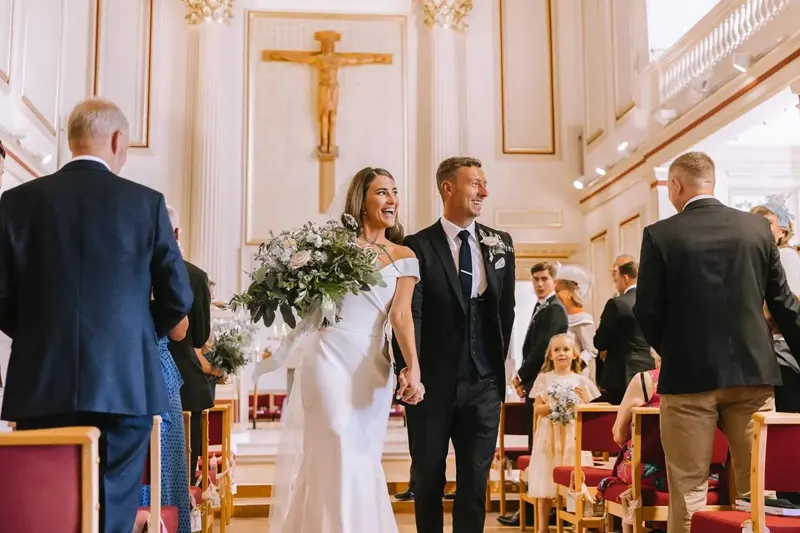
Church Options in Antalya and Surrounding Region
The Antalya region has several Christian churches available for wedding ceremonies, though availability depends on denomination and scheduling.
Protestant Churches
Protestant churches in Turkey serve international expatriate communities and local Turkish Christian converts. These congregations typically welcome destination wedding couples and can host ceremonies following Protestant traditions – Baptist, Methodist, Presbyterian, non-denominational, Pentecostal, or other Protestant expressions.
Protestant church weddings in Turkey usually involve coordination with pastors serving these congregations. Services can follow traditional Protestant liturgy, contemporary worship styles, or whatever format your faith tradition practices. English-language services are common since many Protestant churches serve international communities.
Catholic Churches
Roman Catholic churches exist throughout Turkey serving local Catholic populations and international visitors. Catholic wedding ceremonies follow standard Mass format with proper liturgical requirements – readings from Scripture, homily, exchange of vows, exchange of rings, nuptial blessing, and signing of marriage documents.
Catholic weddings require advance coordination with diocesan authorities and parish priests. Pre-marriage requirements like baptismal certificates, confirmation records, and pre-Cana counseling apply to Turkey weddings just as they would for ceremonies at home. Processing these requirements takes several months, requiring early wedding planning for Catholic couples.
Orthodox Churches
Orthodox Christianity maintains strong presence in Turkey with Greek Orthodox, Russian Orthodox, and other Orthodox communities. Orthodox wedding ceremonies follow traditional liturgy with crowning, common cup, and ritual processions that characterize Orthodox marriage sacraments.
Orthodox couples typically coordinate with their home parishes and potentially bring Orthodox priests to Turkey, or work with local Orthodox clergy if from appropriate jurisdictions. Orthodox Canon Law requires certain procedures that vary by jurisdiction, making advance planning essential.
Bringing Your Own Pastor or Minister
Many Christian couples planning destination weddings in Antalya, Turkey arrange for their home church pastors or ministers they know personally to travel to Turkey to conduct their ceremonies. This approach delivers several advantages over using unfamiliar local clergy.
Why Bringing Your Pastor Works Well
Your home pastor already knows you as a couple, understands your relationship and faith journey, and can personalize ceremonies in ways unfamiliar clergy cannot. The spiritual connection and pastoral relationship you’ve built over years translates into more meaningful, intimate ceremonies than arrangements with clergy you’ve just met.
Language and cultural familiarity ensure ceremonies proceed smoothly without communication barriers. Your pastor speaks your language, understands your culture, and shares your denominational traditions perfectly. No translation, no cultural adaptation, no theological differences to navigate.
Guests experience continuity with your faith community when familiar pastors conduct destination ceremonies. The spiritual authority they recognize from home extends to the Turkey celebration, creating legitimacy and comfort that unfamiliar clergy might not provide immediately.
Logistics and Costs
Bringing pastors from the UK to Turkey involves covering their travel expenses – flights typically £300-£600, accommodation for 2-3 nights at £150-£300, meals during their stay, and appropriate honorarium for their service typically £200-£500 depending on relationship and denominational norms.
Total costs for bringing your pastor typically reach £800-£1,500. This investment ensures ceremony familiarity, personalization, and spiritual confidence that the wedding reflects your faith authentically. Many couples find this cost worthwhile for the peace of mind and ceremony quality their known pastors deliver.
Ramarossi coordinates pastor logistics including transportation from Antalya airport to hotels and venues, scheduling ceremony rehearsals, providing ceremony space setup, and managing any technical needs for music or readings. Your pastor focuses on spiritual leadership while logistics are handled professionally.
Christian Ceremony Venues Beyond Churches
Not all Christian couples want or need traditional church buildings for wedding ceremonies. Many prefer outdoor settings, hotel chapels, or venue locations that provide beautiful backdrops while maintaining Christian ceremony authenticity.
Outdoor Christian Services
Garden ceremonies overlooking the Mediterranean, seaside services on beach platforms, or mountaintop celebrations with panoramic views all accommodate Christian religious services when proper respect and reverence are maintained. Your pastor conducts full Christian ceremonies – Scripture readings, homily or sermon, exchange of vows and rings, prayers, and blessing – in stunning natural settings that showcase God’s creation.
Outdoor Christian weddings require thoughtful setup ensuring sacred atmosphere despite informal settings. Simple altars or tables for Bible and communion elements, cross or Christian symbols establishing religious context, seating arrangements creating congregation space, and sound systems ensuring everyone hears vows and prayers all contribute to appropriate reverence.
Hotel Chapels and Venue Ceremony Spaces
Some wedding venues in Antalya, Turkey offer dedicated ceremony spaces or small chapels suitable for Christian wedding services. These indoor options provide climate control, acoustic advantages, and intimate settings that feel more traditionally chapel-like than outdoor locations.
Hotel chapels aren’t consecrated churches but serve as appropriate spaces for Christian ceremonies when properly arranged. Your pastor’s presence and the religious content of the service create the spiritual significance, not the building itself. Many Christian denominations recognize that sacred space is created by worship and prayer rather than architectural consecration.
Traditional Christian Wedding Elements
Christian weddings include specific traditional elements that can be fully incorporated into Turkey ceremonies regardless of denomination.
Scripture Readings and Homily
Biblical readings remain central to Christian wedding ceremonies – commonly 1 Corinthians 13 on love, Ephesians 5 on marriage, Genesis creation account, or other passages significant to your faith. Family members or wedding party members can participate by reading these Scriptures during the ceremony.
Pastoral homily or sermon providing spiritual teaching about Christian marriage, God’s design for marriage covenant, and exhortation to the couple adds depth beyond simple vow exchange. Your pastor’s message creates the specifically Christian character that distinguishes religious weddings from civil ceremonies.
Exchange of Vows and Rings
Traditional Christian vows – forsaking all others, for better or worse, in sickness and health, till death do us part – can follow Book of Common Prayer language, contemporary versions, or personalized vows reviewed by your pastor. Ring exchange with blessing and religious significance maintains sacred symbolism in destination settings exactly as it would at home.
Communion or Eucharist
Some Christian couples incorporate communion into wedding ceremonies as sacred element pointing to Christ’s sacrifice and the spiritual foundation of Christian marriage. Catholic weddings within Mass include Eucharist as central sacramental element. Protestant couples can include communion when their traditions permit and their pastors approve.
Ramarossi coordinates communion elements – bread and wine or juice, appropriate vessels, and setup – when couples include this in ceremonies. Your pastor handles the spiritual administration of communion while logistics are managed professionally.
Worship Music and Hymns
Christian worship music and traditional hymns create sacred atmosphere. Processional hymns like Canon in D or Trumpet Voluntary, worship songs during ceremonies, congregational hymns where guests participate, and recessional music all contribute to explicitly Christian celebration.
Live musicians playing Christian music, worship leaders leading congregational singing, or high-quality recorded music all work in Turkey venues. Ramarossi coordinates sound systems, musician arrangements, and acoustic setup ensuring Christian music sounds beautiful and creates appropriate worship atmosphere.
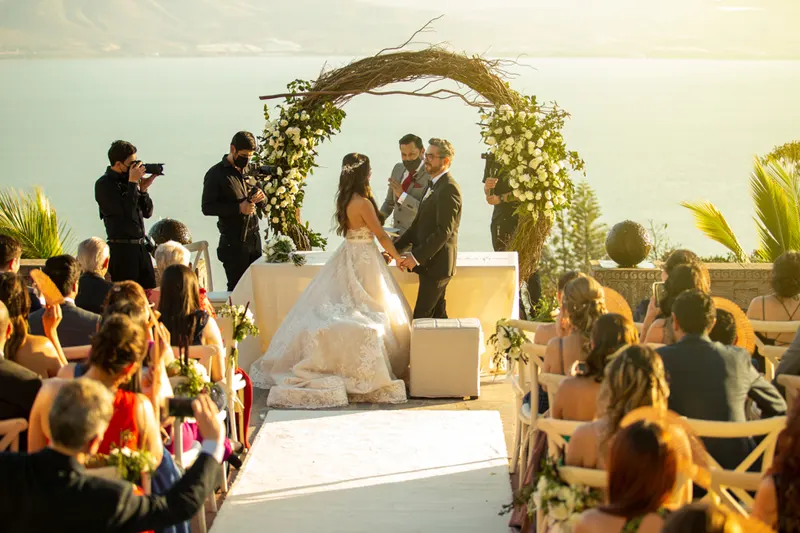
How Different Christian Denominations Handle Destination Weddings
Different Christian traditions have varying requirements and flexibility regarding destination wedding ceremonies.
Catholic Requirements
Catholic couples need permission from their home diocese to marry abroad. This involves requesting permission well in advance, ensuring the receiving parish or location is approved, completing pre-marriage requirements including pre-Cana counseling, and providing all necessary documentation – baptismal certificates, confirmation records, freedom to marry letters.
Catholic weddings must be conducted by Catholic priests or deacons with appropriate faculties. Some Catholic couples complete simple civil ceremonies in Turkey for symbolic celebration, then have formal Catholic marriages convalidated at home churches afterward. This approach provides destination wedding benefits while satisfying Catholic requirements.
Protestant Flexibility
Protestant denominations generally offer more flexibility for destination weddings. Most Protestant churches recognize marriages conducted by ordained Protestant ministers as fully valid regardless of location. Bringing your Protestant pastor to Turkey typically satisfies denominational requirements while providing ceremony familiarity.
Non-denominational Protestant couples have maximum flexibility – essentially any ordained Christian minister can perform valid ceremonies. Denominational Protestants should confirm with their churches that Turkey weddings conducted by their pastors receive full recognition, though this rarely presents problems.
Orthodox Traditions
Orthodox couples need to follow their jurisdiction’s Canon Law requirements, coordinate with appropriate Orthodox authorities, and ensure Orthodox priests conduct ceremonies in canonical Orthodox churches or with proper permissions. Orthodox traditions maintain stricter requirements than most Protestant denominations but remain fully achievable for destination weddings with proper advance coordination.

Legal Marriage vs Religious Ceremony
Christian theology distinguishes between civil marriage recognized by governments and religious marriage blessed by the Church. Understanding this distinction helps couples navigate destination wedding logistics.
Most Christian couples complete legal civil marriage at UK registry offices before or after Turkey celebrations. The registry office procedure handles governmental requirements – legal documentation, official recognition, marriage certificates for name changes and administrative purposes. This takes 10 minutes at your local town hall and costs under £150 total.
Your Christian religious ceremony in Antalya, Turkey then becomes your actual wedding – the sacred covenant before God, the public declaration before witnesses, the spiritual union your faith recognizes as true marriage. This is where your pastor blesses your union, where you exchange vows, where God sanctifies the marriage covenant.
Christianity has always recognized that civil and religious marriage serve different purposes. Caesar’s legal requirements don’t determine what God blesses, and governmental paperwork doesn’t create the spiritual reality of Christian marriage. Your Turkey ceremony can be the meaningful religious wedding even if legal formality happened separately.
Some Christians prefer having legal and religious marriage happen simultaneously. If this matters theologically or emotionally, legal Turkish marriage is possible but requires additional bureaucracy. Most Christian couples find that handling civil paperwork separately at registry offices simplifies logistics while maintaining full spiritual authenticity in their Turkey religious ceremonies.
What Christian Weddings in Turkey Cost
Christian destination weddings in Antalya, Turkey cost approximately the same as non-religious destination weddings, with some additional elements for explicitly Christian ceremonies.
Base wedding costs for 60-80 guests including venue, catering, photography, and coordination range €18,000-€25,000. Christian ceremony additions include pastor travel and accommodation if bringing clergy from UK at £800-£1,500 (€950-€1,750), church fees if using local churches at €300-€800, or Christian celebrant fees for venue ceremonies at €400-€700. Communion elements, Christian décor like crosses or altar arrangements, worship musicians or worship leader costs add €200-€600.
Total Christian weddings in Turkey typically cost €19,500-€28,000 for 60-80 guests with authentic religious ceremonies. Equivalent Christian weddings in the UK cost £28,000-£45,000, making Turkey celebrations 30-40% less expensive while delivering comparable quality and Mediterranean setting beauty.
Frequently Asked Questions
Is our Christian marriage in Turkey recognized by our church at home?
When conducted by ordained Christian clergy according to your denomination’s requirements, yes, your Turkey wedding receives full recognition from your home church. Protestant marriages conducted by Protestant pastors are recognized by Protestant churches regardless of ceremony location. Catholic marriages performed by Catholic priests with proper diocesan permissions are recognized by the Catholic Church worldwide. Orthodox marriages conducted by canonical Orthodox priests in Orthodox churches receive Orthodox Church recognition. The key is ensuring your pastor or priest has appropriate credentials and follows proper procedures for your specific denomination. If bringing your home pastor to Turkey, ask explicitly whether your church recognizes destination weddings conducted by their clergy. Most Christian denominations do, but confirming avoids surprises. If using local clergy in Turkey, verify they’re ordained in your denomination and that your home church accepts marriages conducted by clergy outside your immediate geographic region. Ramarossi can facilitate these conversations between couples, home churches, and officiants in Turkey ensuring all ecclesiastical requirements are met for full church recognition of your marriage.
Can we have communion during our wedding ceremony?
This depends on your denomination’s theology and your pastor’s approval. Catholic weddings celebrated within Mass include Eucharist as central sacramental element – though not all Catholic weddings are celebrated within Mass. Many Protestant denominations permit communion during wedding ceremonies when pastors judge it appropriate and meaningful. Some Protestant traditions view communion as specifically congregational rather than appropriate for mixed gatherings including non-believers, while others embrace communion as witness to God’s grace accessible to all. Orthodox weddings don’t typically include communion during the marriage ceremony itself, though Divine Liturgy might be celebrated separately. The practical question is whether your pastor or priest approves incorporating communion into your specific wedding ceremony. If they do, Ramarossi coordinates all necessary elements – appropriate bread and wine or grape juice, communion vessels, setup for distribution, and timing within ceremony flow. Many Christian couples find communion during weddings profoundly meaningful, grounding their marriage in the gospel and Christ’s sacrifice. Others prefer keeping wedding ceremonies focused on marriage covenant specifically. Discuss with your pastor what makes sense theologically and emotionally for your celebration.
What if our families belong to different Christian denominations?
Denominational differences within Christianity rarely create problems for wedding ceremonies since core Christian theology and marriage understanding remains consistent across traditions. If you’re from Baptist background and your partner is Methodist, or one of you is Presbyterian and the other is non-denominational, your pastors can typically accommodate each other’s traditions easily. The ceremony might blend elements from both traditions or follow whichever denominational format feels primary to your faith. Most Protestant denominations recognize each other’s clergy and marriage ceremonies without theological objection. Catholic-Protestant combinations present more complexity since Catholic Church requires specific procedures for mixed marriages. Catholic partners need dispensation from canonical form if marrying outside Catholic Church or permission for Catholic priests to participate in non-Catholic ceremonies. These permissions are routinely granted but require advance application. Orthodox-Protestant combinations similarly need Orthodox canonical permissions which vary by jurisdiction. The key is early communication with religious authorities from both traditions, explaining your interfaith situation, and requesting appropriate permissions or blessings. Ramarossi can facilitate these ecclesiastical conversations ensuring both traditions are respected and satisfied with ceremony plans. Many couples find destination weddings actually ease denominational tensions by creating neutral ground where both traditions can be honored without one family’s church dominating.
Should our ceremony be in a church or can outdoor venues work?
This depends on your theological convictions and denominational requirements. Some Christians believe sacred marriage covenants require consecrated church settings. Others view all of creation as God’s sanctuary where Christian worship and sacraments can validly occur. Catholic theology traditionally emphasizes church buildings, though dispensations for outdoor Catholic weddings are increasingly granted. Most Protestant denominations accept outdoor Christian weddings as fully valid when conducted by ordained clergy with appropriate reverence. The practical question is what feels right spiritually to you and your families. If church buildings create necessary sacred atmosphere for your faith, Ramarossi coordinates church ceremonies in Antalya. If you believe God’s presence extends beyond church walls and outdoor Mediterranean settings enhance rather than diminish Christian celebration, outdoor Christian ceremonies work beautifully. Many couples appreciate that outdoor venues showcase God’s creative glory – the Mediterranean, mountains, gardens, and sky testifying to divine majesty. Others find traditional church architecture and liturgical atmosphere creates better worship environment. There’s no universally correct Christian position. Follow your spiritual convictions and your pastor’s guidance about what honors God appropriately for your marriage covenant.
Can we have Christian ceremony but non-religious reception?
Absolutely. Christian marriage theology focuses on the ceremony itself – the covenantal vows before God and witnesses – rather than reception celebrations afterward. Receptions are cultural celebrations of the marriage, not religious sacraments. Many Christian couples have deeply sacred, reverent Christian ceremonies followed by energetic, festive receptions with dancing, drinking, and celebration that feel more party than worship. There’s no theological inconsistency – the ceremony established sacred marriage covenant, the reception celebrates that covenant with joy and community. Some Christian traditions emphasize modest, restrained celebrations. Others embrace exuberant joy as appropriate response to God’s blessing. Follow whatever approach feels authentic to your faith and cultural background. The ceremony is where your Christian faith gets expressed primarily through vows, Scripture, prayer, and pastoral blessing. The reception is where you celebrate with community through whatever cultural expressions feel appropriate. Ramarossi coordinates both elements ensuring your ceremony reflects your spiritual priorities while your reception celebrates in whatever style makes you happiest.
Do we need to register our marriage with churches in Turkey?
Church registration requirements depend on whether you’re having legal Turkish marriage or purely religious ceremony. If your Christian ceremony in Turkey also serves as legal civil marriage through Turkish authorities, then marriage documentation goes through governmental offices rather than churches. If your ceremony is purely religious while legal marriage happens at UK registry offices, no Turkish church registration is necessary – your marriage exists before God through the ceremony and before government through registry office documentation, but Turkish churches aren’t involved in official registration. Your home church may want documentation of your marriage for their records, which your pastor or the officiating clergy can provide. Some denominations maintain marriage registries tracking marriages performed by their clergy. Coordinate with your pastor about what documentation they need and provide. The key distinction is between religious marriage before God versus legal marriage recognized by governments. Churches witness and bless marriages; governments register and recognize them legally. You don’t need governmental registration in Turkey, UK, or anywhere else for your Christian marriage to be valid before God when properly conducted by Christian clergy. Legal registration serves governmental administrative purposes rather than determining spiritual validity of Christian marriage.
What Christian traditions can we incorporate from both families?
Christian weddings accommodate diverse cultural expressions while maintaining core theological and ceremonial elements. If one family has African Christian traditions and the other has European Christian traditions, both cultural expressions can be woven into ceremonies. Gospel choir music alongside traditional hymns, African call-and-response alongside liturgical readings, traditional garments from one culture combined with wedding attire from another – all these work beautifully. Middle Eastern Christian traditions like Zaffe entrance processions, Asian Christian traditions like tea ceremonies, Latin American Christian traditions like lazo or arras coins – whatever cultural Christian traditions your families practice can typically be incorporated. The unifying thread is the Christian theological core – Scripture, vows before God, pastoral blessing, prayer. Cultural expressions vary globally, but Christian marriage theology remains consistent. Work with your pastor to identify which cultural traditions complement rather than contradict Christian ceremony structure. Most pastors experienced with multicultural congregations understand how to honor diverse Christian cultural expressions within unified worship. Ramarossi coordinates logistical elements these traditions require – special music, cultural items or symbols, timing and placement within ceremony flow, and explanation for guests unfamiliar with particular traditions.
If you’re planning a Christian wedding and want a destination that honors your faith fully while providing Mediterranean beauty and exceptional value, Ramarossi can discuss how Antalya, Turkey accommodates Christian ceremonies across denominations. A conversation about your specific faith tradition, ceremony vision, and spiritual priorities costs nothing – and clarifies exactly how to create authentically Christian celebrations that honor God, respect tradition, and create memories you’ll cherish forever.