


Greek Orthodox weddings carry deep religious and cultural significance requiring proper ceremony settings, qualified priests, and traditional elements that honor faith and heritage. For Greek diaspora families in the UK, US, Canada, and Australia, finding destination wedding locations that accommodate Orthodox ceremony requirements while delivering beautiful celebrations presents genuine challenges.
Antalya, Turkey hosts vibrant Orthodox Christian communities with active churches, experienced priests, and cultural familiarity with Greek Orthodox traditions. At Ramarossi, we coordinate Greek Orthodox destination weddings that honor every religious requirement while taking advantage of Mediterranean beauty and exceptional value compared to Greece or Cyprus celebrations. This guide explains how Greek Orthodox ceremonies work in Turkey and what families should understand.
Can We Have a Greek Orthodox Religious Ceremony in Turkey?
Yes, absolutely. Turkey has historic Orthodox Christian communities with functioning churches where Greek Orthodox wedding ceremonies can be conducted properly and legally.
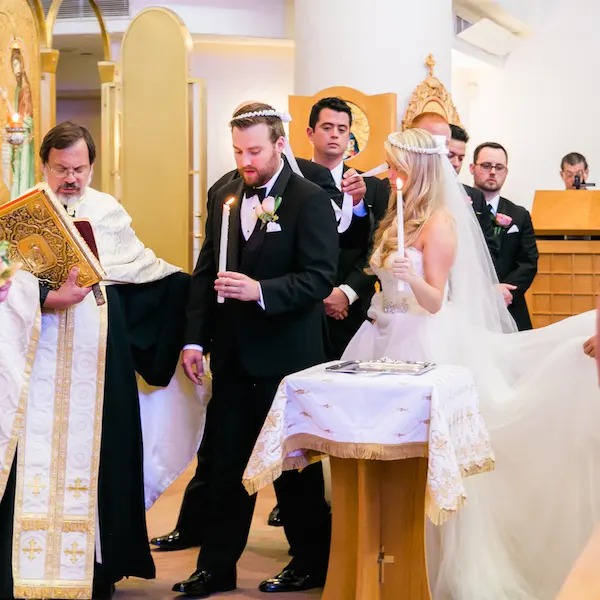
The Greek Orthodox ceremony – the Sacrament of Holy Matrimony – requires an Orthodox church or chapel, a qualified Orthodox priest, and proper setup including the Holy Gospel, wedding crowns (stefana), candles, wine for the common cup, and wedding rings. Antalya, Turkey and surrounding regions have Orthodox churches that host wedding ceremonies for international couples regularly.
Orthodox churches in Turkey primarily serve local Orthodox Christian populations – Greek Orthodox, Russian Orthodox, and other Orthodox communities that have maintained religious presence for centuries. These churches welcome international wedding ceremonies when properly coordinated through their priests and parish administration.
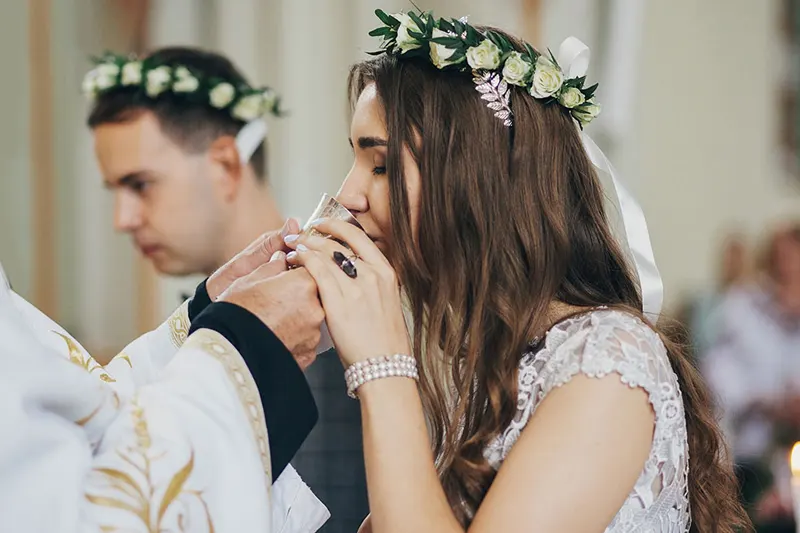
The ceremony follows standard Greek Orthodox liturgy – the Betrothal service with ring exchange, the Crowning ceremony with stefana, the Common Cup sharing, the Dance of Isaiah (walk around the table three times), and final blessings. The religious meaning, traditional structure, and sacred nature remain completely intact when celebrated in Turkey.
Church Availability and Coordination
Several Orthodox churches in the Antalya region can host wedding ceremonies, though coordination requires advance planning and proper communication with church administration.
The Church of Saint Nicholas in nearby Demre represents one of Christianity’s most historic sites, though its primary function is archaeological rather than active worship. More practical for weddings are functioning parish churches in Antalya and surrounding areas where regular Orthodox services occur and priests maintain active ministry.
Church availability depends on the liturgical calendar and existing parish schedules. Orthodox churches observe feast days, fasting periods, and liturgical seasons when weddings are traditionally not performed. The most restrictive periods include Great Lent (the 40 days before Easter), Holy Week, the week following Easter, certain feast day periods, and sometimes the dormition fast in August. Spring and fall typically offer the most scheduling flexibility.
Ramarossi coordinates church bookings by connecting with Orthodox parishes well in advance of your wedding date, confirming availability according to liturgical calendar, arranging meetings between couples and priests for marriage preparation, and managing all administrative requirements including documentation and church fees. This coordination typically begins 6-9 months before your wedding date to ensure proper scheduling and preparation.
Priest Requirements and Options
Greek Orthodox wedding ceremonies must be conducted by ordained Orthodox priests in good standing. You have two primary options for priest coordination.
Local Turkish Orthodox Priests
Orthodox priests serving parishes in Turkey can conduct your wedding ceremony. These clergy typically speak Turkish and often Greek, with varying English proficiency. The ceremony itself follows Greek Orthodox liturgy which remains consistent regardless of the priest’s primary language – the sacred words and rituals are standardized, though homilies or pastoral elements might be delivered in Turkish or Greek.
Working with local priests simplifies logistics – no travel arrangements, lower costs, established church relationships. The primary consideration is language for any counseling or preparation meetings, though many Orthodox couples in international marriages navigate this regularly.
Bringing Priests from UK or Greece
Many Greek Orthodox couples arrange for priests from their home parishes in the UK, priests from Greece with whom they have family connections, or Orthodox clergy they know personally to travel to Turkey to conduct their ceremonies. This approach ensures linguistic and cultural familiarity while maintaining religious authenticity.
Priests traveling to Turkey for destination weddings need coordination with local Orthodox churches for use of sacred space and appropriate permissions. Orthodox protocol requires visiting priests to inform and coordinate with local bishops or parish priests when conducting sacraments in their jurisdictions. Ramarossi facilitates these ecclesiastical communications to ensure proper protocols are observed.
You cover travel costs – flights typically £300-£600 from the UK or €200-€400 from Greece, accommodation for 2-3 nights, and reasonable stipend or honorarium for the priest’s service and time. Total costs for bringing priests from abroad typically reach £800-£1,500 or €700-€1,300.
Pre-Marriage Requirements and Documentation
Greek Orthodox Church requires marriage preparation and specific documentation before blessing unions.
Both partners must be baptized Orthodox Christians, or one Orthodox partner marrying a baptized Christian from another denomination with appropriate permissions. Letters of freedom from your home parish priests confirming you’re Orthodox in good standing and free to marry are required. Certificate of baptism for both partners showing Orthodox baptism or chrismation into Orthodoxy. If either partner was previously married, ecclesiastical divorce documents from Orthodox Church authorities showing the previous marriage’s dissolution are necessary.
Marriage preparation varies by priest and diocese. Some require formal pre-marriage counseling sessions, others accept less structured preparation. Couples usually complete this with priests conducting their ceremonies – either through in-person meetings if using local Turkish priests or via video calls if bringing priests from abroad.
The ceremony in Turkey can be either your legal civil marriage or purely sacramental if you complete civil marriage separately. Most couples handle civil legal requirements at UK registry offices before or after the Turkey celebration, making the Orthodox ceremony the meaningful sacramental wedding without civil legal complications.
Traditional Greek Orthodox Wedding Elements
Greek Orthodox weddings include specific traditional elements that families expect and that make ceremonies culturally authentic.
The Stefana (Wedding Crowns)
The crowning ceremony represents the central moment when the priest places interlinked crowns on the couple’s heads three times, symbolizing their union and the crowns of martyrdom they accept in serving each other. These crowns remain on the couple’s heads throughout the ceremony.
Stefana can be traditional metal crowns connected by ribbon, floral crowns with orange blossoms and white flowers, or elaborate decorative crowns families commission specially. Many couples bring stefana from their home countries or family heirlooms passed through generations. Others purchase them in Turkey from Orthodox supply shops or commission custom designs from Greek or Turkish artisans.
Koufeta (Sugared Almonds)
Jordan almonds or koufeta are traditional Greek wedding favors symbolizing fertility, health, and prosperity. Almonds are packaged in odd numbers – typically five or seven – representing indivisibility of marriage. Guests receive these in decorative tulle pouches, small boxes, or elegant arrangements.
Turkish confectionery shops and wedding supply vendors in Antalya stock koufeta and can create beautiful favor arrangements. Many couples import specific koufeta from Greece or UK Greek shops if they want particular styles, but quality almonds and traditional packaging are readily available in Turkey.
The Dance and Reception Elements
Greek wedding receptions traditionally feature specific music, dances, and celebration elements. The Kalamatiano, Tsamiko, Hasapiko, and other traditional Greek dances create joyful celebratory atmosphere. Live Greek music or DJs with extensive Greek music libraries ensure authentic soundtracks.
Plate smashing or napkin throwing during dancing, the money dance where guests pin cash to the couple, and other spirited traditions can all be incorporated into Turkey receptions. Venues in Antalya accommodate these cultural elements – loud celebrations, extended dancing, and energetic participation that characterize Greek weddings.
Why Turkey Works for Greek Orthodox Families
Turkey offers several practical and cultural advantages for Greek Orthodox destination weddings beyond just religious ceremony accommodation.
Cultural Familiarity and Mediterranean Connection
Mediterranean Turkey and Greek islands share substantial cultural overlap – cuisine, hospitality traditions, architectural aesthetics, and general approach to celebration. Greek families find Turkish settings culturally comfortable rather than foreign. The Mediterranean connection feels authentic rather than arbitrary.
Turkish cuisine’s Greek influences mean wedding catering can incorporate familiar flavors – mezze appetizers, grilled seafood, olive oil preparations, fresh vegetables, baklava desserts. While Turkish food isn’t identical to Greek cuisine, the overlap is substantial enough that guests find meals familiar and delicious rather than challengingly foreign.
Cost Advantage Over Greece
Greek island weddings – Santorini, Mykonos, Crete, Rhodes – command premium pricing due to tourism demand. A wedding costing €30,000-€40,000 in popular Greek destinations typically costs €20,000-€28,000 in Antalya, Turkey for equivalent quality, guest count, and service.
Venue rentals, per-person catering, photography packages, and accommodation all cost 25-35% less in Turkey than comparable Greek island locations. For Greek Orthodox families who value having proper religious ceremonies while managing budgets carefully, Turkey delivers both requirements successfully.
Accessibility for International Guests
Antalya’s international airport offers excellent connections to UK, Europe, and Middle East with competitive flight pricing. Many Greek diaspora families have guests traveling from multiple countries – relatives in Greece, family in the UK, cousins in Australia or North America. Antalya’s accessibility rivals or exceeds many Greek island destinations, particularly for non-European guests.
Flight costs from London to Antalya typically run £150-£350, comparable to flights to Athens or major Greek islands. The advantage is direct flights to Antalya versus potential Athens connections for some Greek islands, plus generally better hotel value and venue costs once guests arrive.
What Greek Orthodox Weddings in Turkey Cost
Greek Orthodox weddings in Antalya, Turkey typically cost more than standard destination weddings due to religious ceremony requirements and cultural elements.
Base wedding costs for 80-100 guests range €22,000-€30,000 including venue, catering, photography, coordination, and standard reception elements. Church fees and priest arrangements add €500-€1,500 when using local Turkish priests or €1,500-€3,000 when bringing priests from UK or Greece including their travel and accommodation. Traditional Greek entertainment – live bouzouki players, Greek band, or specialized Greek wedding DJs – costs €800-€1,800 depending on ensemble size and duration. Stefana, koufeta favors, and Greek-specific décor elements add €400-€800.
Total Greek Orthodox weddings in Turkey typically cost €24,000-€36,000 for 80-120 guests with proper religious ceremonies and cultural elements. The equivalent celebration in Santorini or Mykonos would cost €35,000-€55,000. In London or major UK cities, expect £40,000-£65,000 for comparable scale and quality.
Practical Timeline and Coordination
Greek Orthodox weddings require earlier planning than standard destination weddings due to church coordination and priest arrangements.
Begin church and priest coordination 8-12 months before your intended wedding date. This timeline allows confirming church availability according to liturgical calendar, securing priest commitments whether local or traveling from abroad, completing required marriage preparation and documentation, and handling any ecclesiastical approvals needed.
The planning trip to Antalya should include meeting with your priest if using local clergy, visiting the church where your ceremony will occur, and handling any parish administration requirements. If bringing priests from abroad, coordinate video calls during your planning trip for marriage preparation meetings.
Ramarossi coordinates all ecclesiastical logistics including church communications and permissions, priest scheduling and coordination, arrangement of ceremony elements like stefana and candles if not provided by the church, and ensuring Orthodox liturgical requirements are met completely. This specialized coordination ensures religious authenticity while managing the practical logistics that destination celebrations require.
Frequently Asked Questions
Can we have a Greek Orthodox ceremony if one partner isn’t Orthodox?
Orthodox Church allows marriages where one partner is Orthodox and the other is a baptized Christian from another denomination, though specific permissions may be required. The non-Orthodox partner doesn’t convert but must respect the Orthodox nature of the ceremony and agree to raise children in Orthodox faith if applicable. Orthodox Church does not perform sacramental marriages where one or both partners are unbaptized or where the non-Orthodox partner belongs to non-Christian faith traditions, though some jurisdictions handle these situations differently. If you’re in an interfaith situation, discuss specifics with the Orthodox priest who would conduct your ceremony well before making Turkey wedding plans. Some priests have more flexibility than others in handling mixed marriages. Ramarossi can connect you with priests experienced in international and interfaith situations who can advise on possibilities for your specific circumstances. If full Orthodox ceremony isn’t possible, couples sometimes have blessing services or ecumenical ceremonies that incorporate Orthodox elements while respecting both partners’ faith traditions.
Are there Greek Orthodox churches in Antalya specifically?
The Antalya region has Orthodox Christian communities with functioning churches, though the concentration is higher in some areas than others. The broader Mediterranean Turkish region historically hosted substantial Orthodox populations and maintains active parishes. Some Orthodox churches in Turkey primarily serve Russian Orthodox communities, others Greek Orthodox, and some welcome all Orthodox Christians regardless of ethnic heritage. The Orthodox Church recognizes all canonical Orthodox churches as valid locations for sacraments, so whether a church is specifically Greek Orthodox or Russian Orthodox or Antiochian Orthodox matters less than it being a legitimate Orthodox parish in communion with the wider Orthodox Church. Ramarossi identifies appropriate Orthodox churches for wedding ceremonies based on availability, location convenience relative to your reception venue, aesthetic preferences, and priest scheduling. We handle all coordination ensuring the church, priest, and ceremony meet Orthodox requirements regardless of the parish’s primary ethnic community.
Do we need to be married in Turkey legally or can this be purely religious?
The Orthodox ceremony in Turkey can be purely sacramental without civil legal recognition, which is how most international couples structure destination Orthodox weddings. You complete civil legal marriage at UK registry offices or equivalent in your home country, then have the Orthodox sacramental ceremony in Turkey as your actual wedding celebration. This approach is theologically and canonically acceptable – Orthodox Church distinguishes between civil marriage (legal status recognized by governments) and sacramental marriage (union blessed by the Church). Many Orthodox couples throughout history and in various countries handle these separately. The sacramental ceremony in Turkey before God and the Church is your real marriage in Orthodox understanding; the civil paperwork is merely governmental formality. If you specifically want legal Turkish marriage for personal or legal reasons, this is possible but requires additional documentation and administrative steps. For most Greek Orthodox couples planning destination weddings, the sacramental ceremony in Turkey combined with simple civil marriage at home delivers exactly what they want religiously and practically.
Can our ceremony be in English?
Greek Orthodox liturgy has standard translations in English that maintain theological accuracy and liturgical integrity. If you bring an English-speaking Orthodox priest from the UK or arrange for local priests with English proficiency, the ceremony can be conducted primarily or entirely in English. Many Orthodox parishes worldwide serve multilingual congregations and regularly celebrate sacraments in English. The sacred words, prayers, and ritual actions remain consistent whether conducted in Greek, English, Church Slavonic, Arabic, or other languages – Orthodox liturgy translates while maintaining essential meaning. Some couples choose bilingual ceremonies with key elements in both English and Greek to honor heritage while ensuring all guests understand. Others prefer entirely English services for clarity. The priest conducting your ceremony can advise on which approach works best given the congregation, family preferences, and practical considerations. Orthodox Church values understanding over rigid language requirements, so English ceremonies receive full recognition and blessing when properly celebrated according to Orthodox tradition and liturgy.
What if our families are in Greece – should we just marry there instead?
Greece makes sense for couples with most guests in Greece, strong family ties to specific Greek locations, or particular connections to Greek islands or villages. Turkey becomes more practical when your guest list is internationally distributed, when budget significantly impacts celebration quality, when you’re based in UK and want easier logistics than Greek island coordination, or when you simply prefer Turkey’s specific venue and setting options. Many Greek Orthodox couples actually have internationally scattered families – relatives in Greece, immediate family in London, cousins in Toronto, friends in New York. For these distributed guest lists, Antalya’s international airport accessibility and cost advantages over premium Greek islands make practical sense. Flight times from UK to Antalya or UK to Athens differ minimally, and Turkey venues deliver equivalent or superior value for most budget ranges. That said, emotional connections to Greece matter. If your heart pulls toward Greece for heritage reasons or specific family significance, honor that even if Turkey offers practical advantages. The question isn’t which location is objectively better but which serves your specific situation – guest distribution, budget realities, venue preferences, and emotional connections – most effectively.
Will Turkish venues accommodate Greek Orthodox reception traditions?
Yes, absolutely. Venues in Antalya, Turkey that work with international destination weddings regularly accommodate diverse cultural traditions including energetic Greek Orthodox celebrations. Plate smashing, enthusiastic dancing, loud Greek music, extended celebration hours, and spirited participation that characterize Greek weddings are welcomed rather than restricted. Mediterranean culture in Turkey shares Greek appreciation for exuberant celebration, making venue staff comfortable with and supportive of traditional Greek reception elements. The music volume, dancing intensity, and celebration energy that might concern some Northern European venues feel completely normal to Turkish Mediterranean hospitality culture. Ramarossi specifically selects venues experienced with international cultural weddings when coordinating Greek Orthodox celebrations. These properties understand that Greek receptions involve specific traditions, extended dancing, and enthusiastic guest participation. Venue staff accommodate rather than police cultural celebration styles, creating the welcoming atmosphere Greek families expect for their meaningful celebrations. You won’t face the cultural friction that sometimes occurs when trying to celebrate Greek traditions in venues unfamiliar with or uncomfortable with Mediterranean celebration styles.
Can we incorporate both Greek and UK cultural elements?
Many Greek Orthodox couples in the UK embrace blended cultural identities, and Turkey weddings can absolutely reflect both heritages. The Orthodox ceremony follows traditional Greek Orthodox liturgy maintaining religious authenticity. Reception celebrations can mix Greek and British elements – Greek dancing followed by British pop music, traditional koufeta favors alongside British wedding cake traditions, Greek mezze appetizers complementing British menu preferences, and generally blending both cultural influences that shape your lives. Many second and third generation Greek families in the UK naturally blend cultures, and your wedding can reflect that authentic hybrid identity. Ramarossi coordinates weddings that honor multiple cultural traditions simultaneously. DJs with both extensive Greek music libraries and British pop selections, catering that balances Mediterranean and British tastes, décor that incorporates both aesthetic traditions – all of this works beautifully. The goal is creating celebrations that feel authentically you, whether that’s purely Greek Orthodox traditional or comfortably bicultural reflecting your actual lived experience as Greek-British individuals.
If you’re planning a Greek Orthodox wedding and want a destination that honors every religious tradition while delivering beautiful Mediterranean celebrations, Ramarossi can discuss how Antalya, Turkey accommodates Orthodox ceremony requirements, coordinates with churches and priests, and ensures your celebration respects both faith and culture. A conversation about your specific needs – religious requirements, cultural elements, family expectations – costs nothing and clarifies exactly how destination Orthodox weddings work in Turkey.