


Nowruz marks the Persian New Year beginning on the spring equinox, typically March 20 or 21, representing renewal, family gathering, and cultural continuity across Persian communities worldwide. Many Iranian couples choose Nowruz season for weddings, connecting marriage celebration to spring’s symbolic rebirth and aligning wedding timing with family travel already planned for New Year observances. Planning these celebrations in Antalya, Turkey for 2027 requires understanding how Mediterranean spring weather patterns, traditional Persian ceremony requirements, and resort infrastructure combine to create authentic cultural celebrations.
Ramarossi has coordinated Persian weddings in Antalya since 2011, with Iranian couples representing 40% of completed celebrations and creating the company’s deepest cultural expertise. This specialisation translates to established relationships with Persian entertainment vendors, understanding of Sofreh Aghd ceremonial requirements, and experience navigating the expectations Persian families bring to destination wedding planning. The following guidance provides transparent 2027 pricing, realistic timeline requirements, and detailed planning advice for Persian couples considering spring celebrations in Turkey.
Nowruz Timing and Spring Season Considerations
Nowruz falls on March 20 or 21 depending on the precise moment of the spring equinox, with Persian families observing celebrations for approximately two weeks following the New Year transition. This timing creates specific planning considerations for couples wanting weddings during or immediately after Nowruz itself.
Weddings scheduled during Nowruz week benefit from family members already planning international travel for New Year celebrations, potentially reducing guest travel coordination complexity. However, this timing compresses wedding planning into already intensive family gathering periods, requiring couples to balance ceremonial participation with wedding coordination. Many families prefer attending Nowruz celebrations at home before travelling to Turkey for weddings, making late March or early April timing more practical than dates during Nowruz week itself.
Antalya’s spring weather in late March and April provides generally pleasant conditions but less reliability than the guaranteed sunshine of May through October. March temperatures range from 15 to 20 degrees Celsius with occasional rain systems, making outdoor ceremony planning require solid indoor backup arrangements. April improves significantly, with temperatures reaching 18 to 24 degrees Celsius and substantially reduced rain probability. Couples prioritising outdoor beachfront ceremonies should favour April dates over March for better weather reliability, though luxury resort properties provide beautiful indoor spaces that accommodate Persian ceremonies regardless of weather conditions.
The spring shoulder season offers pricing advantages compared to peak summer months, with some luxury properties providing 10% to 15% discounts for March and April weddings. However, couples should verify that chosen properties operate at full service capacity during early spring, as some resorts reduce staffing or close certain facilities during shoulder season months. Properties specialising in wedding events typically maintain full operations March through October, but verification during venue selection prevents unwelcome surprises.
Persian Wedding Ceremony Traditions and Sofreh Aghd
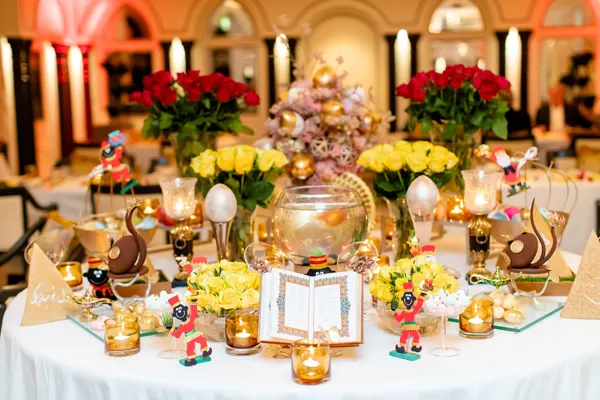
The Sofreh Aghd represents the centrepiece of Persian wedding ceremonies, a ceremonial spread displaying symbolic items representing prosperity, fertility, health, and happiness. Creating authentic Sofreh Aghd in Turkey requires either importing specific ceremonial items or sourcing Turkish alternatives that maintain symbolic meaning while adapting to logistical reality.
Essential Sofreh Aghd Elements
Traditional Sofreh Aghd includes the following elements arranged on decorative fabric spread before the couple. A mirror and two candelabras representing light and fire sit centrally, with the couple seeing each other’s reflection in the mirror as symbolic first sight. Decorated flatbread or sangak represents prosperity and sharing sustenance. Wild rue seeds for burning create protective smoke and pleasant fragrance during the ceremony. A tray of multicoloured herbs and spices including poppy seeds, nigella seeds, frankincense, and rose petals symbolises protection from evil eye and blessing. Honey or sugar cone appears for sweetening life together. Decorated eggs represent fertility. Coins symbolise wealth and prosperity. A copy of poetry, typically Hafez or Rumi, represents art and spirituality. Sweets including noghl, baklava, and chickpea cookies provide treats for guests after ceremony conclusion. Fresh flowers and rose water complete the aromatic and visual presentation.
Assembling complete Sofreh Aghd in Turkey presents logistical challenges, as specific items like decorated sangak, traditional Persian sweets, and certain ceremonial objects prove difficult to source locally. Most couples address this through combined approaches, bringing certain lightweight ceremonial items in checked luggage, purchasing others from Persian shops in Istanbul where substantial Iranian diaspora communities maintain cultural supply networks, and accepting Turkish alternatives for items where symbolic meaning matters more than specific authenticity.
Ramarossi maintains relationships with Persian community contacts in Istanbul who can source Sofreh Aghd items and ship to Antalya, typically requiring four to six weeks advance notice and costing €300 to €800 depending on item complexity and shipping logistics. Some couples engage Persian event designers from Europe, particularly from London’s substantial Iranian community, who travel with complete Sofreh Aghd packages including all ceremonial items and decorative elements. These services cost €2,500 to €5,000 including designer travel, materials, and setup coordination.
Ceremony Structure and Officiant Requirements
Persian wedding ceremonies follow specific structures beginning with the Aghd, the legal and religious marriage contract signing. Modern Persian weddings vary in religious observance, with some couples conducting full Islamic nikah ceremonies and others choosing secular civil ceremonies followed by traditional Persian cultural elements without religious components.
Couples wanting religious ceremonies require officiants qualified to conduct Islamic marriage contracts, with many Persian families preferring officiants who understand Persian cultural context beyond standard Islamic ceremony requirements. Finding appropriate officiants in Turkey requires advance coordination, as most Turkish imams conduct ceremonies in Turkish and may not understand specifically Persian traditions or speak Farsi. Some couples import officiants from Persian communities in Europe or engage Persian religious scholars based in Istanbul. Officiant costs range from €800 to €2,000 plus travel and accommodation if imported from outside Antalya.
Secular ceremonies provide more flexibility, with couples writing personalised vows, incorporating poetry readings from Hafez or Rumi, and focusing on cultural traditions without religious elements. Many Persian couples working with Ramarossi choose this approach, using the Sofreh Aghd as ceremonial focal point while conducting civil marriage registration separately through simplified processes.
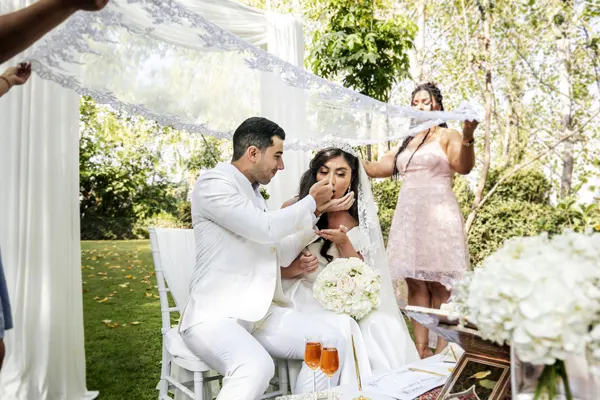
The ceremony traditionally includes the sugar rubbing ritual, where married female relatives rub two sugar cones together above a cloth held over the couple’s heads, showering them with sweetness. This participatory element requires coordination with family members in advance, ensuring appropriate relatives are identified and understand their roles. The ceremony also features the delayed response tradition, where the bride waits through three requests before agreeing to marriage, creating playful suspense that guests anticipate and enjoy.
Persian Entertainment, Music, and Cultural Programming
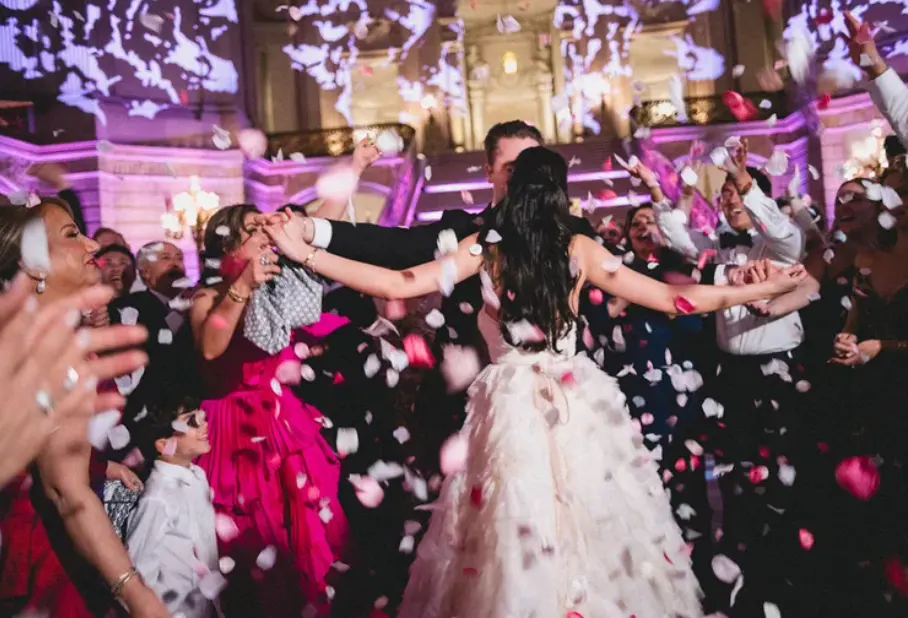
Persian weddings blend traditional and contemporary entertainment, with live Persian music providing cultural authenticity while DJ services deliver modern dance music for younger guests. Finding appropriate entertainment represents one of the primary planning challenges for Persian weddings in Turkey, as local Turkish entertainment lacks Persian cultural knowledge despite geographic proximity.
Live Persian Music Options
Traditional Persian music features specific instrumental combinations including tar, setar, santur, and daf, performed during ceremony portions and cocktail hours to create authentic atmosphere. Sourcing these musicians requires importing performers from Tehran, Istanbul’s Persian community, or European cities with Iranian diaspora populations like London, Stockholm, or Los Angeles.
Persian musicians from Istanbul provide the most accessible option, requiring shorter travel distances and potentially lower costs than international imports. Istanbul-based Persian ensembles charge €2,500 to €4,500 for wedding day performance including travel to Antalya, though availability varies and advance booking at least six months ahead proves essential. Musicians from Tehran or European cities cost €5,000 to €12,000 depending on ensemble size, reputation, and travel logistics including visa requirements for entering Turkey.
Some couples choose recorded Persian classical music during ceremonies to control costs while maintaining cultural authenticity, reserving live music budgets for cocktail hour or reception portions where interactive performance creates more value. High-quality recorded music with proper sound system setup provides ceremonial atmosphere at substantially lower investment, allowing budget allocation toward other cultural priorities.
DJ Services and Contemporary Music
Persian wedding receptions require DJs familiar with Iranian pop music, traditional folk songs adapted for dancing, and the specific cultural knowledge to read Persian crowd energy and adjust programming appropriately. Generic international DJs playing Persian playlists without cultural understanding produce awkward results, as Persian wedding music involves specific progression from traditional to contemporary, regional variations, and generational preferences that require insider knowledge.
Persian DJs from Europe, particularly from London where substantial Iranian exile communities maintain active entertainment industries, provide the most reliable option for authentic reception programming. These DJs charge €3,500 to €6,000 including travel and accommodation, bringing not just music knowledge but understanding of Persian wedding energy flow, appropriate song selection timing, and crowd interaction styles Persian guests expect. Turkish DJs can execute Persian weddings adequately if provided with detailed playlists and programming guidance, charging €1,500 to €2,500, but couples sacrifice the spontaneous energy reading that experienced Persian DJs provide.
Traditional Dance and Performance Elements
Persian weddings often incorporate traditional dance performances including regional folk dances or professional belly dance performances adapted to Persian aesthetic preferences. Some couples hire professional Persian dancers to perform choreographed pieces during reception entertainment, costing €1,200 to €3,000 for evening performances. These additions create cultural programming variety and provide entertainment for guests who may not participate in contemporary dance portions.
Persian Cuisine and Menu Planning
Persian cuisine represents one of the world’s most sophisticated culinary traditions, featuring complex rice preparations, herb-intensive stews, and specific flavour profiles that differ substantially from Turkish, Arab, or other Middle Eastern cooking. Creating authentic Persian wedding menus in Turkey requires chef collaboration, recipe testing, and sometimes ingredient importation.
Traditional Persian wedding dishes include various polo rice preparations such as zereshk polo with barberry and saffron, baghali polo with dill and fava beans, or jewelled rice with nuts and dried fruits creating colourful presentations. Stews like ghormeh sabzi featuring herbs and kidney beans or fesenjan with walnut and pomegranate sauce represent regional specialities. Kebab variations including koobideh ground meat kebabs, joojeh chicken kebabs, and barg filet kebabs provide protein options familiar to Persian guests. Appetisers include kashk-e bademjan eggplant dip, mirza ghasemi smoked eggplant, and various herb platters with fresh vegetables and cheese.
Turkish resort chefs demonstrate varying capability with Persian cuisine depending on property experience level with Iranian guests. Some luxury properties in Antalya have developed Persian menu expertise through repeated Iranian wedding hosting, while others require substantial recipe development and testing. Couples should begin menu planning at least six months before weddings, conducting tasting sessions if possible or reviewing detailed menu proposals with family members who can verify authenticity.
Spice sourcing represents a common challenge, particularly for specific ingredients like dried limes, Persian saffron, barberries, and certain herb combinations. Many couples send spice packages to resorts in advance, ensuring proper flavour development particularly for signature dishes where spice quality determines success. This approach costs €150 to €400 for comprehensive spice packages including saffron, dried fruits, and speciality items, with shipping arranged three to four months before weddings.
Some couples import Persian chefs for wedding weekends, guaranteeing authentic preparation and proper technique particularly for complex rice dishes where crispy tahdig bottom crust and fluffy grain separation require specific expertise. Imported chef services cost €2,500 to €6,000 including flights, accommodation, and professional fees for wedding weekend coverage. This investment proves worthwhile for families prioritising food quality and cultural authenticity, particularly when guest counts exceed 100 where menu execution complexity increases.
Complete 2027 Pricing for Persian Weddings in Antalya
Wedding costs for 2027 reflect 10% to 15% increases from 2026 pricing across Turkish hospitality industry, driven by inflation adjustments and increased international demand for Turkish destination weddings. The following pricing represents realistic total investment including all essential elements for authentic Persian celebrations.
Standard Beach Package: 70 Guests
For 70 guests at four-star beach resort properties, base packages cost €28,175 in 2027. This includes beachfront ceremony location, indoor ballroom with Sofreh Aghd setup capacity, cocktail reception area, seated dinner space, buffet or plated Persian-influenced catering with menu customisation, imported alcohol as bottle allocation, professional photography, wedding day coordination, and foundational décor including basic ceremony setup and reception centrepieces.
Essential Persian enhancements that couples typically add include Sofreh Aghd ceremonial items and setup at €800 to €2,000 depending on sourcing approach, videography covering ceremony and reception at €2,500 to €4,000, Persian DJ from Europe at €3,500 to €6,000 including travel, live Persian music for ceremony or cocktail hour at €2,500 to €4,500, hair and makeup for bride at €1,000 to €1,500, upgraded floral design beyond base package at €2,000 to €4,000 focusing on roses and traditional Persian flower preferences, and custom menu development with Persian chef consultation or imported chef services at €1,500 to €4,000.
Total investment for 70-guest Persian wedding at standard beach properties ranges from €42,975 to €55,175, averaging €49,075. This provides authentic cultural celebration with professional execution, representing 30% to 40% savings compared to equivalent Persian weddings in London, Dubai, or Los Angeles where established Persian wedding industries command premium pricing.
Luxury Package: 100 Guests
Luxury celebrations for 100 guests at five-star deluxe properties begin with base packages of €79,200 to €82,800 in 2027. These packages include exclusive resort access with enhanced privacy, premium gourmet catering with extensive menu customisation and chef collaboration for authentic Persian dishes, elaborate décor with custom design concepts, professional photography and videography teams, comprehensive wedding planning from contract through celebration, and upgraded entertainment coordination.
Luxury package Persian enhancements include premium Sofreh Aghd design by imported Persian event specialists at €2,500 to €5,000, extended photography and videography with cinematic production at €3,000 to €5,000 additional, Persian live music ensemble from Tehran or Europe at €5,000 to €12,000, premium Persian DJ at €4,500 to €6,000, elite hair and makeup teams at €1,800 to €2,500, extensive floral design with Persian garden aesthetic at €6,000 to €12,000, imported Persian chef services for weekend at €3,500 to €6,000, and fireworks display for reception finale at €2,500 to €4,000.
Total investment for luxury 100-guest Persian wedding ranges from €107,200 to €138,300, averaging €122,750. This level provides resort exclusivity, authentic Persian cultural execution with imported specialists, and production quality matching high-end Tehran or Dubai celebrations while offering Mediterranean beachfront settings and efficient logistics unavailable in congested urban venues.
Additional Cost Considerations for 2027
Persian weddings generate several costs beyond base packages that couples should budget appropriately. Guest accommodation at group rates ranges from €90 to €140 per night at four-star properties and €150 to €185 per night at luxury resorts for 2027, with most guests requiring two to three nights. Welcome dinners for immediate family occurring night before weddings cost €50 to €80 per person for restaurant or resort casual dining. Post-wedding brunches the following day range from €30 to €50 per person. Translation services for guests not speaking English or Farsi cost €600 to €1,200 for full wedding day coverage if required. Marriage license processing and document translation if couples pursue legal marriage in Turkey costs €400 to €800 depending on documentation complexity.
Couples should maintain 15% to 20% contingency budgets beyond calculated costs, as Persian weddings often involve scope expansion during planning when families identify additional cultural elements they want incorporated or discover that certain vendors require higher investment than initial estimates suggested.
2027 Wedding Planning Timeline for Persian Couples
Planning Persian weddings for spring 2027 requires beginning coordination in 2025 for luxury properties during March and April, as these shoulder season months attract couples seeking lower pricing while maintaining good weather probability. The compressed timeline between now and spring 2027 means couples should move decisively through planning stages.
Couples should secure venue reservations immediately for March and April 2027 dates at preferred properties, as luxury resorts book peak wedding inventory 12 to 18 months ahead. The 40% deposit secures dates and begins coordination, with venue contracts defining specific spaces allocated for Sofreh Aghd ceremony, reception capacity, and any Persian-specific requirements like prayer room access or ceremony timing flexibility.
Entertainment vendor booking should occur within two months of venue confirmation, particularly for Persian musicians and DJs from Europe who maintain active booking calendars. Spring 2027 dates compete with Nowruz season travel, potentially creating availability constraints for Persian vendors already committed to New Year programming. Early booking ensures access to preferred entertainment providers and allows time for coordination about music selections, ceremony timing, and reception energy programming.
Menu planning with resort chefs should begin six to eight months before weddings, allowing sufficient time for recipe testing, ingredient sourcing, and potential tasting sessions. Couples importing Persian chefs should confirm these arrangements at the same timeline, coordinating work permits if required and establishing detailed coordination plans with resort kitchen teams about equipment access, preparation timing, and service execution.
Sofreh Aghd item sourcing requires four to six months lead time, whether ordering through Persian contacts in Istanbul, engaging European Persian event designers, or coordinating family members to transport items from Iran. Detailed lists of required ceremonial objects should be finalised early, ensuring nothing gets overlooked in the final planning rush.
The second payment instalment of 30% becomes due six months before weddings, with this payment triggering detailed planning coordination including finalised menu selections, confirmed entertainment contracts, and completed décor design concepts. The final 30% payment occurs two months before celebration, marking transition from planning to execution logistics.
Cultural Considerations and Family Dynamics
Persian wedding planning involves navigating complex family dynamics, cultural expectations, and generational differences between couples seeking contemporary celebrations and parents or grandparents prioritising traditional elements. Understanding these patterns helps couples manage planning processes while respecting family involvement.
Extended family participation represents cultural expectation in Persian weddings, with parents, grandparents, aunts, uncles, and cousins all expecting involvement in planning decisions. This creates coordination complexity but also provides support networks and financial contributions that make elaborate celebrations feasible. Couples should establish clear decision-making processes early, defining which choices require family consultation and which remain couple decisions, preventing conflict when opinions diverge on entertainment selections, menu choices, or décor aesthetics.
Religious observance varies dramatically across Persian families, from secular couples wanting purely cultural celebrations to religiously conservative families requiring strict Islamic protocols. Couples should communicate clearly with Ramarossi coordinators about religious requirements, alcohol service expectations, gender separation needs, and prayer timing accommodation. Turkish venues handle these variations comfortably, as Muslim-majority context creates natural understanding, but explicit communication prevents assumptions that might not match couple or family preferences.
Gift-giving traditions in Persian culture create expectations around wedding favours and guest appreciation that differ from Western norms. Persian weddings traditionally provide generous favours, often including high-quality items like decorative boxes filled with sweets, luxury soaps, or small decorative objects rather than token trinkets. Couples should budget €8 to €20 per guest for favours meeting Persian quality expectations, with many choosing to order these from Persian suppliers in Europe and transport to Turkey rather than relying on local Turkish favour options that may not match aesthetic preferences.
Photography and videography preferences among Persian families lean toward comprehensive documentation, with expectations for extensive family portrait sessions, detailed ceremony coverage, and reception photography capturing all guests and family groupings. Persian couples should communicate these expectations clearly to photographers, ensuring contracted coverage hours accommodate thorough family photo sessions that can extend two to three hours beyond standard Western wedding photography timelines.
Frequently Asked Questions
Is March weather in Antalya reliable enough for outdoor Persian wedding ceremonies?
March weather in Antalya falls into shoulder season with pleasant temperatures ranging from 15 to 20 degrees Celsius but higher rain probability than summer months. The region experiences Mediterranean climate patterns where March sees average six to eight rain days per month, making outdoor ceremony planning require careful contingency arrangements. April improves substantially with only three to five rain days monthly and warmer temperatures reaching 18 to 24 degrees, creating more reliable outdoor conditions. Persian couples prioritising outdoor beachfront ceremonies should favour April dates over March for better weather probability, or select venues with beautiful indoor spaces that can accommodate Sofreh Aghd setups regardless of weather. Luxury resort properties suitable for Persian weddings maintain elegant ballrooms and covered terraces that provide ceremonial atmosphere even during inclement weather, with many couples finding indoor Persian ceremonies equally beautiful to outdoor settings when venues feature appropriate architectural details and lighting capabilities. The key involves selecting properties with genuine indoor alternatives rather than basic function rooms, ensuring that weather contingencies maintain celebration sophistication. Couples should also consider that spring temperatures in Antalya, while pleasant for outdoor ceremonies, may feel cool for evening receptions if held entirely outdoors, making hybrid approaches with outdoor cocktails transitioning to climate-controlled dinner spaces often provide optimal guest comfort.
Can resort chefs prepare authentic Persian rice dishes with proper tahdig?
Persian rice preparation represents one of the cuisine’s most technically demanding elements, with proper tahdig crispy bottom crust requiring specific techniques, precise timing, and cultural knowledge that most non-Persian chefs lack. Turkish resort chefs can learn Persian rice methods through detailed instruction and practice, with varying success depending on chef skill level and prior experience with similar preparations. The most reliable approach involves conducting recipe testing sessions six to eight months before weddings, where couples or their families work with resort chefs to demonstrate proper techniques, provide feedback on results, and potentially supply specific rice varieties that perform better for Persian preparations. Some couples send detailed video demonstrations of family members preparing signature rice dishes, giving chefs visual reference for proper texture, colour development, and tahdig formation. Alternatively, importing Persian chefs for wedding weekends guarantees authentic rice preparation, with these specialists bringing both technique expertise and appropriate rice varieties that may not be readily available in Turkey. Imported chef services cost €2,500 to €6,000 but provide peace of mind for families where rice quality represents non-negotiable priority. A middle approach involves having resort chefs handle most menu items while importing specialists specifically for rice preparations and one or two signature stews requiring complex technique. Couples should communicate clearly about rice importance during initial menu planning, ensuring resort teams understand this represents cultural priority rather than simple menu preference, and establishing testing protocols that verify capability before wedding day execution.
What Persian community resources exist in Turkey for wedding planning?
Turkey, particularly Istanbul, maintains substantial Iranian diaspora communities that provide access to Persian cultural resources, vendors, and supplies helpful for wedding planning. Istanbul hosts Persian grocery stores stocking specialty ingredients, ceremonial item suppliers, and community connections to Persian musicians, entertainers, and event professionals. However, most of these resources concentrate in Istanbul rather than Antalya, requiring coordination to transport items or arrange vendor travel to wedding locations. Ramarossi maintains established relationships with key Persian community contacts in Istanbul, facilitating Sofreh Aghd item sourcing, entertainment vendor introductions, and specialty ingredient procurement when needed. These connections developed through 15 years coordinating Persian weddings and represent practical advantage for couples working with experienced Persian wedding planners rather than attempting independent navigation of Turkish Persian community networks. For couples with family or community connections in Iran itself, importing certain ceremonial items or specialty ingredients directly from Tehran proves feasible, though customs clearance and shipping timelines require advance planning of six to eight weeks minimum. European Persian communities, particularly in London, Paris, and Stockholm, offer alternative sourcing for both ceremonial items and professional vendors like musicians, DJs, and event designers, often with easier logistics than Iran-based sourcing given visa-free travel and established business frameworks for cross-border service provision. The optimal approach typically combines multiple sourcing strategies, using Turkish Persian community resources where practical, importing lightweight ceremonial items from Iran or Europe as needed, and accepting some Turkish substitutions where symbolic value matters more than exact authenticity.
How does alcohol service work for Persian weddings given varying religious observance?
Persian families demonstrate wide variation in alcohol preferences, from completely dry celebrations respecting conservative religious values to open bars matching Western wedding norms, with many families preferring controlled middle approaches. Turkish resort packages include imported alcohol as bottle allocation in standard pricing, but couples can modify service patterns to match family preferences without penalty. Common approaches include providing alcohol only during cocktail hour with dry dinner service, limiting bar to wine and beer without spirits, creating separate bar areas where guests choosing to drink can access service without visibility to conservative family members, or implementing completely dry celebrations with enhanced non-alcoholic beverage presentations including Persian sharbat drinks, fresh fruit juices, and speciality tea service. Turkish venue teams handle these variations comfortably, as Muslim-majority cultural context creates natural understanding of celebrations that balance alcohol availability with religious sensitivity. Couples should communicate alcohol preferences clearly during initial planning, establishing whether service will be open throughout celebration, limited to certain periods, available but discreet, or completely absent. This clarity helps avoid misunderstandings when families arrive and discover alcohol service patterns differ from expectations. Some Persian couples choose to communicate alcohol policies directly in wedding invitations or pre-wedding guest communications, allowing religiously observant guests to understand celebration structure in advance. Turkish resorts also accommodate prayer timing and facilities naturally, understanding Muslim guests may require access to prayer spaces at specific times during extended celebrations, and providing these without treating them as unusual requests requiring special accommodation.
Should we plan welcome events or activities for guests travelling for Nowruz season weddings?
Persian wedding guests, particularly those travelling internationally for celebrations, appreciate multi-day programming that transforms wedding attendance into brief holiday experiences. Spring wedding timing allows couples to position celebrations as combined Nowruz and wedding gatherings, creating extended family reunion atmosphere. Common additional events include welcome dinners the evening before weddings, typically hosted at resort restaurants or nearby venues for 30 to 50 immediate family members and close friends, costing €50 to €80 per person for casual dining with Persian food preferences. These gatherings allow families to reconnect after ceremony pressures end, creating intimate celebration space. Post-wedding brunches the morning after celebrations provide casual conclusion to wedding programming, giving guests final gathering opportunity before departure, typically costing €30 to €50 per person for buffet or plated breakfast service. Some couples arrange group activities during guest stays, such as boat trips along Antalya coast, visits to local archaeological sites, or Turkish bath experiences, particularly when significant numbers of guests extend stays beyond wedding dates. These activities require advance coordination with tour operators and typically cost €40 to €100 per person depending on activity complexity and duration. The resort all-inclusive model provides value for guests making multi-day stays, as room rates include property amenities, pools, beach access, and some dining options beyond wedding events themselves. Couples should communicate clearly about which events are hosted versus guest-funded, establishing expectations about meals, activities, and programming throughout guest stay periods. For Nowruz season weddings specifically, some families incorporate Haft-sin table displays as welcome décor in resort common areas or create small Nowruz celebration elements during welcome events, blending New Year traditions with wedding festivities in ways that honour cultural moment while maintaining wedding celebration focus.