

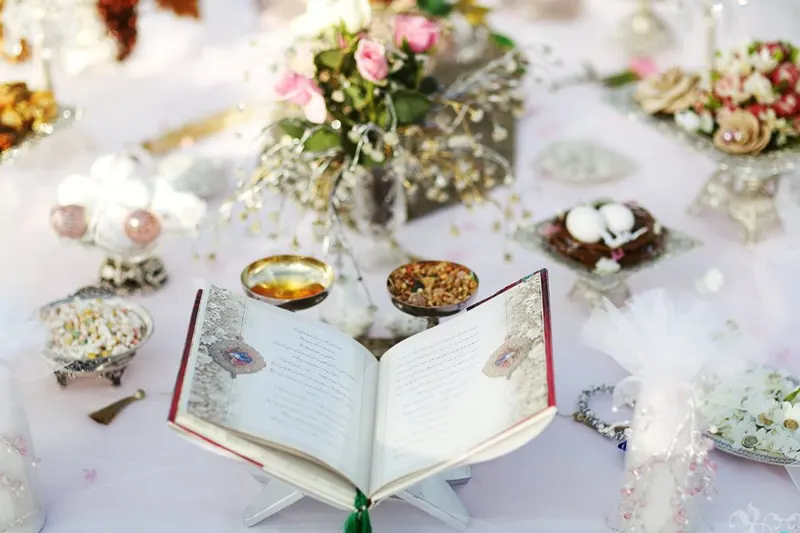
Persian wedding ceremonies transcend simple celebration events, embodying profound cultural heritage connecting contemporary Iranian diaspora families to ancestral traditions, poetic philosophy, and spiritual symbolism accumulated across thousands of years. The Sofreh Aghd ceremonial spread serves as visual manifestation of these cultural depths, with each element carrying specific meanings representing couple blessings, family continuity, and philosophical principles rooted in Zoroastrian cosmology and Persian literary tradition. Understanding these cultural foundations proves essential for destination wedding coordination respecting Iranian family expectations whilst navigating Turkish venue logistics and international guest experiences.
Understanding Sofreh Aghd: Cultural Significance and Spiritual Foundations
The Sofreh Aghd as Cultural and Spiritual Ceremony Centre
Sofreh Aghd translates as ceremonial spread, with Sofreh meaning spread or cloth and Aghd signifying ceremony or contract, representing the sacred space where Iranian marriage contracts receive spiritual blessings through symbolic objects, ceremonial rituals, and family witnesses regardless of religious affiliation. This cultural practice predates Islamic influence in Persia, rooting itself in Zoroastrian traditions emphasising natural element harmony, light versus darkness symbolism, and cosmic balance reflected through carefully selected ceremonial items. Modern Persian families practise Sofreh Aghd ceremonies across diverse religious backgrounds including Muslim, Jewish, Christian, BaháʼÃ, and secular contexts, demonstrating its cultural rather than strictly religious significance within Iranian identity.
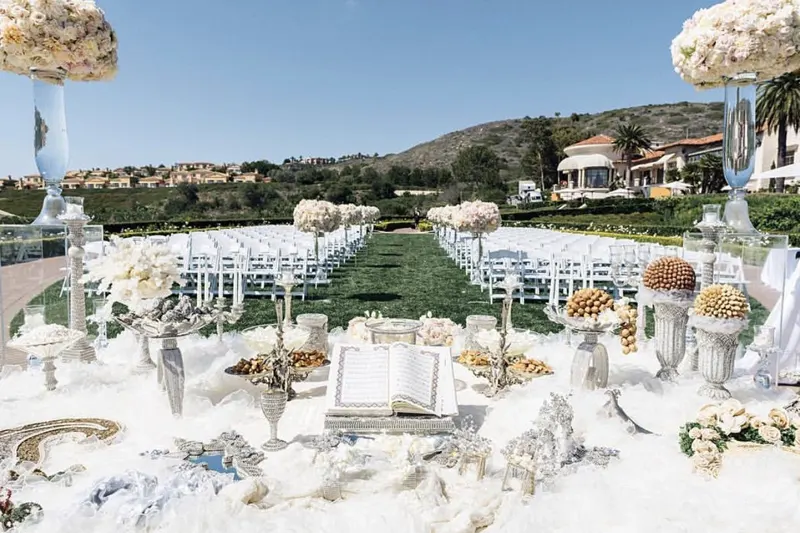
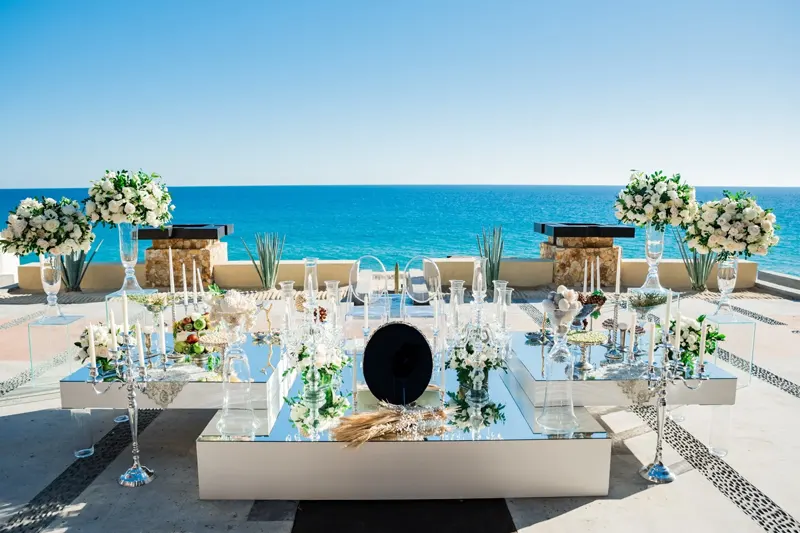
The ceremonial spread traditionally sits on embroidered silk cloths placed directly on floors or elevated platforms, creating intimate gathering spaces where couples sit facing arrangements whilst family members, close friends, and spiritual guides witness marriage contract exchanges. Contemporary adaptations elevate Sofreh arrangements on stages or tables enabling larger guest visibility particularly relevant for destination weddings where international attendees unfamiliar with Persian traditions benefit from clear ceremonial sightlines. The aesthetic presentation balances elaborate decoration with symbolic accuracy, as each element placement carries specific meaning requiring cultural knowledge beyond generic event styling approaches.
Families often dedicate substantial attention to Sofreh design reflecting celebration importance and cultural pride, with heirloom pieces including family Termeh silks, antique mirrors, traditional candlesticks, and generational religious texts contributing emotional depth alongside new acquisitions. This blend of ancestral connection and contemporary celebration creates meaningful ceremonies honouring both heritage preservation and couple individuality within established cultural frameworks. At Ramarossi, our Persian wedding coordination ensures these cultural nuances receive proper respect through authentic element sourcing, accurate symbolic arrangements, and family consultation throughout Sofreh design processes.
Traditional Sofreh Aghd Elements and Symbolic Meanings
The Ayeeneh mirror sits at Sofreh centre representing light, purity, brightness, and reflection of truth within marriage, with veiled brides traditionally entering ceremonies and grooms viewing their unveiled reflections symbolising transparent partnership beginnings. The mirror remains with couples throughout married life, displayed in homes as continuing marriage symbol. Flanking the mirror, two Shamdoun candlesticks represent bride and groom eternal flames, light dispelling darkness, and passionate commitment drawn from Zoroastrian fire worship traditions. These candles burn throughout ceremonies and traditionally remain lit until couples retire to private chambers.
The Khoncheh comprises seven coloured herbs and spices in decorative arrangements including wild rice for prosperity, poppy seeds for abundance, angelica for protection, salt for preservation, nigella seeds for healing, black tea for awakening, and frankincense for purification. This seven-element array wards against evil spirits whilst representing life’s diverse flavours combining bitter and sweet experiences. Asal honey sits ready for couple exchange where bride and groom dip pinky fingers and feed each other symbolising continual sweetness and mutual sustenance throughout marriage. This intimate ritual typically occurs near ceremony conclusions creating tender moments observed by families.
Naan-e-Sangak flatbread represents sustenance and abundance, whilst Nabaat rock candy bowls symbolise joy and happiness becoming couple keepsakes. Golab rosewater perfumes ceremony air with grace, purity, and beauty through Damask rose essence deeply rooted in Persian culture. Fresh fruits including pomegranates for fertility, apples for beauty, and grapes for abundance create natural prosperity symbols. Decorated eggs represent new life and fertility blessings. The Termeh traditional embroidered silk cloth passed through generations symbolises family continuity and ancestral blessings. Religious or literary texts including Quran, Bible, Torah, Avesta, or poetry collections from Hafez, Rumi, and Shahnameh represent spiritual guidance and wisdom.
Sheereeni Persian sweets including baklava, noghl sugar-coated almonds, and sohan asali saffron brittle offer guests after ceremonies symbolising abundance and joy shared with community. Esfand wild rue incense burns throughout ceremonies warding away evil eye and negative energies through protective smoke. Kaleh Ghand sugar cones receive rubbing over silk cloth held above couple heads by happily married female relatives, showering sweetness onto marriage through intergenerational blessing transfer. Each element placement, colour selection, and decorative treatment carries specific meaning requiring cultural knowledge ensuring authentic arrangements honouring Persian traditions rather than superficial aesthetic approximations.
Persian Wedding Ceremony Structure: Aghd and Aroosi Coordination
The Aghd Ceremony: Intimate Contract Exchange and Family Blessings
Traditional Persian weddings separate into two distinct events, the Aghd intimate ceremony where marriage contracts receive spiritual blessings before family witnesses, and the Aroosi grand reception celebrating unions with extended communities through elaborate parties, traditional music, dancing, and feasting. Historically, these events occurred months apart allowing families time for reception preparations, though contemporary celebrations typically unite both within single days maintaining ceremonial distinction through separate spaces, timing, or aesthetic transitions. The Aghd ceremony proves smaller and more intimate, often limited to close family members and dearest friends creating sacred atmospheres for spiritual contract exchanges.
Ceremony proceedings begin with Esfand incense burning warding evil spirits as veiled bride enters accompanied by female relatives, traditionally mothers or happily married sisters. The couple sits facing Sofreh arrangements whilst officiant, often respected family elder or religious figure, conducts ceremony proceedings including contract readings, blessing invocations, and consent requests. The traditional consent ritual involves officiants asking brides three times for marriage agreement, with brides playfully declining first and second requests whilst female relatives provide humorous excuses creating theatrical entertainment before final acceptance. This ritual represents bride agency and thoughtful consideration rather than rushed commitments.
During ceremonies, female relatives hold Tooreh Ghand silk unity cloths above couple heads whilst grinding Kaleh Ghand sugar cones over fabric sprinkling sweetness onto marriages through symbolic gestures passing blessings from happily married generations to newlyweds. Needle and thread rituals involve sewing stitches into unity cloths symbolising intertwined destinies and inseparable bonds. Following official marriage declarations, couples exchange rings, dip pinky fingers in honey feeding each other sweetness, and unveil brides for first mirror reflections observed by grooms. Close family members then approach congratulating couples and presenting traditional gifts including jewellery, Persian carpets, and monetary contributions creating joyous conclusion atmospheres.
The Aroosi Reception: Grand Celebration and Community Gathering
Aroosi receptions transform intimate Aghd ceremonies into elaborate community celebrations with extended guest lists, formal attire, professional entertainment, gourmet dining, and dancing continuing late into evenings. Traditional Persian music featuring tar, setar, tombak, and daf instruments creates cultural atmospheres, though contemporary celebrations often blend Persian traditional sounds with modern international music accommodating diverse guest preferences particularly relevant for diaspora families with multicultural attendees. Live bands, DJs, professional dancers, and cultural performers contribute entertainment variety maintaining celebration energy throughout extended reception periods.
Reception dining proves central to Persian hospitality traditions, with elaborate multi-course menus featuring classic dishes including Fesenjan pomegranate walnut stew, Ghormeh Sabzi herb stew, Tahdig crispy rice, various kebabs, saffron rice preparations, and abundant salads, appetisers, and desserts demonstrating culinary excellence and family generosity. At Ramarossi, we coordinate with chefs experienced in authentic Persian cuisine ensuring traditional flavour profiles, proper cooking techniques, and presentation aesthetics meeting family expectations whilst accommodating dietary restrictions and international guest palates through thoughtful menu balancing.
Reception décor typically proves more formal and elaborate than Aghd ceremony settings, with grand floral arrangements, dramatic lighting, elegant table settings, and sophisticated colour schemes reflecting couple aesthetics and family preferences. Dancing constitutes essential reception elements with traditional Persian circle dances, individual performances, and general celebration dancing creating joyous atmospheres. Contemporary Persian weddings in Turkey blend these traditional reception elements with Mediterranean venue advantages including beachfront settings, garden environments, and resort infrastructure creating unique fusion celebrations honouring heritage whilst embracing destination wedding opportunities.
Why Persian Families Choose Turkey for Sofreh Aghd Ceremonies
Turkey proves increasingly popular amongst Persian diaspora families throughout Europe, United Kingdom, North America, and Gulf regions seeking destination wedding locations combining cultural familiarity, geographic accessibility, stunning Mediterranean venues, and exceptional value compared to European luxury alternatives. The cultural bridges between Iranian and Turkish traditions create comfortable environments for Persian celebrations, with Turkish hospitality philosophies aligning with Iranian family expectations around guest treatment, celebration generosity, and respectful service. Geographic proximity particularly benefits European and Middle Eastern Persian communities, with direct flights from London, Paris, Frankfurt, Dubai, and other major cities reaching Antalya or Istanbul within three to five hours enabling comfortable international guest travel.
Venue variety accommodates diverse Persian wedding styles from traditional hotel ballrooms providing controlled environments for elaborate Sofreh arrangements and formal receptions, through beachfront locations offering Mediterranean ceremony backdrops impossible in landlocked European cities, to historical venues providing cultural ambiance reflecting Persian appreciation for architectural heritage and artistic excellence. Antalya’s purpose-built resort infrastructure particularly suits multi-day Persian celebrations requiring comprehensive guest accommodation, integrated dining, entertainment spaces, and coordination capabilities supporting Aghd ceremonies, Aroosi receptions, and extended family gatherings within single properties. Cost advantages prove substantial, with luxury 150-guest Persian weddings in Antalya totalling €35,000 to €55,000 including venue, authentic Persian catering, professional coordination, entertainment, and comprehensive services compared to €60,000 to €90,000 equivalents in London, Paris, or other European luxury destinations.
Ramarossi Persian Wedding Expertise: 100 Ceremonies and Cultural Competency
Ramarossi’s coordination of over 100 Persian weddings across Antalya and Istanbul creates specialised expertise understanding Sofreh Aghd ceremonial requirements, Aroosi reception expectations, extended family dynamics, and cultural sensitivities distinguishing authentic Persian coordination from generic international wedding planning. Our trilingual team fluent in Persian, English, and Turkish eliminates communication barriers throughout planning processes, enabling direct family conversations in native languages whilst coordinating Turkish vendor relationships ensuring accurate requirement translations and cultural expectation management across linguistic boundaries. This language capability proves particularly valuable during detailed Sofreh element discussions, ceremonial timing coordination, and family consultation requiring nuanced cultural understanding beyond basic interpretation services.
Our established vendor network includes authentic Persian element sourcing for traditional items difficult to locate in Turkish markets, experienced chefs specialising in Persian cuisine maintaining proper flavour profiles and presentation standards, Persian musicians and entertainers understanding traditional performance contexts and cultural appropriateness, and décor specialists familiar with Sofreh aesthetic requirements balancing symbolic accuracy with contemporary elegance. This comprehensive network development over 15 years creates coordination efficiency impossible through ad hoc vendor relationships assembled for individual celebrations, whilst quality control through established partnerships ensures consistent excellence meeting Persian family expectations throughout celebration elements.
Cultural competency extends beyond ceremonial knowledge to understanding Persian family dynamics, decision-making processes, celebration priorities, and communication preferences shaping successful coordination experiences. We recognise extended family involvement in Persian wedding planning, respectful approaches to elder family member consultations, sensitivity around religious versus cultural tradition distinctions, and appreciation for hospitality excellence reflecting family honour and social standing. This cultural understanding prevents coordination misunderstandings, facilitates smoother family relationships throughout planning, and demonstrates respect earning family trust essential for intimate celebration coordination handling personal family dynamics and significant life milestone celebrations.
Practical Persian Wedding Planning in Turkey: Timeline and Coordination
2026 Planning Timeline and Booking Recommendations
Begin Persian wedding planning 15 to 18 months advance for 2026 celebrations, particularly for peak season dates from June through September when Mediterranean weather proves ideal and international guest travel patterns favour summer holidays. This extended timeline accommodates comprehensive Sofreh element sourcing including family heirloom coordination, custom decoration commissioning, and authentic Persian item acquisition requiring international shipping or specialised vendor relationships. Extended families often participate in planning decisions requiring consultation periods, whilst destination logistics including guest accommodation coordination, travel arrangements, and legal documentation preparation benefit from unhurried timelines reducing stress and enabling thoughtful decision-making.
Initial Ramarossi consultations occur 12 to 15 months before weddings, establishing celebration visions, budget parameters, guest count projections, and cultural requirement discussions forming coordination foundations. These conversations conducted in Persian, English, or both create comfortable environments for detailed family expectations, ceremonial priorities, and practical considerations shaping proposal developments. Venue selection happens 10 to 12 months advance securing preferred properties during competitive periods, whilst Sofreh design consultations begin 8 to 10 months before ceremonies enabling thoughtful element selections, family heirloom integration discussions, and custom decoration planning without rushed decisions compromising cultural accuracy or aesthetic excellence.
Vendor confirmations including Persian catering, traditional music, professional photography understanding Persian ceremonial moments, and entertainment coordination progress 6 to 8 months before celebrations. Guest accommodation coordination begins simultaneously, with room block reservations, group discount negotiations, and travel information distribution supporting international attendee planning. Final Sofreh element acquisitions, decoration installations, ceremonial timing rehearsals, and family coordination meetings occur within final 2 to 3 months ensuring comprehensive preparation before celebration arrivals. This structured timeline balances thorough preparation with flexible adjustment capabilities as family preferences evolve throughout planning processes.
Venue Selection for Persian Sofreh Aghd Ceremonies
Persian ceremony venue requirements differ from standard wedding considerations, demanding adequate space for elaborate Sofreh arrangements visible to all attendees, appropriate ceiling heights accommodating raised platforms or stages without visual compression, lighting capabilities highlighting ceremonial elements whilst maintaining intimate atmospheres, and acoustic properties supporting officiant voices, musical performances, and family participation without amplification difficulties. Antalya resort ballrooms particularly suit these requirements through purpose-built event infrastructure, whilst beachfront locations prove popular for sunset Aghd ceremonies combining Mediterranean beauty with Persian tradition creating stunning cultural fusion aesthetics.
Capacity considerations account for both intimate Aghd ceremonies often limited to 50 to 100 closest family members and grand Aroosi receptions accommodating 150 to 300 guests depending on family sizes and diaspora community connections. Single-venue coordination simplifies logistics when properties offer multiple spaces enabling Aghd ceremony intimacy in smaller rooms followed by grand ballroom Aroosi receptions maintaining celebration continuity without guest transportation between locations. Climate control proves essential for elaborate Sofreh arrangements including fresh flowers, lit candles, and food items requiring stable temperatures, whilst backup infrastructure protects against Mediterranean weather uncertainties particularly relevant for outdoor ceremony components.
Cultural sensitivity in venue selection considers alcohol service policies respecting diverse family religious observances, prayer space availability for observant guests, dietary accommodation capabilities for halal requirements and vegetarian preferences, and staff cultural awareness training ensuring respectful service throughout Persian celebration contexts. Ramarossi venue partnerships across Belek, Lara, Kemer, and Side resort areas provide diverse options matching specific family preferences, celebration scales, and budget parameters whilst maintaining quality standards and operational excellence essential for complex multicultural coordination.
Persian Wedding Investment in Turkey 2026: Comprehensive Pricing
Complete Persian wedding packages through Ramarossi coordination range €35,000 to €65,000 for 150-guest celebrations depending on venue selection, ceremonial elaboration, reception formality, and service customisation levels. Standard luxury packages at €35,000 to €42,000 include five-star resort venue for both Aghd ceremony and Aroosi reception, authentic Persian multi-course dinner service, professional Sofreh Aghd arrangement with traditional elements, comprehensive wedding planning and trilingual coordination, professional photography and videography understanding Persian ceremonial moments, elegant floral design, quality sound systems, and basic entertainment coordination.
Premium packages at €48,000 to €55,000 add enhanced Sofreh arrangements with heirloom-quality elements, expanded Persian menu selections, traditional live music performers, upgraded photography and videography with Persian cultural expertise, elaborate floral installations, and extended coordination supporting multi-day family gatherings. Ultra-luxury celebrations at €58,000 to €65,000 provide exclusive venue access, gourmet Persian cuisine with specialty dishes, comprehensive traditional entertainment, luxury décor transformations, and white-glove service throughout celebration periods. All pricing includes Turkey’s 20 per cent KDV providing transparent budget certainty, with 40/30/30 payment structures managing financial planning across 12 to 18 month coordination timelines.
Guest accommodation through resort partnerships costs €100 to €200 per night for quality rooms with all-inclusive dining and 10 to 15 per cent group discounts applied to blocks exceeding 10 rooms. For 150-guest celebrations requiring 60 to 75 rooms over three-night average stays, collective guest investment totals €18,000 to €45,000 representing substantial family expenditure though significantly lower than European equivalents. The comprehensive investment combining wedding packages and guest accommodation proves exceptional value compared to London, Paris, or other European luxury destinations whilst maintaining superior quality, authentic cultural execution, and stunning Mediterranean settings impossible in alternative locations.
Persian Sofreh Aghd Ceremony Turkey: Frequently Asked Questions
Can we bring family heirloom items from abroad for our Sofreh Aghd in Turkey?
Absolutely, many Persian families transport precious heirloom elements including family Termeh silks, antique mirrors, traditional candlesticks, and generational religious texts to Turkish destination weddings creating meaningful ancestral connections within celebration contexts. Ramarossi coordinates safe heirloom integration including customs navigation for valuable items, secure storage before ceremonies, professional handling during Sofreh arrangements, and careful packaging for return journeys ensuring family treasures receive proper respect throughout destination coordination. We recommend photographing heirlooms before travel, carrying irreplaceable items in cabin luggage rather than checked bags, and coordinating early arrivals enabling proper setup time without rushed handling. Alternatively, Ramarossi sources authentic Persian elements in Turkey when families prefer avoiding heirloom travel risks whilst maintaining traditional ceremonial accuracy through quality acquisitions matching cultural requirements.
How does Ramarossi ensure authentic Persian cuisine meeting family expectations in Turkey?
Our established relationships with chefs experienced in Persian cuisine ensure authentic flavour profiles, proper cooking techniques, and presentation aesthetics meeting Persian family standards through comprehensive menu development consultations conducted in Persian language enabling precise requirement communication. We coordinate tastings when families visit Turkey for planning trips, though international families often rely on our Persian wedding experience and chef partnerships proven through 100 previous celebrations. Menu customisation accommodates regional Persian preferences recognising culinary diversity across Iranian provinces, dietary restrictions including halal requirements and vegetarian options, and fusion elements blending traditional Persian dishes with Turkish Mediterranean specialities creating unique cultural celebration menus. Quality ingredient sourcing proves essential, with specific spices, pomegranates, saffron, and other Persian staples acquired through specialised suppliers maintaining authentic preparations rather than approximated substitutions compromising traditional flavours families expect.
What legal requirements exist for Persian couples marrying in Turkey?
Most Persian couples choose symbolic Sofreh Aghd ceremonies in Turkey after completing civil marriage requirements in home countries, avoiding Turkish legal procedures requiring document translations, government office appointments, and residency waiting periods complicating destination coordination. Symbolic ceremonies prove equally meaningful culturally whilst eliminating legal complexity, with Persian marriage contracts and ceremonial proceedings maintaining traditional significance regardless of civil registration locations. For couples preferring Turkish civil ceremonies, Ramarossi coordinates complete legal processes including document preparation, translation services, government appointments, and registration completion typically accomplished within three days when couples arrive with proper paperwork including birth certificates, divorce decrees if applicable, and Certificates of No Impediment from home countries. Legal coordination costs €400 to €800 depending on requirements, though most families choose symbolic approaches focusing celebration energy on cultural traditions rather than administrative procedures.
Can Ramarossi coordinate multi-day Persian celebrations including pre-wedding events?
Absolutely, many Persian families extend celebrations across multiple days incorporating welcome gatherings for arriving international guests, intimate family dinners preceding Aghd ceremonies, separate Aghd and Aroosi events maintaining traditional distinction, and farewell brunches concluding celebration weekends before guest departures. Ramarossi coordinates comprehensive multi-day experiences including sequential event planning, varied venue selections preventing repetitive atmospheres, entertainment diversity maintaining guest engagement throughout extended celebrations, and integrated resort coordination simplifying logistics when properties accommodate all events within single locations. Our experience serving Persian, Pakistani, and Indian wedding traditions requiring multiple ceremonial events demonstrates operational capabilities managing complex timelines, diverse cultural requirements, and extended family coordination essential for successful multi-day celebrations beyond single-event wedding approaches.
How far in advance should we book Ramarossi for 2026 Persian weddings?
Contact Ramarossi 15 to 18 months before desired 2026 wedding dates, particularly for peak season celebrations from June through September when venue demand peaks and comprehensive coordination timelines prove essential for authentic Persian element sourcing, family consultation processes, and international guest coordination. Earlier contact enables preferred venue securing, optimal vendor availability, and unhurried planning developing thoughtful celebration designs honouring family expectations whilst managing destination logistics complexities. Initial consultations occur via video calls conducted in Persian, English, or both, establishing celebration visions, discussing cultural requirements, reviewing budget parameters, and developing coordination proposals forming planning foundations. These complimentary consultations create comfortable environments for detailed family conversations ensuring Ramarossi partnerships align with specific Persian wedding needs before formal commitments. Contact us directly to schedule 2026 consultation and begin your authentic Persian destination wedding planning journey in Turkey’s stunning Mediterranean settings.