

Pakistani Mehndi Night: Traditions, Décor Ideas and Planning Abroad
What happens at a Mehndi, what to wear, how to style it and how to hold one abroad, with a real Mehndi night from Fethiye.
A Mehndi night is the henna evening before a Pakistani Nikah: the bride’s hands are decorated with henna, both families arrive with music, and the night carries on with songs, dances and dinner.
What is a Mehndi night?
Mehndi is the Urdu and Hindi word for henna, and it has come to mean the celebration where henna is applied as well, which is why the night is also called the Mehndi ceremony. The Merriam-Webster dictionary records both meanings: the henna design on the skin, and the event at which the designs are applied. You will also see it spelled mehendi or mehandi. All three spellings describe the same night.
In a Pakistani wedding, the Mehndi is the lively, informal night of the celebrations. The Nikah is the religious marriage and the reception is the formal evening; the Mehndi is where the families sing, dance, tease each other and celebrate the bride before she marries. It is held in the days before the Nikah.
The henna itself comes from the leaves of one plant, Lawsonia inermis. As the Natural History Museum explains, a dye in the leaves binds to the protein in skin, which is why the colour shows darkest on the hands and feet.
Where the Mehndi sits among the wedding events
A Pakistani wedding is a series of events rather than a single day. Not every family holds all of them, and the order and names vary by region and family, but this is the general order of events.
Informal evenings at home with the dholak drum, wedding songs, food and dancing.
In the weeks and days before the wedding.
The bride wears yellow and a turmeric paste (ubtan) is applied to her skin by close family.
A few days before the wedding, where families keep this custom.
Henna for the bride, the families’ entrances, songs, choreographed dances and dinner.
Before the Nikah, as an evening event.
The Islamic marriage ceremony, led by an imam or nikah khwan, with witnesses and the nikah nama (marriage contract).
After the Mehndi, sometimes on the same day as the baraat or reception.
The groom’s procession arrives, and at the rukhsati the bride leaves with her new family.
On the wedding day itself.
The reception hosted by the groom’s family after the marriage.
After the Nikah, as the closing celebration.
| Event | What happens | When |
|---|---|---|
| Dholki | Informal evenings at home with the dholak drum, wedding songs, food and dancing. | In the weeks and days before the wedding. |
| Mayun | The bride wears yellow and a turmeric paste (ubtan) is applied to her skin by close family. | A few days before the wedding, where families keep this custom. |
| Mehndi | Henna for the bride, the families’ entrances, songs, choreographed dances and dinner. | Before the Nikah, as an evening event. |
| Nikah | The Islamic marriage ceremony, led by an imam or nikah khwan, with witnesses and the nikah nama (marriage contract). | After the Mehndi, sometimes on the same day as the baraat or reception. |
| Baraat and rukhsati | The groom’s procession arrives, and at the rukhsati the bride leaves with her new family. | On the wedding day itself. |
| Walima | The reception hosted by the groom’s family after the marriage. | After the Nikah, as the closing celebration. |
At home, each family might hold its own Mehndi, with the groom’s side visiting the bride’s Mehndi and the bride’s side visiting the groom’s. Abroad, with both families staying in the same place, a joint Mehndi for both sides is the simpler choice, and it keeps the friendly rivalry between the two families in one room. For the religious and legal side of the Nikah in Turkey, read our guide to a Muslim wedding in Turkey.
Mehndi traditions, from the entrance to the last dance
No two families run a Mehndi in quite the same way, and that is part of its charm. These are the moments to plan for.
The groom’s family arrives
The groom’s side makes an entrance, traditionally with a dhol player leading the way, carrying decorated trays (thaals) of henna, sweets and candles. The bride’s family waits to welcome them with flower petals, and from that moment the two sides start competing over who can sing louder and dance longer.
The bride’s entrance
The bride then makes her own entrance, escorted by her brothers, sisters or cousins. Some brides walk in under a dupatta trimmed with flowers, held up by the people walking beside her. She takes her place on the Mehndi stage, which becomes the centre of the night.
The Mehndi ceremony: henna, sweets and blessings
The bride’s hands, and sometimes her feet, are decorated with henna. Elders and family members come up to the stage one by one to place a little henna on the couple’s palms, feed them a sweet and give their blessings. Some henna artists hide the groom’s name or initials in the bride’s design for the groom to find later.
Songs, dhol and choreographed dances
Music carries the whole night. Traditional wedding songs sung to the dholak sit alongside a DJ’s playlist, and friends and cousins on both sides rehearse choreographed dances before the wedding. On the night, the performances can turn into a good-natured contest between the bride’s side and the groom’s side.
Dinner
The Mehndi meal is generous and relaxed: biryani, kebabs, qorma and sweet desserts, served as a buffet so guests can eat between the performances and the dancing. If some of your guests are vegetarian, plan dishes for them from the start rather than as an afterthought.
What to wear to a Mehndi
A Mehndi calls for bright colours and clothes you can dance in. It is less formal than the wedding day, and the outfits reflect that.
- The bride: yellow, green or orange is the traditional choice, lighter in weight and embellishment than her wedding outfit. Red is traditionally kept for the baraat.
- The groom: a kurta, with or without a waistcoat, in a colour that sits well with the bride’s outfit.
- Women guests: bright shalwar kameez, gharara or lehenga in Mehndi colours. Leave the red to the bride.
- Men guests: a kurta with shalwar or trousers; a waistcoat smartens it up.
- Shoes: a garden Mehndi means grass, so flats or block heels work better than stilettos.
- For later in the evening: a light shawl or wrap, as evenings outdoors can cool down after sunset.
If friends are performing, agree on outfits for the dance group early, so everyone can buy or tailor them before they travel.
Mehndi décor ideas
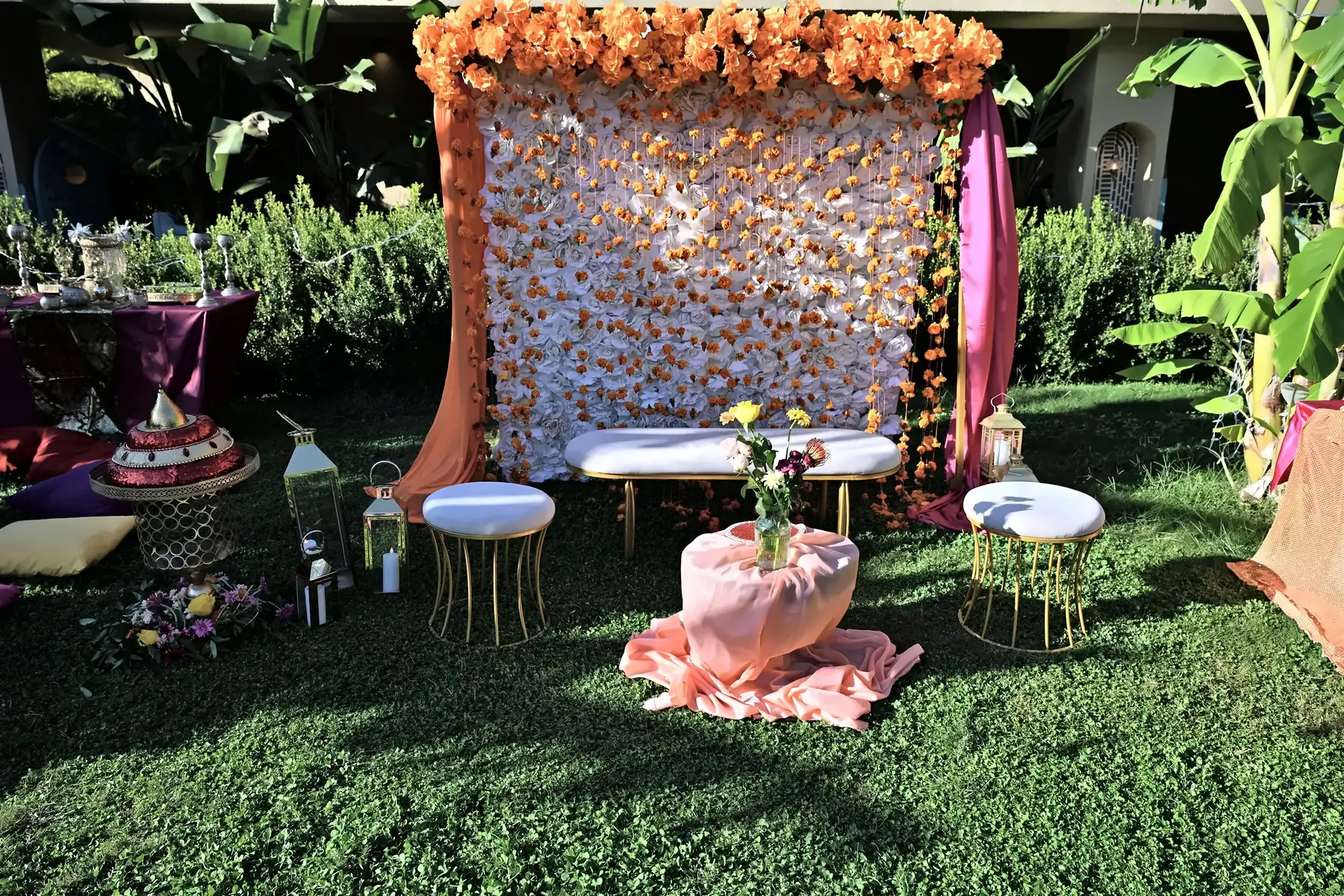
Mehndi décor is warm, colourful and close to the ground: a stage for the bride, floor seating and plenty of candlelight. Several of these ideas come from Sahar and Fahad’s Mehndi in Fethiye, and they work in a villa garden, on a hotel terrace or on a lawn by the sea.
A stage the whole party can see
The stage is where the bride sits, where the henna is applied and where the families come to give their blessings. A wall of marigolds, drapes in orange and pink, low seats and cushions give it the Mehndi look, and it should face the dance floor so every performance plays to the bride.
Mandala rugs and floor seating
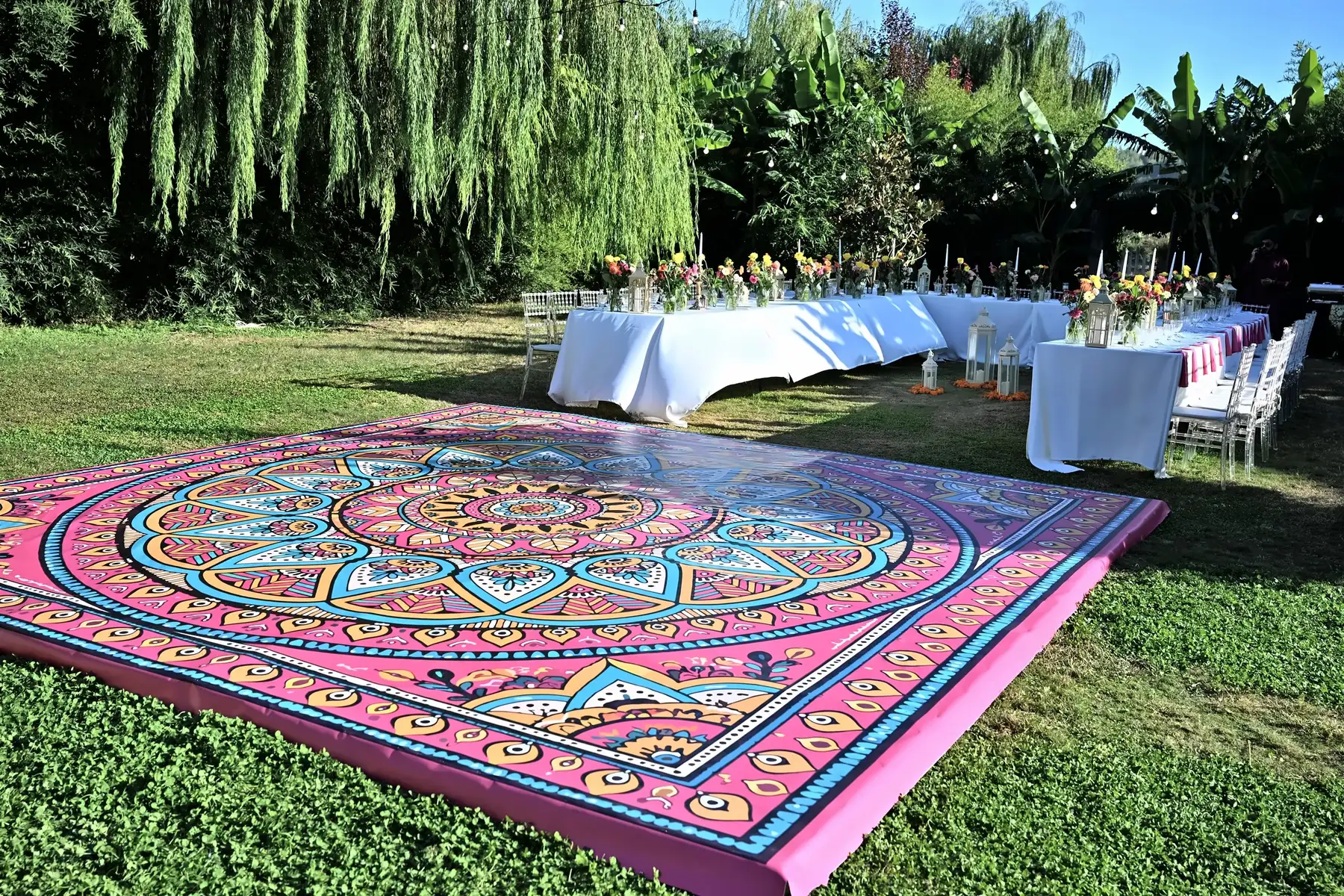
A printed mandala rug on the lawn marks out the dance floor or a seating area, and floor cushions give younger guests a place to sit close to the action. Keep proper chairs for older relatives, with a clear view of the stage.
Lanterns, candles and brass
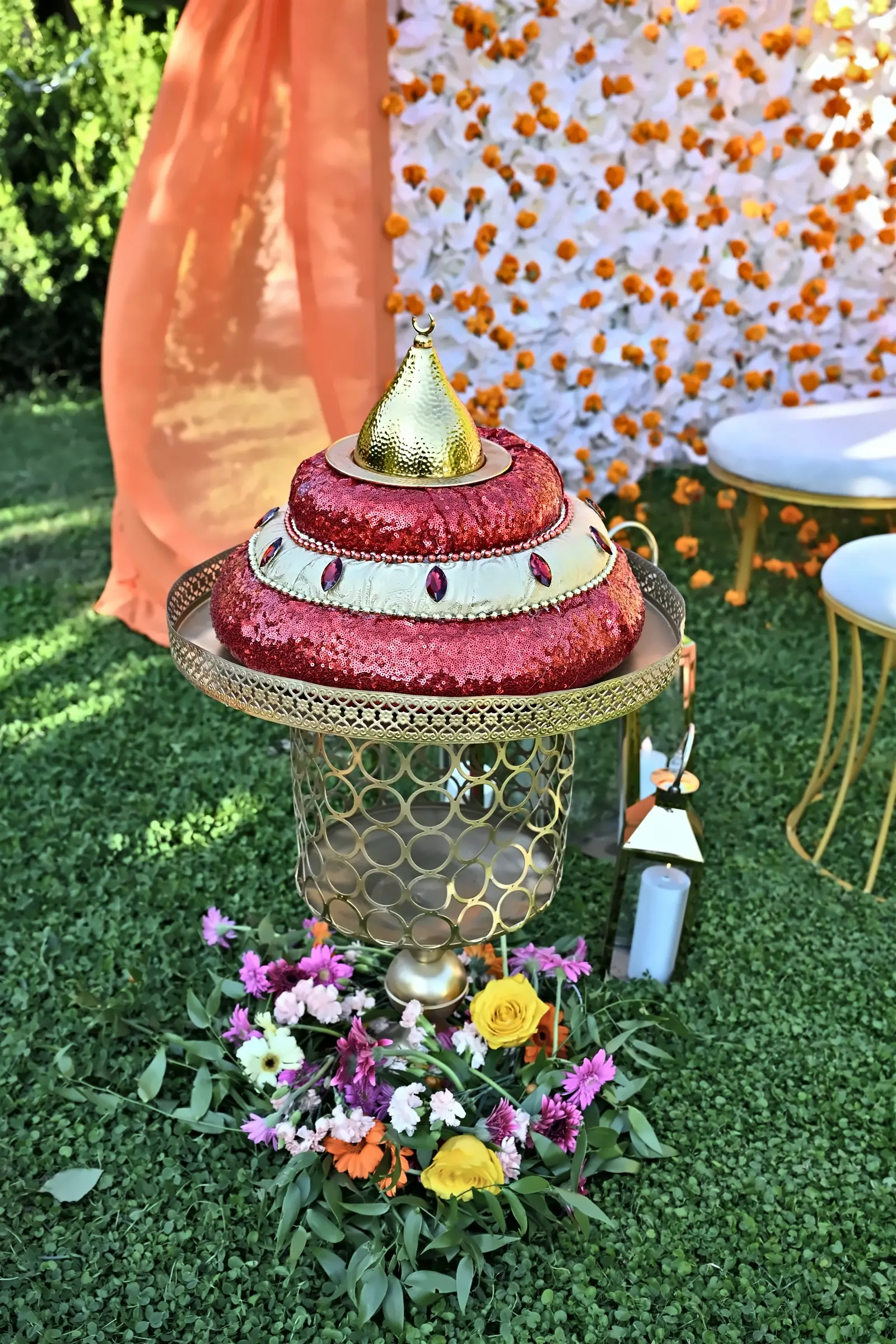
Gold lanterns, candles in brass holders and brass trays bring the warm glow a Mehndi needs once the sun goes down. Add string lights over the tables and you have enough light for dancing and for the photographer without losing the mood.
Colourful flowers on the tables
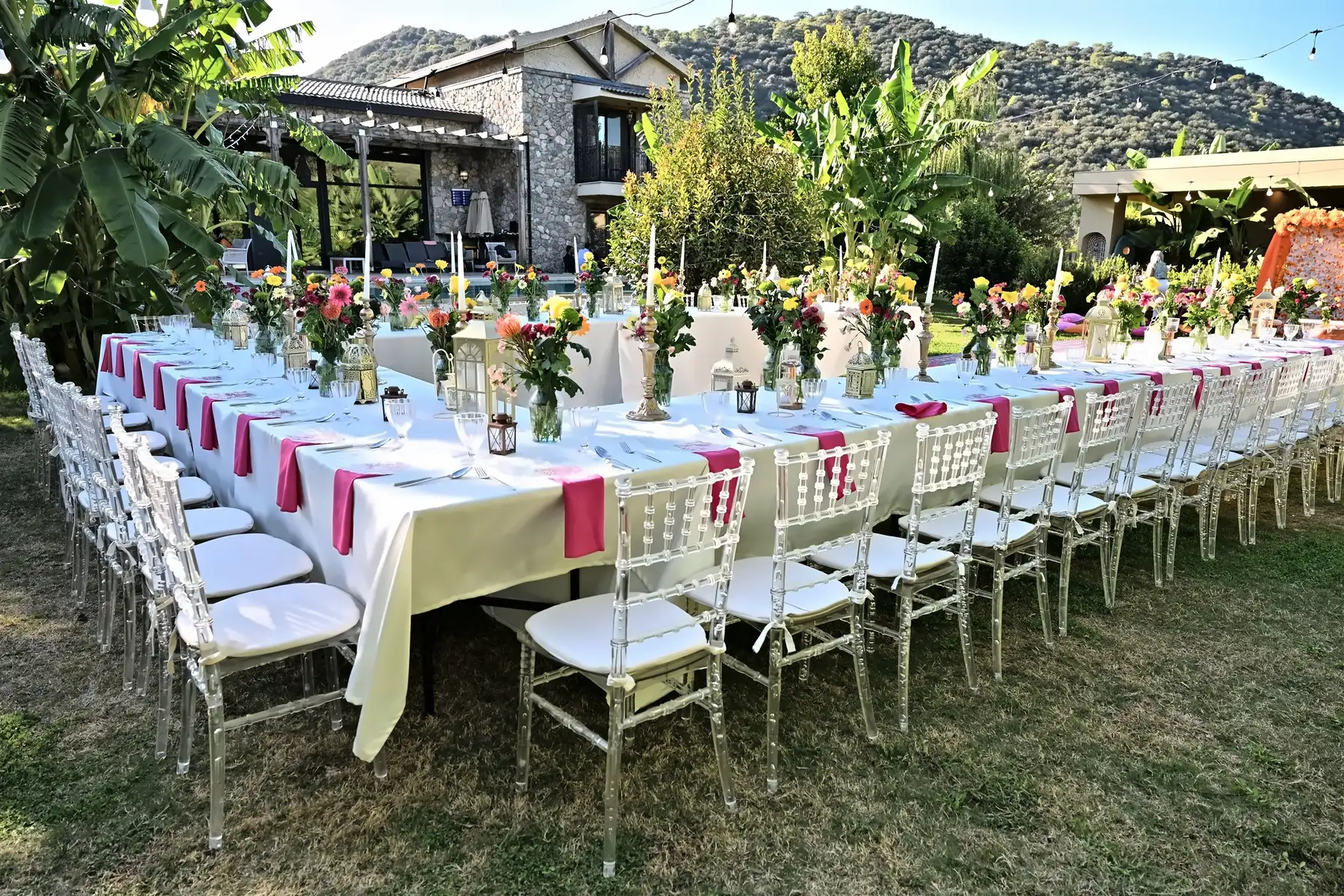
Mehndi tables can take more colour than a reception: mixed flowers in yellow, orange, pink and red, pink napkins and runners, and small arrangements low enough for guests to talk across.
A henna station and a welcome sign
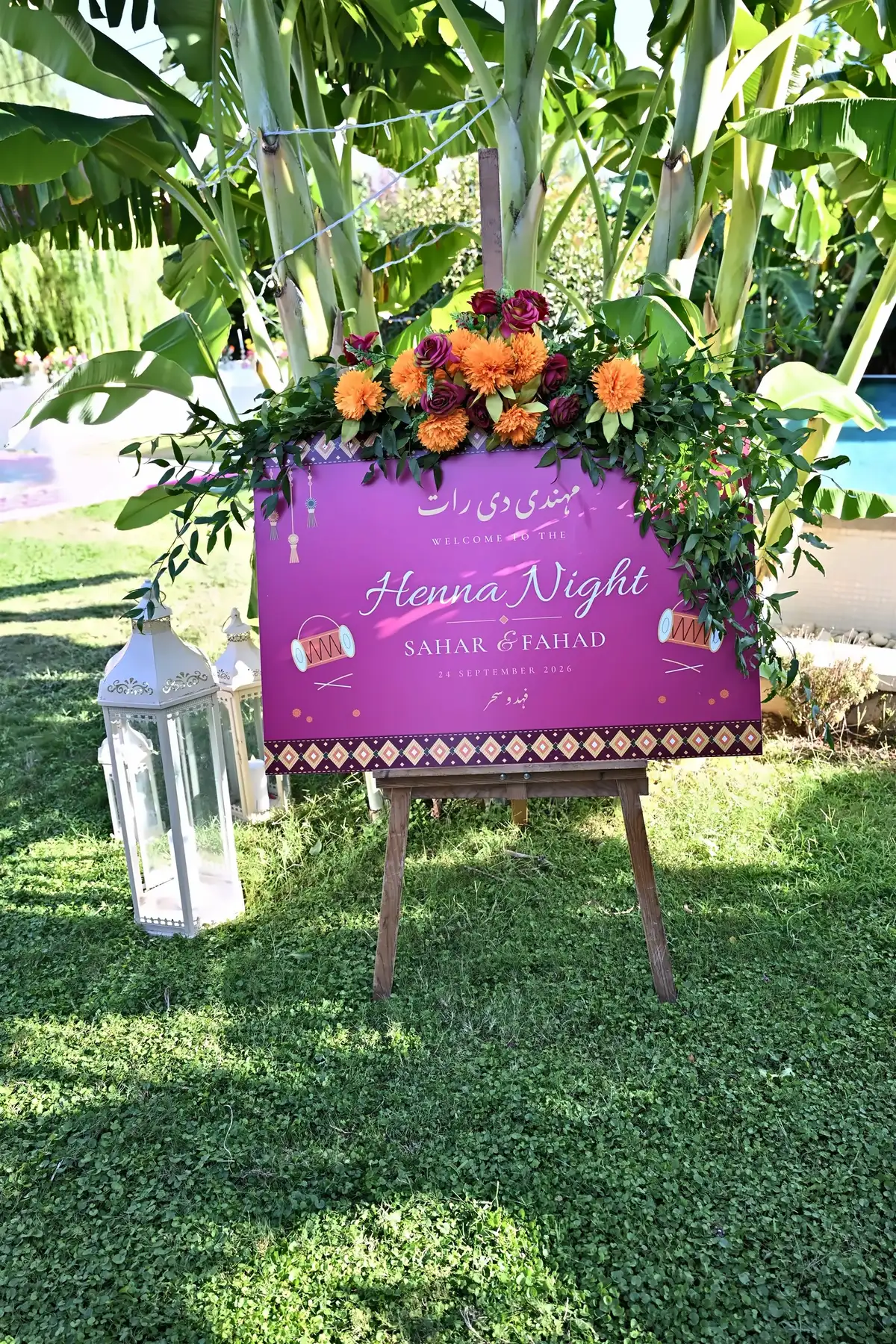
A dedicated henna station lets guests have their own henna done while the ceremony carries on. A welcome sign at the entrance, in the couple’s colours, sets the tone as guests arrive.
- Stage with a backdrop, seating for the bride and room for family to come up
- Dance floor facing the stage
- Chairs with a clear view for older relatives
- Henna station for guests
- Lanterns, candles and string lights for after sunset
- Colourful table flowers, runners and napkins
- Welcome sign at the entrance
- Space for the dhol player and the DJ
Planning a Mehndi abroad in Turkey
Henna nights are part of Turkish weddings too: the Turkish kına gecesi is a henna night of its own, so the idea of a henna evening before the wedding is familiar here. What changes abroad is the planning around it: your guests are travelling, the setting is new to them, and the Mehndi sits inside a programme of several events.
Choose a setting with room for every part of the night
A Mehndi needs a stage, a dance floor, a dinner area, a henna station and seating for older guests, all within sight of each other. A villa garden, a hotel lawn or terrace, or a beach setting can all work. What matters is the space and the layout, and whether the setting allows music and dancing in the evening.
Set the finish time around the next morning
If your Nikah is the morning after the Mehndi, the finish time of the Mehndi decides how fresh the bride and the family look in the Nikah photos. Hair and make-up for a morning Nikah can start early, so plan the Mehndi to end in good time.
In Turkey, wedding music ends at 00:00 as standard. Some venues must stop at 23:00 or 23:30 because of local limits, and only a venue with permission for late music and no homes around it can continue to 02:00 or 03:00. Ask about the music time before you choose your Mehndi setting.
Book the henna artist early
Decide whether the bride’s full bridal henna will be done at the Mehndi or earlier in private, with only a symbolic touch on stage. A detailed bridal design takes hours and needs time to dry, so some brides have it done a day or two before, as the colour keeps darkening after the paste comes off. Agree in advance the number of guests the henna artist will decorate during the night. Ask for natural henna only: so-called black henna can contain a hair dye called PPD, which can cause serious skin reactions.
Plan the music and the entrances together
The dhol entrance, the bride’s entrance, the performances and the open dancing each need their moment. Give the DJ the order of performances and the songs for each one before the night. Our guide to wedding music in Antalya covers DJs, dhol players and sound.
Feed everyone well
Plan the buffet around your family’s tastes, with halal food, vegetarian dishes and plenty of options for children. For what shapes the budget of the whole wedding, read how much a Muslim destination wedding costs.
Think about the guests’ journey
Guests flying in from different countries arrive on different days, so a Mehndi on the second night gives everyone time to settle in first. If the Mehndi is at a different place from the hotels, plan the shuttles there and back. Our wedding guest transport guide explains how this works around Antalya, and our guide on when to get married in Antalya shows the weather month by month.
A real Mehndi night: Sahar and Fahad in Fethiye
Sahar and Fahad, a couple from Toronto, held their three-day Pakistani wedding in Fethiye in September 2026, with 45 guests from Canada, the United States, the United Kingdom and Pakistan. Their Mehndi took place on 24 September, the night after the welcome dinner and the night before the Nikah.
Our team brought and styled all the décor: U-shaped tables around a dance floor, a mandala floor, a Mehndi stage framed with marigolds, lanterns and colourful flowers on the tables. The groom’s family made their entrance from the staging area behind a dhol player, and Sahar’s family welcomed them with flower petals. Sahar then walked in with her brothers and sisters.
While the henna ceremony went on at the stage, the henna station we arranged opened for the guests. Sahar and her friends performed the dances they had rehearsed. A buffet dinner with vegetarian options followed, and the dancing went on until 22:30. We finished the night at that time on purpose: the Nikah was at 11:00 the next morning, and hair and make-up for Sahar and six guests started at 7:00.
See how the welcome dinner, the Nikah and the reception came together in our page on Pakistani weddings in Turkey, or read more about weddings in Fethiye.
Planning a Mehndi in Turkey?
Tell Ramarossi your date or season, the events you are planning, your guest count and where your guests are flying from. We can arrange a free video call to talk through your plans and prepare a bespoke proposal.
Prefer another email service? Write to info@ramarossi.com using Wedding in Turkey Enquiry - Pakistani Wedding as the subject.
Follow our celebrations
Discover beautiful weddings, private events, styling ideas and behind-the-scenes moments from Ramarossi in Turkey.
Frequently Asked Questions
What is a Mehndi night?
A Mehndi night is the henna celebration held before a Pakistani Nikah. Henna is applied to the bride’s hands, both families make their entrances with music, and the night carries on with songs, choreographed dances and dinner.
What happens at a Mehndi ceremony?
The families make their entrances, the bride takes her place on the stage, and elders place henna on the couple’s palms, feed them a sweet and give their blessings. Songs, choreographed dances and dinner follow.
Is the Mehndi before or after the Nikah?
The Mehndi is traditionally held in the days before the Nikah. At a destination wedding it can be the night before the Nikah, as it was for Sahar and Fahad, or two nights before.
What is the difference between a dholki and a Mehndi?
A dholki is an informal gathering at home in the weeks or days before the wedding, with the dholak drum, wedding songs and food. The Mehndi is a larger, planned event with a stage, henna for the bride, the families’ entrances and performances.
Do the bride and groom have separate Mehndis?
Traditionally each family could hold its own Mehndi, with the other side visiting. For a wedding abroad, where both families stay in the same place, a joint Mehndi for both sides is the simpler choice.
What should guests wear to a Pakistani Mehndi?
Bright colours such as yellow, green, orange and pink, in outfits you can dance in: shalwar kameez, gharara or lehenga for women and a kurta for men. Red is traditionally the bride’s colour for the baraat, so guests leave it to her.
What colours are used for a Mehndi?
Yellow, green and orange are the traditional Mehndi colours, with marigold tones, pinks and gold accents in the décor.
Is it mehndi, mehendi or mehandi?
All three spellings are used for the same thing. Mehndi is the spelling recorded by Merriam-Webster, with mehendi as a less common variant.
Can we have a Mehndi night in Turkey?
Yes. A Mehndi can be held in a villa garden, at a hotel or by the sea, as one event in a wedding programme. Sahar and Fahad held theirs in a villa garden in Fethiye, with a henna artist, a dhol entrance and a buffet dinner.
Can you arrange a henna artist in Turkey?
Yes, as part of a wedding we plan. For Sahar and Fahad’s Mehndi we arranged a henna artist who decorated the guests’ hands during the night.
How late can a Mehndi go on in Turkey?
Wedding music ends at 00:00 as standard. Some venues must stop at 23:00 or 23:30, and a venue with permission for late music and no homes around it can continue to 02:00 or 03:00. If your Nikah is the next morning, an earlier finish is kinder to the bride and the family.