


A venue can look right in every photograph and still be the wrong place for the wedding you have designed. Photographs do not show whether a furniture van can reach the service gate, whether dance-floor panels fit along the service corridor, or whether suppliers will have enough time to build everything before guests arrive.
That is what Antalya wedding load-in and setup access is about. If you are planning a wedding in Antalya, establish how equipment reaches the event space, when suppliers are allowed in, how long the build can take and how everything leaves before you commit to a venue or approve a design. In Antalya, Turkey, these conditions differ from property to property, and the reliable answer comes from the venue, in writing.
“What your venue must allow” is not a legal requirement placed on venues. Each property sets its own supplier hours, access routes, security procedures, setup periods and operational conditions. The point is practical: if your wedding needs a certain level of access to be built, the specific venue has to be able to provide it, and confirm that it can.
What Load-In Access Actually Means
“Load-in” is the production term for getting suppliers and equipment into a venue and ready for the event. It is a chain, and every link has to work:
- Delivery: supplier vehicles arrive at the property.
- Unloading: equipment comes off the vehicle at an agreed point.
- Carry route: items move from that point towards the event space.
- Staging: equipment waits somewhere before it is installed.
- Installation: structures, furniture, flowers, lighting and sound are built and placed.
- Testing: technical equipment is checked before guests arrive.
- Strike: everything is dismantled and removed after the event.
A weakness at any point affects the rest: a long carry route, for example, uses up setup time.
Guest Access and Supplier Access Are Not the Same Thing
Couples judge a venue by the arrival, the entrance and the walk to the ceremony area. Supplier access can be a different route, entrance and set of rules.
A hotel’s main entrance does not automatically mean suppliers may use it. A garden guests reach through a lobby may be reachable for equipment only by a narrow service path, and a rooftop with comfortable guest lifts may have a smaller service lift with its own hours. These are examples, not rules about Antalya venues. Alongside the broader Antalya venue site visit checklist, walk the route your suppliers will actually use.
Follow the Equipment from the Road to the Event Space
Start where a delivery vehicle would stop and walk to the exact spot where each element will be built, noting every step, door and change of surface.
Where the Vehicle Stops
Establish where supplier vehicles may unload and what size of vehicle can reach that point: whether there is a loading bay or service entrance, a height restriction, room to turn, and how long vehicles may stay. If a truck cannot reach the service road, equipment may need transferring to smaller vehicles, which adds time.
The Carry Route
A long manual carry, slopes, steps or tight corners all slow the build. Check doors, gates, corridors and thresholds, and whether the route crosses guest areas. Where the event space is on another level, ask whether suppliers may use a service lift, its dimensions, load limit and hours. Do not assume suppliers can use guest lifts.
What Has to Fit
Stage sections, dance-floor panels, bar units and ceremony structures all have to pass the narrowest point on the route. Anything larger has to be redesigned or built in sections. Where the route is exposed, ask how equipment is protected if it rains during load-in.
How Much Setup Time Does the Venue Actually Give You?
Knowing that a wedding starts at 18:00 tells you nothing about when it can start being built. The useful question is when the venue releases the event space, and how much time that leaves before guests arrive.
Setup time is not only décor time. Depending on the event, it may need to cover floor protection where required, furniture, stage or dance-floor installation, lighting and sound, flowers and table styling, bar and catering preparation, technical testing and a final planner inspection. The order differs by event; table styling, for instance, cannot finish until the furniture is in place. What matters is that every supplier can finish properly and testing is not squeezed into the last minutes.
Ask whether setup can begin the day before, whether the space is in use earlier on the wedding day, and whether the handover time is stated in writing. A design built for a long setup window does not work in a short one.
What Happens When Several Suppliers Arrive at Once?
On a wedding day the venue may be receiving several suppliers, not one: furniture, florist, production, sound and lighting, catering, bar, entertainment, cake, photography and the planning team. If they all arrive at one gate at once, a property with limited loading space can become blocked.
The answer is a coordinated arrival schedule built around the venue’s actual access: who arrives when, through which entrance, for how long, and which installations must be finished before the next can start. Depending on the agreed scope, Ramarossi coordinates this schedule with the venue and suppliers. Ramarossi does not provide every supplier service itself; its role is to make the moving parts fit the venue’s real conditions.
Hotel and Resort Load-In Questions
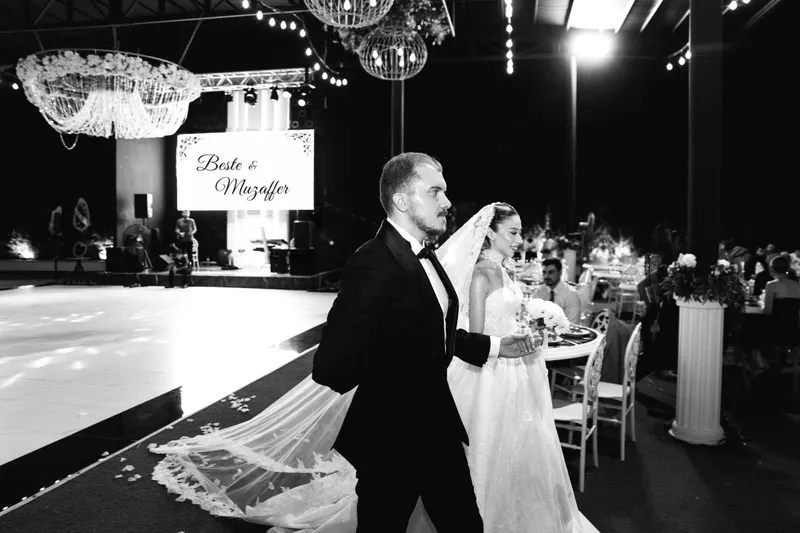
Larger hotels and resorts in the Antalya area can have service entrances and back-of-house routes, but also formal procedures, because the property keeps running for its guests. Procedures vary, so confirm which entrance suppliers must use, whether suppliers and vehicle plates must be registered with security in advance, when deliveries are accepted, whether equipment may pass through guest areas, when the event space is released and whether installation can begin the previous evening.
Private Venue and Villa Load-In Questions
Private venues, estates and villas can present the opposite challenge: less formal infrastructure, more physical restriction. Narrow approach roads, limited turning space, slopes, steps, long manual carries and the absence of a loading area or storage room can all affect what can be built and how long it takes. For the wider property checks, see the guide to villa wedding access and logistics in Antalya.
Restaurant and Central Venue Access
A central restaurant may seem easy to reach, yet supplier access can be constrained by public roads, pedestrian areas, shared entrances, narrow service areas, limited storage and other customers. Loading may also be limited by the property’s rules or local traffic management, so check restrictions for the specific property and date. Include any kitchen or service route catering equipment needs; the commercial side is covered in Antalya wedding venue catering rules.
Where Does Equipment Wait Before It Is Installed?
Equipment does not always go straight from the vehicle to its final position. Ask where items can wait before the space is released, where florists and catering teams can prepare, where cases and replacement equipment go during the event, and whether anything can remain overnight. Where dedicated staging space is limited or unavailable, deliveries may need tighter sequencing, vehicle holding or another agreed temporary arrangement, which reduces flexibility if a supplier is delayed.
Can Suppliers Work While the Venue Is Still Operating?
At resorts, restaurants and shared properties, the venue may still be serving guests, customers or another event during installation. That affects supplier routes, which areas can be blocked, vehicle movements, setup noise, when visible décor can go up and when sound checks can happen. These conditions are set by the venue and can differ by day and space, so confirm them before the production schedule is finalised.
Using Several Areas Inside One Venue
When the ceremony, dinner and dancing use different spaces within one property, check that equipment can reach each area and that each is released when the build needs it. Where one space changes function during the event, establish where replacement furniture waits, who makes the change, how much time the programme allows and where guests are meanwhile.
When a Design Looks Good but Cannot Be Installed
Some couples contact a planner by asking first about decoration packages, but a design cannot be properly finalised until the venue is selected and inspected. It depends on the venue’s architecture, dimensions and surfaces, where each element can sit, power, installation rules, the weather backup and, critically, how equipment reaches the space and how long the team has to build it.
A concept that cannot physically reach the event space, or cannot be installed within the available setup window, needs to be adapted: redesigned, built in sections, simplified or moved. Discovering that after suppliers are booked can mean renegotiating with several of them at once.
This is why Ramarossi does not work from one fixed décor or setup package. The planning scope depends on the venue, guest count, design, supplier mix, technical requirements, catering model, setup access, event timing, priorities and budget direction. The sequence that works is venue first, access confirmed, then a design built around what the venue can physically support.
Dismantling and Collection Are Part of the Access Plan
The load-in plan is incomplete until you know how everything leaves; the morning route may not be available late at night. Confirm when dismantling can begin, when equipment must be removed, whether anything can stay overnight or be collected the following morning, and whether the same loading route remains available. Cleaning, waste and deposit arrangements are separate questions.
Load-In Access Points at a Glance
| Access point | What to inspect | What to confirm with the venue | Why it affects the wedding |
|---|---|---|---|
| Supplier vehicle arrival | Approach road, entrance and turning space | Permitted vehicle size, arrival times and where supplier vehicles may wait | Decides which vehicles can deliver and whether equipment must be transferred |
| Unloading point | Loading bay, service entrance or kerbside area | The exact unloading location and how long vehicles may stay | Limits how many suppliers can unload at the same time |
| Carry route | Distance, surfaces, doors, gates and corridors | The approved route and any areas suppliers may not cross | Affects build time and which items can reach the space |
| Service lift | Internal size, door width and load limit | Availability, hours and whether suppliers may use it | Determines whether large items can move between levels |
| Stairs and thresholds | Steps, slopes and raised door frames | Whether ramps or an alternative route exist | Affects heavy items, trolleys and carry time |
| Event-space handover | Current use of the space on the wedding day | The exact release time and whether previous-day setup is possible | Sets the real setup window |
| Staging and storage | Back-of-house rooms and covered areas | Where items wait, where cases go during the event and any overnight storage | Keeps equipment out of guest view and protects the delivery order |
| Sound and lighting testing | Timing relative to other venue activity | When testing is permitted in that space | Avoids untested equipment at guest arrival |
| Multiple supplier arrivals | Space for vehicles to wait | Any limits on simultaneous deliveries | Shapes the supplier arrival schedule |
| Dismantling and collection | Route availability after the event | When dismantling may start, the removal deadline and any next-morning collection | Affects supplier scheduling and design choices |
Questions to Send the Venue Before You Approve the Design
These are not obligations every venue accepts. They establish what this venue can offer, so the design and supplier schedule can be built around the answers. Ask for replies in writing.
- What is the earliest time suppliers may enter the property?
- When is the event space fully released to our team?
- Can any setup take place the previous day?
- Which entrance must suppliers use, and where can vehicles unload?
- What is the largest practical delivery vehicle for the property?
- Is a service lift available, and what are its dimensions, load limit and hours?
- Are there stairs, slopes or narrow points on the supplier route?
- Where can equipment be staged, and where can cases be stored during the event?
- Are suppliers allowed to cross guest areas, and when?
- When can sound and lighting be tested?
- Is another event or activity using the space before ours?
- When can dismantling begin, and by what time must everything be removed?
- Can any equipment be collected the following morning?
How Ramarossi Coordinates Wedding Setup in Antalya
Ramarossi is a full wedding planning company. Depending on the agreed scope, Ramarossi can coordinate venue research and operational questions, site inspections, layout planning, design development once the venue is selected, supplier coordination and arrival schedules, the setup sequence, communication with the venue, production coordination, the wedding-day timeline and on-site oversight of setup through to event delivery.
Ramarossi is not the venue and does not set or guarantee its access arrangements. Each property confirms its own access rules, operating conditions and permissions. Ramarossi is not a law firm, and any contract question needing legal interpretation belongs with a qualified lawyer. Ramarossi’s role is to ask the right questions early and reconcile the answers with the design and suppliers, so the couple does not have to do it alone.
Planning an Antalya Wedding?
Send Ramarossi your preferred date, approximate guest count, any shortlisted venue and its type, your ceremony and reception structure, design direction and main production requirements, whether you are still choosing a venue, your budget direction and any other priorities.
Ramarossi can then assess your venue and planning requirements and, within an agreed scope, coordinate the process from venue selection through to event delivery. Availability, venue conditions and scope are confirmed individually for each wedding. You can start through Ramarossi’s wedding planner in Antalya page.
Frequently Asked Questions
What does wedding venue load-in mean?
Load-in is the process of bringing suppliers and equipment into the venue and preparing everything before guests arrive: delivery, unloading, the carry route, staging, installation and testing. It is planned together with how equipment is dismantled and removed afterwards.
How early should wedding suppliers be allowed into an Antalya venue?
There is no single answer. Supplier access times are set by each venue and can depend on the day, the space and other activity at the property. The right time is one that allows the agreed design to be installed and tested before guests arrive, confirmed in writing.
Can décor be installed the day before the wedding?
Some venues may allow previous-day setup and others may not, depending partly on whether the space is in use the evening before. Ask the specific venue, and if it is possible, confirm what can be left in place overnight and how it is secured.
What if a delivery truck cannot reach the wedding area?
Equipment may need to be transferred to smaller vehicles or carried from the nearest permitted unloading point. That adds time, which the setup schedule, and sometimes the design, has to reflect.
Do hotels have separate supplier entrances?
Some hotels and resorts have supplier entrances and back-of-house routes, but arrangements differ between properties. Ask which entrance suppliers must use, whether security registration is required and whether equipment may cross guest areas.
Why does the venue access route affect wedding decoration?
A structure larger than the narrowest point on the route, or too heavy for the available lift, has to be redesigned, built in sections or replaced. That is why the design is finalised after the venue and its access are confirmed.
What happens if several suppliers need to unload at the same time?
Where loading space is limited, simultaneous arrivals can block the unloading point and delay installation. A coordinated arrival schedule agreed with the venue sets who arrives when, where each unloads and the installation order.
Should setup and dismantling times be confirmed before booking?
Yes, where the design depends on them. Handover time, setup window, dismantling start and removal deadline all affect what can be built, so confirm them in writing before booking or, at the latest, before approving the design.
Can Ramarossi coordinate venue access and supplier setup for an Antalya wedding?
Yes, within the agreed planning scope. Ramarossi can raise access questions with the venue, build the arrival schedule and setup sequence around its confirmed conditions, and oversee setup on the day. The venue remains responsible for its own access rules and operating conditions.