


A wedding venue can feel completely clear while you are standing in it. Then you fly home, open your notes and find the gaps. Which terrace was actually part of the proposal? Was outside catering approved, or only mentioned? Was the late-night space confirmed? Did the quoted arrangement include the backup area? Can your production team use the setup you discussed?
The purpose of a Turkey wedding venue site visit is not only to decide whether you like the property. It is to reduce the number of assumptions that travel home with you, whether you are planning a destination wedding in Turkey at a hotel, resort, event venue, restaurant, private estate or villa.
Turkey Wedding Venue Site Visit: The Short Answer
Before flying home, you should know exactly which spaces your wedding can use, whether the venue can accommodate your planned guest count and programme, which venue rules affect your suppliers and production, how catering and guest movement will work, what the backup-space arrangement is, what event-time conditions apply, and which unanswered points still need written confirmation.
A site visit does not have to solve everything on the day. Some answers need venue management, a caterer, a production supplier or a later written proposal. What matters is that anything still unanswered leaves the venue with an owner and a next step, rather than as a verbal assumption.
What You Saw Is Not the Same as What Is Confirmed
A useful venue visit works on three levels.
What you saw
The physical property: the lawn, the terrace, the dining room, the view at the hour you visited. It tells you what exists, not what your wedding can use.
What the venue said
The conversation during the visit. A manager may describe a previous event, suggest where the dance floor could go or indicate that a request should be possible. These are useful signals, not yet the venue’s position on your wedding.
What is confirmed
The venue’s written position that your plan can rely on. Depending on the point, this may appear in a formal proposal, a venue email, a written event specification, later supplier correspondence or, where appropriate, the booking documentation.
The risk is flying home with the first two levels and assuming you have the third. Not every operational detail needs to be in a signed contract straight away, but do not silently convert an unanswered or verbal point into a confirmed yes.
Questions to Close Before You Leave the Venue
This table is a question-closure tool, not a way to score venues. Not every row will apply to every property.
| Area | Question to Resolve | Who Needs to Confirm It | What You Should Leave With |
|---|---|---|---|
| Event spaces | Which exact areas are included, for which parts of the programme? | Venue | Included spaces named, or requested in writing |
| Guest count and layout | Does our format work here at our realistic guest count? | Venue, with planner input | The venue’s view, or a layout listed as still needed |
| Guest arrival and movement | Where do guests arrive, and how do they move through the event? | Venue, with planner input | The route understood; transport questions listed |
| Catering and bar | Who provides food and beverage, and what remains to confirm? | Venue or caterer | Responsibility identified; follow-up points listed |
| Outside suppliers | Are outside suppliers permitted, or must any come through the venue? | Venue | The venue’s position, or a written request logged |
| Sound and event times | What times apply to each space we intend to use, outdoors and indoors? | Venue | Times requested in writing for these spaces |
| After-party space, where relevant | Where could an after-party happen, and under what conditions? | Venue | Space identified; conditions to confirm in writing |
| Backup space | Which space is the actual backup, and is it included? | Venue | Backup seen; inclusion status recorded |
| Accommodation relationship | Is accommodation linked to event use or any stay condition? | Venue or hotel | Any condition noted; hotel follow-up assigned |
| Setup and access | When and where can suppliers access the site, and when must it be cleared? | Venue | Access conditions recorded for suppliers |
| Production follow-up | Does anything need separate technical assessment? | Production supplier, via the planner | Points for the technical team listed |
| Commercial inclusions | What does the proposal include, and what discussed today is not yet included? | Venue | An updated written proposal agreed |
| Outstanding actions | What is still open, and who owns it? | Couple and planner | A follow-up list with owners and next actions |
Confirm the Exact Spaces You Are Actually Discussing
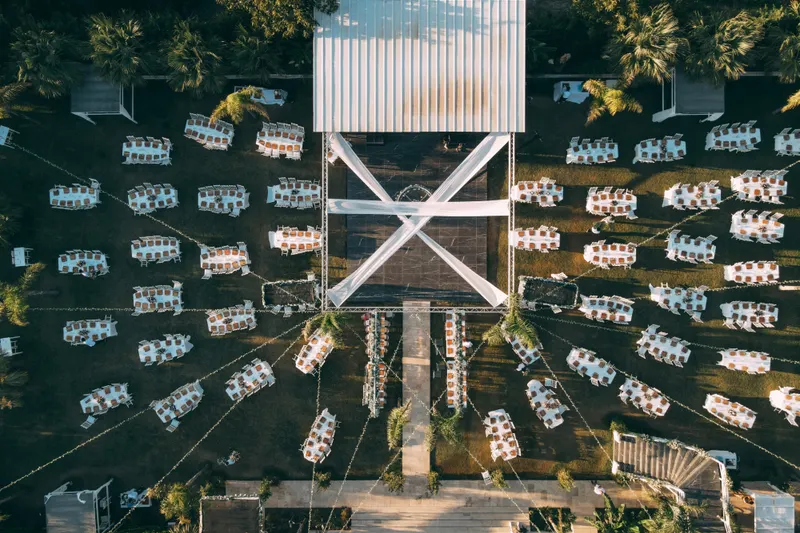
Do not assume every space you were shown is part of the arrangement proposed for your wedding. For each space you are relying on, ask which part of the programme it is for, for which period it is available, whether it is exclusive to your group, and whether nearby public or shared areas will still be operating for other guests. If the answer affects the flow of the day, ask for the included spaces to be named in the updated proposal.
Test the Wedding Plan Against the Real Guest List
The aim is not an abstract capacity number but whether your ceremony, seated dinner and dancing work in practice. Describe your realistic guest count and the shape of the event, then ask whether that specific plan works in the proposed spaces, whether the venue has seen or would approve an indicative layout, and which spaces become tight if the guest list changes. If the venue cannot answer without a layout, record it as an open point.
Walk the Guest Journey, Then Ask What Still Needs Solving
Walk the guest route, from arrival and drop-off through the ceremony, dinner, toilets and evening spaces to departure, looking for questions that still need answers.
Where organised transport is planned, ask where coaches or transfers would stop. Where guests will stay elsewhere, ask where they are realistically likely to stay and how they will reach the property. If you know older or mobility-limited guests are attending, ask whether the actual route can work for them. Anything unresolved goes on the follow-up list.
Catering and Suppliers: Identify the Rules, Not Every Detail
The visit should reveal which supplier decisions the venue controls and which need specialist follow-up, not settle every menu or production detail. Ask:
- Is catering in-house, and are outside caterers possible where relevant?
- Which service spaces are actually available, and what remains to confirm with the catering team?
- Are outside décor, music, photography and entertainment suppliers permitted, or must any categories be arranged through the venue?
- What venue conditions affect décor, sound or lighting, and who needs to approve the production concept?
If an answer is unclear, record who owns it.
Sound, Event Times and After-Party: Get the Venue-Specific Answer
Event hours at Turkish wedding venues are property-specific. No general rule you read online can stand in for the venue’s own answer about its own spaces.
Ask the venue for the finishing time of the main reception, the finishing time for amplified music outdoors, any different arrangement for indoor or enclosed spaces, and, if you want an after-party, where it can take place and under what conditions. Then ask whether the venue will confirm those times and spaces in writing.
At a private or residential property, do not assume the same arrangements as a licensed hotel or event venue. Confirm with that property whether wedding use, amplified music, supplier access and the event spaces you have in mind are possible there, and until what time.
See the Backup Space, Then Record What Is Confirmed
If any part of your wedding is planned outdoors, ask to see the actual backup space. Hearing that there is an indoor option is not the same as knowing which room it is.
Establish which space is the backup for the ceremony, the reception or both, whether its use is included, which parts of the event would move there, and what still needs design or production follow-up.
Ask What the Venue Needs From Your Suppliers
Before leaving, ask what the venue will need from your suppliers to give a clear position. Depending on the property and your plan, this may include a production assessment, supplier details, a layout, equipment information from the sound, lighting or décor teams, and access requirements for setup and removal.
Record each of these as a follow-up item with a named owner, so the conversation continues after you have gone home.
Ask for the Updated Written Commercial Scope
A visit changes the conversation, and the proposal you received before travelling will not reflect it. Before leaving, clarify:
- what the current proposal includes, and what was discussed today that is not yet priced or included;
- which items still require third-party quotations;
- what commercial conditions or minimum commitments apply to the wedding you are discussing, and whether the venue can set them out clearly in the proposal;
- whether any additional venue conditions or mandatory charges need to appear in the written proposal;
- whether the venue will issue an updated written proposal after the visit.
Do not rely on verbal commercial terms. Leave each venue with enough written information for the proposals to be compared later. Commercial and contractual terms that are not operationally visible during the visit still need to be documented and reviewed separately before you commit.
Do Not Rush to Sign Just Because You Are Flying Home
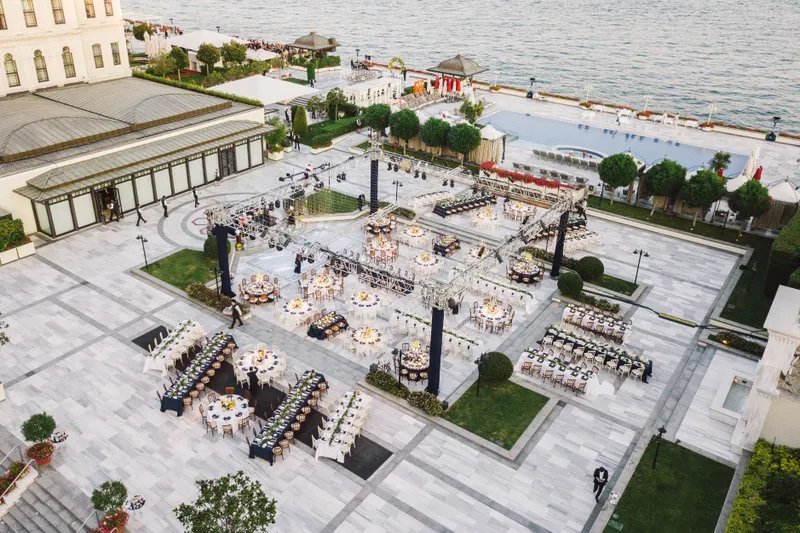
A return flight is not a reason to commit. A site visit can resolve operational questions without forcing an immediate booking decision. After you return home, you can still receive updated written information, review the commercial documentation, obtain specialist follow-up and clarify what remained unresolved. Whether a venue will hold a date in the meantime is a matter for that venue, so ask directly rather than assuming.
Build the Follow-Up List Before Leaving Turkey
Before leaving each venue, sort every material point into one of four practical statuses:
- Confirmed: the venue has given a clear answer.
- Needs written confirmation: the answer was given verbally and should be documented.
- Needs specialist follow-up: the venue cannot answer alone, and the planner, caterer, production supplier or another relevant party needs to assess it.
- Unresolved: the answer is not yet known.
For every point not yet confirmed, note the responsible party and the next action. If a deadline has been agreed, record it; if not, do not invent one. This is a planning tool, not a contractual status. Its value is that nothing important is left between “we discussed it” and “it is agreed”.
How Ramarossi Uses a Venue Site Visit
During a visit, a couple may focus on atmosphere and design, while the venue focuses on its own property. Someone needs to connect the venue to the rest of the wedding, from layout, catering and suppliers to guest transport, accommodation, setup and delivery on the day.
That is Ramarossi’s role as a wedding planning and coordination company. We help couples prepare each visit around their actual wedding brief rather than generic venue questions and, within the agreed scope, attend or coordinate the visits themselves. Depending on that scope, Ramarossi may coordinate venue communication, layout discussions, design implications, supplier and catering follow-up, production follow-up, guest logistics, accommodation coordination, event sequencing and written follow-up with the venue. Confirmed venue conditions are then carried into the wider planning process, through to setup and event-day delivery. Our wedding planning services page sets out how this fits together.
Ramarossi is not the venue and does not legally review or approve venue contracts. It does not certify venue capacity, electrical systems or regulatory compliance, and does not guarantee a venue’s permissions, prices or availability.
Frequently Asked Questions
What should we ask during a wedding venue site visit in Turkey?
Focus on what the venue can confirm about your wedding: included spaces, layout at your guest count, guest movement, catering, supplier conditions, event times, backup space, setup access and commercial scope. Leave with a list of the points still open.
Do we need every venue answer in writing before we fly home?
Not necessarily. Some points can be confirmed later through an updated proposal, a venue email or supplier follow-up. Important operational answers should be documented appropriately, and anything still open should have a named owner and a next step.
Should we sign the venue contract while we are still in Turkey?
Your flight schedule should not force an immediate signature. Before committing, have the venue’s written scope and any unresolved questions clarified, with legal interpretation of the booking documentation handled separately by a qualified lawyer where needed.
What if the venue cannot answer a technical question during the visit?
Record the question, identify who is responsible for answering it, such as the production supplier, and agree the next step. An answer the venue does not yet know is not approval.
Should we see the rain or backup space during the venue visit?
Yes, where part of your wedding is planned outdoors. Seeing the actual proposed backup space and confirming whether it is included is useful. Whether it suits your plan depends on your programme and may need follow-up.
Should our wedding planner attend the venue site visit?
It is not a requirement, but a planner can help connect the venue’s answers to the wider plan, including suppliers, production, guest logistics and timing.
Can Ramarossi coordinate venue site visits in different parts of Turkey?
Depending on the destination and agreed scope, Ramarossi can help prepare visits, coordinate venue communication and, where arranged, attend with you. Appointments, access and availability remain subject to each venue.
Final Takeaway
Do not measure the success of a Turkey venue visit by how many venues you saw. Measure it by how few important assumptions you still have when you leave: know what is confirmed, what needs to be documented, what requires specialist follow-up and what remains unresolved.
If you are planning venue visits in Turkey, share your guest count, event structure and shortlist with Ramarossi, and we can help focus each site visit on the decisions that matter to the full wedding plan.