
Symbolic Wedding in Turkey: How a Non-Legal Ceremony Works and How to Make It Personal
What a symbolic ceremony is, how it sits beside a legal marriage at home, who can lead it, which rituals to choose and how to shape a personal ceremony by the sea or in the hills around Antalya.
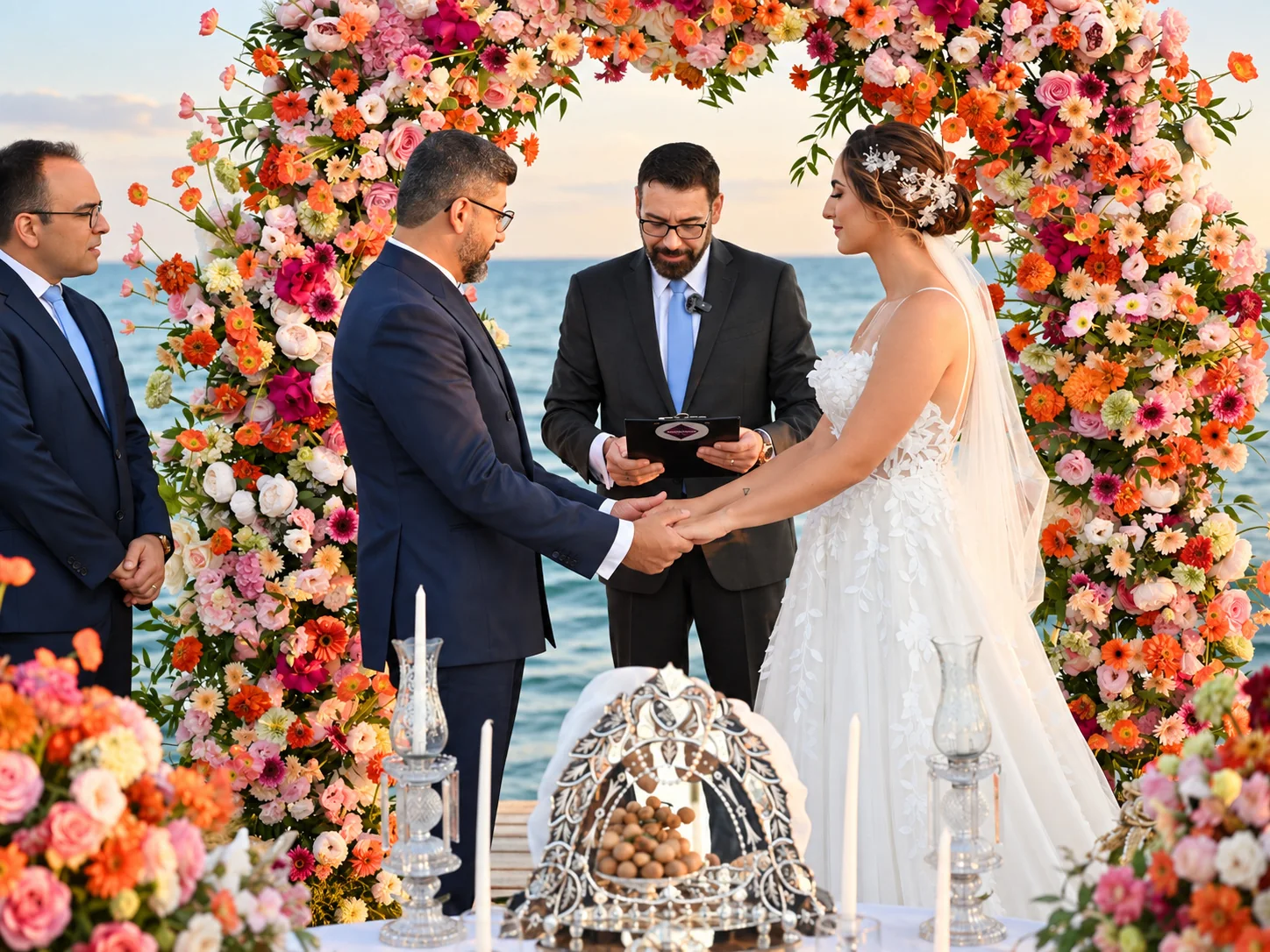
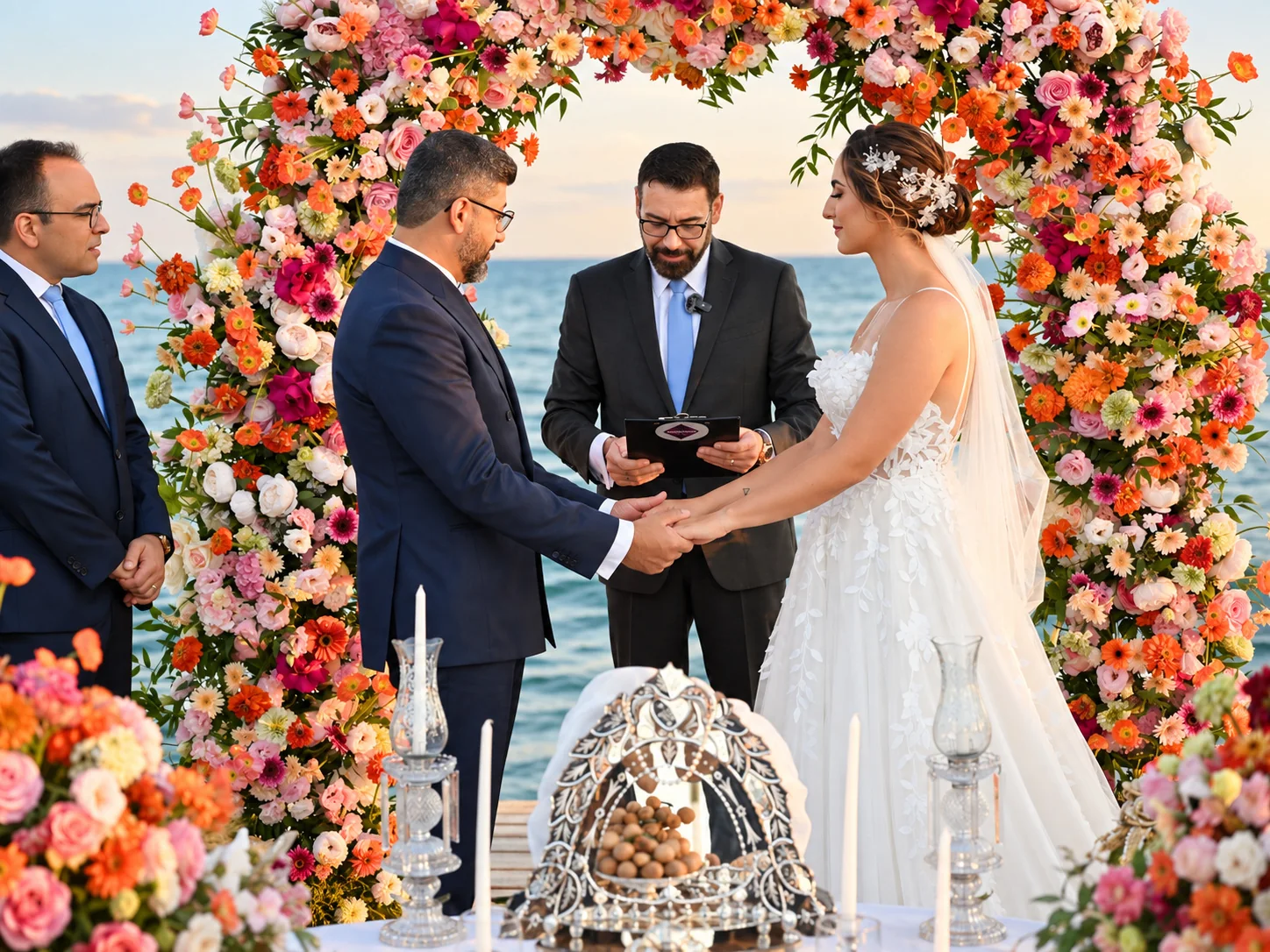
A symbolic wedding in Turkey is a ceremony without legal effect: you complete the paperwork at home, then stand before your guests in Antalya, Turkey, with the words, rituals, setting and hour all chosen by the two of you.
Three kinds of wedding ceremony take place in Turkey. The legal kind is a civil marriage, which an officer of the local municipality performs; the documents and certificates are explained in marriage in Turkey for foreigners. A religious ceremony, such as a nikah for Muslim couples, carries deep meaning for a family but is a separate step from the civil one. The third is the symbolic ceremony, and this Ramarossi Journal guide is about it: what it involves, who leads it, and how to make each minute your own.
What a Symbolic Wedding in Turkey Involves
A symbolic ceremony looks and feels like any wedding: an aisle, someone to lead it, promises, rings, and a kiss your guests cheer. The registration simply happens somewhere else, and that is where its freedom comes from.
Couples choose it for practical and personal reasons. Marrying at your own register office keeps the paperwork in your language and your system, with nothing to authenticate or translate abroad. The ceremony in Turkey can then fall on any day of the week, at whatever hour the light is softest, on sand, stone or grass, and in the languages your families speak. Nobody has to follow a set text: the vows, readings and rituals are written for the two of you.
It also suits couples whose families come from different countries or faiths, couples who married quietly and now want the celebration, and couples who want the ceremony to be the heart of a wedding weekend rather than an appointment in someone else’s diary.
Fitting It Around Your Legal Marriage at Home
The order is yours to decide. Marrying at home a few days or weeks before you fly means you arrive in Antalya already married, and the symbolic wedding becomes the public celebration. Marrying after you return works just as well; the date on your certificate will then come after the date in your wedding photographs, so decide together which day you will mark as your anniversary.
Book the register office early, since dates close to popular weekends can fill, and check with your home registry about anything particular to your nationality, such as how far ahead you must give notice. Think of the two events as a pair with different jobs: the registry creates the legal record, and the ceremony in Turkey carries the meaning.
A third route is a civil ceremony in Turkey followed by a symbolic one, the same day or the next. The civil part keeps to the municipal office’s format and timing, and the symbolic ceremony afterwards holds the personal words. Whether you mention the legal step to guests is your choice: a line in the welcome, or nothing at all.
Who Can Lead a Symbolic Ceremony
Because nothing is being registered, anyone you trust can lead it. A professional celebrant brings a sense of pacing, a voice that carries outdoors and the calm to steady a nervous couple. A friend or relative brings intimacy and stories no outsider knows, and can be supported with a written script and a rehearsal. The role can also be shared: a celebrant leads, while a sibling or godparent gives one reading or the closing blessing.
Language matters when families fly in from different countries. A bilingual celebrant can move between English and Turkish, Persian, Arabic, German or Russian, or a lead speaker can be paired with a relative who repeats the key lines.
Before you book, ask about these points:
- Languages. Which ones they can lead in, and how guests who speak only one of them will follow along.
- The script. Whether they write it from a questionnaire or a call, and how many drafts you will see.
- Rituals. Which ones they have led, and which props they bring or expect from you.
- Rehearsal. Whether they can walk the wedding party through the order the day before.
- Their outfit. What they plan to wear, so they sit well in the photographs.
- A keepsake. Whether they offer a ceremony certificate, clearly worded as symbolic.
A Simple Structure for the Ceremony
A symbolic ceremony has no fixed order, yet guests relax when it follows a familiar arc. This shape suits a short ceremony or a longer one:
- Processional. The wedding party walks in, then one or both of you, alone, together or on a parent’s arm.
- Welcome. The celebrant greets everyone, thanks those who travelled and remembers anyone missing.
- Your story. A few minutes on how you met and who you are together, told with warmth and a little humour.
- Readings. One or two, from poetry, literature or a family’s faith, read by friends or relatives.
- Vows. Personal promises, or questions the celebrant asks and you each answer.
- Ring exchange. With a short line spoken as each ring goes on.
- Ritual. One symbolic act, chosen from the table below.
- Pronouncement. The celebrant declares you married in the eyes of everyone present, and the kiss follows.
- Recessional. You walk back up the aisle to music, and guests follow you towards drinks.
For the promises themselves, our guide to writing your own wedding vows covers gathering ideas, shaping and delivering them, so they are not covered again here. Keep the readings and the story brief enough that the vows stay at the emotional centre.

Symbolic Rituals and What They Mean
A ritual gives guests something to watch and gives the two of you a moment to do something together rather than only speak. One ritual is plenty for a short ceremony; two can work if each is quick.
Two colours of sand poured into one vessel, a picture of two lives joined that cannot be separated again
Beach ceremonies and blended families, as children can pour their own colour
Your joined hands are bound with ribbons or cords, an old Celtic custom linked to the phrase “tying the knot”
Couples with Scottish or Irish roots, and anyone who wants relatives to place a ribbon
Two smaller candles, one for each family, light a single larger one
Indoor or sheltered spaces; outdoors, set the candles inside glass shades
The rings travel from guest to guest before the exchange, each person adding a silent wish
Smaller guest lists, so the rings come back in time
You seal letters to each other in a box, with a bottle if you like, to open on a chosen anniversary
Couples who want a private keepsake from a public moment
You each add soil and water to one young plant, a sign of something that keeps growing
Garden and villa ceremonies with families of keen gardeners
A shared cup of a drink that stands for hospitality and friendship in Turkey
Turkish and international families marrying into each other
| Ritual | What it means | Works well for |
|---|---|---|
| Sand ceremony | Two colours of sand poured into one vessel, a picture of two lives joined that cannot be separated again | Beach ceremonies and blended families, as children can pour their own colour |
| Handfasting | Your joined hands are bound with ribbons or cords, an old Celtic custom linked to the phrase “tying the knot” | Couples with Scottish or Irish roots, and anyone who wants relatives to place a ribbon |
| Unity candle | Two smaller candles, one for each family, light a single larger one | Indoor or sheltered spaces; outdoors, set the candles inside glass shades |
| Ring warming | The rings travel from guest to guest before the exchange, each person adding a silent wish | Smaller guest lists, so the rings come back in time |
| Wine or letter box | You seal letters to each other in a box, with a bottle if you like, to open on a chosen anniversary | Couples who want a private keepsake from a public moment |
| Tree planting | You each add soil and water to one young plant, a sign of something that keeps growing | Garden and villa ceremonies with families of keen gardeners |
| Turkish coffee | A shared cup of a drink that stands for hospitality and friendship in Turkey | Turkish and international families marrying into each other |
A few practical notes help each one go smoothly. By the sea, a breeze can put out an open flame, so a unity candle needs glass around it. A sand ceremony can use sand from the very beach you stand on, poured into a sealed jar you take home. For a handfasting, choose ribbons in family colours or a fabric with a story; the National Trust for Scotland explains the Celtic roots of handfasting and how the hands are tied. If guests pass the rings around, tie them to a small cushion or place them in a pouch, and name someone to untie them before the exchange.
Turkish Wedding Traditions to Weave In
Turkey’s own customs can give a symbolic ceremony a sense of place without borrowing anything sacred. Sharing a cup of Turkish coffee during or just after the ceremony is a gentle option: UNESCO lists Turkish coffee culture and tradition as intangible cultural heritage and notes its place at occasions such as engagements. A playful custom comes from the civil ceremony itself: traditionally, as the newlyweds sign the marriage register, each tries to step on the other’s foot first, and the winner is said to have the final word at home. In a symbolic ceremony the same game can follow the vows and lighten the mood.
Customs differ by region and from one family to the next, so ask Turkish relatives which ones they know. For favours, a small blue glass nazar bead, the evil eye charm found across Turkey and traditionally believed to protect whoever carries it, makes a light keepsake, offered in the spirit it is meant: good wishes. Single friends can write their names on the sole of the bride’s shoe; by tradition, the first name to rub away belongs to the next to marry. For the evening before, a henna night, or kına gecesi, traditionally gathers the bride’s women friends and relatives; our guide to a henna night in Antalya describes the celebration. On styling, Ottoman tile patterns, brass or copper lanterns and Turkish textiles can dress a ceremony table or the end of each row without overwhelming the setting.
Settings Around Antalya
With no office timetable to follow, the setting and the hour are yours to pick, and the coast around Antalya offers sand, stone and pine forest within reach of one another.
On a beach, the sea becomes the backdrop and a sand ceremony feels at home; ask the hotel or beach club where the aisle can run and whether the area can be kept for your guests during the ceremony. In the Old Town, a courtyard among restored stone houses gives shade, intimacy and a sense of history, and you can read more about a wedding in Antalya Old Town and its historic venues. On a cliff terrace, the view over the bay is the drama, while footing and breeze need thought, as our cliffside wedding guide explains.
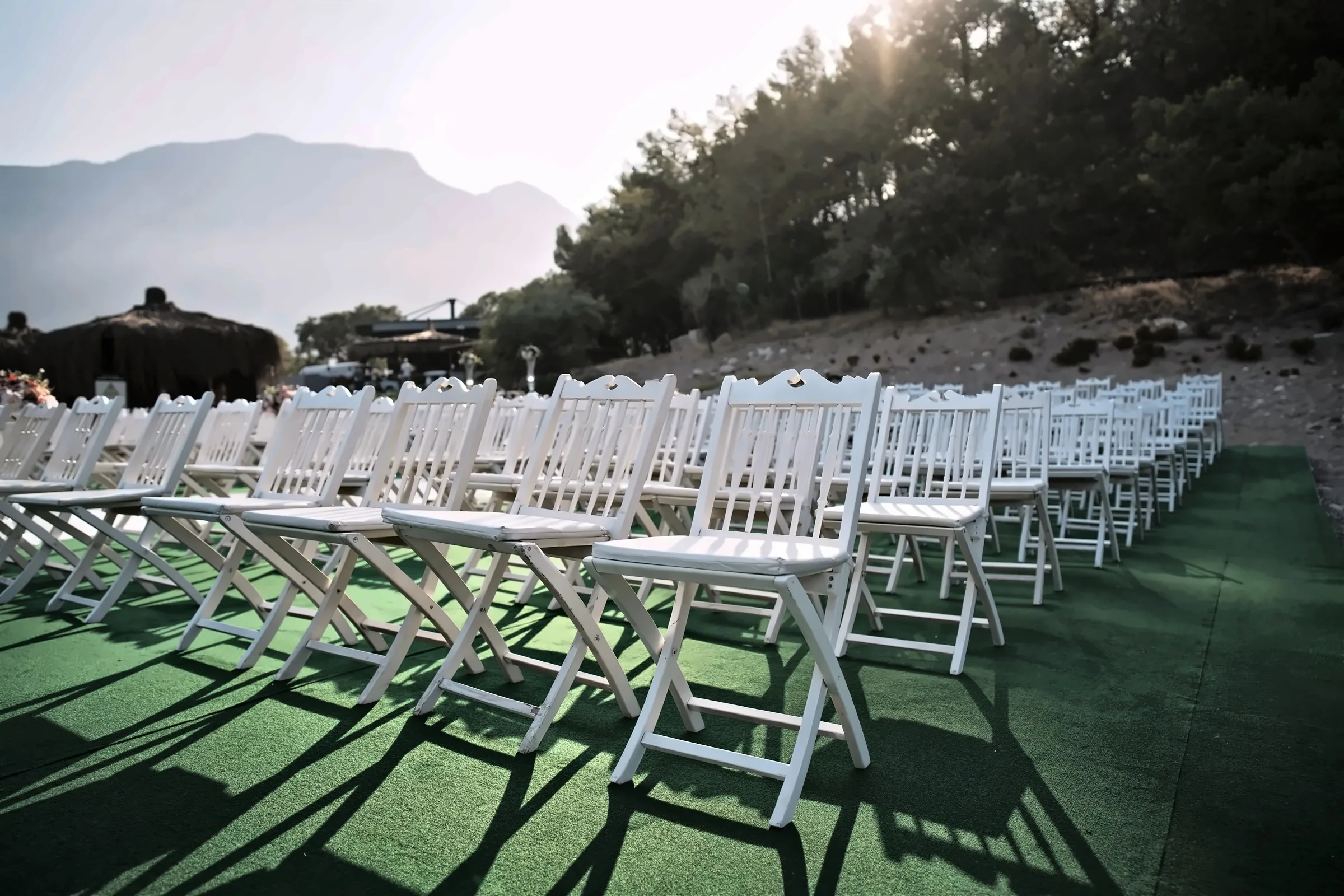
In a garden or on a lawn among pines, with the Taurus Mountains rising behind, a tree planting or a handfasting with family gathered close sits naturally. On a boat, a small ceremony can be held at sea with only your closest family on board.
For a public place such as a beach, a park or a historic site, ask about permission for a ceremony with chairs, an arch and music. Ask the venue or the local authority early, and confirm it before the invitations go out. If you are still comparing areas, Ramarossi’s overview of planning a wedding in Antalya introduces the coast’s main options.
A Sample 25-Minute Running Order
Here is one way a 25-minute ceremony could unfold. It is an example to shorten or stretch, not a script; the clock starts as the first member of the wedding party steps onto the aisle.
Processional music; the wedding party walks in
Your entrance
Welcome from the celebrant; the rings begin their journey along the rows
Your story
A reading by a friend or relative
Vows
Ring exchange with the warmed rings
Sand ceremony or another ritual
Pronouncement and the kiss
Recessional, with guests following you to drinks
| Time from start | Moment |
|---|---|
| 0:00 | Processional music; the wedding party walks in |
| 0:03 | Your entrance |
| 0:05 | Welcome from the celebrant; the rings begin their journey along the rows |
| 0:08 | Your story |
| 0:12 | A reading by a friend or relative |
| 0:14 | Vows |
| 0:18 | Ring exchange with the warmed rings |
| 0:20 | Sand ceremony or another ritual |
| 0:23 | Pronouncement and the kiss |
| 0:25 | Recessional, with guests following you to drinks |
Seat guests around ten minutes before the start, with water and shade on a summer afternoon, so the ceremony begins in calm. Choose the starting time by the light rather than the clock: the gentler sun before sunset flatters faces and keeps the front rows comfortable.
Persian, Muslim and Mixed Couples
A symbolic ceremony can carry a family’s heritage while welcoming everyone else in. Persian couples can speak their vows in front of a Sofreh Aghd laid before the arch, so the personal promises and the Persian ceremony share one stage.
For Muslim couples, the nikah can stand on its own, with the symbolic ceremony as the moment shared with friends of every background. A British Pakistani couple, for instance, might hold the nikah with close family in the morning and a symbolic ceremony by the sea at golden hour, closing the vows with a line in Urdu for the grandparents.
When two faiths meet, a celebrant can bring a reading or a blessing from each side and explain each custom as it happens. Our guide to interfaith weddings in Antalya explores this in more depth.
Renewing Your Vows the Same Way
Already married and marking an anniversary? A vow renewal uses the same symbolic format, with years of shared life to draw on in the story and the promises. Children can carry the rings or pour their own colour of sand. Settings and family roles are covered in our article on a vow renewal in Antalya.
Tell us about the ceremony you imagine
Share your dates, guest count, the languages your families speak and the setting you picture, and Ramarossi will come back with ideas for a symbolic ceremony that feels like the two of you.
Prefer another email service? Write to info@ramarossi.com using Antalya Wedding Enquiry as the subject.
Follow our celebrations
Discover beautiful weddings, private events, styling ideas and behind-the-scenes moments from Ramarossi in Turkey.
Frequently Asked Questions
Is a symbolic wedding in Turkey legally binding?
No. It has no legal effect. In Turkey the legal step is a civil marriage before an authorised officer, so couples choosing a symbolic ceremony complete their legal marriage at home, before or after the trip.
Do we need documents for a symbolic ceremony?
No marriage office paperwork is involved in the ceremony itself. If you plan to use a public place, ask in advance whether permission is needed for chairs, an arch or music.
Who can officiate a symbolic wedding?
A professional celebrant, a friend or a family member. As nothing is registered, choose someone who will speak about you with warmth and confidence, in the languages your guests understand.
Should we marry legally before or after the ceremony in Turkey?
Either works. Marrying before means you arrive already married; marrying after means your certificate date follows the celebration. Check timings and notice rules with your home registry.
How long does a symbolic ceremony last?
As long as you wish. Twenty to thirty minutes leaves room for a welcome, your story, a reading, vows, rings and one ritual while guests stay comfortable outdoors.
Which ritual suits a beach ceremony?
A sand ceremony fits the setting, and a handfasting copes well with a breeze. A unity candle by the sea needs glass shades around the flames.
Can we add Turkish traditions to a symbolic ceremony?
Yes. A shared cup of Turkish coffee, nazar bead favours, the playful foot-stepping game after the vows, or a henna night the evening before can all bring in a local touch.
Can a symbolic ceremony be held in two languages?
Yes. A bilingual celebrant can switch between languages, or a relative can repeat the key lines, so guests from both families follow the vows and the ritual.