


Indian weddings compress generations of family connection, cultural continuity, and spiritual celebration into three days of elaborate ceremony. Each event serves distinct purposes within the wedding tradition, from the intimate mehndi gathering where female relatives apply intricate henna designs, through the high-energy sangeet night combining music and dance performances, to the formal baraat procession and sacred wedding ceremony itself. Planning these celebrations in Antalya, Turkey requires understanding how luxury resort infrastructure adapts to accommodate specifically Indian requirements for vegetarian cuisine, extensive décor transformations, and ceremonial spaces that shift function across multiple days.
Ramarossi has coordinated Indian weddings in Antalya since 2011, developing systems that translate traditional celebration elements into the Turkish resort context. The following guidance reflects actual costs, realistic timelines, and proven logistics for hosting 50 to 150 guests across three consecutive days of celebration. All pricing represents 2026 rates including 20% Turkish VAT, with payment structures following the standard 40% deposit, 30% midpoint, and 30% final payment schedule.
Understanding the Three-Day Wedding Structure
Indian wedding traditions follow a progression designed to build celebration intensity across consecutive days. The structure allows families to participate in intimate gatherings before transitioning to larger public celebrations, with each event maintaining distinct energy and purpose.
Day one typically focuses on the mehndi ceremony, a primarily female gathering where professional mehndi artists apply intricate henna designs to the bride’s hands and feet, with family members and guests receiving simpler patterns. The celebration occurs in afternoon or early evening, creating an intimate atmosphere with traditional music, sweets distribution, and storytelling among maternal relatives. Guest counts for mehndi range from 30 to 80 people, significantly smaller than the wedding day itself.
Day two escalates energy dramatically with the sangeet night, an evening performance where both families compete through choreographed dance routines, musical performances, and playful family presentations. Modern sangeet celebrations blend Bollywood-style production values with traditional folk elements, requiring professional sound systems, lighting design, and stage areas. This event draws the full guest list, often matching wedding day attendance.
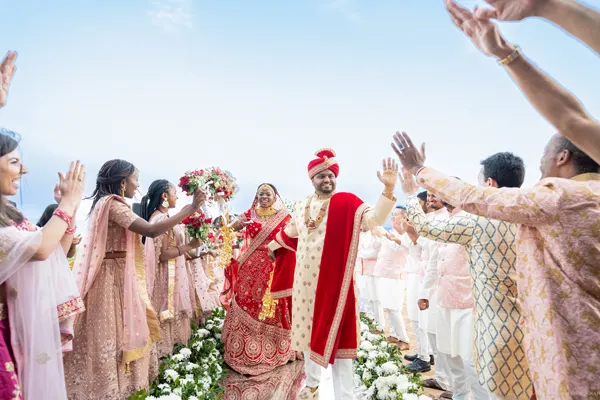
Day three contains the wedding ceremony itself, beginning with the baraat procession where the groom arrives accompanied by dancing family members, dhol drummers, and sometimes horses or decorated vehicles. The Hindu ceremony follows traditional elements including the sacred fire, seven steps ritual, and exchange of garlands, before transitioning to a reception dinner and dance celebration that extends well into the evening. This represents the formal public celebration requiring the most elaborate venue setup, catering complexity, and coordination effort.
Venue Requirements for Multi-Day Indian Celebrations
Hosting three consecutive days of celebration at the same property provides logistical advantages that justify the all-inclusive resort model for Indian weddings. Couples avoid the complexity of coordinating venue changes, transporting décor elements between locations, and managing guest movement across multiple properties.
Essential Space Requirements
Indian weddings require properties with multiple distinct event spaces capable of transformation between ceremonies. The mehndi ceremony needs covered outdoor areas or garden settings accommodating 30 to 80 guests in casual seating arrangements, with good natural lighting for henna application work and photography. Low seating options such as floor cushions or ottomans create authentic atmosphere, though many couples now prefer elevated seating for elderly guests’ comfort.
Sangeet nights demand ballroom or large indoor spaces with proper acoustics, theatrical lighting capabilities, and stage areas for performances. The space must accommodate 100 to 150 guests in theatre-style or cocktail configurations during performances, with capacity to transition to standing dance floor arrangements. Professional sound system installation requires technical infrastructure that basic garden venues cannot provide.
Wedding ceremonies require the largest and most versatile spaces, capable of hosting mandap installations for the religious ceremony, followed by transformation to seated dinner configurations for 100 to 150 guests. Beachfront locations work well for baraat processions, providing the space and visual drama these celebratory arrivals require. Indoor backup capacity matters critically, as traditional Hindu wedding ceremonies cannot occur in rain and rescheduling proves impossible with families already gathered.
Antalya Properties Suitable for Multi-Day Indian Weddings
Luxury resorts in Belek and Lara Beach provide the multi-space infrastructure Indian weddings require. Properties like Regnum Carya, Maxx Royal Belek, and Titanic Mardan Palace offer garden areas for mehndi ceremonies, ballrooms for sangeet performances, and beachfront locations for wedding day celebrations, all within walking distance for guests staying on property.
Resort selection for Indian weddings prioritises properties with experience managing complex multi-day celebrations, kitchens capable of preparing authentic vegetarian cuisine at scale, and coordination teams familiar with Hindu ceremony requirements. The ability to provide three distinct event setups across consecutive days, including overnight décor transformations between ceremonies, separates properties genuinely equipped for Indian weddings from those merely willing to attempt them.
Day-by-Day Ceremony Breakdown and Requirements
Day One: Mehndi Ceremony
The mehndi ceremony creates intimate celebration focused on the bride and her closest female relatives. Turkish resort gardens provide ideal settings, with afternoon timing taking advantage of natural light for henna application and photography. The ceremony typically runs three to four hours, beginning around 3pm or 4pm and concluding before dinner service.
Décor for mehndi ceremonies emphasises bright colours, traditional textiles, and low seating arrangements. Marigold flower installations, colourful cushions, and draped fabrics in yellows, oranges, and pinks create vibrant atmosphere. Many couples incorporate swings or jhula as focal points for bride photography, decorated with fresh flowers and fabric.
Mehndi artists represent the essential vendor for this ceremony. Antalya has limited local mehndi expertise, requiring most couples to import artists from India or hire artists from Indian communities in Istanbul or European cities. Professional mehndi artists charge €800 to €1,500 for full-day services including bridal application, with rates increasing if artists must travel internationally. The bride’s full hand and arm mehndi application requires three to five hours, making early ceremony start times essential.
Catering for mehndi stays light and casual, with samosas, pakoras, chaat selections, and sweet options like jalebi and gulab jamun. Chai service throughout the afternoon represents standard expectation. Budget €25 to €40 per person for mehndi ceremony catering, significantly less than formal dinner service. Entertainment includes traditional folk musicians or recorded Bollywood music, with some couples hiring dhol players for portions of the ceremony.
Day Two: Sangeet Night
Sangeet celebrations evolved from simple family singing gatherings into elaborate performance productions requiring professional event coordination. Modern sangeet nights feature choreographed dance performances by family groups, professional entertainment, and extended dance party portions that can continue past midnight.
Stage design and lighting infrastructure define sangeet success. Proper theatrical lighting, professional sound systems with wireless microphones for hosts and performers, LED screens for video presentations, and dedicated stage areas with dance floor surfaces create the production environment families expect. Turkish resort audiovisual teams can provide technical infrastructure, though couples often supplement with specialised Indian event production companies that understand specific Bollywood-style lighting and sound requirements.
Entertainment options for sangeet include DJ services specialising in Bollywood and contemporary Indian music, costing €1,500 to €3,000 for full evening service. Live bands performing Hindi film songs and traditional pieces range from €3,500 to €8,000 depending on group size and travel requirements. Dhol players add authentic energy to performances, charging €800 to €1,500 for evening appearances. Some couples import complete entertainment packages from India or the UK, including choreographers, performers, and production staff, with costs escalating to €15,000 to €25,000 for comprehensive international entertainment.
Catering for sangeet typically provides cocktail-style service with substantial Indian appetisers, allowing guests to eat throughout performances without formal seated dinner service. Expect €60 to €90 per person for extensive cocktail menus featuring chaat counters, tandoori stations, regional speciality selections, and dessert displays. Bar service includes imported alcohol as bottle allocation, though many families request limited alcohol service or completely dry sangeet celebrations respecting conservative family members.
Décor for sangeet creates theatrical atmosphere with bold lighting, draped fabrics in jewel tones, and modern design elements. Unlike mehndi’s traditional bright colours, sangeet décor often incorporates sophisticated palettes with golds, deep purples, and rich blues. Floral arrangements stay dramatic but less extensive than wedding day installations, as lighting design provides primary visual impact.
Day Three: Wedding Ceremony and Reception
The wedding day begins with the baraat procession, where the groom arrives accompanied by dancing family members and dhol drummers. Beachfront locations in Antalya provide ideal settings for baraat, offering the space these energetic processions require. The arrival typically occurs late morning or early afternoon, depending on auspicious timing determined by priests or family tradition.
Mandap construction represents the ceremony’s focal point, requiring either rental of traditional wooden structures decorated with fresh flowers or custom-built installations incorporating fabric draping, floral designs, and symbolic elements. Mandap rentals in Turkey cost €2,500 to €5,000 for traditional carved wooden structures, with international shipping from India adding €1,500 to €3,000. Custom-built mandaps using local materials with imported decorative elements provide alternatives, costing €2,000 to €4,000 depending on complexity.
Hindu wedding ceremonies require priests who can conduct traditional rituals in Sanskrit with appropriate explanations in Hindi, English, or regional languages. Most couples import priests from India or engage priests from Indian communities in European cities. Priest fees range from €1,200 to €2,500 plus travel and accommodation costs. Coordination with priests about ceremony timing, required materials including sacred fire setup, and ritual sequences requires planning beginning six months before the wedding.
Reception dinner service follows the ceremony, typically beginning in early evening. Formal plated dinners showcase regional Indian cuisine specialities, with menus developed in consultation between couples and resort chefs. Authentic Indian food preparation requires experienced chefs, specific spice sourcing, and extensive vegetarian options. Luxury resort catering for Indian wedding receptions costs €150 to €250 per person, reflecting the complexity of preparing authentic multi-course Indian meals at scale with proper spice balancing and regional accuracy.
Floral design reaches maximum elaboration on wedding day, with extensive mandap decorations, ceremony aisle installations, reception centrepieces, and ambient arrangements throughout the venue. Traditional Indian wedding flowers include roses, orchids, mogra, and marigolds, with many couples incorporating regional preferences like lotus or jasmine. Comprehensive floral design for 100 to 150 guest Indian weddings costs €8,000 to €15,000, representing one of the largest single expense categories after catering.
Photography and videography for Indian weddings require teams experienced with the ceremonies’ specific ritual moments, lighting challenges during indoor ceremonies, and extended coverage spanning early morning preparation through late night reception. Full-day coverage with professional teams costs €4,000 to €7,000, with many couples adding cinematic video production for €3,000 to €5,000 additional investment.
Vegetarian Catering and Regional Cuisine Requirements
Vegetarian cuisine represents standard expectation rather than special accommodation for most Indian weddings, particularly among families following Hindu dietary practices. Turkish resort kitchens must demonstrate capability to prepare authentic vegetarian dishes at scale, understanding that vegetarian for Indian guests means completely plant-based preparation including dairy but excluding eggs, with separate cooking equipment to avoid cross-contamination with meat products.
Regional Cuisine Variations
Indian cuisine encompasses dramatic regional variation, with North Indian, South Indian, Gujarati, Punjabi, and Bengali traditions each maintaining distinct flavour profiles, preparation techniques, and expected dishes. Couples planning menus must specify regional preferences, as generic Indian food disappoints guests expecting authentic home-region preparations.
North Indian and Punjabi cuisine dominates most Indian weddings, featuring tandoori preparations, rich curry gravies, bread varieties including naan and paratha, and rice dishes like biryani and pulao. South Indian preferences emphasise dosa, idli, sambar, and coconut-based curries, with different spice profiles and cooking techniques. Gujarati cuisine incorporates subtle sweet notes into savoury dishes, with specific expectations around dhokla, khandvi, and traditional sweet preparations.
Antalya resort chefs require advance menu planning sessions with couples, often incorporating recipe testing three to six months before the wedding. Some couples import specialist chefs from India for the wedding weekend, ensuring authentic preparation particularly for complex regional dishes. Imported chef services cost €3,000 to €8,000 including flights, accommodation, and professional fees for three-day wedding coverage.
Live Cooking Stations and Interactive Elements
Live cooking stations provide entertainment value while ensuring fresh preparation of specific dishes. Popular options include chaat counters with bhel puri, pani puri, and dahi puri preparations, tandoor stations for fresh naan and tandoori vegetables, dosa and uttapam stations for South Indian preferences, and kulfi or traditional dessert stations. Live stations add €15 to €30 per person to catering costs but significantly enhance guest experience, particularly for younger guests familiar with modern Indian restaurant presentations.
Complete Multi-Day Wedding Pricing for Antalya 2026
Three-day Indian wedding packages in Antalya begin at €40,000 for 50 guests at standard beach venues, scaling to €95,000 to €140,000 for 120 to 150 guests at luxury properties. The following breakdown illustrates realistic total costs including all essential elements.
Standard Package: 80 Guests Across Three Days
For 80 guests celebrating across three consecutive days at a four-star beach resort, expect the following investment structure. Base venue package covering all three days costs €42,000 to €52,000, including beachfront ceremony and reception spaces, garden area for mehndi, ballroom for sangeet, complete catering for all three events with vegetarian focus, imported alcohol as bottle allocation for sangeet and reception, professional photography covering all three days, wedding coordination services, and foundational décor for each event.
Essential enhancements that most couples add include mehndi artists at €1,000 to €1,500, mandap rental and installation at €3,500 to €5,500, Hindu priest services at €1,800 to €3,000 including travel, sangeet entertainment with DJ and dhol players at €2,500 to €4,500, videography for all three days at €3,500 to €5,000, hair and makeup for bride across three ceremonies at €1,200 to €1,800, upgraded floral design beyond base package at €3,000 to €6,000, and enhanced sangeet production including lighting and sound upgrades at €2,000 to €4,000.
Total investment for 80 guests across three days ranges from €59,500 to €83,300, averaging €71,400. This provides comprehensive celebration with authentic cultural elements and resort-quality service, representing 35% to 45% savings compared to equivalent Indian wedding packages in the UK or North America.
Luxury Package: 120 Guests Across Three Days
Luxury three-day celebrations for 120 guests at five-star deluxe properties begin with base packages of €78,000 to €98,000, including exclusive resort access with full property privacy, premium catering with regional cuisine specialists or imported chef collaboration, extensive décor installations for all three events, professional photography and videography teams, comprehensive entertainment coordination, and full wedding planning services from contract through celebration.
Luxury package enhancements include custom mandap design and construction at €4,500 to €7,500, premium mehndi artists from India at €2,000 to €3,500 including travel, international entertainment packages with choreographers at €8,000 to €15,000, elite hair and makeup teams serving bridal party across three days at €2,500 to €4,000, upgraded floral design with extensive installations at €10,000 to €18,000, sangeet production with LED screens and theatrical lighting at €5,000 to €9,000, and fireworks for reception finale at €2,500 to €4,000.
Total investment for luxury 120-guest three-day celebration ranges from €112,500 to €162,000, averaging €137,250. This level provides resort exclusivity, authentic cultural execution, and production quality comparable to high-end Indian weddings in Mumbai or Delhi, with the advantage of Mediterranean beachfront settings impossible to replicate in urban Indian venues.

Planning Timeline and Coordination Requirements
Multi-day Indian weddings require extended planning timelines compared to single-day celebrations, beginning 15 to 20 months before the wedding date for luxury properties during peak season. The coordination involves both Turkish resort teams and specialty Indian wedding vendors, requiring careful timeline management to ensure all elements synchronise correctly.
Couples should secure venue reservations 15 to 18 months in advance for May through October dates at premium Antalya properties. Initial planning focuses on confirming guest count projections, determining which traditional ceremony elements will be included, and establishing overall budget parameters. Resort contracts require 40% deposit at signing, with this initial payment securing dates and beginning coordination processes.
Twelve months before the wedding, couples should finalise menus with resort chefs, confirm vegetarian preparation capabilities, and if necessary begin arrangements to import specialty chefs from India. This timeline also marks when priest coordination should begin, as popular priests book their international travel calendars 10 to 14 months ahead. Mandap rental or construction planning begins at this stage, with design concepts developed and supplier contracts finalised.
Nine months before the wedding represents the critical period for entertainment vendor selection, particularly for couples importing performers from India or the UK. International entertainment requires substantial advance booking to coordinate travel logistics, secure necessary work permits for Turkey, and allow time for choreography development if family performance groups are involved. Hair and makeup artists, photographers, and videographers should be contracted at this timeline, particularly if couples prefer vendors from Indian communities in European cities.
Six months before the wedding, detailed décor planning intensifies, with specific colour palettes confirmed for each ceremony, floral design concepts finalised, and any specialty décor elements ordered. Mehndi artist coordination begins at this stage, with design consultations occurring remotely if artists will travel from India. The second payment instalment of 30% becomes due at six months, based on standard Ramarossi payment schedules.
Three months before the wedding, all vendor contracts should be finalised, with no additional supplier additions possible beyond this point due to logistics complexity. Guest communication intensifies, with accommodation blocks confirmed, travel information distributed, and ceremony-specific participation organised for family members involved in ritual roles or sangeet performances. Menu tastings occur at this stage if couples can visit Antalya, or via detailed video consultations with resort chefs for international couples unable to travel for advance planning visits.
Two months before the wedding marks the final payment deadline and completion of all detailed timeline documents including minute-by-minute ceremony schedules, vendor arrival and setup sequences, and contingency plans for weather disruptions. Couples should have confirmed outfit selections for all three ceremonies, completed any necessary religious consultations with priests about ceremony modifications, and finalised music selections for each event.
Cultural and Religious Considerations in Turkish Context
Hosting Hindu wedding ceremonies in Turkey provides unexpected advantages stemming from cultural and religious overlap between Turkish and Indian traditions. Turkey’s Muslim-majority context creates natural understanding of religious ceremony importance, dietary requirements, and gender dynamics that some European destinations struggle to accommodate.
Vegetarian catering receives immediate understanding in Turkish hospitality contexts, whereas European venues sometimes treat vegetarian requirements as difficult special accommodations. Turkish cuisine includes substantial vegetarian traditions through Ottoman palace cooking and regional Anatolian preparations, giving resort chefs foundational understanding even if they require guidance on specifically Indian spice profiles and preparation techniques.
Religious ceremony logistics benefit from Turkish venues’ experience accommodating various faith traditions. Sacred fire ceremonies for Hindu weddings receive proper safety coordination and appropriate respect, with venue teams understanding the ceremonial significance rather than treating fire elements as merely decorative. Prayer facilities exist naturally at Turkish properties, providing suitable spaces for families requiring prayer timing accommodation during multi-day celebrations.
Alcohol service patterns adapt easily to Indian wedding requirements, as Turkish culture maintains sophisticated understanding of celebrations that blend alcohol availability with respect for non-drinking guests. Venues naturally accommodate dry ceremonies or controlled service timing, implementing these preferences without the resistance sometimes encountered at Western properties where alcohol represents significant profit centres.
Gender dynamics receive appropriate handling, with Turkish venue staff understanding family structures where older relatives may require gender-separated spaces for certain ceremonies or prayer times. Properties can provide separate preparation areas, modify seating arrangements to accommodate family preferences, and implement service patterns respectful of conservative family members’ comfort levels.
The primary cultural challenge involves communication patterns and expectation management. Indian wedding families often expect immediate vendor responsiveness and willingness to accommodate last-minute changes, reflecting Indian hospitality industry norms where flexibility represents standard practice. Turkish vendors operate more rigidly within contracted specifications, requiring couples to clearly communicate that timeline adherence and advance planning matter more than spontaneous flexibility in the Turkish coordination context.
Frequently Asked Questions
Can we find authentic Indian vendors in Antalya for specialised services?
Antalya has limited local Indian wedding vendor infrastructure compared to UK cities like London or Leicester, requiring most couples to import specialty providers for certain services. Turkish resort teams excel at venue coordination, general event production, and hospitality service, but specific Indian cultural elements need external specialists. Mehndi artists, mandap decorators, and priests almost always require import from India, Indian communities in Istanbul, or European cities with established Indian populations. These vendors charge their standard professional fees plus travel costs including flights and accommodation. Entertainment depends on couple preferences, with local Turkish DJs capable of playing Bollywood music libraries but lacking the cultural intuition Indian wedding specialists bring to reading crowd energy and timing song selections. Dhol players exist in Istanbul’s Indian community but require advance booking and travel coordination to Antalya. Photography and videography have more options, as Antalya hosts experienced destination wedding photographers familiar with multi-day celebrations, though couples preferring photographers specifically experienced with Indian ceremony rituals often import these vendors from the UK or India. Ramarossi maintains relationships with reliable Indian wedding vendors across these categories, facilitating introductions and coordinating logistics for vendor travel and on-site collaboration with resort teams.
How do Turkish resorts handle vegetarian and Jain dietary requirements?
Turkish resort kitchens demonstrate strong capability with vegetarian cuisine, as Turkish culinary tradition includes substantial plant-based preparations through Ottoman palace cooking and regional Anatolian traditions. Chefs understand vegetarian as completely plant-based including dairy but excluding eggs, and implement separate cooking equipment to prevent cross-contamination with meat products. The challenge involves specific Indian spice profiles, regional cuisine accuracy, and cooking techniques like tandoor preparation rather than vegetarian capability itself. Couples should conduct menu planning sessions with resort chefs beginning six months before the wedding, providing recipe references, discussing regional preferences, and potentially arranging tasting sessions. Many couples send specific spice blends or hard-to-source ingredients to resorts in advance, ensuring authentic flavour profiles. Jain dietary requirements present more complexity, as the restrictions on root vegetables and certain preparation methods require extensive kitchen coordination. For Jain guests, couples should identify guest count with these requirements early in planning, communicate specific restrictions clearly to chefs, and consider designated Jain-compliant cooking stations if guest numbers warrant separate preparation. Some couples import Indian chefs for wedding weekend service specifically to ensure authentic preparation and proper understanding of complex dietary requirements, with this investment proving worthwhile for families where food quality and religious compliance represent non-negotiable priorities.
What backup plans exist if weather disrupts outdoor ceremony plans?
Antalya’s Mediterranean climate provides exceptional weather reliability from May through October, with rain extremely rare during peak wedding season and temperatures consistently suitable for outdoor celebrations. September and October offer ideal conditions with temperatures between 25 and 30 degrees Celsius and virtually guaranteed sunshine, making these months particularly popular for Indian weddings. However, Hindu wedding ceremonies cannot occur in rain due to sacred fire requirements and ritual elements, making backup plans essential even in reliable climates. Luxury resort properties suitable for multi-day Indian weddings maintain indoor spaces capable of accommodating mandap installations and full ceremony guest counts, allowing rapid transition from outdoor to indoor setups if weather threatens. Couples should confirm indoor backup capacity during venue selection, specifically verifying that ballrooms or covered spaces can accommodate mandap structures with proper ceiling height and square footage. Mandap installations designed for flexibility can move between outdoor and indoor locations within several hours if weather changes require relocation. The greater weather risk involves extreme heat rather than rain, particularly for July and August dates when midday temperatures can exceed 35 degrees Celsius. Couples planning summer weddings should schedule baraat processions and outdoor ceremony elements for early morning or late afternoon timing, with indoor air-conditioned spaces available for guest comfort during peak heat hours.
How does accommodation work for guests across three consecutive days?
Multi-day celebrations require most guests to stay at the wedding resort for the full three-night period spanning mehndi day through wedding day, making accommodation coordination central to planning. Luxury resort packages for Indian weddings typically include the couple’s accommodation as part of the base package, with guest rooms available at negotiated group rates. Group rates at four-star properties range from €80 to €130 per night, while five-star luxury resorts charge €140 to €170 per night, with 10% to 15% discounts applying for room blocks of 15 or more. Couples should communicate clearly with guests about accommodation expectations, as Indian wedding culture includes varied approaches to who covers guest accommodation costs. Some couples incorporate guest accommodation into overall wedding budgets, others split costs with guests, and many simply facilitate group bookings while leaving payment to individual guests. Resort all-inclusive options provide value for guests making multi-night stays, as room rates include meals, beverages, and property amenity access beyond wedding events themselves. Families travelling with children particularly appreciate resort models offering kids’ clubs, pools, and beach access, turning wedding attendance into brief holiday experiences. Couples should secure room blocks 12 to 14 months before the wedding, particularly for peak season dates when resort inventory becomes constrained. Clear communication about room block cutoff dates helps ensure guests book within allocated inventory, avoiding situations where late-booking guests face higher rates or limited availability.
Can we incorporate both Hindu and Sikh ceremony elements in one celebration?
Interfaith or combined tradition weddings occur frequently among modern Indian couples, blending Hindu and Sikh elements or incorporating Christian, Muslim, or other traditions when partners come from different religious backgrounds. Turkish resort venues provide neutral settings that adapt to various faith requirements without privileging specific traditions. The logistics require coordinating multiple religious officiants, ensuring appropriate ceremonial spaces for different ritual requirements, and managing timeline flow when ceremonies have distinct structural elements. Hindu and Sikh weddings share cultural elements including mehndi and sangeet celebrations, making the first two days relatively straightforward to plan. The wedding day itself requires careful choreography, with couples choosing between sequential ceremonies where both traditions receive full expression or blended ceremonies incorporating selected elements from each faith. Sequential ceremonies provide authentic religious experience but extend wedding day timelines significantly, potentially requiring five to seven hours for complete Hindu ceremony followed by Anikh Karaj, the Sikh wedding ritual around Guru Granth Sahib. Blended ceremonies compress timing by selecting essential elements from each tradition, though this approach requires sensitive consultation with religious advisors to ensure respectful implementation. Ramarossi has coordinated numerous interfaith Indian weddings, developing expertise in managing multiple religious requirements, coordinating priests and granthis, and designing ceremony spaces that accommodate different ritual needs. The key involves early planning with clear communication to all religious officiants about timeline expectations, ceremonial space configurations, and how traditions will be integrated or presented sequentially.