


Antalya, Turkey can host beautiful Jewish weddings with traditional chuppah ceremonies, rabbinical officiation, kosher catering options, and all the elements that make Jewish celebrations meaningful. Turkey’s secular constitution protects religious freedom, its location is geographically central for Jewish families spanning Israel, North America, and Europe, and Ramarossi has experience creating Jewish celebrations that honour tradition in Mediterranean splendour.
Jewish couples researching destination weddings often focus on Israel, the United States, or European destinations with established Jewish communities. Turkey rarely appears on initial lists. This oversight is understandable – but once couples examine what Turkey actually offers, many discover it solves problems that other destinations cannot.
The Jewish diaspora is global. Families span continents – grandparents in Israel, parents in New York, cousins in London, friends in Los Angeles. Finding a destination where everyone can gather involves complex calculations of travel time, visa accessibility, and cost. Turkey emerges as a surprisingly practical solution for families whose guest lists cross multiple continents.
At Ramarossi, we’ve helped Jewish couples create celebrations in Antalya, Turkey that honour every tradition while taking advantage of Mediterranean beauty and Turkish hospitality. This guide explains how Jewish weddings work in Turkey and what couples should understand.
Can We Have a Traditional Jewish Ceremony in Turkey?
Yes. Turkey is a secular republic with constitutional protections for religious freedom. Jewish ceremonies are legally permitted and practically accommodated. The chuppah, the ketubah signing, the seven blessings, the breaking of the glass – all traditional elements can be incorporated into your celebration.
The Chuppah
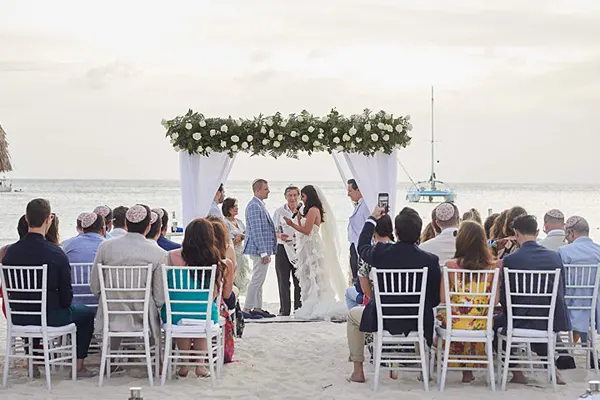
The chuppah – the wedding canopy symbolizing the home the couple will build together – forms the visual and spiritual centerpiece of Jewish ceremonies. In Antalya, Turkey, Ramarossi creates chuppah structures that honour tradition while taking advantage of stunning settings.
Imagine your chuppah positioned with the Mediterranean as backdrop, or beneath ancient olive trees, or on a clifftop terrace as the sun sets over the sea. The traditional element gains additional beauty from exceptional venues that most couples haven’t considered.
Chuppah design ranges from traditional four-post structures with tallit covering to contemporary interpretations using flowers, fabric, or architectural elements. Ramarossi works with couples to create chuppahs that reflect their aesthetic while maintaining ceremonial meaning.
Rabbinical Officiation
Couples can bring their own rabbi to Turkey to officiate, or Ramarossi can help connect couples with rabbis experienced in destination ceremonies. Many couples prefer bringing a rabbi who knows them personally – someone who can speak authentically about their relationship and create a meaningful ceremony.
Logistically, bringing a rabbi to Antalya, Turkey is straightforward. Travel arrangements are similar to any destination wedding guest, and accommodating the rabbi’s needs during the celebration is part of standard planning.
For couples without existing rabbinical relationships, options exist for connecting with rabbis who perform destination weddings. The ceremony can be conducted according to Orthodox, Conservative, Reform, or other Jewish traditions depending on the couple’s background and preferences.
Ketubah and Traditional Elements
The ketubah – the Jewish marriage contract – is signed before the ceremony, typically witnessed by two kosher witnesses. This tradition continues unchanged in Turkish destination weddings. Couples often commission custom ketubahs from artists, creating heirloom documents that reflect their personal style.
The seven blessings (sheva brachot), the circling, the ring exchange, and the breaking of the glass all proceed as they would anywhere. The destination changes the setting, not the substance. Your ceremony can be as traditional as you wish.
Is Kosher Catering Available in Turkey?
Yes, though with important nuances couples should understand. Turkey does not have the established kosher infrastructure of Israel, New York, or London. Kosher catering requires advance planning and typically involves one of several approaches.
Importing Kosher Catering
Some couples arrange for kosher caterers to travel to Turkey specifically for their wedding, bringing ingredients and staff to prepare food on-site under proper supervision. This approach ensures highest kashrus standards but adds cost and logistical complexity.
Israeli kosher caterers are geographically closest and have experience with international events. European kosher caterers also serve destination weddings. The key is advance coordination – these arrangements require months of planning, not last-minute solutions.
Kosher-Style Catering
Many couples, particularly those who keep kosher-style rather than strictly kosher homes, choose high-quality catering that follows kosher principles without formal certification. This means no mixing of meat and dairy, no shellfish or pork, and attention to preparation methods – but without the full infrastructure of certified kosher supervision.
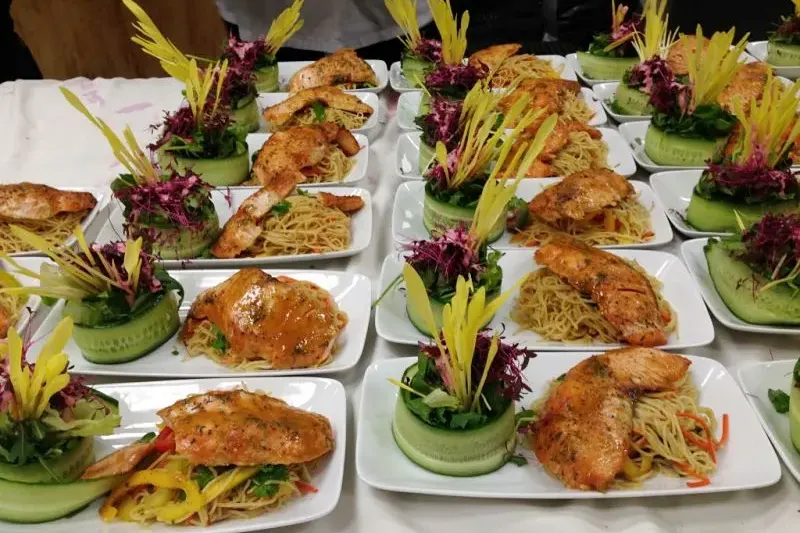
Turkish catering adapts well to this approach. Mediterranean cuisine naturally emphasizes ingredients compatible with kosher-style preparation. Fresh fish, grilled meats, vegetable dishes, and careful menu design create beautiful meals that respect tradition without requiring imported kosher infrastructure.
Vegetarian and Fish Options
Fully vegetarian or fish-based menus offer another approach for couples concerned about meat preparation. Mediterranean cuisine excels at both – stunning vegetable preparations, excellent fresh seafood, and abundant options that avoid the complexities of meat kashrus entirely.
Ramarossi works with couples to understand their specific level of observance and design catering approaches that respect their practice. The solutions range from strictly kosher to kosher-style to creative alternatives – all delivering excellent food that honours your standards.
Where Do Jewish Families Live Globally?
Understanding the Jewish diaspora’s geography helps explain why Turkey works as a destination wedding location.
The United States has the largest Jewish population outside Israel, with major communities in New York, Los Angeles, Miami, Chicago, and cities throughout the country. American Jewish families often have relatives in Israel and connections to European communities.
Israel is home to millions of Jews, many with family connections across the diaspora. Israeli guests represent a significant portion of many Jewish wedding guest lists, and Israel’s proximity to Turkey creates travel advantages.
The United Kingdom hosts substantial Jewish communities, particularly in London and Manchester. British Jewish families often have relatives in Israel, North America, and continental Europe.
France has Western Europe’s largest Jewish population, concentrated in Paris and other major cities. French Jewish families frequently have Israeli connections and relatives across multiple continents.
South Africa maintains an active Jewish community with strong connections to Israel and family networks spanning multiple countries. South African Jewish weddings often involve guests from several continents.
Canada, Australia, Argentina, and other countries have significant Jewish communities, adding further geographic complexity to wedding guest lists.
Why Is Turkey Geographically Central for Jewish Families?
When guest lists include Israel, New York, London, and possibly South Africa or Australia, finding a central destination seems impossible. Turkey offers surprisingly balanced accessibility.
From Tel Aviv, the flight to Antalya, Turkey is approximately ninety minutes – shorter than many domestic flights in larger countries. Israeli guests reach Turkey more easily than they reach Western European or North American destinations.
From New York, approximately eleven hours with connections through Istanbul or European hubs. Comparable to European destinations and significantly easier than reaching Israel for non-stop-flight-free routes.
From London, approximately four hours direct. Easier than reaching Israel and comparable to other Mediterranean options.
From Paris, approximately three and a half hours. Again, easier than Israel and comparable to alternatives.
From Johannesburg, approximately nine hours via Istanbul. Long, but comparable to reaching European or Israeli destinations.
No destination eliminates long travel for globally distributed families. But Turkey uniquely balances accessibility from Israel with accessibility from the Western diaspora – a combination few other destinations achieve.
What About Israeli Guests Specifically?
Israeli guest attendance often determines destination feasibility for Jewish weddings. A celebration many Israeli relatives cannot attend loses important family presence.
Turkey and Israel maintain diplomatic relations, and direct flights connect Tel Aviv to Antalya regularly. Israeli passport holders can obtain Turkish visas through a straightforward e-visa process. The travel is easy, affordable, and routine – thousands of Israelis visit Turkey annually for tourism.
For Jewish couples whose guest lists include substantial Israeli contingents, Turkey’s proximity and accessibility create genuine advantages over European or North American alternatives. Grandparents who might not manage transatlantic flights can manage the brief journey to Turkey. Cousins who might skip a distant celebration will attend one ninety minutes away.
This accessibility often proves decisive for couples weighing destination options. Turkey allows Israeli family to attend with minimal travel burden – an advantage most other destinations cannot match.
How Does Turkey Accommodate Jewish Sabbath Observance?
For families with Shabbat-observant guests, wedding timing requires careful consideration. Saturday weddings create conflicts for guests who don’t travel or attend events on Shabbat. Sunday weddings or weekday celebrations allow observant guests to arrive before Shabbat, rest appropriately, and attend without religious conflict.
Ramarossi advises couples with observant guests to consider Sunday celebrations, allowing Shabbat observance before the wedding. Thursday or Wednesday weddings offer alternatives that accommodate various schedules while avoiding Shabbat conflicts entirely.
For wedding weeks involving multiple events, scheduling around Shabbat allows observant guests to participate in most celebrations while respecting their practice. The destination’s flexibility supports various approaches to this consideration.
Hotel arrangements can accommodate Shabbat needs – pre-arranged meal options, walking distance to venues, and attention to various observance requirements. Ramarossi coordinates these details for couples whose guests include Shabbat observers.
What Venues Work for Jewish Celebrations?
Jewish wedding celebrations share certain needs: space for ceremony and reception (often in the same venue), room for hora dancing, facilities for cocktail hour and formal dinner, and atmosphere appropriate for both sacred ceremony and joyful celebration.
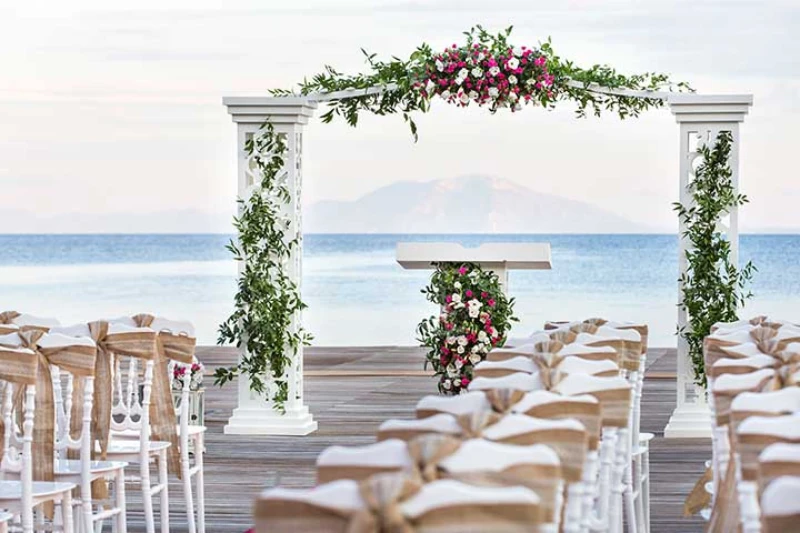
Antalya, Turkey offers numerous venues suited to Jewish celebrations. Private beach clubs provide ceremony-to-reception flow with Mediterranean backdrop. Clifftop terraces offer dramatic settings for chuppah ceremonies with expansive space for celebration. Luxury resort venues combine excellent service infrastructure with beautiful settings. Historic properties add character for couples wanting distinctive locations.
Ramarossi matches venues to celebration needs – guest count, ceremony preferences, dancing expectations, and aesthetic vision. The venue selection process considers specifically Jewish ceremonial requirements, ensuring chosen spaces accommodate all traditional elements.
What Will Non-Jewish Guests Experience?
Jewish weddings include traditions unfamiliar to some guests. The beauty of destination weddings is that all guests share the adventure, and non-Jewish attendees often find Jewish ceremonies moving and memorable even without prior familiarity.
Programs explaining ceremony elements help guests understand what they’re witnessing. The chuppah symbolism, the ketubah signing, the seven blessings, the glass breaking – brief explanations transform unfamiliar rituals into meaningful moments for all attendees.
The hora – circle dancing that lifts the couple on chairs – involves everyone regardless of background. This joyful tradition creates shared celebration that transcends religious familiarity. Many non-Jewish guests describe the hora as a wedding highlight.
Beyond specifically Jewish elements, the celebration unfolds as any beautiful wedding – dinner, dancing, toasts, joy. The destination itself provides shared experience: Mediterranean beauty, Turkish hospitality, and the adventure of gathering somewhere unexpected.
How Does Turkey Compare to Israel for Jewish Weddings?
Israel is the obvious destination for Jewish weddings – spiritual significance, established infrastructure, family presence. For couples with primarily Israeli guest lists or strong personal connections to Israel, nothing substitutes.
But Israel presents challenges for globally distributed families. Western relatives face long flights and significant costs. Security concerns, while often overstated, create anxiety for some guests. Kosher observance is simpler, but destination appeal for non-observant Western guests may be limited.
Turkey offers a middle ground: accessible from Israel while also accessible from the Western diaspora. The destination provides adventure for all guests rather than feeling routine for some and foreign for others. Mediterranean beauty rivals Israeli coastal settings without the complexity of Israeli logistics.
For couples whose families span Israel and the West, Turkey allows everyone to gather in neutral territory – a destination that’s special for all rather than home for some and distant for others.
Frequently Asked Questions
Can we have a traditional Jewish wedding ceremony in Turkey?
Yes. Turkey’s secular constitution protects religious freedom. Traditional chuppah ceremonies with rabbinical officiation, ketubah signing, seven blessings, and all ceremonial elements are legally permitted and practically accommodated. Couples can bring their own rabbi or connect with rabbis experienced in destination ceremonies.
Is kosher catering available for weddings in Turkey?
Yes, through several approaches. Couples can import kosher caterers from Israel or Europe, choose kosher-style catering that follows principles without certification, or opt for vegetarian or fish menus. Ramarossi works with couples to design catering matching their level of observance.
How far is Antalya from Israel?
The flight from Tel Aviv to Antalya, Turkey is approximately 90 minutes – shorter than many domestic flights. Israeli guests reach Turkey easily, affordably, and routinely. Direct flights operate regularly, and Israeli passport holders obtain Turkish visas through a simple e-visa process.
Can Shabbat-observant guests attend a Turkey wedding?
Yes, with appropriate scheduling. Sunday weddings or weekday celebrations allow observant guests to arrive before Shabbat and attend without religious conflict. Ramarossi advises on scheduling and coordinates hotel arrangements that accommodate Shabbat needs.
Can we have a chuppah ceremony in Antalya, Turkey?
Yes. Ramarossi creates beautiful chuppah structures in stunning Mediterranean settings – imagine your chuppah with sea views, beneath ancient olive trees, or on a clifftop terrace at sunset. Design ranges from traditional four-post structures to contemporary interpretations.
Is Turkey a good option if our family is split between Israel and America?
Yes – this is Turkey’s particular strength. The 90-minute flight from Israel and 11-hour journey from New York creates balanced accessibility. Turkey allows everyone to gather in neutral territory that’s special for all guests rather than routine for some and distant for others.
If you’re planning a Jewish wedding and want a destination that honours tradition while solving the logistics of globally distributed family, Ramarossi can discuss what Antalya, Turkey makes possible. A conversation about your ceremonial requirements, kashrut needs, and family geography costs nothing – and could reveal the destination that brings everyone together.