


A private villa can work very well for a wedding in Kaş, but whether a specific property is actually suitable depends on the property itself, rather than the word “villa” on a listing page. Before a villa is booked as a wedding venue, three things need to be established: how guests and suppliers will access the property, what sound and evening programme the property can genuinely accommodate, and how catering and service will actually operate on the day.
Layout, power, weather backup and guest facilities matter too, but each of those questions connects back to one of those three systems. A villa with an attractive garden and no genuine supplier access, for example, is not yet a wedding venue. Working through access, noise and catering in that order gives a couple, and their planner, a realistic picture of whether a particular villa can support the wedding they are planning, rather than the wedding they have pictured from photographs.
Couples exploring a wedding in Kaş and already leaning towards a private villa will find this article most useful once a specific property is under consideration.
First Question: Is This Villa Actually Being Offered for the Wedding You Want?
Before assessing access, sound or catering in detail, it is worth confirming the basic point: does this property actually accept the wedding being planned. A villa available to rent for a holiday stay is not automatically available, or arranged, for a wedding with outside guests, suppliers, catering, sound equipment and an evening programme.
Confirm with the property or its representative whether it accepts:
- the intended guest count, for both the ceremony and reception if these differ
- a wedding ceremony and reception on site
- dancing and amplified music
- external suppliers, including catering, florists and production companies
- setup in advance of the day and breakdown afterwards
- an after-party, where one is planned
An owner’s verbal willingness to host a wedding is a starting point, not confirmation that every part of the plan can proceed. Where there is any doubt about what the property actually permits, that should be resolved with the property directly before the villa is treated as booked.
Access Starts Before Guests Reach the Front Door
Access is often the first thing a couple checks, and the one most likely to be assumed rather than confirmed. Knowing that a villa has road access is different from knowing that the intended arrival plan will actually work on the day.
For each shortlisted villa, establish:
- where guest vehicles can stop, and whether that point is close to the entrance
- whether the type of vehicle likely to be used, such as a coach or minibus for a larger group, can physically reach the property
- whether there is a turning point for larger vehicles, or whether vehicles need to reverse
- where taxis and private transfers can wait during the event
- whether parking is available on site, and who it is intended for
- how older guests, or guests with limited mobility, will reach the ceremony or reception space from the drop-off point
- the actual route guests will walk from arrival to the ceremony or dinner area
- how that same route works after dark, including lighting
None of these questions has a single answer that applies to every Kaş villa. The answer depends entirely on the specific property, and each point should be checked and confirmed rather than assumed from photographs or a general description.
Supplier Access Is a Different Test from Guest Access
A guest car reaching the villa does not confirm that a catering van, a furniture delivery vehicle or a sound and lighting rig can be delivered and installed there. Supplier access is a separate test, and should be checked separately.
Relevant vehicles and equipment can include catering vehicles, florist and decor vehicles, furniture and equipment hire deliveries, sound and lighting equipment, DJ or band equipment, refrigeration or additional service equipment, and whatever needs to be removed again after the event.
Questions worth raising with the property include:
- where the largest supplier vehicle expected for the event can stop
- how far equipment then needs to be carried from that point
- whether there are steps, narrow gateways or uneven surfaces along that carry route
- what setup period is actually available before the event starts
- whether equipment can remain on site overnight, or whether same-day collection is required
- when collection needs to happen after the event
These answers vary from property to property, and a villa that works well for guest arrival can still present real difficulties for supplier access. Both should be checked independently.
Walk the Guest Route and Supplier Route Separately
Guest movement and supplier movement through a villa are often two different journeys, and treating them as one route can create avoidable problems on the day.
A guest route typically runs from arrival, through the ceremony area, to pre-dinner drinks, into dinner, onto the dance floor, past the toilets, and out again at departure. A supplier route runs from the vehicle stop, through preparation and service areas, into the ceremony and decor setup, through dinner service, to the bar, to any technical or production area, and out again for collection.
Where these two routes cross, particularly near entrances, terraces or narrow corridors, guests can end up walking past active service areas, and suppliers can find their access blocked during the event itself. Mapping both routes for a specific villa, rather than assuming one route works for everyone, is a practical step that a site visit can confirm directly.
Noise: Ask About the Specific Space, Not ‘The Villa’
Sound is rarely a single yes-or-no question for an entire property. It is more useful, and more accurate, to ask about each space in turn: the ceremony area, the dinner area, the dancing area, a pool terrace, a garden, an indoor room, and any enclosed space that might be used for a later part of the evening.
For each of these spaces, it is worth confirming:
- whether amplified music is accepted in that exact area
- whether the arrangement changes later in the evening, for example after the main reception ends
- whether speakers can be positioned or directed in a particular way
- whether there are neighbouring properties nearby
- whether some parts of the villa are treated differently from others for sound purposes
- whether an indoor space is available if the programme needs to move inside later
A villa may accept amplified music in a garden during the reception but have a different arrangement for a later, louder after-party, or may need continuation to move to an enclosed room. These distinctions come from the property, not from a general assumption about what villas normally allow.
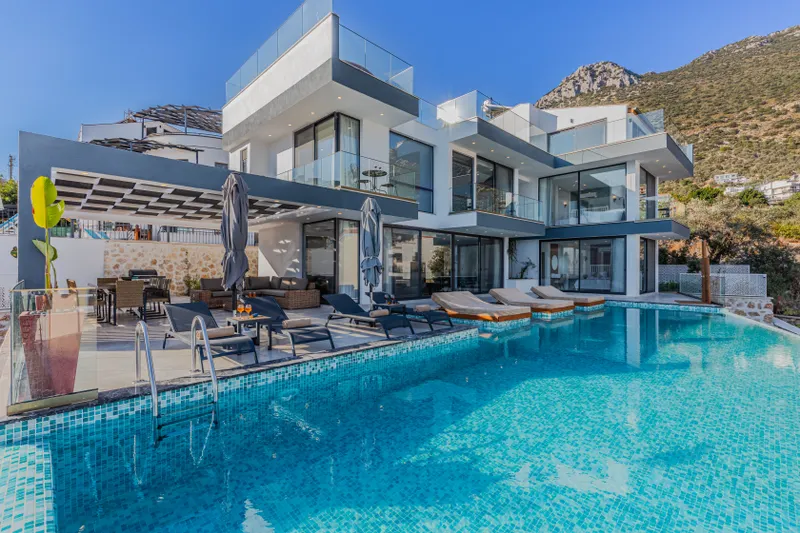
Secluded Does Not Automatically Mean Sound Freedom
A villa that looks isolated in photographs is not necessarily free of nearby neighbours, and a villa that appears closer to other buildings is not necessarily restricted. Seclusion in a photograph does not tell a couple anything reliable about the property’s actual sound arrangement.
A property may have neighbouring homes, other accommodation, or nearby uses that are not obvious from marketing images, alongside a specific sound arrangement that reflects that context. Equally, a villa near other buildings may still have a workable arrangement for the event being planned. The only reliable answer comes from the property itself, not from how remote the setting looks in a photograph.
Main Reception and After-Party Planning
In Ramarossi’s operational experience of Turkish wedding-venue practice, the main wedding and reception programme is normally structured to finish at approximately 00:00, with any continuation after that treated as an after-party. An after-party may continue later, commonly to around 02:00, only where the specific property and specific event space are permitted and contractually able to operate at that time. If outdoor amplified music is specifically permitted after 00:00 for that property and space, the after-party may continue outdoors within that permission; otherwise, a later programme may need to move to an authorised indoor or enclosed space.
Neither approximately 00:00 nor approximately 02:00 is a universal statutory finishing time, and a private or residential villa should not be assumed to have the same operating arrangement as a hotel or a dedicated commercial event venue. The couple should confirm, in writing with the specific property, the main reception finishing time, the outdoor amplified-music arrangement, whether an indoor continuation is available, and the after-party space and finishing time if one is planned.
Catering: Can a Residential Kitchen Actually Support the Event?
A villa having a kitchen does not automatically mean that kitchen can support a wedding-scale catering operation. A residential kitchen designed for a holiday rental and a working kitchen capable of producing and serving a multi-course meal for a wedding party are different things, and the difference matters before a menu is planned.
Points worth assessing with the caterer and the property together include whether the existing kitchen can actually be used by the appointed caterer, how much preparation space is available, what refrigeration and storage exist, whether the water supply is adequate for the planned service, how washing-up and food holding will work during service, how waste will be managed, whether there is a suitable working area for catering staff, what the service route into the dining area looks like, and how the bar will be set up and supplied.
Temporary catering equipment, or a separate catering setup, may be needed for some properties. That should not be assumed to be necessary for every villa, and the actual requirement depends on what the specific kitchen can and cannot support for the guest count and menu being planned.
Where Will the Caterer Actually Work?
Beyond the kitchen itself, it is worth asking the caterer to set out a specific back-of-house plan for the property, rather than a general catering proposal. That plan should cover food preparation, cooking where relevant, plating, the return and washing of dirty items, glassware handling, ice, beverage storage, waste and rubbish removal, staff break arrangements, and the service route from the kitchen or preparation area into the dining space.
Wherever practical, this back-of-house activity should be kept separate from where guests are moving and socialising. A caterer who can describe exactly where each of these tasks will happen at a particular villa is a stronger sign of readiness than a general assurance that catering will be arranged.
Outside Catering Must Be Confirmed Before You Build the Menu
A private villa should not be assumed to give automatic freedom to bring in any external caterer. Some properties accept outside catering without difficulty, some have their own catering arrangement or a list of approved suppliers, and some attach specific conditions to kitchen or service-area access.
Before the menu is planned, confirm with the property whether an external caterer is accepted, whether the villa has its own catering arrangement that would apply instead, whether kitchen access is included as part of the booking, which service areas the caterer can actually use, and whether temporary catering equipment can be brought onto the property if required. Any fees or conditions attached to outside catering should come directly from the property, rather than from a general assumption about how villas typically operate.
Power Connects Catering, Sound and Production
Catering, sound, lighting and any production elements often draw on the same technical infrastructure at a villa, which means a shortfall in one area can affect all of them on the day. Refrigeration, a bar setup, lighting, a DJ or band, sound equipment and any additional production all place demand on the property’s power supply.
A residential electrical system should not be assumed to be adequate for a wedding-scale event without being checked. The relevant technical suppliers, working with the property, should establish what supply is actually available, where the connection points are, and what temporary or backup power provision may be needed to support the plan safely. This is a conversation for the sound, lighting and catering suppliers to have directly with the property, rather than an assumption made in advance.
Toilets, Water and Service Facilities
Guest toilets, water supply and general service facilities are easy to overlook until the guest count is confirmed against what the villa actually offers. Check how many usable guest toilets are available, where they are located relative to the ceremony and reception spaces, how they will be cleaned and serviced during the event, whether the water supply is sufficient for the numbers involved, and whether adequate lighting is in place for evening use.
Residential facilities at a villa are not automatically inadequate for a wedding, and they are not automatically sufficient either. The right answer depends on the actual number of guests attending and the length of the event, and whether temporary facilities need to be brought in should be assessed against that specific guest count, rather than assumed either way.
Weather Backup Changes the Catering and Sound Plan Too
A weather backup plan for a villa wedding needs to work for more than shelter. If an outdoor ceremony, dinner or dancing area becomes unusable, it is worth asking in advance where guests would move to, where dinner service would relocate to, whether the caterer can still serve that alternative space effectively, whether sound and lighting equipment can be moved without disrupting the event, and whether the backup space can actually accommodate the layout the wedding has been planned around.
A backup space that exists only as a small covered terrace, for example, may not genuinely support a full seated dinner for the same guest count as the outdoor plan. The test is whether the alternative space can support the actual wedding as planned, not simply whether a covered area exists somewhere on the property.
What to Check During a Villa Site Visit
A site visit is the most reliable way to test a villa against the plan, rather than against its photographs. During a visit to a specific Kaş property, it is worth:
- driving the actual approach road
- identifying the guest drop-off point
- identifying where suppliers can unload
- walking the guest route from arrival to departure
- walking the separate supplier carry route
- inspecting the ceremony, dinner and dancing spaces directly
- noting neighbouring or adjoining properties without assuming how they affect the event
- inspecting the catering and back-of-house areas
- checking the bar location
- checking the usable toilets
- reviewing power locations with a technical supplier where appropriate
- testing how the backup space would actually be laid out
- identifying a possible indoor or after-party area
- confirming what access is available for setup and collection
Where a site visit before booking is not possible, as many of these points as possible should be confirmed directly with the property, or with a trusted representative acting on the couple’s behalf.
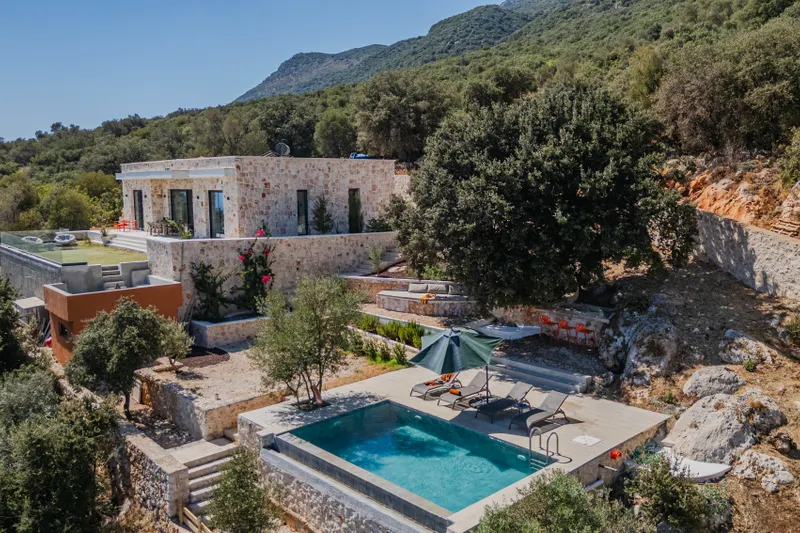
Private Villa Operational Check: Decision Table
The following table summarises the main areas to inspect and confirm before treating a private villa in Kaş as a booked wedding venue.
| Area | What to Inspect | What to Confirm in Writing |
|---|---|---|
| Wedding use | Whether the property is presented and used as a wedding venue or purely as a holiday rental | Written acceptance of the intended guest count, ceremony, reception, suppliers and any after-party |
| Guest arrival | Approach road, drop-off point, turning space, parking | Where vehicles stop, parking arrangements, accessibility for guests with limited mobility |
| Supplier access | Vehicle unload point, carry route, steps or narrow gateways | Setup and collection times, whether equipment can remain overnight |
| Guest circulation | Route from arrival to ceremony, dinner and dance floor, lighting after dark | Any points where guest and supplier routes cross |
| Catering | Kitchen condition, preparation space, existing equipment | Whether outside catering is accepted, and any conditions attached |
| Kitchen / back-of-house | Refrigeration, storage, washing-up area, waste arrangements | What the caterer can and cannot use on site |
| Bar / service | Proposed bar location, beverage storage, ice supply | Service route from bar to guest areas |
| Power | Existing electrical supply and connection points | Available capacity and any backup power required, confirmed with a technical supplier |
| Sound | Each event space individually: ceremony, dinner, dancing | Whether amplified music is accepted in each space, and whether this changes later in the evening |
| Neighbour considerations | Proximity of neighbouring properties or accommodation | How this affects the property’s sound arrangement, confirmed directly with the property |
| Main reception | Space and layout for the main wedding programme | Contractual finishing time for the main reception |
| After-party | Whether a separate indoor or outdoor space exists for a later programme | Whether an after-party is permitted, in which space, and until what time |
| Toilets / facilities | Number and location of usable guest toilets, water supply | Whether temporary facilities are required for the guest count |
| Weather backup | Alternative indoor or covered space | Whether the backup space can host the full guest count and layout |
| Setup / breakdown | Access windows before and after the event | Agreed setup and collection times with the property |
Warning Signs That the Villa May Not Suit the Wedding
Some signs suggest that a particular villa may need a revised plan, or that another property might be a better fit for the wedding being planned:
- the property’s acceptance of wedding use is not actually confirmed
- the arrival or supplier access does not work for the intended plan
- catering has no workable service area to operate from
- production cannot realistically be delivered within the space available
- the sound and late-night plan does not match the programme the couple wants
- the weather backup is not genuinely usable for the full guest count
- guest movement through the property is difficult or congested
- the number of temporary systems needed to make the wedding work is significant
None of these points on its own necessarily rules a villa out. Together, or alongside the couple’s specific requirements, they may indicate that the plan needs to change, or that another property would suit the wedding better.
When a Private Villa Can Be a Strong Kaş Wedding Venue
A private villa can be an excellent setting for a Kaş wedding where the property genuinely supports the plan being built around it. That is more likely where the property explicitly accepts the intended wedding, guest and supplier access both work for the plan, the layout suits the actual guest count, catering has a realistic operating plan in place, power and production needs can be supported, the sound and after-party arrangements match the couple’s programme, the weather backup is credible for the full guest count, guest facilities are adequate, and setup and breakdown can be carried out without creating problems for the property or its neighbours.
A villa is not automatically a stronger or weaker choice than a boutique hotel or a seafront venue. The right venue is the one whose specific arrangements match the wedding actually being planned.
Still Deciding Between Villa, Boutique Hotel and Seafront Venue?
Couples who have not yet settled on a venue type may find it useful to step back and compare the broader options first. Ramarossi’s Kaş wedding venues comparison sets out how a boutique hotel, a private villa and a seafront terrace differ, before narrowing down to a specific property.
How Ramarossi Plans a Private Villa Wedding in Kaş
Selecting a villa is one part of a much larger operational plan. Ramarossi’s role in a private villa wedding in Kaş can include defining the villa brief, shortlisting suitable properties, communicating directly with the property on the couple’s behalf, carrying out a site and layout review, planning guest movement and transport, coordinating supplier access, arranging catering and the bar and service plan, coordinating decor and flowers, managing production including sound and lighting, arranging entertainment, developing a credible weather backup, confirming the main reception and after-party arrangements, planning setup and breakdown, building the full wedding-day timeline, and coordinating suppliers and the property through to delivery on the day.
The value of working with a planning team is not simply finding an attractive villa. It is making sure the selected property, the suppliers involved, the guests attending and the wedding programme itself all operate as one workable plan, rather than a set of separate arrangements that have never been tested together. Ramarossi does not provide legal contract review and does not guarantee a property’s permissions, availability, pricing, finishing times, supplier access or the outcome of the day.
Planning Your Private Villa Wedding in Kaş
If you are considering a private villa for a wedding in Kaş, Ramarossi can help define the operational requirements, assess shortlisted properties against your wedding plan, and coordinate the full planning process once the right property is selected.
Share your preferred date, approximate guest count, any villa or property you already have in mind, your ceremony and dinner format, whether an after-party matters to you, and your accommodation strategy, and the Ramarossi team can help you work through what a specific property can and cannot support.
Visit Ramarossi’s wedding planning services to get started.
Frequently Asked Questions
Can a private villa in Kaş be used for a wedding?
A private villa can be used for a wedding in Kaş where the specific property accepts wedding use, including guests, suppliers, catering and the intended sound and evening programme. This should be confirmed directly with the property rather than assumed from its availability as a holiday rental.
What access should we check before booking a Kaş wedding villa?
Before booking, confirm where guest vehicles can stop, whether the vehicle types you plan to use can reach the property, where suppliers can unload, and how guests and equipment will move through the site, both during the day and after dark. These answers are specific to each property and should be checked directly rather than assumed.
Can outside caterers work at a private villa in Kaş?
This depends on the individual property. Some villas accept an external caterer without difficulty, some have their own catering arrangement, and some attach specific conditions to kitchen or service-area access. Confirm the position with the property before the menu and catering plan are finalised.
Can amplified music be used at a private villa wedding?
Amplified music arrangements vary by property, and often by specific space within the same villa. Confirm directly with the property whether amplified music is accepted in the ceremony, dinner and dancing areas, and whether the arrangement changes later in the evening.
Can a Kaş villa wedding have an after-party?
An after-party may be possible where the specific villa and specific event space are permitted and contractually able to operate later into the evening. This is not automatic, and the arrangement, including the finishing time and whether it can continue outdoors, should be confirmed with the property in writing.
What catering facilities should a wedding villa have?
A workable villa should offer, or allow the caterer to bring in, adequate preparation space, refrigeration and storage, a sufficient water supply, a practical service route into the dining area, and a suitable working area for catering staff. Whether the existing kitchen is sufficient or additional equipment is needed depends on the guest count and menu planned.
Can Ramarossi plan the complete wedding at a private villa in Kaş?
Yes. Ramarossi can coordinate the full planning process around a chosen villa, including property communication, supplier access, catering, production, transport, weather backup and the wedding-day timeline, working with the couple to confirm what the specific property can support before and after booking.