

Wedding Day Weather: Forecasts, a Plan B and Practical Fixes for Rain, Heat and Wind
When to start watching the forecast, how to give every outdoor moment a fallback, and what to pack and ask for a wedding in Antalya whatever the sky decides.
Wedding day weather is the one element of an outdoor celebration you cannot book, yet nearly everything it might change can be prepared for months before the forecast settles.
This guide from Ramarossi looks at forecasts and how far to trust them, a fallback for each part of the day spent outside, and the kit and questions for rain, heat and wind, with notes for Antalya, Turkey, written for couples who are organising everything from another country. If venues, seasons and travel are still open questions, start with the wider picture of a wedding in Antalya and come back here once the setting is clear.
Wedding Day Weather Forecasts: When to Look and What to Trust
Outlooks published weeks ahead describe a broad pattern, not your afternoon. The UK Met Office explains in its guide to ten-day forecasts that the first few days are where its forecasts are sharpest, and that from around day five onwards they convey the general feel of the weather rather than local detail. Any forecaster faces the same limit, so let the lead time decide what you do with each update. Months ahead, when you are still choosing a date, long-term climate averages for the month are the better guide.
A week to ten days out. Glance at the trend and confirm with the venue that your covered fallback is still held for you. Nothing needs deciding yet.
Five to three days out. Forecasts gain local detail. Ask suppliers about extras such as fans, heaters or more umbrellas, and tell the photographer which alternative spots are in play.
The final 48 hours. Look at the hourly forecast for the ceremony slot and at wind speed, not only the rain symbol. For Antalya, the Turkish State Meteorological Service (MGM) publishes a five-day Antalya forecast in English, a useful second opinion beside a phone app.
Choose one or two sources and check them at set times rather than reloading every hour; a calm routine makes the eventual decision easier.
A Plan B for Every Outdoor Moment
A fallback is more than a single room kept in reserve. Each part of the day held outside deserves its own answer, because a shower at four o’clock may clear by dinner, and a breezy ceremony can still give way to a still, warm evening. Once the alternative spaces are chosen, ask the venue to note them in your agreement next to the main set-up, so both options are reserved for your date.
Ceremony. Ask where the chairs would stand under cover, how long the switch takes, and whether the arch and flowers travel with them. A covered terrace or pavilion facing the same view keeps much of the original feeling.
Drinks and photos. A shaded or roofed corner for the drinks hour matters as much on a scorching day as on a wet one.
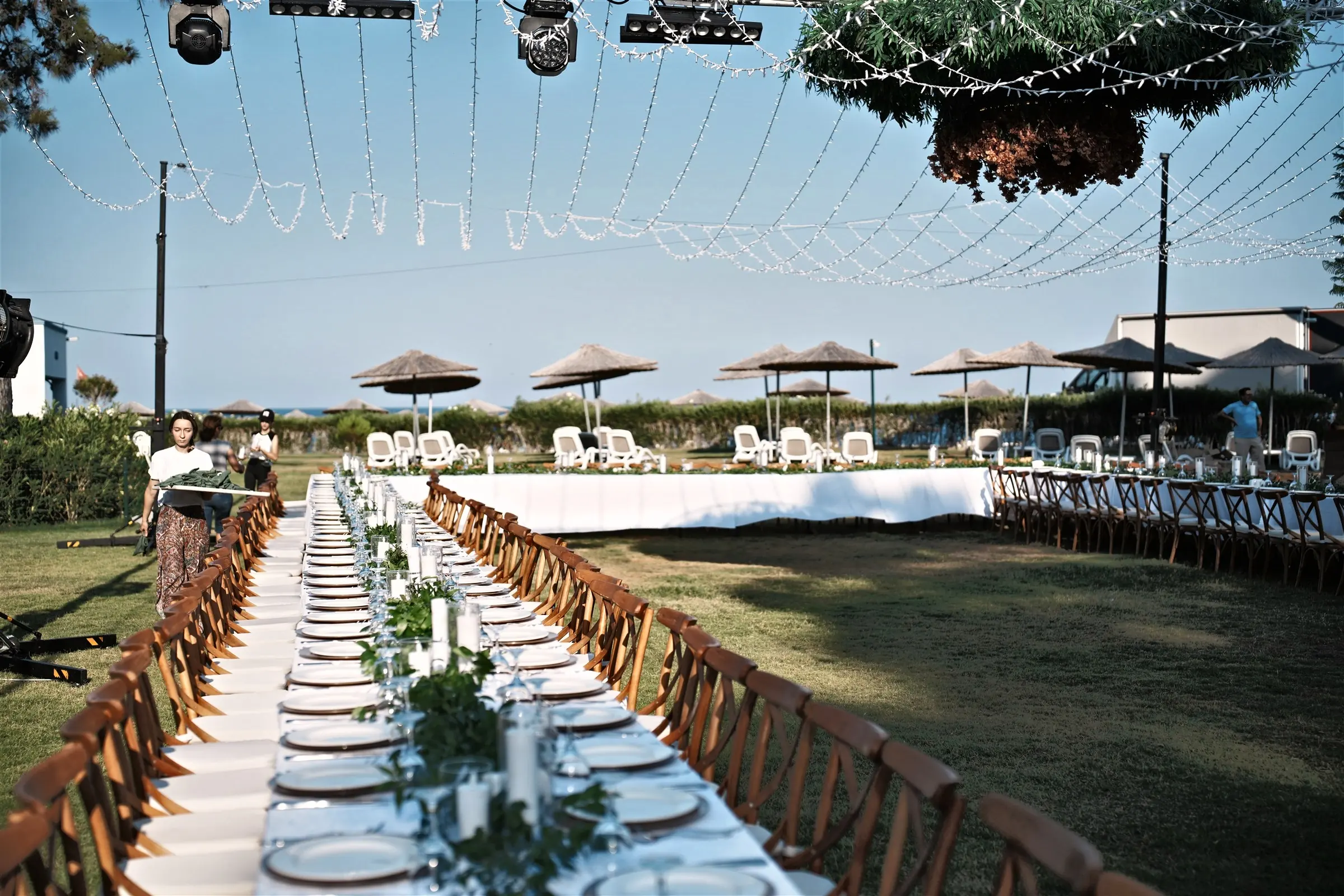
Dinner. For long tables on a lawn or near the sand, check whether a structure can go up over them or whether dinner moves to a hall or restaurant, and how your seating plan transfers.
Dancing. Sound and lighting equipment must stay dry, so ask the DJ or band what cover they need and where power would run in the alternative space. Finishing times can differ between indoor and outdoor areas, as our guide to Antalya venue curfews explains.
Decision Time and Who Makes the Call
Settle before the wedding week who decides, by when and on what basis. Left open, the question gathers a dozen opinions on the morning itself.
- Ask how much notice the venue needs. Find out how many hours the team needs to move a set-up from the garden or beach into the covered space.
- Name one decision-maker. Your planner, the venue coordinator or a trusted relative, with the authority to make the call.
- Agree the trigger in plain words. For example, a stated chance of rain in the hourly forecast, or the wind speed your florist names as the limit for the arch.
- Fix the hour. The evening before or the morning of the wedding, and keep to it.
- Decide who passes it on. One person tells the photographer, florist, musicians, transfer company and guests.
A split decision can be a graceful answer: keep the vows outside while the sky holds, and move dinner under cover early so nothing is rushed later in the evening.
Rain, Heat, Wind and Cold: What to Prepare
Each kind of weather brings its own problems and its own simple remedies. Use this as a checklist when you talk to the venue and suppliers.
Wet grass, slippery steps, damp hair and fabrics
A covered fallback, umbrellas for guests, an aisle runner or flooring, spare flat shoes
Tired guests, wilting flowers, a softening cake
Shade, chilled water, fans and parasols, a later ceremony time
Flying decor, lifting veils, candles blown out, vows lost to the breeze
Anchored decor, lanterns instead of open flames, lapel microphones
Guests chilled once the sun goes down
Wraps or pashminas, heaters on terraces, a warm indoor space
Lightning outdoors, interrupted power for lights and sound
Solid cover for everyone, a question to the venue about backup power
| Weather | Risk | What to prepare |
|---|---|---|
| Rain | Wet grass, slippery steps, damp hair and fabrics | A covered fallback, umbrellas for guests, an aisle runner or flooring, spare flat shoes |
| Strong heat | Tired guests, wilting flowers, a softening cake | Shade, chilled water, fans and parasols, a later ceremony time |
| Wind | Flying decor, lifting veils, candles blown out, vows lost to the breeze | Anchored decor, lanterns instead of open flames, lapel microphones |
| Cool evening | Guests chilled once the sun goes down | Wraps or pashminas, heaters on terraces, a warm indoor space |
| Thunderstorm | Lightning outdoors, interrupted power for lights and sound | Solid cover for everyone, a question to the venue about backup power |
Tents, Marquees and Covered Terraces
Ask each venue what cover exists on site: an indoor hall, a roofed terrace, a pavilion or a structure that can be raised over the lawn. Then ask to see it dressed, because lighting, flowers and draping make a fallback feel intended rather than borrowed.
A marquee or stretch tent needs level ground, time to build and a booking made well in advance. If one is part of the plan, ask when it must be confirmed and whether it can stand ready the day before, offering shade whatever happens. Sides that roll up or down let the same structure serve a bright afternoon and a showery one.
Ramarossi has planned weddings across the Turkish Riviera since 2011, and a well-dressed covered space can carry every bit as much atmosphere as a garden. If you are still choosing a setting, our article on deciding between indoor and outdoor venues sets out the trade-offs.
Heat and Strong Sun
Midsummer in Antalya is hot. MGM’s long-term statistics for Antalya, covering 1930 to 2025, put average daytime highs in July and August at around 34°C, which means the ceremony time does more for comfort than any accessory.
Start with shade: trees, a pergola or parasols over the ceremony seats, with older relatives placed out of direct sun. Next comes water: a station of chilled water, perhaps with lemonade or ayran, waiting as guests arrive and refilled through the drinks hour. Paper fans and parasols left on the chairs are practical and look lovely in photographs. For a midsummer date, ask the venue which air-conditioned room could host the drinks hour or dinner on a particularly hot afternoon.
Flowers, chocolate and buttercream suffer in heat, so ask the florist which stems hold up and keep the cake indoors until shortly before it is cut. Seasons and sunset across the year are set out in our month-by-month look at when to get married in Antalya.
Wind on Beaches, Piers and Cliffs
A sea breeze can be welcome on a warm day and a nuisance for anything light. Beaches, wooden piers and clifftop terraces are exposed, so plan the details for a gust even when the forecast looks calm. Each setting has its own deeper read: vows on the sand in our Antalya beach wedding guide, and exposed terraces in our notes on clifftop ceremonies and wind.
- Decor. Arches anchored or weighted, linen clipped to tables, and loose petals kept off the aisle if gusts are expected.
- Veil. A shorter or weighted veil, or one that can be removed after the ceremony portraits.
- Candles. Hurricane glasses or lanterns in place of open tea lights, with LED candles as a backup.
- Paper. Menus, place cards and orders of service held in frames or stands.
- Sound. Lapel microphones for the officiant and the couple, so the vows carry over wind and waves.
- Hair. A pinned or upswept style; ask for a windproof option at the trial.
Rain: Guests, Shoes, Hair and the Aisle
A basket of umbrellas at the entrance, in a shade that suits your palette, turns a shower into a picture. Clear umbrellas keep faces visible in photographs.
Over grass, a runner or temporary flooring stops heels sinking and hems soaking up mud. A bride may want a second pair of flat shoes, and a bustle added at the final fitting lifts a long train clear of wet ground.
Damp air flattens curls and raises frizz, so ask your stylist for a look that copes with humidity and give a touch-up kit to the maid of honour, along with a few towels for wet chair seats. Trials and timings are covered in a separate piece on hair and makeup for brides marrying in Turkey.
Autumn and Winter Weddings in Antalya
The same MGM records show Antalya’s rain falling mainly between November and February, with midsummer close to dry and showers becoming more likely again from October. Spring and autumn weddings therefore sit in a softer, changeable season: warm days, cooler evenings and the chance of a passing shower.
For a wedding in these months, pick a venue whose covered space is good enough to be Plan A rather than a refuge, and plan warmth for the evening with wraps, terrace heaters and hot drinks after dinner.
Heavy rain on an arrival day can slow roads and flights anywhere, so leave a margin in guest arrival times and keep the transfer company informed of the plan.
Photographs in Changeable Weather
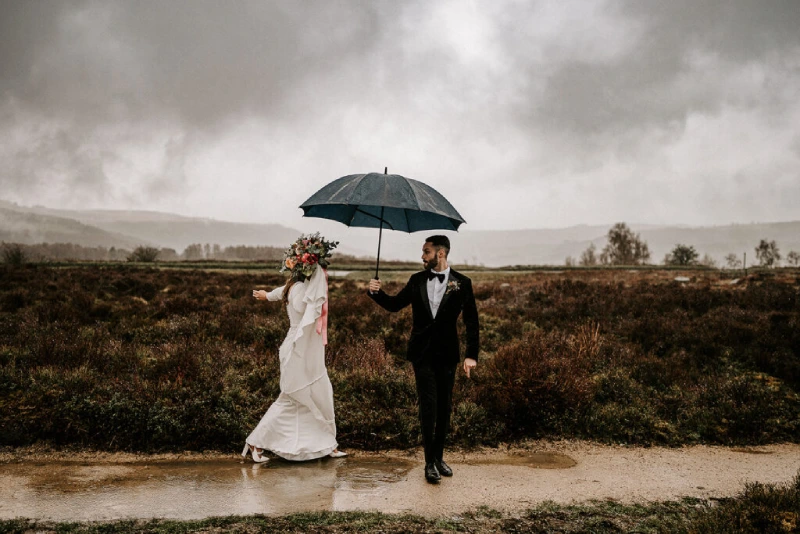
Tell your photographer early which alternative spots are on the list, so they can judge the light there. Overcast skies give even, flattering light for portraits, and a dramatic sky behind a couple under an umbrella can outshine a cloudless frame. Shoot planning has its own page: photo and video for an Antalya wedding.
Ask whether the photographer carries flash and rain covers, and leave a little slack in the timeline: a fifteen-minute buffer lets portraits slip between showers to catch a clearing. In heat, keep group photos short and in shade, and save couple portraits for the gentler light before sunset.
Does Wedding Insurance Cover the Weather?
Policies vary. Read how the wording defines adverse weather, whether the wedding has to be prevented altogether for a claim, and whether travel disruption for you or your guests is included. Check too that a policy bought at home covers a celebration held in Turkey. Our explainer on wedding event insurance sets out the basics.
Keeping Guests in the Loop
Guests flying in need to pack for the weather they will meet. A line on the wedding website or in the welcome message suggesting light, breathable fabrics for a summer day, a layer for the evening, comfortable shoes for grass or sand, and sun protection answers questions before they are asked.
If the plan changes on the day, send one clear message by group chat or email: where to go, at what time, and what to bring. Signs and a friendly face at the original spot guide anyone who missed it, and transfer drivers should hear the change at the same moment. Umbrellas by the door or pashminas for a cool evening are thoughtful extras.
Plan a day that works in any weather
Tell Ramarossi your dates, guest count and the setting you have in mind, and we will come back with ideas for covered spaces, timings and comfort touches that suit the season.
Prefer another email service? Write to info@ramarossi.com using Antalya Wedding Enquiry as the subject.
Follow our celebrations
Discover beautiful weddings, private events, styling ideas and behind-the-scenes moments from Ramarossi in Turkey.
Frequently Asked Questions
How far ahead can we trust the wedding day weather forecast?
Local detail firms up in the last few days. A week or more ahead, a forecast shows the broad pattern rather than conditions at your ceremony time, so check the hourly forecast in the final 48 hours before making the call.
When should we decide whether to use our Plan B?
At a time agreed in advance with the venue, set by how many hours it needs to move the set-up. The evening before or the morning of the wedding are both workable, as long as one named person makes the call.
Does it rain in Antalya in summer?
Long-term records from the Turkish State Meteorological Service show July and August close to dry in Antalya, with the year’s rain falling mainly between November and February and showers becoming more likely again from October.
How can we keep guests cool at a summer wedding in Antalya?
Choose a ceremony time later in the day, seat guests in shade, set up chilled water at arrival and through the drinks hour, and leave fans and parasols at the chairs.
What if it is windy at our beach ceremony?
Anchor the arch, swap open candles for lanterns, hold paper items in frames, choose a pinned hairstyle and a veil that can come off after the ceremony, and ask for lapel microphones so the vows carry.
Does wedding insurance cover bad weather?
It depends on the policy. Read how it defines adverse weather, whether the event has to be prevented altogether, and whether travel disruption is included, and check that it covers a wedding held in Turkey.
How do we tell guests if the plan changes on the day?
Send one short message with the new location, time and anything to bring, put up signs at the original spot, and make sure transfer drivers and suppliers hear the change at the same moment.