


The History of Wedding Cakes and British Wedding Cakes in Antalya
From grain cakes in ancient Rome to Queen Victoria’s white icing, the story behind the wedding cake, and how to plan a British-style cake for a wedding in Antalya.
The history of wedding cakes runs from grain cakes broken over a Roman bride’s head to the tall white cakes of Victorian Britain, and those traditions still shape the cake you cut at a wedding in Antalya today.
This guide follows the wedding cake through the centuries, looks at cake traditions around the world, and then turns to British wedding cakes in Antalya: traditional styles and flavours, local ingredients, keeping a cake in shape in the summer heat, and how to choose yours.
The History of Wedding Cakes in Brief
The wedding cake has changed shape again and again over two thousand years, but its meaning has stayed close to the same idea: a shared, special food that wishes the couple a sweet and plentiful life together. This timeline shows the main steps from ancient Rome to the modern tiered cake.
| Period | The cake | What it meant |
|---|---|---|
| Ancient Rome | A barley cake broken over the bride’s head | Good fortune for the new couple |
| Medieval England | Small spiced buns and cakes piled high on a table | The couple kissed over the pile for a prosperous life |
| 16th and 17th centuries | The bride’s pie, and cakes with white sugar icing | Refined sugar showed the family’s wealth |
| 1840 | Queen Victoria’s white-iced fruit cake | Set the style for the white British wedding cake |
| Late 1800s | Tiered cakes on columns, copied at smaller weddings | Cheaper sugar brought the white cake to more couples |
| Today | Tiered sponge, fruit or chocolate cakes, naked cakes and dessert tables | A centrepiece that reflects the couple’s taste |
A barley cake broken over the bride’s head
Good fortune for the new couple
Small spiced buns and cakes piled high on a table
The couple kissed over the pile for a prosperous life
The bride’s pie, and cakes with white sugar icing
Refined sugar showed the family’s wealth
Queen Victoria’s white-iced fruit cake
Set the style for the white British wedding cake
Tiered cakes on columns, copied at smaller weddings
Cheaper sugar brought the white cake to more couples
Tiered sponge, fruit or chocolate cakes, naked cakes and dessert tables
A centrepiece that reflects the couple’s taste
Ancient Beginnings
In ancient Rome, the marriage was marked by breaking a barley cake over the bride’s head for good fortune, as the Smithsonian Magazine describes. The cake was closer to bread than to anything we would call a wedding cake today, but the idea of a special grain cake shared at the wedding was already there.
Medieval Stacks and the First Tiers
In medieval England, guests brought small spiced buns and cakes and piled them as high as they could on the table. The couple tried to kiss over the stack without knocking it down, which was said to bring a prosperous life. A popular story says that a London baker later took the shape of the spire of St Bride’s Church on Fleet Street as the model for a tiered cake. The City of London describes the link as a rumour, but it remains part of the cake’s folklore.
Sugar, White Icing and the Bride’s Pie
Early British weddings also had a bride’s pie, a savoury pie with a rich filling, served to the guests. As refined sugar became more available in England from the 16th century, white icing became a sign of wealth: the whiter the cake, the more expensive the sugar, and the more it said about the family hosting the wedding.
Queen Victoria and the White Wedding Cake
The wedding of Queen Victoria and Prince Albert in February 1840 set the style that still shapes British wedding cakes. According to the Royal Collection Trust, the cake weighed more than 140 kg, measured around 3 metres in circumference and was topped with a figure of Britannia blessing the couple. It was made by John Mauditt, the confectioner at Buckingham Palace. The cake was a rich fruit cake covered in pure white icing, as National Geographic notes, and a detailed print of it was reportedly displayed in London windows.
Later royal weddings added height. The cake for Princess Victoria’s wedding in 1858 stood on columns between its tiers, and as sugar became cheaper towards the end of the century, couples across Britain copied the tall, white, tiered cake on a smaller scale. The hard white icing used on these cakes is known today as royal icing.

Keeping the Top Tier
A rich fruit cake keeps for a long time, which gave rise to a British custom: the couple kept the top tier for the christening of their first child. In North America the custom moved to the first wedding anniversary. In the southern United States, a groom’s cake joined the wedding cake, a smaller, darker cake, first a fruit cake and today a chocolate cake, decorated to suit the groom’s interests.
Wedding Cake Traditions Around the World
Each country has its own way of celebrating with cake:
- United Kingdom. The traditional cake is a fruit cake soaked in brandy, covered in marzipan and royal icing. Sponge layers, chocolate and lemon are popular choices for one or more tiers today.
- France. The croquembouche, a tower of cream-filled choux buns held together with caramel, is assembled close to the celebration because it is sensitive to heat and humidity.
- Scandinavia. The kransekake is a tower of almond rings.
- The Caribbean. Black cake is a dark, rum-soaked fruit cake.
- United States, Australia and South Africa. Tiered cakes in the British shape, with sponge, butter or pound cake inside rather than fruit cake, and the groom’s cake in the American South.
- Turkey. At a Turkish wedding reception, the couple cut a tiered cake together while guests and the photographer gather round.
- Persian weddings. Friends of the couple dance with the cake knife, and the couple offer money or gifts before the knife is handed over, a joyful moment at a Persian wedding in Antalya.
Wherever the wedding takes place, cutting the cake is the couple’s first shared task as a married pair, and sharing the slices with guests passes their good fortune on to everyone at the celebration.

British Wedding Cakes in Antalya
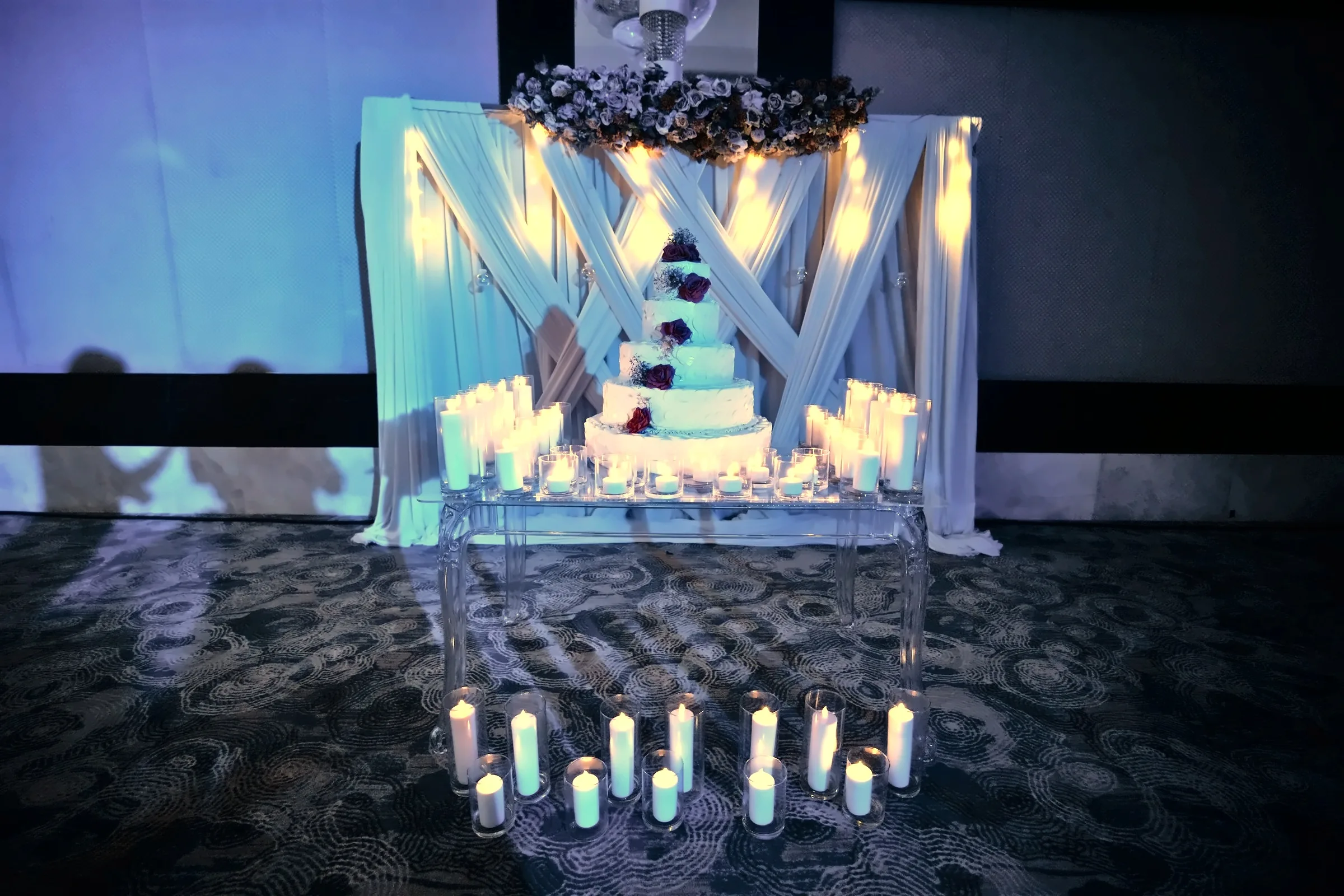
For British couples marrying in Antalya, the cake is a chance to bring a piece of home to the Mediterranean. A British-style wedding cake in Antalya can follow the traditional look, white tiers with sugar flowers and piped detail, or a lighter modern style, while the setting and the local flavours make it your own.
British Styles and Flavours to Choose From
- Classic tiers. Smooth white tiers with sugar flowers, lace-style piping or a monogram, the look that runs back to Victorian Britain.
- Fruit cake. Dried fruit, spices and brandy under marzipan and icing. A traditional fruit cake is baked weeks ahead and fed with brandy as it matures, so ask about it early, or choose one fruit tier with sponge tiers for the rest.
- Victoria sponge. Light sponge with raspberry jam and cream, the British teatime favourite, as a tier or as a whole cake.
- Lemon and elderflower, chocolate or carrot. British flavours that sit well in the warm Antalya climate when they are paired with the right covering.
- Naked and semi-naked cakes. Sponge layers with a thin coat of cream and fresh berries or flowers, suited to garden and old town weddings.
Local Flavours With a British Shape
Turkey gives you flavours that British guests will remember: pistachio, sour cherry, rose, and oranges from Finike on the Antalya coast, a town known for its citrus. A pistachio or orange tier sits well beside a Victoria sponge, and for a British dessert table, warm scones can be served with Turkish kaymak, a thick cream close to clotted cream, alongside jam and lemon curd.

Cakes in the Summer Heat
Average highs in Antalya reach about 34°C in July and August (see our best time to get married in Antalya guide), so the cake needs to suit the season. Fresh cream and soft buttercream lose their shape fastest in the heat; a ganache base under fondant holds its shape better, although fondant can sweat in humid air, so a cool room still matters. For a summer wedding, plan these points with your cake designer and the venue:
- Where it waits. A cool room or the venue’s kitchen until it is time to bring it out.
- When it comes out. Shortly before the cutting, rather than standing on display through the whole reception.
- Where it stands. In the shade, away from direct sun and heat lamps, with a level, sturdy table.
- Delivery. A delivery time that fits the day’s schedule, and transport that keeps it cool on the road.
- Fresh flowers. Food-safe flowers, prepared by the florist and placed by the cake designer.
Choosing Your Wedding Cake
- Your theme. Match the cake to the setting and the flowers, from classic white for a ballroom to fresh flowers and berries for a garden. Our decoration ideas for weddings in Antalya can help you set the look.
- Your guest count. Plan one slice per guest, and decide whether the cake is the dessert or a sweet served with coffee after dinner.
- A tasting. Taste the flavours before you decide, especially if you are combining British and local tiers.
- Details from the dress. Lace on the gown or a motif from your invitations can be repeated in the piping or the sugar flowers.
- What shapes the cost. The number of tiers, the size, handmade sugar flowers and the covering. Our guide to the cost of a wedding in Turkey covers the wider budget.
- Dietary needs. Vegan and gluten-free tiers, or a separate small cake, so that every guest can share a slice.
- A dessert table. Mini lemon meringue tarts, shortbread, scones and small fruit cakes beside a smaller cake give guests a taste of British baking.
Tell us about the cake you have in mind
Share your date, guest count and the style you like, from a classic white British cake to a dessert table with local flavours, and we will come back with ideas for your celebration.
Prefer another email service? Write to info@ramarossi.com using Wedding Cake Enquiry as the subject.
Follow our celebrations
Discover beautiful weddings, private events, styling ideas and behind-the-scenes moments from Ramarossi in Turkey.
Frequently Asked Questions
Where does the wedding cake tradition come from?
It goes back to ancient Rome, where a barley cake was broken over the bride’s head for good fortune. Medieval England added piles of spiced buns, and Victorian Britain made the tall white iced cake the model for weddings across the world.
Why are wedding cakes white?
Refined sugar was expensive, so white icing showed the wealth of the family. Queen Victoria’s white-iced cake in 1840 made the white wedding cake the fashion in Britain and beyond.
Why do wedding cakes have tiers?
Tiers grew from the medieval custom of piling cakes high, and Victorian royal cakes added columns and height. A popular story links the tiered shape to the spire of St Bride’s Church in London.
Why do couples keep the top tier?
Because a rich fruit cake lasts, British couples saved the top tier for their first child’s christening. In North America it became a first-anniversary treat.
What is a groom’s cake?
A smaller, darker cake, first a fruit cake and today a chocolate cake, served alongside the wedding cake in the southern United States and decorated to suit the groom’s interests.
Can we have a British fruit cake for our wedding in Antalya?
Yes. Ask your cake designer early, as fruit cake needs weeks to mature. In the warm months, one fruit tier among sponge tiers is a lighter choice.
How do we keep the cake fresh in the summer heat?
Keep it cool and out of the sun until the cutting, and choose a firm covering such as ganache under fondant.
Can we serve British desserts in Antalya?
Yes. A dessert table with scones, Turkish kaymak in place of clotted cream, jam, lemon curd, shortbread and mini lemon tarts brings a British touch to a wedding in Antalya.