


Food quality and dining experience significantly impact how guests remember your wedding. Exceptional cuisine elevates celebrations while disappointing meals diminish otherwise beautiful events. Destination weddings provide opportunities to showcase local Mediterranean cuisine, introduce international guests to Turkish flavors, or provide familiar international menus ensuring all guests eat comfortably.
At Ramarossi, we coordinate catering for every destination wedding in Antalya, Turkey, working with professional caterers who understand international expectations while showcasing quality Turkish cuisine. This guide explains catering options, typical costs, menu planning strategies, and dietary accommodation ensuring your wedding food impresses guests memorably.
Understanding Turkish Wedding Catering Costs
Wedding catering in Antalya, Turkey operates on per-person pricing with costs varying based on menu quality, service style, and inclusions.
Standard Cost Ranges
Basic wedding catering in Turkey starts around €50 – €75 per person for simple buffet service with standard menu selections – grilled meats, pasta dishes, basic salads, and simple desserts. Mid-range catering running €80 – €130 per person provides elevated menu quality, more diverse selections, better ingredient quality, and enhanced presentation. This represents the most common pricing tier for destination weddings coordinated by Ramarossi.
Premium catering packages costing €150 – €250+ per person include gourmet preparations, premium ingredients like fresh seafood or prime beef cuts, sophisticated presentations, extensive course offerings, and white-glove service standards. These high-end packages appeal to couples prioritizing exceptional dining experiences and willing to invest substantially in food quality.
For 60-guest weddings, catering costs total approximately €4,800 – €7,800 at standard pricing, €9,000 – €15,000 at premium levels. These costs typically include all food, basic bar service with wine and beer, waitstaff, table settings, and service throughout cocktail hour and dinner.
What’s Included in Per-Person Pricing
Standard catering packages include multiple components beyond just food. Cocktail hour appetizers – passed hors d’oeuvres and stationary displays with 6-8 varieties, dinner service with appetizer or salad course, main entrée with sides, dessert service including wedding cake or alternative sweets, basic beverages including soft drinks, coffee, and tea, waitstaff providing professional service throughout events, table linens, place settings, glassware, and standard centerpieces, and setup and breakdown handling all catering logistics.
Additional costs beyond base per-person pricing might include premium alcohol upgrades beyond standard wine and beer, specialty dietary meals for guests with restrictions, late-night snack services after main dinners, elaborate dessert displays beyond standard cake service, or custom menu development requiring special ingredients or preparations.
Menu Style Options: Mediterranean vs. International Cuisine
Destination weddings in Turkey offer choices between authentic Mediterranean cuisine showcasing local flavors or international menus providing familiar options for diverse guests.
Mediterranean and Turkish-Inspired Menus
Mediterranean cuisine emphasizes fresh ingredients, grilled preparations, abundant vegetables, olive oil, and bright flavors. Turkish wedding menus might include appetizers like hummus, baba ganoush, fresh vegetable mezes, stuffed grape leaves, sigara borek (cheese-filled pastries), and assorted olives. Main courses feature grilled lamb kebabs, sea bass or sea bream prepared with Mediterranean herbs, chicken shish with yogurt sauce, or mixed grill platters. Sides include bulgur pilaf, roasted vegetables, fresh salads with pomegranate dressing, and warm flatbreads.
Mediterranean menus showcase your destination location, provide authentic cultural experiences for international guests, often cost less than imported international ingredients, and celebrate Turkey’s excellent cuisine traditions. The challenge is ensuring all guests appreciate Mediterranean flavors – some conservative eaters unfamiliar with Turkish cuisine might feel uncomfortable with unfamiliar dishes.
International and Fusion Menus
International menus provide familiar Western dishes – roasted chicken or beef, pasta preparations, standard vegetable sides, and conventional salads. These menus might include appetizers like caprese salad, Caesar salad, or soup courses, main courses featuring herb-crusted chicken breast, grilled salmon with lemon butter, beef tenderloin with red wine reduction, or vegetarian pasta primavera, and sides like roasted potatoes, green beans almondine, or rice pilaf.
International menus ensure all guests find familiar, comfortable food without cultural cuisine concerns. They work particularly well for very conservative guest demographics or when significant numbers of guests have limited culinary adventurousness. The downside is missing opportunities to showcase exceptional Turkish cuisine and potentially higher costs importing ingredients or preparations less common in Turkey.
Fusion Approaches
Many couples choose fusion menus combining Mediterranean and international elements – perhaps Mediterranean appetizers introducing Turkish flavors followed by internationally-styled main courses providing familiarity. Or buffets offering both Mediterranean and Western options allowing guests to select according to preferences. This hybrid approach provides cultural authenticity while ensuring all guests eat comfortably.
Service Style: Plated, Buffet, or Family-Style
How food is served affects both dining experience and costs.
Plated Service
Plated service involves guests selecting meal choices ahead of time with waitstaff delivering individual plates to tables during dinner. This formal service style creates elegant dining experiences, ensures portion control and food waste management, accommodates dietary restrictions easily since meals are pre-ordered, and provides sophisticated atmosphere appropriate for formal celebrations. Plated service typically costs €5-€10 more per person than buffet service due to increased labor requirements and careful meal tracking.
The logistics require collecting meal selections from guests weeks before weddings Рtypically through RSVP cards or online forms asking guests to choose from 2-3 entr̩e options. This advance planning adds coordination complexity but delivers refined dining experiences many couples prefer for formal destination weddings.
Buffet Service
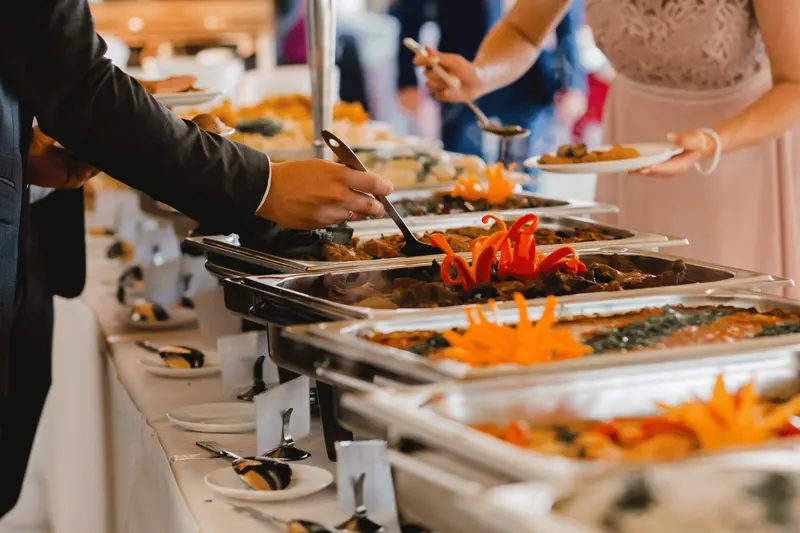
Buffet service presents multiple dishes on display tables where guests serve themselves or staff assist with portioning. Buffets provide variety allowing guests to sample multiple items rather than committing to single entrées, accommodate diverse preferences without pre-ordering since guests choose on-site, create interactive social elements as guests move through buffet lines, and typically cost less than plated service by €5-€10 per person.
Well-executed buffets feature abundant food beautifully presented on elegant serving displays. Poor buffets create cafeteria atmospheres with institutional service. The difference lies in presentation quality, food abundance preventing running out, and efficient line flow preventing long waits. Professional catering coordination ensures buffets feel upscale rather than casual.
Family-Style Service
Family-style service places large platters on tables for guests to pass and serve themselves communally. This approach creates warm, convivial atmosphere encouraging sharing and conversation, provides variety similar to buffets without guests leaving tables, works particularly well for intimate weddings under 50 guests, and costs similar to plated service requiring substantial waitstaff for coordinated table service.
Family-style dining suits celebrations emphasizing community and connection over formal elegance. It works less well for very large weddings where coordinating simultaneous table service becomes logistically challenging.
Cocktail Hour Food and Appetizers
Cocktail hours require strategic planning ensuring guests stay satisfied during the 60-75 minutes between ceremonies and dinners.
Passed Appetizers
Passed hors d’oeuvres involve waitstaff circulating with trays of bite-sized appetizers guests take individually. Standard cocktail hour service includes 6-8 varieties passed continuously – perhaps mini lamb sliders, caprese skewers, spanakopita triangles, shrimp cocktail, bruschetta, stuffed mushrooms, and cheese puffs. Aim for 6-8 pieces per guest across cocktail hour providing substantial appetizers without completely filling guests before dinner.
Passed appetizers create elegant, interactive atmosphere where guests mingle freely while waitstaff ensure everyone has access to food. This service style works beautifully for cocktail hours emphasizing social mingling and sophisticated ambiance.
Stationary Displays
Stationary appetizer displays present food on tables where guests approach and serve themselves or staff assist with portioning. Common displays include cheese and charcuterie boards with crackers and accompaniments, Mediterranean meze spreads with hummus, baba ganoush, olives, and fresh vegetables, raw bars with oysters and shrimp, antipasto displays, or bruschetta stations with various toppings.
Stationary displays provide visual impact and abundant variety. They work particularly well combined with passed appetizers – displays offer impressive presentation and grazing opportunities while passed items ensure food reaches all guests including those not approaching stations.
Accommodating Dietary Restrictions and Allergies
Modern weddings must accommodate various dietary needs – allergies, religious restrictions, and lifestyle choices.
Common Dietary Requirements
Vegetarian and vegan diets require meat-free and animal-product-free options respectively. Turkish cuisine naturally includes excellent vegetarian dishes – vegetable-based mezes, grilled vegetables, bulgur preparations, and bean dishes. Vegan accommodations require slightly more planning ensuring no dairy, eggs, or honey in preparations. Gluten-free requirements eliminate wheat, barley, and rye. Many Mediterranean dishes naturally avoid gluten though careful attention prevents cross-contamination.
Halal requirements for Muslim guests ensure meat is slaughtered according to Islamic law and pork products are completely excluded. Turkish caterers routinely accommodate halal requirements given Turkey’s Muslim population. Kosher needs for Jewish guests involve more complex requirements that Turkish caterers might not typically handle – kosher certification processes, separate equipment, and specific preparation protocols. For small numbers of kosher-keeping guests, providing vegetarian meals often represents the practical solution.
Collecting Dietary Information
Include dietary restriction questions on RSVP cards or online response forms. Ask specifically about allergies, vegetarian/vegan preferences, religious restrictions, and any other dietary needs. Don’t assume guests will volunteer this information unprompted – many hesitate mentioning restrictions worried about causing difficulty. Direct questions give permission for honest communication.
Share dietary information with caterers 4-6 weeks before weddings allowing proper planning. For plated service, coordinate special meals for guests with restrictions ensuring they receive appropriate dishes. For buffet service, ensure dishes are clearly labeled with ingredients and allergen information allowing guests to make informed choices.

Dessert Options Beyond Traditional Wedding Cake
While wedding cakes remain traditional, diverse dessert options enhance dining experiences.
Turkish Desserts and Sweets
Turkish dessert traditions include spectacular options perfect for destination weddings. Baklava – layers of phyllo pastry with nuts and honey syrup – represents Turkey’s most famous sweet. Turkish delight (lokum) offers colorful, flavorful confections. Künefe – shredded phyllo with sweet cheese and syrup – provides warm, impressive dessert. Kazandibi, muhallebi, and other milk-based desserts offer creamy alternatives.
Incorporating Turkish desserts alongside or instead of traditional wedding cakes provides cultural authenticity and introduces international guests to exceptional sweets. Many couples choose smaller ceremonial wedding cakes for cutting photos while serving Turkish dessert assortments for actual guest consumption. This approach delivers both tradition and cultural experience.
Dessert Bars and Stations
Dessert bars presenting multiple sweet options create interactive experiences and accommodate varied preferences. Options might include miniature desserts – bite-sized cheesecakes, petit fours, macarons, and truffles displayed elegantly, ice cream stations with multiple flavors and toppings during warm summer celebrations, chocolate fountains with fruit and sweet dipping options, or coffee and dessert pairings featuring Turkish coffee alongside sweets.
Dessert bars add €8-€15 per person beyond standard catering costs depending on selections and presentations. They provide memorable experiences and beautiful photo opportunities while ensuring all guests find sweets they enjoy.
Late-Night Food and Snack Services
Extended receptions sometimes benefit from late-night food offerings several hours after main dinners.
Late-night snacks typically appear around 10:30-11:00pm Р2-3 hours after dinner service when guests are dancing and drinking but growing hungry again. Options include pizza stations serving fresh slices, Turkish street food like g̦zleme (savory filled flatbreads) or simit (sesame bread rings), slider bars with mini burgers, French fry or loaded nacho stations, or simple sweets like cookies and brownies.
Late-night food adds €8-€12 per person and particularly appeals to younger crowds dancing energetically through late hours. For weddings ending around 11:00-11:30pm, late-night food becomes less necessary. For celebrations extending to midnight or 1:00am, food refreshers sustain guest energy and enjoyment.
Tastings and Menu Finalization
Professional catering coordination includes menu tastings ensuring food quality meets expectations before wedding days.
Tastings typically occur during planning trips to Antalya several months before weddings. Ramarossi coordinates tastings with caterers where couples sample proposed menu items, evaluate preparation quality and presentation, discuss modifications or substitutions, and finalize exact menu selections. These sessions last 1-2 hours providing comprehensive food review.
Tastings serve critical quality control – you’re making substantial financial commitments to caterers and need confidence food meets standards. If tastings reveal quality concerns, time remains to adjust selections or even change caterers if necessary. Never skip tastings assuming food will be fine. The investment in planning trip tastings protects against disappointing wedding day meals.
For couples unable to visit Turkey before weddings, virtual menu planning with detailed photos and descriptions provides alternatives, though nothing replaces actually tasting food. Trust Ramarossi’s vendor relationships and quality standards when in-person tastings aren’t feasible – we work exclusively with caterers whose quality we’ve verified repeatedly.
Frequently Asked Questions
How much should we budget per person for wedding catering?
For destination weddings in Antalya, Turkey, budget €80 – €130 per person for quality mid-range catering including cocktail hour, dinner, dessert, and basic beverage service. This pricing delivers professional food quality, good variety, and appropriate service standards without excessive luxury. Couples can reduce costs to €50 – €75 per person with simpler menus and buffet service, though quality sometimes suffers at very low price points. Premium experiences costing €150 – €250+ per person provide gourmet preparations and white-glove service for couples prioritizing exceptional dining. The per-person cost multiplies by guest count for total catering expenses – 60 guests at €105 per person totals €6,300. This represents approximately 15-20% of typical destination wedding budgets. Some couples allocate more for food prioritizing dining experiences, others reduce catering costs to invest elsewhere in celebrations. Consider your values about food importance. If exceptional cuisine matters intensely, budget generously for catering. If food is simply functional and other elements matter more, allocate accordingly. There’s no universal correct catering budget – spend based on your priorities while maintaining quality standards ensuring guests eat well regardless of budget level.
Should we serve Turkish food or stick to international cuisine?
This decision depends on guest demographics and your preferences about cultural authenticity versus familiarity. Turkish and Mediterranean cuisine is exceptional – fresh, flavorful, and generally appealing to international palates. Most UK guests enjoy Mediterranean food even if unfamiliar with specific Turkish preparations. The cuisine isn’t extremely exotic or challenging for Western eaters. Serving Turkish food showcases your destination, provides authentic cultural experiences, celebrates Turkey’s culinary traditions, and often costs less than international alternatives. However, if your guest list includes very conservative eaters uncomfortable with unfamiliar food, elderly guests with restricted diets preferring simple preparations, or cultural backgrounds where Mediterranean flavors might not appeal, international menus provide safety. The hybrid approach works brilliantly – Turkish appetizers and Mediterranean-influenced main courses with familiar preparations. Or buffets offering both Turkish and international options. This compromise provides cultural authenticity while ensuring all guests find comfortable choices. Don’t feel obligated choosing purely Turkish menus to justify destination weddings. The goal is guests eating well and enjoying meals, not forcing cultural experiences on uncomfortable eaters. Balance authenticity with practicality based on your specific guest composition.
What if guests have severe food allergies?
Communicate severe allergies to caterers well in advance – 4-6 weeks minimum – allowing proper planning for safe meal preparation. For guests with anaphylactic allergies to common ingredients like nuts, shellfish, or specific foods, caterers must prevent cross-contamination using separate equipment, preparing special meals with heightened caution, and training staff about severity. Some severe allergies require guests bringing their own meals or eating before arriving if catering cannot guarantee absolute safety. This isn’t ideal but sometimes represents the only truly safe option. For life-threatening allergies, guest safety outweighs hospitality concerns about providing meals. Discuss specific allergy situations directly with caterers through Ramarossi coordination. Professional caterers regularly accommodate allergies and understand protocols preventing cross-contamination. However, caterers’ ability to guarantee allergen-free preparation varies by kitchen setup and specific allergens involved. Some allergies are easily managed, others present genuine challenges. Honest communication about capabilities prevents dangerous situations. Never minimize guest allergy concerns or assume caterers will handle everything automatically. Advocate for guests with severe restrictions ensuring their safety is prioritized above all other catering considerations.
Can we save money by having cocktail hour only with no seated dinner?
Yes, cocktail reception formats serve substantial passed appetizers and stationary displays throughout entire celebrations without formal seated dinners. These events typically cost €25-€35 per person versus €80 – €130 for full dinner service, providing significant savings. Cocktail-style receptions work well for afternoon celebrations, shorter 3-4 hour events, more casual celebration vibes, or when substantial budget constraints exist. The trade-off is losing formal sit-down dinner experiences many guests expect at weddings. Cocktail receptions feel less substantial and formal, require guests to stand most of the time which can be tiring for elderly attendees, and might leave some guests feeling dinner was inadequate. If choosing cocktail-only format, serve generous, substantial appetizers – not just light snacks. Guests should leave feeling well-fed, not hungry. Consider timing – afternoon cocktail receptions starting 2:00-3:00pm feel more appropriate than evening events where dinner expectations are stronger. Clearly communicate reception format in invitations so guests understand they’re attending cocktail celebrations rather than full dinners. This prevents disappointment from unmet expectations. Some guests might eat before attending once they understand format. The approach can work beautifully as intentional choice matching celebration style and budget reality, but requires thoughtful implementation ensuring guests are genuinely well-fed and comfortable.
Should we include children’s meals for young guests?
Yes, if children are attending weddings, offer child-friendly meal options rather than expecting them to eat adult menus. Children’s meals typically cost €15-€25 per child – less than adult pricing – and include kid-friendly selections like chicken fingers, pasta with butter or simple sauce, burgers or sliders, pizza, and fries or other familiar sides. These simplified options ensure young guests actually eat rather than picking at unfamiliar adult preparations. Many caterers automatically provide children’s meals for guests under 12 years old when informed about child attendance. Discuss this during catering planning to ensure proper provisions. Children’s meals aren’t elaborate – they’re functional food ensuring kids are fed and happy without forcing adult cuisine on picky young eaters. For very young children – toddlers and infants – parents typically manage feeding themselves and might not need full meals provided. Ask parents during RSVP process about children’s meal needs allowing proper planning. Some families prefer bringing familiar foods for very young children rather than relying on catering. The goal is ensuring all guests, regardless of age, can eat comfortably and enjoy celebrations. Children represent special considerations requiring thoughtful accommodation beyond standard adult catering.
What happens to leftover food after receptions?
Leftover food handling varies by venue and catering contracts. Some venues allow couples to keep leftovers – particularly when celebrations occur at hotels where couples have suites for post-event storage. Leftovers get packaged and sent to couple rooms providing next-day breakfast or snacks. However, many venues have health and safety policies preventing leftover food leaving kitchens due to liability concerns about food safety after sitting at room temperature during receptions. Professional catering contracts often specify that food cannot be taken by couples or guests after events. Leftover food might be offered to venue staff or disposed of according to venue policies. If taking leftovers matters to you, discuss this during catering negotiations before signing contracts. Some caterers accommodate leftover requests, others have firm policies preventing it. Food waste concerns are valid and unfortunate – weddings often involve more food than guests consume. Better planning means ordering appropriate quantities minimizing waste rather than excessive amounts requiring disposal. Caterers experienced with destination weddings generally estimate portions accurately preventing both shortages and massive excess. Trust professional portioning recommendations rather than overordering from anxiety about running out. The small chance of slight food shortage is preferable to guaranteed substantial waste.
Do we need to do formal tastings or can we just pick from sample menus?
Formal tastings provide essential quality control that sample menus cannot deliver. Menus describe food theoretically – tastings reveal actual preparation quality, portion sizes, presentation standards, and whether dishes match your expectations. Sample menus might sound wonderful while actual execution disappoints. Or dishes you’d skip based on descriptions might surprise you during tastings, becoming menu selections. Tastings occur during planning trips to Turkey several months before weddings, requiring minimal time – typically 1-2 hours – while providing substantial value. You’re investing thousands in catering and trusting vendors to deliver food impacting how guests remember celebrations. The tasting investment protects against disappointment and allows informed decisions. If planning trips aren’t feasible and you cannot visit Turkey before weddings, detailed menu discussions with photos become necessary alternatives. However, nothing replaces actually tasting food. Work with experienced coordinators like Ramarossi who maintain vendor relationships and quality standards when you must rely on recommendations without personal tastings. We only work with caterers whose quality we’ve verified repeatedly, providing assurance when direct tasting isn’t possible. But whenever feasible, schedule tastings during planning trips. The confidence gained from knowing exactly what guests will receive justifies the effort.
Wedding catering significantly impacts celebration experiences and represents substantial budget investments. If you want professional menu planning, caterer coordination, and dietary accommodation management for your wedding in Antalya, Turkey, Ramarossi handles all catering logistics from tastings through wedding day service. A conversation about your culinary preferences, guest demographics, and budget priorities costs nothing and ensures your wedding food impresses guests while respecting your vision and values.