

Croatia vs Turkey Beach Wedding: Pebble Coves or Long Sandy Shores?
Adriatic coves, islands and ferries, or the sands, pebbles and clifftops around Antalya: how the two coastlines compare for vows by the sea, from water and wind to flights and beach permissions.
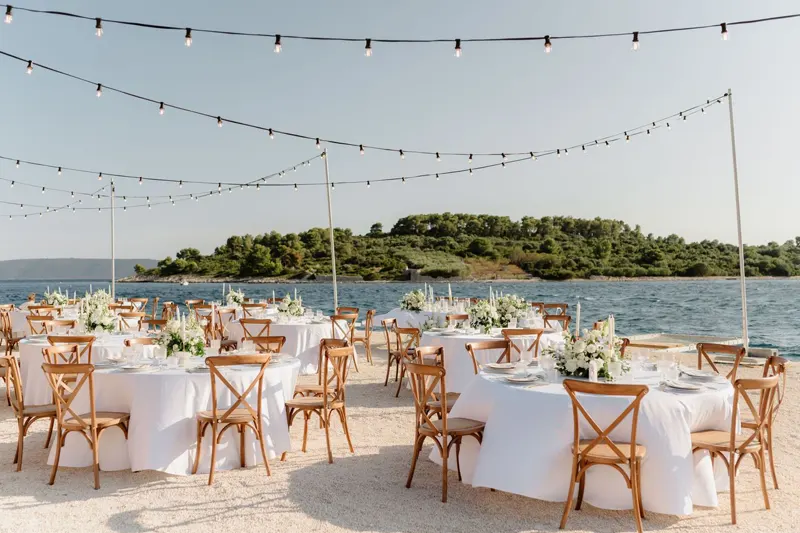
Weighing up a Croatia vs Turkey beach wedding starts with the shore under your chairs. The Croatian Adriatic gives you pebble and rock coves, island harbours and walled stone towns, while the coast around Antalya, Turkey stretches from long sandy beaches to pine-backed bays and, further west, terraces perched on the cliffs.
Both are beautiful places to say your vows by the water. This guide from Ramarossi, a destination wedding planner based in Antalya since 2011, looks at them purely as beach wedding locations: the type of shoreline, sea temperature and wind, how long the season runs, flights for your guests, islands and ferries, permissions on the sand and the legal side. For the settings on the Turkish side in more depth, read our page on a beach wedding in Antalya.
Croatia vs Turkey Beach Wedding: The Shorelines Side by Side
The two coasts feel different underfoot, in photographs and in the way guests spend the days around the wedding. Start with this overview, then read the sections below for the detail behind each row.
Pebbles and smooth rock, flat stone sunbathing ledges and a few sandy bays
Long sand at Lara, Belek and Side, a long pebble shore at Konyaaltı, mixed coves around Kemer
Small coves, stone waterfront terraces, island harbours and spots near the old towns
Open sand by the water, pine-backed bays, and clifftop terraces around Kalkan and Kaş
Wooded islands, pale stone towns and the open Adriatic
The Taurus Mountains above the bay to the west, a wide open horizon along the eastern sands
At its warmest in July and August
Warm from late spring and pleasant well into autumn
The maestral on summer afternoons; the bura and the jugo outside high summer
The afternoon breeze at your exact beach, and more exposure on the western clifftops
The shorter trip, into Split, Dubrovnik, Zadar or Pula
Antalya Airport, with routes from across the UK, serving Kemer, Lara, Belek and Side
Ferries or catamarans if the venue sits on an island
Road transfers along the shore; a boat is an extra, not a necessity
| Question | Croatia, Adriatic coast | Antalya coast, Turkey |
|---|---|---|
| Under your feet | Pebbles and smooth rock, flat stone sunbathing ledges and a few sandy bays | Long sand at Lara, Belek and Side, a long pebble shore at Konyaaltı, mixed coves around Kemer |
| Ceremony settings | Small coves, stone waterfront terraces, island harbours and spots near the old towns | Open sand by the water, pine-backed bays, and clifftop terraces around Kalkan and Kaş |
| Backdrop | Wooded islands, pale stone towns and the open Adriatic | The Taurus Mountains above the bay to the west, a wide open horizon along the eastern sands |
| Swimming water | At its warmest in July and August | Warm from late spring and pleasant well into autumn |
| Wind to ask about | The maestral on summer afternoons; the bura and the jugo outside high summer | The afternoon breeze at your exact beach, and more exposure on the western clifftops |
| Flying in from the UK | The shorter trip, into Split, Dubrovnik, Zadar or Pula | Antalya Airport, with routes from across the UK, serving Kemer, Lara, Belek and Side |
| Island factor | Ferries or catamarans if the venue sits on an island | Road transfers along the shore; a boat is an extra, not a necessity |
Croatia’s Coast: Pebble Coves, Islands and Dalmatian Old Towns
Croatia’s shoreline is broken into bays, headlands and islands, and the water over its pebbles is strikingly clear. Beaches are mainly pebble or smooth stone, with flat rock ledges where swimmers step straight into deep water. Sandy beaches exist too, on islands such as Rab and Lopud, so if you picture bare feet in soft sand, pin down the exact beach before anything else.
Each region has its own character. Istria in the north pairs the sea with hill towns and an Italian accent in the food and architecture. Dalmatia, from Zadar and Šibenik down through Split to Dubrovnik, is the postcard version: walled towns of pale limestone, harbours full of wooden boats and islands such as Hvar, Brač, Vis and Korčula a crossing away. One appealing way to use it is vows in a cove or on a stone terrace by the water, followed by dinner within reach of an old town.
That blend of shoreline and heritage is Croatia’s real gift to a beach wedding. Guests swim in the morning, wander stone lanes at dusk and can add island days before or after the celebration.
Antalya’s Coast: Long Sands, City Pebbles and Clifftop Terraces
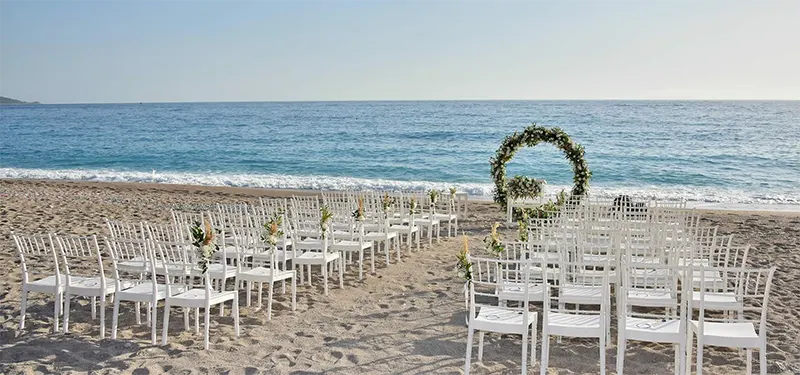
Around Antalya you can choose between several kinds of shore within one region, linked by road rather than by sea. East of the city, Lara Beach is a long ribbon of sand, and the sand carries on along the resort coast at Belek and Side. In the city, Konyaaltı is a long pebble beach with the mountains rising almost directly behind it. South-west, Kemer has pine-backed bays and coves under the Taurus range.
Further west, around Kalkan and Kaş, the coast turns steep and rocky. Ceremonies there move up onto terraces and sea platforms above very clear water, a look that sits closer to the Croatian Adriatic than the sandy east does. Our notes on a clifftop ceremony cover the access and sound questions those spots raise.
Ramarossi plans weddings along this whole stretch, so you can weigh sand, pebble and clifftop settings side by side before settling on one. To browse settings by type, start with our guide to wedding venues in Antalya.

Sea Temperature, Swimming and Wind
If you imagine guests swimming before the ceremony or a lazy beach morning the day after, water temperature matters. The Adriatic warms through early summer and is at its warmest in July and August, with cooler water in late spring and from mid-autumn. The sea off Antalya warms earlier in the year and keeps its heat for longer, so a swim stays pleasant well into autumn.
Wind deserves its own question on either coast. In Croatia the maestral is a refreshing summer breeze off the sea that picks up from late morning and eases towards sunset, which suits an evening ceremony. The bura, a gusty wind from the land, and the jugo, a humid southerly, are more associated with the cooler months. Around Antalya, ask about the afternoon breeze at your exact beach, and expect more exposure on the western clifftops than in a sheltered bay.
- The arch. How it is anchored in sand or fixed on stone, and whether flowers are wired against gusts.
- Sound. Whether the officiant and readers need microphones over waves and breeze.
- Candles. Hurricane glass or lanterns instead of open flames on the tables.
- Linen and paper. Weighted cloths, and clips or holders for menus and orders of service.
- Hair and veil. A quick test outside at the planned ceremony hour.
How Long the Beach Season Lasts
Croatia’s beach season is concentrated in the summer months, when the water is warmest and the summer ferry timetables, beach bars and island restaurants are in full swing. Late spring and early autumn bring quieter coves and softer light; check which boats and services still run on your date.
Antalya’s warm season runs longer, from spring through October, which widens the choice of dates for a ceremony on the sand. In high summer, ceremonies move towards early evening, when the light softens and the sand cools. For light, heat and sea conditions, see when to marry in Antalya, month by month.
Flights From the UK, Europe and the Gulf
From the UK, Croatia’s coast is the shorter flight, and Split, Dubrovnik, Zadar and Pula spread arrivals across the regions. Pick the airport by the wedding location, because an island near Split and a beach near Dubrovnik are separate trips. Some UK routes to the Croatian coast fly only in the warmer months, so check your date before you send save-the-dates.
On the Turkish side, Antalya Airport is the main gateway for Kemer, Lara, Belek and Side, with routes from cities across the UK and Europe and extra flights in the holiday season; the airport’s official website lists current airlines and destinations. For Kalkan and Kaş, Dalaman Airport can be the closer arrival point. Our guide to flights for UK wedding guests covers booking and entry for British travellers. As for passports and money, Croatia uses the euro and sits inside the Schengen area, while Turkey sets its own entry rules by nationality, so each guest should check what applies to their passport.
For families travelling from the Gulf or Lebanon, routing can tip the balance. Antalya has direct routes from Gulf cities, several of them seasonal, plus connections through Istanbul, while guests bound for the Croatian coast may change in Zagreb or another European hub. Compare both for your actual week rather than in general.
Islands, Ferries and Getting Guests to the Sand
An island wedding in Croatia makes a charming guest weekend: everyone arrives by boat, stays around one harbour and strolls to dinner. The planning then revolves around timetables. Ferries and catamarans link the islands with mainland ports such as Split, and guests, luggage and supplier equipment all need a crossing that fits the day.
- Which crossings suit guests arriving on different days, and which need booking ahead?
- When can the florist, the sound team and the furniture cross, and should they travel the day before?
- Where will guests sleep, and can they walk or take one short shuttle to the beach?
- What happens if wind or sea conditions affect a crossing on the wedding day?
- How do older guests get from the road or the jetty down to the ceremony spot?
On the Antalya coast the questions are about road time instead: the drive from the airport to the hotel, and from the hotel to the beach. When guests stay at the resort hosting the ceremony, the sand can be a short walk from their rooms; when the beach is elsewhere, build in shuttles with time to spare, as our page on airport transfers and wedding-day shuttles explains. A boat can still play a part as a sea arrival or a sunset cruise, a bonus rather than the only way in.
Beach Permissions: The Question to Ask Early
A shore that looks open and empty in photos may be looked after by a hotel, a beach club or the local authority, and what is allowed on it can change from one stretch to the next. Ask the same set of questions on either coast before you settle on a spot.
- Who decides. Who manages this stretch of sand or rock, and who confirms the ceremony?
- Timing. From what time can the set-up begin, and when must the beach be clear?
- Public access. Will other beachgoers still be around during the vows?
- The set-up. Are chairs, an arch, an aisle runner or flooring allowed on the shore?
- Sound. Are a microphone and music allowed on the beach itself?
- Plan B. Which covered or indoor space is held for the day if the weather turns?
The Legal Side, in One Line Each
Croatia: the Croatian government states that foreign citizens can marry there under the same conditions as Croatian citizens, with their documents translated into Croatian.
Turkey: legal weddings in Turkey are civil ceremonies performed by a municipal marriage officer; our guide to marriage in Turkey for foreigners explains the documents.
On either coast you can also marry at home first and hold a symbolic ceremony on the beach, which leaves the spot and the hour entirely up to you.
What Shapes the Budget on Either Coast
Figures change every season, so compare the things that move the total instead. These factors decide what a beach wedding costs on either coast:
- Guests and days. The guest count, and whether you add a welcome evening or a morning-after swim.
- Date. A peak summer weekend compared with late spring or autumn.
- Island or mainland. Boat crossings for guests and suppliers on an island plan.
- The beach set-up. Chairs, arch, aisle, shade, sound and any flooring on sand or stone.
- The backup. A covered or indoor space reserved for the day.
- Where guests stay. One resort, or several towns joined by transfers.
For the Turkish side in detail, read what a wedding in Turkey costs, a practical look at the budget factors.
Which Coast Fits Your Beach Wedding?
Neither coast wins outright; each suits a different picture of the day. Croatia may be right for you if you love clear water over pebbles, want stone old towns and island hopping around the wedding, have guests based mainly in the UK and Europe who like a short flight, and are happy to plan around ferry timetables.
Antalya may be right if you want sand under the chairs, or the freedom to choose between sand, pebble and clifftops within one region; a longer warm season with more possible dates; guests arriving from the UK, Europe and the Gulf through one airport; and the option of ceremony, dinner and rooms in a single place. If Antalya comes out ahead, our page on planning a wedding in Antalya is the natural next step.
Tell us which shore you have in mind
Share your dates, your guest count and where people are flying from, and Ramarossi will come back with beach settings around Antalya that match the ceremony you picture.
Prefer another email service? Write to info@ramarossi.com using Antalya Wedding Enquiry as the subject.
Follow our celebrations
Discover beautiful weddings, private events, styling ideas and behind-the-scenes moments from Ramarossi in Turkey.
Frequently Asked Questions
Is Croatia or Turkey better for a beach wedding?
Both make a lovely setting; they suit different plans. Croatia offers pebble coves, islands and stone old towns, with a short flight from the UK. Antalya offers long sandy beaches as well as pebble and clifftop settings, a longer warm season and one airport for the whole resort coast. Choose by the shore you want, where your guests live and your date.
Are Croatian beaches sandy?
They are mainly pebble or smooth rock, with flat stone ledges for sunbathing in places, and there are some sandy bays. If sand under bare feet matters, choose the exact beach before the rest of the plan.
Which beaches around Antalya are sandy?
Lara, east of the city, and the resort coast at Belek and Side have long sandy beaches. Konyaaltı in the city is a pebble beach, Kemer has bays and coves, and around Kalkan and Kaş the coast is rocky, with ceremonies on clifftop terraces.
When is the sea warm enough for guests to swim?
The Adriatic is at its warmest in July and August. The sea off Antalya warms from late spring and stays pleasant for swimming well into autumn, which gives more dates with a swim built into the weekend.
Can foreigners marry legally in Croatia or Turkey?
Croatia states that foreign citizens can marry there under the same conditions as Croatian citizens, with documents translated into Croatian. Legal weddings in Turkey are civil ceremonies performed by a municipal marriage officer. On either coast you can also complete the legal step at home and keep the beach ceremony symbolic.
Do we need permission for a ceremony on the beach?
Ask who manages the stretch of shore, from what time the set-up can begin and when it must be cleared, whether the public can still use it, and which chairs, arch, flooring and sound are allowed. Have the answers confirmed in writing.
Which coast is easier for guests flying from the Gulf?
Antalya has direct routes from Gulf cities, several of them seasonal, plus connections through Istanbul. Guests heading for the Croatian coast may connect through Zagreb or another European hub. Compare the routes for your actual date before deciding.