


A Bosphorus waterfront mansion can look like the answer to a couple’s wedding in Istanbul before a single question has been asked: water on one side, a historic facade on the other, and a setting that does most of the visual work on its own. What the photographs do not show is how the property actually functions on the day itself, once a real guest count, a real event schedule and a real supplier list are placed on top of it.
This article does not compare venue types across the city. That broader comparison sits in our guide to weddings in Istanbul. Here, the focus is narrower and more practical: a specific Bosphorus waterfront mansion is already under consideration, and the question is whether it will genuinely support the wedding being planned, once the details behind the photographs are checked.
Defining What Exclusive Use Actually Covers
Exclusive use needs to be defined for the specific property rather than assumed from the way the venue is described.
- Does exclusivity apply to the entire property, or only to certain terraces, salons or gardens?
- Are any rooms, wings or service areas excluded from the booking?
- Could other guests, restaurant customers, hotel guests, residents or unrelated visitors be present anywhere on the property during the event?
- Are owners, managers or staff resident on site, and if so, does that affect any part of the venue?
- Are the ceremony, dinner and dancing spaces all included in the same booking, or only some of them?
- Does exclusivity extend to the setup and dismantling periods, not only the event itself?
- Is access to the waterfront private to the wedding, or shared with other users of the property?
None of this can be assumed from how a property is marketed. The details can differ from one property to another, so the exact spaces and access included should be confirmed for the venue being considered.
Capacity Is Only Part of the Question
A headline guest capacity answers very little on its own. The useful planning question is whether the property works for the actual guest count with ceremony, cocktails, dinner, dancing, entertainment, bar, production and service routes all included, not simply whether it can hold a certain number of people.
Testing the Layout Against the Real Event
A terrace that comfortably seats a stated number of guests for dinner may become considerably tighter once a dance floor, staging, a bar and catering service routes are added to the same area. Working through the layout properly means placing every planned element on the space at once: ceremony seating, cocktail area, dinner tables, dance floor, entertainment position, bar, catering and service routes, technical equipment, guest circulation between levels, toilets, and a backup space for poor weather.
Where a Waterfront Terrace Can Feel Different in Practice
A waterfront terrace that looks generous in photographs can behave differently once it needs to function for several hours with movement in every direction. This is precisely the kind of testing Ramarossi carries out as part of full planning: setting a couple’s actual guest count and event format against a specific property’s real layout, rather than relying on a stated capacity figure alone.
What the Waterfront Itself Needs to Offer
The waterfront itself deserves a separate practical check because it may be central to the ceremony, cocktails, dinner or guest movement.
- Is the waterfront terrace genuinely usable for the ceremony or dinner being planned, or is it better suited to a shorter part of the evening?
- Is there a level change between indoor rooms and the waterfront area, and how does that affect guest movement?
- How will guests move between ceremony, cocktails, dinner and dancing across the property?
- Are there narrow passages, stairs or pinch points that could create bottlenecks with the full guest list moving at once?
- How close is the water’s edge to the areas where guests will be standing or seated?
- What lighting or barriers does the property provide, or permit a couple to add, where needed?
- Can furniture, production equipment and catering equipment physically reach the waterfront area without disrupting the event?
These are practical questions rather than dramatic ones, and the answers vary considerably between properties. A waterfront setting can work extremely well for a wedding; it simply needs to be assessed on its own terms rather than assumed.
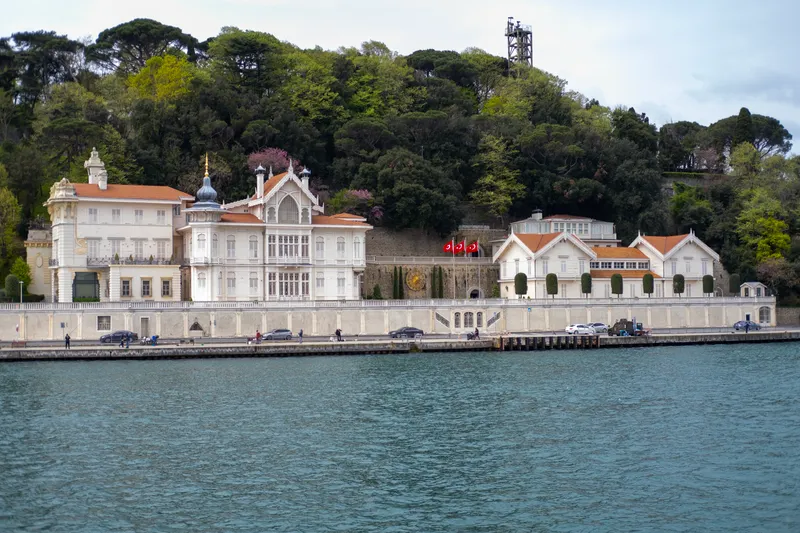
Road Access and Water Access Are Two Separate Questions
A Bosphorus venue can look highly accessible on a map while behaving quite differently at street level. Road access, supplier access and guest access are worth checking separately, since a property can be strong on one and weaker on another.
- What does the final vehicle approach to the property actually look like?
- Can coaches or minibuses reach the venue, or only smaller vehicles?
- Where do taxis and private cars drop guests, and how far is that from the entrance?
- Is there parking on site, nearby, or not at all?
- How do supplier vans and delivery vehicles reach the property?
- What is the carrying distance from the vehicle drop-off point to the event space, and are there stairs along the way?
- What setup and collection windows does the property allow?
If Boat Arrival Is Part of the Plan
Boat arrival can be a genuinely attractive option at some waterfront properties, but not every mansion has a usable private landing point or permits guest arrival by boat. Where it is being considered, the relevant questions are whether the property has a usable landing point, whether it permits guest arrival or departure by water, how many guests can move through that route safely and practically, and what the alternative plan is if a water transfer is not appropriate on the day. These details depend entirely on the specific property and should be confirmed directly with it rather than assumed from its waterfront location.
How Suppliers, Furniture and Equipment Actually Reach the Venue
A waterfront mansion can look straightforward from the guest’s side of the event while presenting a genuinely separate set of questions for suppliers. This is worth checking early, since it affects what can realistically be planned for the day.
- Where do suppliers unload, and how far is that from the event space?
- Are there stairs or lifts between the unloading point and the event level?
- Does road access reach the actual event level, or does equipment need to be carried a further distance?
- What delivery windows, setup time and collection time does the property allow?
- How are larger decor or production items brought in and taken out?
- Does the property operate an approved supplier list or an approval process for outside suppliers?
These are practical, property-specific questions. Ramarossi works through them directly with the venue as part of coordinating the day, rather than leaving a couple to discover the answers on site.
Catering, Service Routes and the Distance to the Waterfront
Catering at a waterfront mansion raises one issue that does not always apply at a purpose-built event venue: the distance and the route between where food is prepared and where it is served. Worth checking before booking:
- Whether catering is provided in-house or must be brought in by an external caterer
- What kitchen and service facilities the property actually has
- Where preparation and staging space is located relative to the waterfront dining area
- Refrigeration and washing-up facilities available on site
- How beverage service is arranged and where it is set up
- Whether temporary service infrastructure needs to be brought in
- How waste is managed during and after the event
- What access catering staff have to the property during service
A kitchen that is a short, level walk from the dining area works very differently from one separated by stairs or a long outdoor route. The route between preparation, staging and the waterfront dining area can materially affect service planning, so it should be assessed before the event layout and catering plan are finalised.
What the Property Will Actually Allow for Production
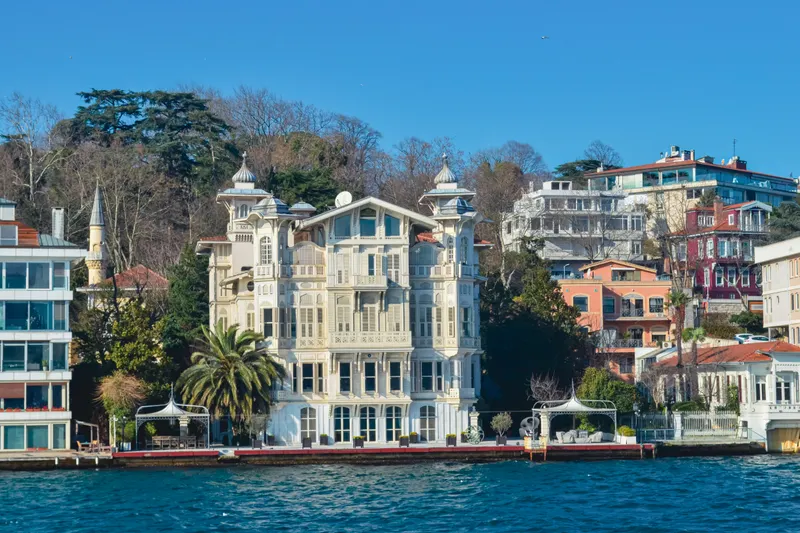
A striking property does not automatically mean every production idea can be installed inside it. A waterfront mansion may have property-specific rules about decor installation, power, staging and how equipment can be brought into the space.
- What power capacity is available for lighting, sound and catering equipment together?
- Where can a DJ, band, dance floor or staging realistically be positioned?
- What installation methods does the property allow for decor: fixing points, rigging, freestanding structures?
- Is a generator or supplementary power needed, and is one permitted on site?
- What cable routes are available, and do they cross guest walkways?
- What protection does the property require for interiors, flooring, walls or waterfront surfaces during setup?
Rather than assuming a historic property prohibits certain installation methods, or assuming a modern one permits everything, the safer approach is to confirm directly with that property what it allows. Ramarossi coordinates this conversation as part of planning the production for the day.
How Ceremony, Dinner and Dancing Connect to Each Other
A waterfront property may offer several spaces that could potentially be used across the wedding day: an outdoor area for the ceremony, a waterfront terrace for cocktails, an indoor or outdoor space for dinner, another area for dancing, and possibly a separate after-party space. Whether all of these can be combined for a single wedding depends on the property, and this should be confirmed directly, along with how guests would move between each stage of the evening and how much time that movement takes.
Weather and a Backup Plan That Still Works
When the main wedding spaces are outdoors or directly on the waterfront, the backup plan should be tested alongside the preferred layout: what indoor or covered space exists, whether it can genuinely hold the same guest count and the same essential functions such as dinner, dancing and service, and whether moving indoors still allows the event to flow naturally.
Music Timing and the After-Party Question
In Ramarossi’s operational experience of Turkish wedding-venue practice, the main wedding and reception programme is normally structured to finish at approximately 00:00. Any continuation after that point is treated as an after-party rather than as part of the main event. An after-party can continue later, commonly to around 02:00, but only where the specific waterfront mansion and the specific space being used are permitted and contractually able to operate at that time. If the property’s outdoor or waterfront area has permission for amplified music after 00:00, the after-party may continue there within that permission. If it does not, an after-party may still be possible where the property offers an appropriate indoor or enclosed space and the arrangement has been confirmed.
Neither of these times is a universal rule that applies automatically to every Bosphorus property. They reflect how wedding programmes are commonly structured in Ramarossi’s operational experience, and the exact finishing times, spaces and permissions for a specific mansion should always be confirmed with that property in writing before booking.
Before booking, it is worth asking directly:
- What time does the main reception finish?
- Until what time can amplified music operate in the waterfront or outdoor space?
- Is an after-party available at this property, and in which specific space?
- If the after-party needs to move indoors, how does that affect the flow and feel of the evening?
Accommodation and Getting Guests There and Back
Accommodation depends on the property. A standalone waterfront venue may have no guest rooms, while a property associated with a hotel may have accommodation available. The practical question is where guests will be staying relative to the venue, and how arrival and departure will work.
Frequently Asked Questions
What should we check before booking a Bosphorus mansion for a wedding?
The main areas are what exclusivity actually covers, whether the real layout suits your guest count and event style, how suppliers and catering reach the waterfront area, what production the property allows, the weather backup, and the property’s specific finishing time and after-party arrangement. Each answer is specific to that property rather than general to Bosphorus venues.
Does a waterfront mansion automatically mean exclusive use?
No. Exclusivity varies by property and needs to be defined precisely: which spaces it covers, whether it includes setup and dismantling, and whether any other users could be present on site during the event.
Can guests arrive at a Bosphorus wedding venue by boat?
Potentially. A waterfront property may have a usable landing point and allow guest arrival by boat, but this should be confirmed for the specific venue together with the practical arrival plan and an alternative if needed.
Can ceremony, dinner and dancing all take place on the waterfront?
Whether all three stages can take place on the waterfront depends on the property’s usable space and the planned guest count. The real layout should be tested against your guest count before booking to confirm what the space can actually support.
Can a Bosphorus mansion have an after-party?
Only where the specific venue and the specific space being used are permitted and contractually able to operate later than the main reception. The exact finishing time and space need to be confirmed with that property directly.
Does a waterfront mansion include guest accommodation?
Not automatically. Accommodation depends on the property and should be confirmed as part of the venue and guest-logistics plan.
Working Through These Questions Before You Book
A Bosphorus waterfront mansion can be an exceptional setting for a wedding, but the photographs that make it appealing do not answer any of the questions above. Ramarossi coordinates these questions as part of the full wedding planning process, from identifying the right property through testing the real layout against your guest count and event format, coordinating catering and supplier access, planning production and setup, confirming road and waterfront access, managing guest logistics where they affect the venue, building a practical weather backup around the spaces the property has confirmed, coordinating the confirmed timing and after-party arrangements, and delivering on the wedding day itself. Minimums, exclusivity terms, catering arrangements and supplier conditions are property-specific and should be confirmed before booking.
If you already have a Bosphorus property in mind, Ramarossi can assess how well it fits the wedding you are planning and coordinate the practical questions with the venue. Share your approximate guest count, preferred dates, whether you are picturing ceremony, dinner and dancing outdoors or across several spaces, whether an after-party matters to you, and the general style of wedding you are planning. If you have not chosen a property yet, Ramarossi can help shortlist suitable Bosphorus options as part of full wedding planning in Istanbul.