


Choosing Istanbul is the straightforward part. The harder decision arrives a few weeks later, when a couple has venue proposals open on both sides of the city, a hotel suggestion forwarded by a relative, and a welcome dinner idea in a third location entirely. Istanbul is divided by the Bosphorus into a European side and an Asian side, and a wedding programme that drifts across that divide without a plan turns into a transport exercise as much as a celebration.
Neither side is universally better for a wedding. The better wedding base is the side on which the venue, the guest accommodation and the main event programme can work together without unnecessary city crossings. Which side that turns out to be depends on the specific property, the guest list and the number of events, rather than on the continent label attached to it.
European Side vs Asian Side: The Short Answer
Neither side is universally better. The stronger choice is the side where the venue, the guest base and the main wedding programme can operate together with the least unnecessary cross-city movement. Both sides contain very different districts, venue models and accommodation structures, so the actual property matters more than the Europe or Asia label by itself. Two venues on the same side can create completely different wedding logistics. Two venues on opposite sides can be operationally similar. The side is a first filter, not the final venue decision.
The practical sequence is to define the wedding first and choose the side second, because the venue model, the guest base, the number of events and the production required all narrow the choice before the map does.
Couples at an earlier stage, still weighing the city itself rather than the area within it, may find the broader overview of planning a wedding in Istanbul a more useful starting point.
What Choosing a Side Actually Changes
The side decision is not cosmetic. It sets the boundary of the venue shortlist, because a venue on the far side of the city enters the plan with a transport dependency already attached to it. It shapes the relationship between the wedding venue and the guest accommodation, and whether that relationship is walkable, a short organised transfer or a full city crossing. It determines whether organised guest transport is a convenience or a structural requirement of the day.
It also affects the parts of the wedding guests never see. Suppliers, hire stock, floral installations and technical equipment all have to reach the property within the access window the venue permits, and a multi-day programme compounds each decision, because every additional event either sits inside the same operating area or adds another movement to coordinate.
European Side vs Asian Side at a Glance
The table below compares planning questions rather than the two halves of the city. Every answer stays conditional on the specific property, the guest base and the programme, and each item in the final column should be confirmed with the venue in writing before it is relied on.
| Planning Question | European Side | Asian Side | What to Confirm |
|---|---|---|---|
| Venue model | The shortlist can include different property models; suitability depends on the individual venue and wedding brief. | The shortlist can include different property models; suitability depends on the individual venue and wedding brief. | Which named properties suit the guest count, ceremony format and dinner layout. |
| Guest accommodation relationship | Some venues house guests, some do not. Varies by property. | Some venues house guests, some do not. Varies by property. | Whether the venue houses guests, and where the remainder would stay in relation to it. |
| Wedding-day movement | Can range from a single property with no transfers to several organised movements. | Can range from a single property with no transfers to several organised movements. | How many separate movements the day requires, and who is responsible for each. |
| Cross-Bosphorus dependency | Depends on where the venue, guest base and additional events sit. | Depends on where the venue, guest base and additional events sit. | How many crossings the full programme creates, and whether each is deliberate. |
| Multi-day programme | Additional events may sit on the same side or require a crossing. | Additional events may sit on the same side or require a crossing. | Where each event would be held, and how guests move between them. |
| Supplier access and setup | Set by the venue’s own access rules, load-in window and supplier policy. | Set by the venue’s own access rules, load-in window and supplier policy. | Load-in and load-out times, vehicle access, outside-supplier permission, exclusivity conditions. |
| Waterfront-event options | Whether a waterfront setting is available depends on the individual property and what it permits outdoors. | Whether a waterfront setting is available depends on the individual property and what it permits outdoors. | What the property permits outdoors, in which space, under what conditions. |
| Guest independence | The principal historic sightseeing areas sit on this side, which can matter where guests plan free days. | Free days would be planned differently, and sightseeing in the historic areas involves crossing the city. | What guests will do around the wedding, and whether that sits inside the programme. |
| Accessibility | Depends on the property’s layout, entrances, lifts and surfaces, and on travel distance to it. | Depends on the property’s layout, entrances, lifts and surfaces, and on travel distance to it. | Step-free access, lifts, drop-off distance to ceremony and dinner, surfaces underfoot. |
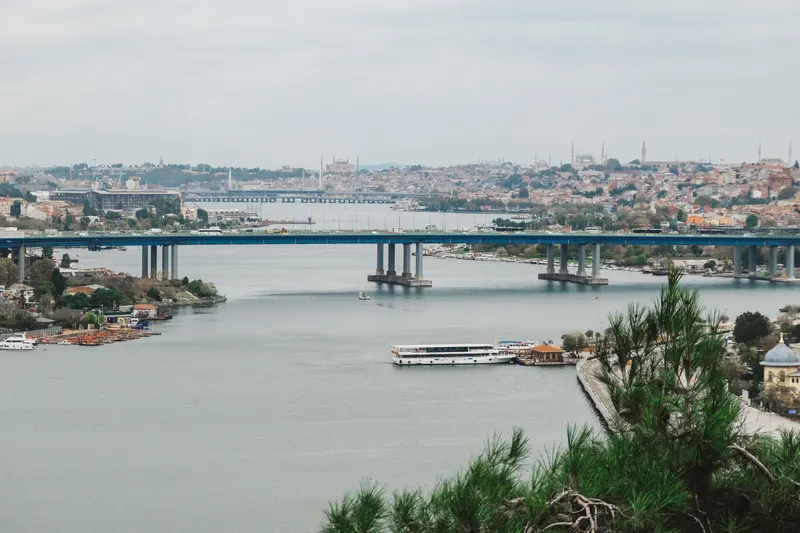
European Side: When It May Fit the Wedding Brief
European-side properties are worth shortlisting first where the wedding structure points that way, rather than because the side carries a particular reputation. That structure is recognisable. The programme is anchored to a specific property that can hold the ceremony, the dinner and a meaningful part of the guest accommodation together. A significant share of the guest list can be accommodated within the same operating area. Guests intend to spend free days in the principal historic sightseeing areas, which sit on the European side, and the couple would rather that time were independent than dependent on organised transport.
A European-side venue does not remove crossings by itself. If the welcome dinner has been planned on the Asian shore, the crossings remain in the programme. The side reduces complexity only when the rest of the wedding system is built around it.
Asian Side: When It May Fit the Wedding Brief
The same test applies in reverse. An Asian-side base can work well where a specific property fits the brief better than anything available across the water, where part of the guest list is already based on that side, or where the full programme, including a welcome event and anything held the following day, can be built within one area. Where a property provides both the event space and a substantial part of the accommodation, much of the movement problem disappears regardless of which side it stands on.
What should not drive the decision is the set of impressions attached to the side. Assumptions that the Asian side is quieter, cheaper, more residential or more difficult to work with are not planning facts. The deciding questions are the same on both shores: whether the venue can take the guest count and the event format, whether guests can be accommodated within a workable distance of it, whether suppliers can reach it within the access window, and what the venue permits in each space it offers.
The Venue Matters More Than the Side
A hotel that provides ceremony space, dinner space and guest rooms within one property creates a different wedding from a venue with no accommodation attached, which in turn creates a different wedding from a private property where nearly everything has to be brought in. Those differences are larger than the difference between the two sides in the abstract.
This is why the property should be assessed before a whole side is assumed to behave in one way. What does the venue include as standard, and what has to be hired in? Does it house guests, and how many? Are outside suppliers permitted, and under what access conditions? What are the contracted arrangements for the end of the evening, including which space is authorised for any continuation and until what time? Those answers vary between two venues standing on the same shore, and should be confirmed with the venue in writing rather than inferred from the area.
Guest Accommodation Should Support the Wedding Base
Where practical, the main guest base and the main wedding venue should sit in a workable relationship with each other rather than on opposite sides of the city. When they are separated by a crossing, ordinary elements of the day become transport movements: the arrival at the ceremony, the return at the end of the night, and any guest who arrives late and has to find their own way.
Which specific areas suit a given guest list is a separate question, and depends on budget, the size of the party and what guests intend to do with the days around the wedding. At the stage of choosing a side, the decision that matters is whether the accommodation plan and the venue can share one operating area.
When Crossing the Bosphorus Is Worth It
The aim is not to eliminate every crossing. The two sides are part of what makes Istanbul interesting as a wedding destination, and a programme that refuses to cross at all may give up something worthwhile. The aim is that each crossing is intentional.
Before a crossing is written into the programme, it is worth asking whether the second location genuinely offers something the first cannot, whether it justifies the additional coordination, how much guest free time it consumes, and whether it creates one crossing or a repeating pattern. A single well-placed crossing for a welcome event can be a feature of the weekend. A programme that crosses for the ceremony, crosses back for dinner and crosses again the following morning becomes dependent on transport conditions that nobody involved controls, and those assumptions should be checked against current conditions.
Multi-Day Weddings: One Side or Both?
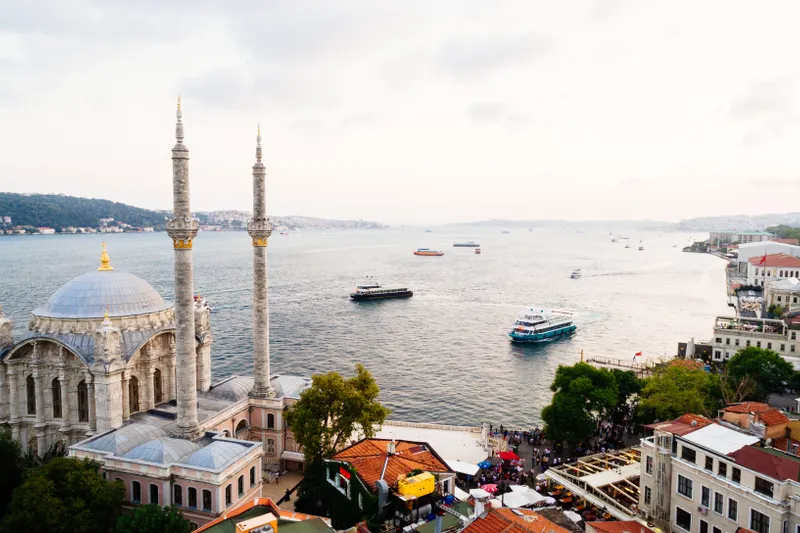
A multi-day programme can use both sides. The question is where the side change is placed and whether it has been chosen deliberately. A change of scene is easier to absorb on a day with slack in it, rather than one where guests are also being moved to a fixed ceremony time. Where practical, keeping the wedding day itself geographically simple leaves room for a second location elsewhere in the weekend. The wider sequencing of a multi-day Istanbul programme is a larger subject than the side decision alone.
Supplier and Production Logistics
Guests see the finished room. Suppliers see the route in. The side decision can affect supplier call times, delivery windows, equipment movement, setup sequencing and how much contingency a production schedule needs to carry. A venue with no permanent kitchen, no in-house furniture or restricted access hours requires more to be brought in, and the practical question is whether the load-in window the venue allows is long enough for what the design requires.
This is not a claim that suppliers charge more for one side, or that one side is harder to reach. It is a reminder that the production plan should be tested against the actual property: what can be delivered and when, where vehicles can unload, and what has to be cleared afterwards, all confirmed in the venue agreement.
Guest Profile and Accessibility
Older guests, guests with limited mobility, families with young children and guests unfamiliar with Istanbul may all benefit from a programme with fewer complex movements. Each additional transfer adds waiting, boarding and a stretch of time during which guests depend on a schedule they cannot influence. That does not rule out a crossing. It means the cost of each movement should be weighed against the guest list actually travelling.
Questions to Answer Before Choosing the European or Asian Side
Working through the following questions before shortlisting properties will produce a clearer answer than comparing the two sides in general terms.
- What venue model do we actually want?
- Where can most of our guests reasonably stay?
- How many events are we hosting?
- Are those events likely to sit on one side or both?
- How many organised city crossings would the programme create?
- Is any of those crossings genuinely adding to the wedding experience?
- How much external production does the design require?
- Are older or mobility-limited guests travelling?
- Does the venue itself solve part of the accommodation or transport problem?
- Can we keep the main wedding day geographically simple?
- Have our transport assumptions been checked against current conditions?
How Ramarossi Helps Couples Choose an Istanbul Wedding Base
Ramarossi works with couples from the brief stage, assessing guest count, venue style, accommodation structure, the number of events, production requirements, transport implications and guest profile, then shortlisting venue and area models that fit what has been described. Depending on the agreed scope of wedding planning services, that work can extend to venue search and venue communication, accommodation coordination, guest transport coordination, design, supplier arrangements, production, multi-day sequencing and event-day delivery.
What it does not include is control over traffic conditions, journey times or transport performance, none of which any planner can guarantee. Venue availability, capacity, permissions, pricing and operating conditions are set by each property and confirmed by it in writing. The value of planning support at this stage is in identifying the crossings a programme would create before they are locked into contracts.
Final Takeaway
Do not choose the European or Asian side because one sounds more impressive, more convenient or more interesting. Choose the side whose available venue, guest base and event programme combine into the most workable wedding system.
The strongest Istanbul wedding may still use both sides. A welcome dinner in one place and a wedding in another can be a considered decision rather than an accident of how the shortlist was assembled. What separates the two is whether each crossing was chosen or simply inherited.
If you are weighing an Istanbul wedding base, sharing your guest count, the venue style you have in mind, any accommodation ideas, the number of events planned, mobility considerations within the guest list and your production priorities gives enough for a useful first conversation about which side and which venue model fit the brief. Availability is confirmed with the individual property.
Frequently Asked Questions
Is the European or Asian side better for an Istanbul wedding?
Neither side is universally better. The stronger choice is the side where the venue, the guest base and the main wedding programme work together with the least unnecessary movement across the city. Both sides contain very different districts and venue models, so the specific property matters more than the side label.
Does the European side have better wedding venues?
Venue inventory changes, and suitability is not a ranking exercise. Both sides contain venues that suit some weddings and not others. The useful comparison is between named properties assessed against the guest count, the event format and the production required.
Can we hold the wedding on one side if guests stay on the other?
It may be possible, and can be the right answer where the venue justifies it. It does create an additional transport dependency for arrivals, departures and anyone moving outside the organised transfers, and the plan should be built around current transport conditions rather than assumptions.
Should wedding guests stay on the same side as the venue?
Where practical, keeping the main guest base and the main venue in the same operating area reduces unnecessary movement. Which specific areas or properties suit a particular guest list is a separate decision that depends on budget, party size and what guests plan to do around the wedding.
Can a multi-day Istanbul wedding use both sides?
Yes, where the second side adds enough to justify the movement it creates. A deliberate change of location on a day with flexibility in it is different from repeated crossings on the wedding day itself, when the schedule has the least tolerance for delay.
Does crossing the Bosphorus make wedding logistics difficult?
It adds coordination rather than making a wedding unworkable. Each crossing introduces a dependency on transport conditions and departure timings, which is manageable when planned and disruptive when assumed.
Can Ramarossi plan weddings on both the European and Asian sides?
Yes. Within the agreed scope, Ramarossi can shortlist venues on either side, communicate with properties, coordinate accommodation, guest transport, design, suppliers and production, and manage delivery on the day. Availability, capacity, pricing and operating conditions are confirmed by each property rather than guaranteed in advance.