


Destination Wedding in Turkey: What to Check Before Booking
Planning from abroad starts with practical decisions: who is travelling, how the venue really works and which wedding events must fit together. Use this checklist before committing to a property or detailed design.
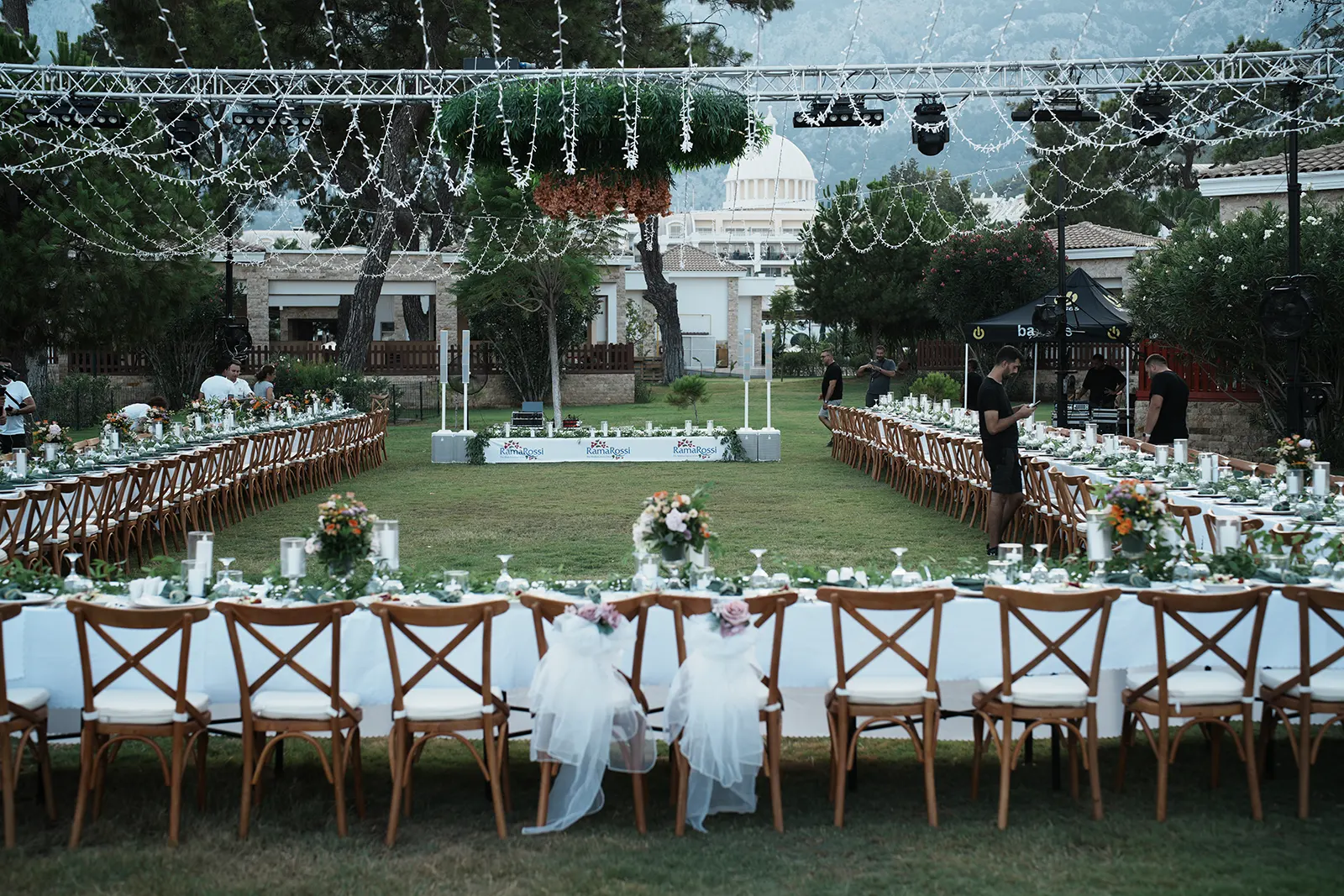
Planning a destination wedding in Turkey from abroad? Before you reserve a resort, villa or ceremony space, decide who will travel, how many events you want, what your guests will need and how the venue must function. Those decisions affect which location and property can actually deliver the celebration you have in mind.
This is a pre-booking checklist, not a list of the “best” Turkish venues or an advertisement for a standard wedding package. It draws on Ramarossi’s operational experience planning international weddings in Turkey. If you are comparing destinations or looking for a full-service planning company, see Ramarossi’s destination wedding planning in Turkey. Here we focus on the decisions couples should make before choosing a venue.
1. Start with the guest list, not a venue photograph
For a wedding abroad, the guest list shapes far more than the number of dinner chairs. It determines which flight routes are practical, whether relatives need accommodation near the venue, how many transfers might be necessary and whether the ceremony and reception can fit within the same property.
- Estimate a realistic attendance range. Separate your invited total from the number likely to travel, while allowing for family members who cannot confirm early.
- Identify where guests are travelling from. A venue that is convenient for one family may involve several connections for another.
- Consider different needs. Older relatives, children, guests with mobility limitations and families with several events may need very different travel and accommodation arrangements.
- Decide who is arranging and paying for what. Do not assume that guest rooms, airport transfers or additional meals are included in a wedding quotation.
As an initial planning brief, an approximate guest range is useful. Before booking a venue, however, compare the proposed capacity with the actual ceremony layout, reception seating, dance floor and guest movement, not only the maximum number advertised.
2. Choose a destination that works for the journey
Antalya, Istanbul, Bodrum, Fethiye and Cappadocia offer very different types of wedding setting, but scenery should not be the only deciding factor. Ask which destination makes the journey and the event programme manageable for your particular guests.
Three useful questions are: Can most guests reach the destination without an awkward itinerary? Can they stay close enough to attend the full celebration? And does the local venue model suit your ceremony, reception and any additional cultural events?
A wedding at a resort with guest accommodation on site is organised differently from one at a separate villa or historic property. Neither model is universally better. The answer depends on the guest group, the event format, the budget and the specific property’s conditions.
3. Test the wedding layout before committing to a venue
One of the most common early planning mistakes is choosing a venue because its photographs look right and only later assessing the space against the intended wedding. The setting influences everything that follows: ceremony furniture, floral structures, lighting, sound, supplier access, reception layout and even how comfortably guests can move around.
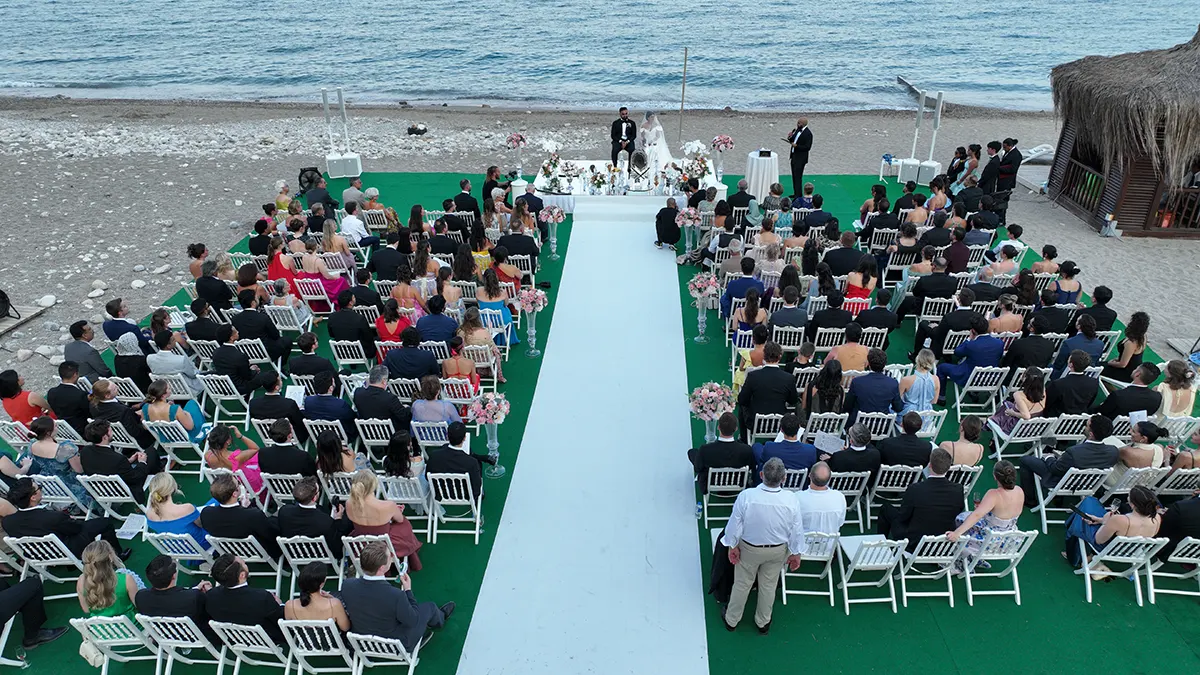
Ramarossi has encountered Antalya projects where a property appeared suitable until the ceremony footprint was considered in detail. Seating rows, aisle width, structures and circulation space can reduce the usable area substantially. That is why detailed decoration proposals should follow the venue assessment, not precede it.
Eight practical questions to ask a shortlisted venue
- Which precise area is allocated to the ceremony, reception and any indoor or late-evening event?
- Does the proposed guest number fit the intended setup, not just the venue’s stated capacity?
- What access and installation windows are available to the wedding production team?
- Which outside suppliers, structures, sound equipment and design elements are permitted?
- What are the property’s rules and agreed hours for outdoor music, indoor events and any after-party?
- What backup space or arrangements can be offered if weather makes the first plan impractical?
- How will guests move between accommodation, ceremony, dinner and any additional venue?
- Which items are supplied by the property, and which must be organised as part of the wider wedding?
These are operational questions; their answers vary by property. Written venue confirmation matters more than assumptions based on another wedding at a different hotel. For a deeper look at bookings made from another country, see the Turkey wedding venue contract checklist for international couples. Ramarossi helps coordinate the practical planning process; it does not provide legal advice or review contracts as a law firm.

4. Define whether you are planning one event or several
A single wedding day and a multi-day destination celebration are different planning projects. A welcome dinner, henna or cultural evening, ceremony, reception, after-party and farewell gathering may each need their own space, supplier access, catering, entertainment and timing. Guests also need clear information about which events they are invited to attend.
For example, Ramarossi planned a real four-day Persian wedding in Antalya for up to 166 guests, with separate settings and arrangements for each day. It is a useful illustration of why a multi-day programme should be assessed as one connected project rather than several unrelated bookings.
If your wedding includes distinct events, decide early whether they should happen at the same property or in separate locations. Neither arrangement is automatically easier: on-site events may simplify guest movement, whereas different venues can introduce more transfer and setup decisions.
5. Build the cultural requirements into the initial brief
A wedding in Turkey does not need to follow a particular set of Turkish traditions. International couples may want a Persian Sofreh Aghd, a Mehndi, a Nikah-related celebration, a Lebanese dance programme, a Turkish henna evening or no additional cultural elements at all. The programme should reflect the couple and their families rather than assumptions about nationality.
These choices affect practical planning. A Sofreh Aghd needs a suitable ceremony footprint; an entertainment-led reception needs the right dance-floor layout and sound arrangements; separate cultural events change the timetable and possibly the accommodation plan. Discuss the elements that matter before the venue shortlist is finalised.
If the couple requires an officially registered marriage rather than a celebration alone, they should check the current requirements with the relevant Turkish authorities and qualified professionals separately. Venue suitability and event planning are different from official marriage procedures.
6. Compare proposed wedding scope—not just headline prices
When two venues or planning proposals have different totals, the lower number is not automatically the better fit. First check what the totals cover. Accommodation, catering, drinks, exclusive use, service, equipment, transfers, supplier access and additional events may be treated differently from one proposal to another.
It is helpful to agree a realistic budget framework before detailed styling begins. Floral installations, ceremony structures, lighting and reception furniture depend on the chosen venue and what can actually be built there. Asking for an elaborate design before deciding on a workable space often creates assumptions that have to be changed later.
Ramarossi does not use one fixed package for every couple. For full-planning weddings, the scope is shaped around the guest count, destination, venue, timing, cultural requirements, design direction and budget. Once the scope is agreed, the couple receives one total proposal covering the agreed elements; later changes to that scope may change the total. You can request a customised wedding proposal after sharing your priorities.
7. Give overseas guests information they can actually use
Many questions arrive after a venue is booked, when guests begin planning their travel. Avoid leaving the following until the last few weeks:
- Arrival information: the most practical arrival airport or airports, expected transport arrangements and whether your event involves separate properties.
- Accommodation guidance: available room options, booking deadlines and whether any wedding-related room conditions apply.
- Event schedule: which day and location each activity uses, with enough notice for guests arranging annual leave or onward travel.
- Individual travel requirements: each guest should verify passports, entry or visa requirements and any travel restrictions using the appropriate official sources for their nationality and circumstances.
- Accessibility and comfort: steps, slopes, outdoor walking distances, heat, wind, meal timing and the needs of guests with children or limited mobility.
Accommodation blocks, guest transfers and the information sent to guests can be coordinated within an agreed full-planning scope. The exact arrangements depend on the wedding rather than a standard destination-wedding formula.
8. What to prepare before you ask for a wedding proposal
You do not need to arrive with a venue contract, a full floral mood board or a finished supplier list. A strong first enquiry is simpler and more useful:
- Your preferred wedding date or a realistic date range.
- The approximate number of guests and where they will travel from.
- The Turkish destinations you are considering, if any.
- Whether you want one day or several events.
- The ceremony traditions, entertainment or family priorities that must be accommodated.
- Your budget context and the elements most important to you.
- Whether you need guest accommodation or transfer coordination.
With this information, a planning company can begin evaluating workable venue models and the likely scope of the event. Venue selection should then inform the production plan and design proposal—not the other way around.
Frequently Asked Questions
Should we book a venue before contacting a wedding planner in Turkey?
Not necessarily. It is often more effective to understand your guest numbers, budget, cultural requirements and event programme first, then assess venues against those needs. A venue can look attractive but prove unsuitable for the proposed ceremony or reception layout.
Can a destination wedding in Turkey be planned while we live abroad?
Yes. Much of the planning can be coordinated remotely. Venue assessment, supplier arrangements, design decisions and guest logistics still need on-the-ground coordination. An in-person visit can be helpful where practical, but it is not a universal requirement.
Does the ceremony and reception have to be at the same venue?
No. They can take place in one property or separate locations depending on the actual venues and the couple’s priorities. Separate locations introduce additional considerations such as transfers, timing, weather alternatives and supplier setup.
How far ahead should we start planning?
In Ramarossi’s experience, starting around twelve months ahead generally offers more flexibility for dates, venues and suppliers. It is not a fixed rule; weddings can also be planned on shorter timelines if suitable options remain available.
Can we receive a fixed wedding package before choosing a venue?
A general indication of budget may be possible, but a reliable detailed proposal depends on the venue, guest count, event programme, design and agreed scope. Venue architecture and operating conditions affect what decoration and production will actually be suitable.
Who confirms a venue’s event hours and after-party arrangements?
The specific venue must confirm its operating conditions and what is agreed for your date, spaces and event. There is no single universal late-night schedule that can be assumed for every Turkish wedding property.
Planning a destination wedding in Turkey?
A successful destination wedding starts with decisions that fit together, not a collection of unrelated bookings. Ramarossi is an Antalya-based, founder-led destination wedding planning company established in 2011. For international couples, the planning process can extend from venue selection and design development to supplier arrangements, production, guest logistics and on-site event delivery, according to the agreed scope.
If you are at the early planning stage, send your preferred dates, estimated guest numbers, destinations, cultural priorities and budget context. Tell Ramarossi about your wedding and request a tailored proposal.
Hello, I’m interested in knowing more about your wedding planning services in Antalya. Do you offer any all-inclusive packages, and what is the average cost for a wedding of about 100 guests? Also, do you have experience with organizing themed weddings? Appreciate your help!
Hello! We offer all-inclusive wedding packages in Antalya that cover everything from the venue and catering to entertainment and photography. but we can provide a more precise estimate based on your specific needs. We also specialize in themed weddings and would love to discuss your vision. Please reach out to us for more details. Thanks!