


An Antalya wedding venue can look straightforward in photographs and still be difficult for some guests on the day. The ceremony terrace may sit below the entrance, dinner may be reached along a garden path, and the nearest toilets may be on another level. Unless this is checked deliberately, it can come to light only after the venue is booked.
If you are planning a wedding in Antalya and older relatives or guests with limited mobility are attending, Antalya wedding venue accessibility needs to be assessed before you commit, not after the design is settled. The question is not whether a venue calls itself accessible, but whether your guests can move through the route your wedding will actually use.
Antalya Wedding Venue Accessibility: The Short Answer
Accessibility is a route, not a label. To judge whether an Antalya wedding venue will work for older or mobility-limited guests, map every stage those guests will pass through: arrival, entrance, ceremony, drinks, dinner, toilets, any later event space, the backup space and the route back to transport. Then ask the venue to confirm, in writing, how each stage works for the guest who needs it.
A lift, ramp or step-free entrance helps only if it serves every part of that route. A venue without an accessibility label may still be workable for a particular guest, and one with a label may still leave a gap.
Start With the Guests Who Actually Need the Route
Age alone tells you little. One grandparent may walk the length of a garden without difficulty, while another guest, of any age, may use a wheelchair, rely on a walking aid or avoid stairs entirely. Where possible, ask the relevant guests privately what makes a venue workable for them: do you avoid stairs, do you use a wheelchair or walking aid, is a long walk difficult, would seating during transitions help, is there any support we should arrange?
Answering is voluntary, and nobody needs to share a diagnosis. What the venue needs is the practical requirement, for example a step-free route for one wheelchair user, or seating close to the ceremony for two guests who cannot stand for long.
Map the Full Wedding Journey Before You Book
Once you know who needs what, walk through the wedding in order and note every point where a guest has to move, from the moment they leave the vehicle to the moment they get back into one. Include the toilets from each event space, any later event area, the backup space and, if guests are staying on site, the route from their rooms.
Not every wedding uses every stage, and the earlier you map yours, the more room there is to adapt before décor, transport and seating are set. If the ceremony and reception are at different venues, that adds a second property and a second arrival to check.
Accessibility Questions at a Glance
The table below is a planning tool for each stage of the guest journey, not an assessment of any particular venue.
| Guest-Journey Stage | What to Verify | Why It Matters | Who Should Confirm It |
|---|---|---|---|
| Vehicle arrival and drop-off | Where a vehicle can stop and the route to the entrance | A long or stepped walk can be the first barrier of the day | The venue |
| Entrance | Whether the guest entrance is step-free, or where an alternative is | The main entrance and a step-free entrance may differ | The venue |
| Route to ceremony | Steps, level changes and surfaces on the way | The ceremony may be on a different level | The venue, against your layout |
| Ceremony seating | Where seating can go and how guests reach it | A reserved seat helps only if it can be reached | The venue and your planner |
| Ceremony-to-reception route | How guests move to drinks and dinner | The second route may be harder than the first | The venue |
| Dinner or reception level | Whether dinner shares the ceremony level | A lift may serve one level but not another | The venue |
| Toilets | Location and whether they can be reached without stairs | Guests need them throughout the event | The venue |
| Dance floor or later event area | Where it sits and how guests reach it | The evening may move to a different space | The venue |
| Guest accommodation route, where relevant | Room to event areas and collection point | Staying on site helps only if this route works | The venue |
| Backup space | How guests reach and use it | The backup route may differ from the planned one | The venue |
| Departure route | The exit and pick-up point at the end | Exits, lighting and layout can change | The venue and your planner |
Arrival and Drop-Off
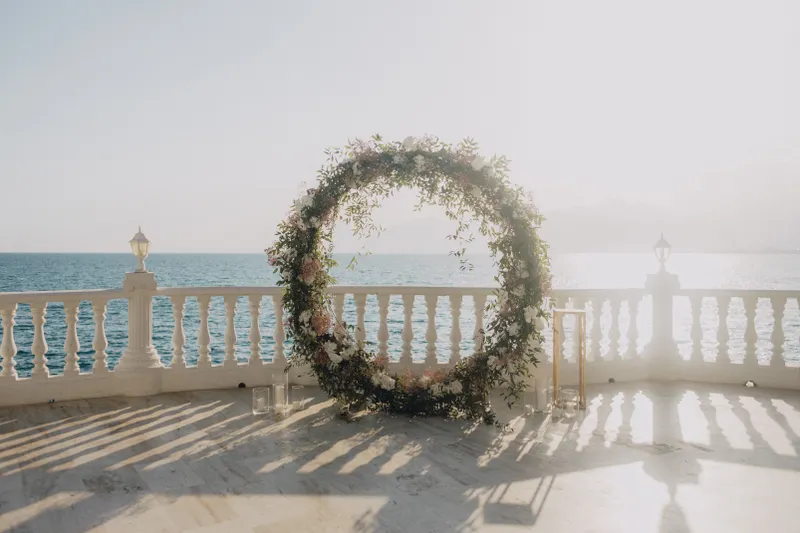
Arrival is the first test. The useful question is simple: can a vehicle stop close enough to the practical entrance for a guest who cannot manage a long walk?
Ask the venue where guests will be dropped off, what lies between that point and the entrance, and whether the route includes steps, a steep gradient or a difficult surface. If guests may need to wait, ask whether there is somewhere to sit nearby. Group transport and parking are a separate subject; here you need to know where one guest leaves one vehicle and how they reach the door.
Steps, Lifts and Ramps: Check Where They Actually Lead
“Does the venue have a lift?” is the wrong question on its own. A lift may connect the lobby to guest floors but not to a lower terrace where the ceremony takes place. A ramp may lead to the restaurant but not to the garden.
Ask instead whether the lift or step-free route serves each level your wedding will use: ceremony, dinner, toilets, any later event space, the backup space and, where relevant, the accommodation floors. If there is a ramp, ask where it starts, where it ends and whether it covers the whole route or only one section.
Where exact details matter, such as whether a particular wheelchair fits a particular lift, ask the venue directly. Legal or technical compliance should be confirmed by the property and, where necessary, an appropriately qualified professional or authority.
Outdoor Surfaces Can Change the Route
Antalya wedding venues may use gardens, terraces, poolsides or waterfront areas for the ceremony or dinner, and the surface a guest has to cross can matter as much as the number of steps. Paving, grass, gravel, sand and uneven stone each behave differently underfoot and under wheels.
No surface is automatically unsuitable; it depends on the guest and the route. Ask what surface guests will cross, whether the route is level and whether the backup route differs. If the existing route does not work for a particular guest, the answer may be to adjust the plan, for example by repositioning the ceremony or using a different space at the same property, rather than ruling the venue out.
Ceremony, Dinner and Dance Floor: Can Guests Move Between Them?
A wedding moves from ceremony to drinks, drinks to dinner and dinner to the dance floor. Each move is another route, and a guest who manages the first may struggle with the third.
Look at the sequence as a whole. Where event spaces are spread across levels or ends of a property, it may be possible to reduce movement, for instance by holding drinks beside the ceremony area. Whether a venue will allow a particular layout change depends on the property, so ask before relying on it.
Toilets Need to Be Part of the Route
Toilets are easy to overlook on a venue visit and hard to ignore on the day. The route matters from every event space, not just one.
Ask where the toilets are in relation to each event space, whether they can be reached without stairs or a lift, whether there is a facility suitable for the practical needs of the guest concerned, and whether it remains available for the whole event. Do not rely on a label; ask the venue to describe the facility and confirm it in writing.
Seating and Rest During Transitions
Weddings include waiting, before the ceremony, at the drinks reception and while transport arrives. Guests who cannot comfortably stand or walk for long periods may need a convenient place to sit during these moments.
This is a practical arrangement, not a medical one. Ask the relevant guests whether it would help, then check with the venue where seating can be placed along the route. Guest comfort, rest opportunities and the length of the route should be considered alongside the intended date and venue conditions.
If Guests Are Staying at the Venue, Check the Room-to-Event Route
Accommodating older or mobility-limited guests at the wedding property can reduce some movement, but only if the route from their room to the event works. Being at the same property does not make a venue workable by default.
Ask about the route from the room to the event area, any breakfast or common area and the vehicle collection point. At a property spread across buildings or levels, that route can differ considerably between rooms, so ask which rooms would suit the guests concerned.
Check the Backup Space Too
A venue may have a workable route to the planned outdoor space and a much harder route to the indoor backup, or the reverse. If the wedding moves because of weather or another change, the guests who need a step-free route still need one. Ask the venue to confirm access to the backup space, including toilets and seating, in the same detail as the planned space.
Do Not Forget the End-of-Night Route
The route out is not necessarily the route in. By the end of the evening, a different exit may be in use, furniture or décor may block a path that was clear earlier, lighting may be lower, and a gate, lift or entrance used on arrival may no longer be available.
Ask whether the same exit and pick-up point will be available, and whether anything closes before guests leave. If a later event space is used, check its route out as well.
Questions to Ask an Antalya Wedding Venue Before Booking
These questions are specific to guest accessibility. Ask them alongside your wider venue enquiries.
- Can a vehicle stop near the practical guest entrance?
- Is the route from arrival to the ceremony step-free for the guest who needs it?
- If there are steps, what alternative route is available?
- Does the lift serve every event level we intend to use?
- What surfaces must guests cross between event spaces?
- Where are the toilets in relation to the ceremony and dinner areas?
- Can the relevant toilet facilities be reached without stairs?
- Can the ceremony and reception be arranged to reduce unnecessary guest movement?
- If the wedding moves to the backup space, is that route equally workable?
- If guests stay at the property, what is the route from their rooms to the event?
- Is the departure route the same at the end of the night?
- Which of these arrangements will you confirm in writing?
How to Verify Accessibility When Planning from Abroad
If you cannot visit Antalya before booking, these methods work best used together:
- current photographs of each event space and the routes between them;
- a floor plan or site plan, where the venue has one;
- a live video walkthrough following the actual guest route;
- detailed written answers to the questions above.
None of these guarantees that a route will suit a particular guest, and a camera can miss a single step or a sloping path. Where the guest route is a major factor in the booking decision, a site visit can be especially useful. For accessibility, focus on walking the actual route at the pace of the guests who need it.
How Ramarossi Coordinates Accessibility Questions
Ramarossi has planned destination weddings in Turkey since 2011. When older or mobility-limited guests are attending, we treat accessibility as part of planning from the start. Depending on the agreed planning scope, that may include:
- understanding the guest group and any important mobility requirements;
- including those requirements in venue shortlisting;
- asking shortlisted venues specific questions about routes, steps, lifts, toilets and event spaces;
- coordinating photographs, video walkthroughs or site visits where appropriate;
- considering the guest route in ceremony, reception, seating, accommodation and transport planning;
- connecting confirmed venue conditions with the wider design and schedule;
- coordinating the agreed plan through setup and event-day delivery.
We coordinate the questions and the arrangements. We do not certify building accessibility, carry out inspections, give medical advice or guarantee that a route will suit every guest. The venue remains responsible for accurately describing its facilities, and not every access issue can be resolved at every property, but careful planning brings those issues to light before you book. You can read more about our wedding planning services.
Frequently Asked Questions
How do we know if an Antalya wedding venue is suitable for older guests?
Start with the guests rather than their age. Find out what practical support they need, map the route they will use, and ask the venue to confirm how each stage works. A generic accessibility label is not enough.
Does a venue with a lift automatically work for wheelchair users?
No. The lift needs to serve every event space the guest will use, and the rest of the route must also work. Wheelchair users have different requirements, so check the details against the specific guest.
Can a beach, garden or outdoor Antalya venue work for guests with limited mobility?
It may, depending on the route, the surfaces, the event layout and the needs of the guest concerned. An outdoor setting is neither ruled out nor suitable by default.
Should we visit the venue before booking if accessibility matters?
A site visit can be very useful where the guest route is a major factor. If travel is not practical, photographs, floor plans, a video walkthrough and written answers can help, although a remote check cannot guarantee suitability.
Should older guests stay at the wedding venue?
Not necessarily. Staying on site can reduce some movement, but only if the route from the room to the event spaces and collection point works for the guest concerned.
Can Ramarossi check accessibility with the venue?
Within the agreed planning scope, Ramarossi can put specific accessibility questions to venues, coordinate walkthroughs or site visits and build the confirmed arrangements into the plan. Ramarossi does not certify building accessibility or legal compliance.
What should we get confirmed in writing?
The route to each event space, lift and step arrangements, the relevant toilet facilities, access to any later event space and the backup space, and any assistance the venue has specifically agreed to provide.
Final Takeaway
Do not book an Antalya wedding venue on the strength of an “accessible” label or a set of photographs. Identify the guests who need the route, map every stage they will use, and get the venue’s answers in writing before decoration, transport and layout are finalised.
If older relatives or guests with limited mobility will be at your wedding, share your guest group, preferred dates and the venue types you are considering with Ramarossi, and we can talk through how accessibility should shape your venue search in Antalya.