
Is Turkey Safe for a Wedding?
What the UK, US and Canadian governments currently say about Turkey, where Antalya sits in that advice, and the practical steps that keep a wedding group safe and well looked after.
Is Turkey safe for a wedding? For the coast, including Antalya, the official advice from the UK, the US and Canada does not tell travellers to avoid the area. The UK advises against travel only to within 10 km of the border with Syria, about 480 km from Antalya in a straight line. But the same advice warns of a terrorism risk across Turkey and of regional tensions in the Middle East, so it is worth reading it properly rather than relying on reassurance.
This guide sets out what each government says today, with links so you and your guests can check the latest version yourselves, followed by the practical steps that matter for a wedding group: insurance, transfers, drinks, the sea, the heat, and what to do if the advice changes before your date.
The Short Answer
Turkey is a popular destination for British travellers: the UK Foreign Office reports that 4.27 million British people visited in 2025. None of the three governments covered here advises tourists against travel to Antalya, Side, Belek, Kemer, Kaş or Kalkan.
That is not the same as saying there is no risk. Official advice for Turkey includes a nationwide terrorism warning, and the UK advice now includes a section on regional tensions in the Middle East, which could affect flights and airspace. As the FCDO puts it, “No travel can be guaranteed safe.” No government ranks wedding destinations by safety, so whichever country you are considering, read its official advice in the same way. The sensible approach is to read the current advice, make sure everyone is properly insured, and plan the practical details well.
What the UK Foreign Office Says
We checked the FCDO’s Turkey travel advice on 1 November 2026. It was last updated on 27 October 2026. The main points:
- Areas to avoid: the FCDO advises against all travel to within 10 km of the border with Syria. There is no advice against travel to the rest of Turkey.
- Terrorism: the FCDO says terrorists are likely to try to carry out attacks in Turkey, and that most attacks have taken place in south-east Turkey, Ankara and Istanbul. It advises staying aware of your surroundings, following local media and following the advice of local authorities.
- Regional tensions: the FCDO says the situation in the Middle East “remains deeply unpredictable and the risk of sudden escalation is high”, and that since the conflict began in early 2026, Iran has stated its intention to target locations associated with the US and Israel. Travellers in the region should be prepared for possible flight cancellations, airspace closures and travel disruption, keep their departure plans under review, stay away from security or military facilities and follow local authorities. The page also explains what to do if told to take shelter.
- Demonstrations: protests take place in Istanbul and other cities, and the advice is to avoid them and leave the area if one develops.
- Insurance: the FCDO notes that travel insurance could be invalidated if you travel against its advice.
The simplest step for any couple is to sign up for FCDO email alerts for Turkey, so you hear about any change on the day it is published. It is worth sharing the link with guests too.
What the US and Canadian Advice Says
If you have guests travelling from North America, they will read their own government’s advice, and it is useful to know what it says.
| Country | Overall level | Areas to avoid |
|---|---|---|
| United Kingdom | No overall level; specific areas listed | Within 10 km of the Syrian border |
| United States | Level 2: exercise increased caution (issued 9 June 2026) | Level 4: within 10 km of the borders with Syria and Iraq |
| Canada | Exercise a high degree of caution (updated 29 September 2026) | Within 10 km of the Syria and Iraq borders; non-essential travel to Hakkari and Şırnak |
Level 4 do not travel only within 10 km of the borders with Syria and Iraq.
Avoid all travel within 10 km of the Syria and Iraq borders, and non-essential travel to Hakkari and Şırnak provinces.
The US travel advisory gives terrorism, armed conflict and arbitrary detentions as its reasons, and mentions arrests for criticising the government, including on social media. The Canadian advice points to the threat of terrorism and the possibility of large demonstrations. Neither includes the Mediterranean coast in its areas to avoid.
Where Antalya Sits on the Map
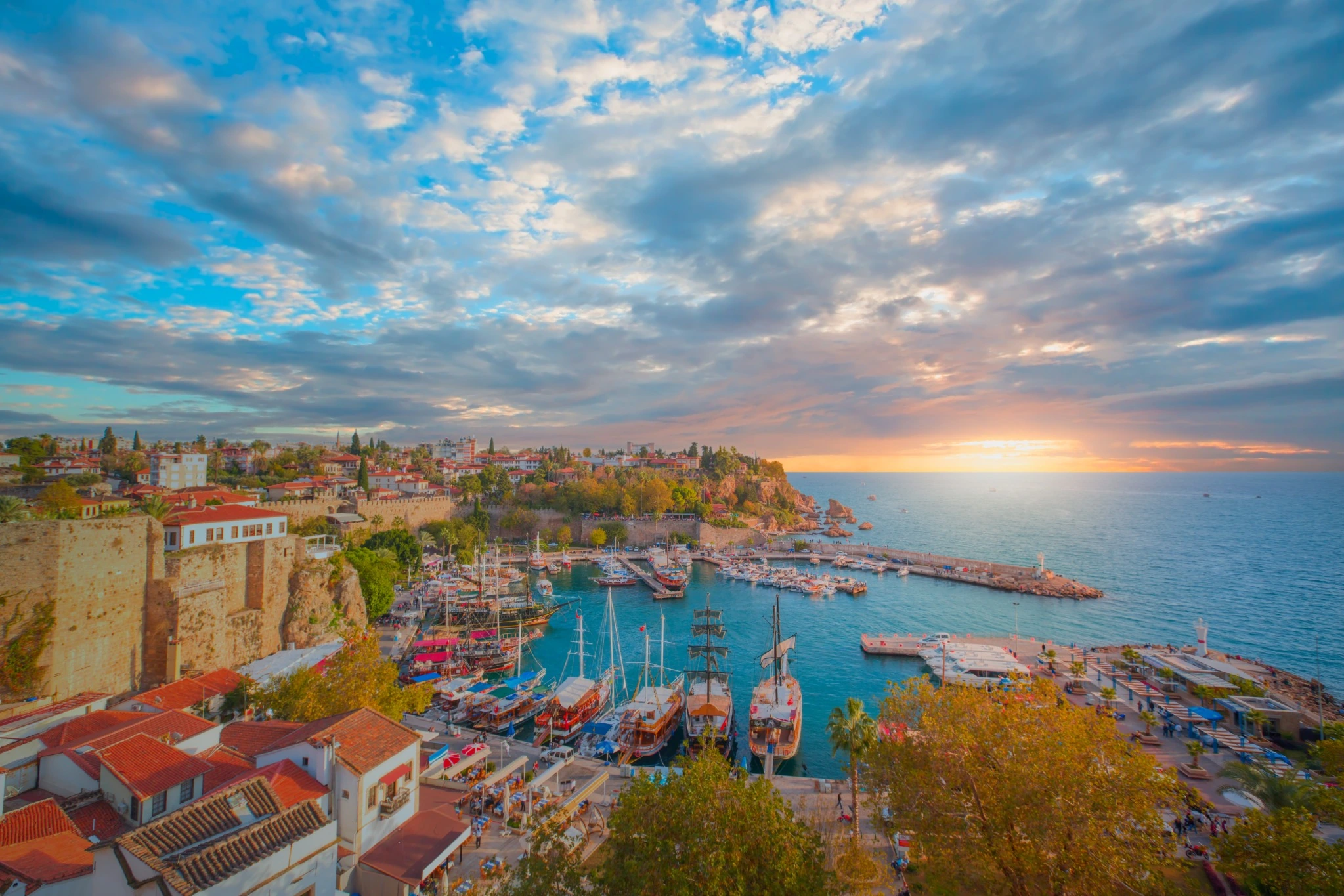
Turkey is a large country. Antalya is on the south-west Mediterranean coast, around 480 km in a straight line from the nearest point of the Syrian border, and further by road. The resort towns popular for weddings are all on this stretch of coast: Kemer, Kaş and Kalkan to the west of the city, and Belek and Side to the east. All are far from the border area.
Antalya is about four hours’ flight from the UK, with direct flights from many UK airports during the wedding season. Its airport is one of the busiest in Turkey for international holiday traffic, and the region is used to looking after large numbers of British visitors every summer.
Practical Steps That Keep Guests Safe
Most problems on a wedding trip are ordinary travel problems: a missed transfer, too much sun, a fall by the pool, a lost passport. These steps, most of them taken from the FCDO’s own advice, cover the ones that matter most for a wedding group.
- Travel insurance for everyone: the UK Global Health Insurance Card (GHIC) is not valid in Turkey, so guests need travel insurance that covers medical treatment, repatriation and any activities they plan, such as boat trips or water sports.
- Passports: for British citizens, the passport must be valid for at least 150 days from the date of arrival, with at least one blank page. Ask guests to check now, not the week before.
- Visas: British citizens can visit Turkey without a visa for up to 90 days in any 180-day period. Guests on other passports should check their own rules.
- Transfers: the FCDO warns that lifts from unofficial taxis are highly risky. Use pre-booked transfers or registered taxis, and arrange group transfers for arrival day and the wedding evening.
- Drinks: the FCDO warns of methanol poisoning from illegally produced spirits and counterfeit branded bottles. At the wedding, drinks should come from a licensed venue. Away from the wedding, guests should drink in reputable places and keep sight of their glasses.
- The sea and pools: follow the beach flag system, never dive into unknown water, and keep children supervised even where there is a lifeguard.
- Children: the FCDO advises that children are always accompanied by people they know and trust, and are not left alone with hotel or excursion staff.
- Emergencies: the emergency number in Turkey is 112, for police, ambulance and fire. Include it, with the nearest hospital and your planner’s number, in the guest information you send out.
One page is enough: venue and hotel addresses, transfer times, the emergency number 112, the nearest hospital, a contact number for the day, and links to the FCDO advice and email alerts.
For flights, airports and timing, see our guide to flying wedding guests from the UK.
Local Laws Worth Knowing
A few Turkish laws surprise visitors. The FCDO highlights these:
- Photo ID: it is illegal not to carry photographic ID, so guests should keep their passport with them.
- Drugs: penalties for illegal drugs, including cannabis, are severe, with prison sentences of 4 to 24 years.
- The nation and the flag: insulting the Turkish nation, the flag, the President or Atatürk is a criminal offence, and this can apply to posts online.
- Antiquities: buying or exporting antiquities is illegal, so check before buying anything that looks old.
Heat, Wildfires and Earthquakes
Summer on the Antalya coast is hot, so plan shade, water and the ceremony time around the heat, and consider late afternoon or evening ceremonies in July and August. Wildfires are frequent in summer, and lighting fires or throwing away cigarettes in risk areas can lead to a fine or a prison sentence. Earthquakes happen regularly in Turkey. In every case, the advice is the same: follow local authorities and your venue’s instructions.
What If the Advice Changes Before Your Wedding?
Advice can change, so plan for it from the start:
- Sign up for FCDO alerts when you book, not when you travel.
- Buy travel insurance early, ideally when you book flights, so cancellation cover starts as soon as possible.
- Ask each venue and supplier, before you sign, what happens to your booking if official advice changes.
- Keep the guest list informed with one clear update rather than many small messages.
- Check where a change applies: advice can change for one area rather than the whole country, so check whether it affects the place you are actually going.
How a Local Planner Helps
A planner cannot change the official advice, but can make sure the details around it are handled: licensed venues, registered transfer companies, timing planned around the heat, a weather backup for outdoor plans, and a local contact for guests if a flight is delayed or something goes wrong. Ramarossi has planned weddings from Antalya since 2011, and we keep up with the official advice so we can answer guests’ questions directly.
For the legal side, read our guide for British citizens marrying in Turkey. If you are still deciding between home and abroad, see whether it is cheaper to get married abroad or in the UK. For planning support, see wedding planning in Antalya.
Questions about safety for your guests?
Tell Ramarossi your preferred dates, guest count and where your guests are travelling from. We will answer your questions about the area, transfers and guest arrangements, and suggest venues that suit your group.
Prefer another email service? Write to info@ramarossi.com using Wedding in Turkey Enquiry - UK Couple as the subject.
Follow our celebrations
Discover beautiful weddings, private events, styling ideas and behind-the-scenes moments from Ramarossi in Turkey.
Frequently Asked Questions
Is Turkey safe to travel to right now?
The UK, US and Canada do not advise against travel to Turkey’s Mediterranean coast. The UK advises against all travel only within 10 km of the Syrian border. All three warn of a terrorism risk across the country, and the UK also warns of possible flight disruption because of regional tensions. Check the FCDO page before you book and again before you travel.
Is Antalya safe?
Antalya is not in any area where the UK, US or Canada advise against travel, and it welcomes millions of international visitors every year. Normal precautions apply: travel insurance, pre-booked transfers, licensed venues for drinks, care in the sea and the heat, and following local authorities. For a wedding, add group transfers and clear guest information.
Is Side in Turkey safe?
Side is a resort town on the coast east of Antalya. It is not in any area where the UK, US or Canada advise against travel, and the same nationwide terrorism warning and normal precautions apply.
Is Turkey safe for Americans?
The US State Department rates Turkey at Level 2, “exercise increased caution”, and Level 4 only within 10 km of the borders with Syria and Iraq. Its advisory also mentions detentions and arrests linked to criticism of the government, including on social media, so American guests should read it in full.
Is Turkey safe for women and solo female travellers?
The FCDO reports that 29 cases of sexual assault, including rape, were reported to British consular staff in 2025, out of 4.27 million British visitors, mostly in coastal resorts during the tourist season. It advises using reputable providers, buying your own drinks and not sharing accommodation or contact details with strangers.
Do UK guests need a visa for Turkey?
British citizens can visit without a visa for up to 90 days in any 180-day period. The passport must be valid for at least 150 days from arrival, with at least one blank page.
Does the GHIC work in Turkey?
No. The Global Health Insurance Card and the European Health Insurance Card are not valid in Turkey, so every guest needs travel insurance that covers medical treatment.
What is the emergency number in Turkey?
112, for police, ambulance and fire.
What happens if the travel advice changes before our wedding?
Sign up for FCDO email alerts, buy insurance early, and ask each venue and supplier before signing what happens to your booking if official advice changes. A change may apply only to specific areas, so check whether your destination is affected.