


Legal Guide for British Citizens Marrying in Turkey
Understand the UK marital-status affirmation, Turkish marriage-office process, certificates and UK recognition—while keeping the legal ceremony separate from destination-wedding planning.
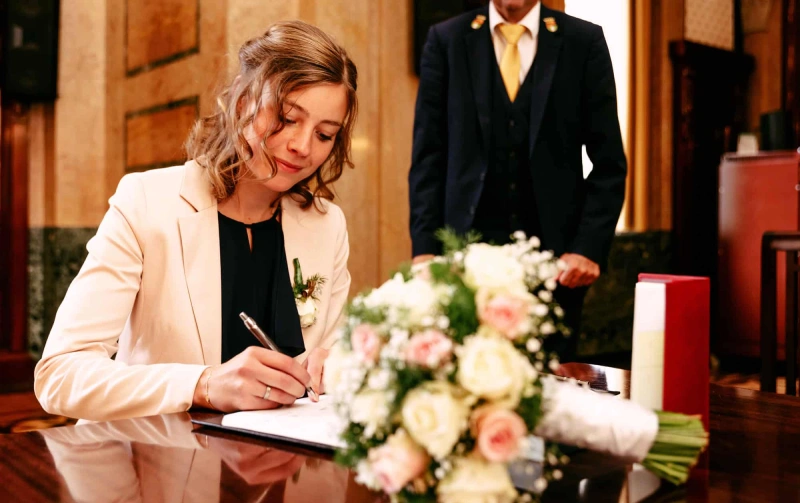
British citizens can marry in Turkey when the proposed marriage meets the applicable Turkish requirements. But the process for a legally recognised civil marriage is separate from choosing a wedding venue, arranging the celebration or planning a symbolic ceremony. The most important first steps are checking the relevant municipal marriage office’s current documentation, following the correct UK marital-status procedure and understanding how a lawful Turkish marriage is recognised in the UK.
Some online guides—including an earlier version of this article—tell every British couple to obtain a Certificate of No Impediment (CNI) from a UK register office and later register the Turkish marriage with the UK’s General Register Office (GRO). That is not a reliable description of the current Turkey-specific process. The UK Foreign, Commonwealth & Development Office (FCDO) publishes an affirmation or affidavit of marital status procedure for British nationals marrying in Turkey. And GOV.UK explains that ordinary marriages conducted abroad are registered by the country where they take place, not subsequently entered into the UK marriage register.
This guide is designed to help British couples understand the sequence of enquiries, paperwork, venue questions and post-ceremony records without mistaking general information for a guaranteed document checklist. The precise requirements can depend on whether you live in the UK or Turkey, your partner’s nationality and circumstances, the municipality conducting the marriage and any earlier marriages. Confirm all requirements with the relevant authorities well before making non-refundable arrangements.
Can British Citizens Legally Marry in Turkey?
Yes, provided the couple can satisfy the legal requirements that apply to the marriage in Turkey. British citizenship by itself is not a guarantee that a particular ceremony can be performed on a preferred day or at any chosen hotel or private property. Marriage is a civil status, so the relevant local authority must accept the application and the ceremony must be carried out by a person authorised to conduct a legal marriage under Turkish rules.
It is also important to distinguish a legal civil marriage from the celebration that surrounds it. A couple might want a seafront ceremony, a private dinner, a traditional family gathering or a larger destination wedding with international guests. The wedding’s design and hospitality do not determine whether the marriage is legally valid. The formal procedure, eligibility of the couple and the authority conducting the ceremony do.
GOV.UK’s getting married abroad guidance advises British nationals to check eligibility, the local process and documentary requirements for the actual country of marriage. An individual municipality may also have application and appointment rules. For couples marrying in Antalya, for example, the Muratpaşa Municipality marriage-procedures page describes categories of documents for foreign nationals. Use local guidance as a starting point, not a universal checklist for every district or future wedding date.
Where the couple has different nationalities, lives in different countries or has a prior marriage, do not assume the paperwork for two British citizens resident in the UK applies equally to both individuals. Each person’s eligibility and official records may need to be confirmed separately.
Step-by-Step: Planning a Legal Civil Wedding in Turkey
A sensible legal-marriage planning sequence begins with the authority rather than with decoration, catering or a venue deposit. That is especially important for destination weddings, where travel, guest accommodation and supplier arrangements can create financial commitments before the legal practicalities have been checked.
- Identify the relevant Turkish marriage office. Confirm that it can handle your particular application, what appointment and document procedures apply, and which ceremony arrangements it permits.
- Check both partners’ eligibility. Ask about nationality, residence, previous-marriage evidence, identity requirements and any circumstances requiring further documentation.
- Follow the correct UK marital-status route. British nationals should check the current FCDO Turkey guidance, including the distinction between making an affirmation in the UK and through a British mission in Turkey.
- Confirm how supporting documents must be prepared. Ask which records require translation, certification, legalisation or an apostille before they are submitted.
- Check local health-report and application requirements. The receiving Turkish authority should confirm any required medical reports, photographs, witnesses and dates.
- Agree the lawful ceremony arrangements. Confirm who can conduct the civil ceremony and where it is legally permitted; do not assume a private venue itself can register a marriage.
- Keep the official certificate. After a valid ceremony, obtain the Turkish marriage record or certificate through the appropriate issuing authority and clarify what documents you may need for future use abroad.
Each of these steps may involve processing time, appointments or preparation in different places. We do not publish a fixed minimum lead time because the exact requirements and availability change. Couples should contact the relevant authorities as early as practical, before they make non-refundable commitments based on assumptions about the legal procedure.
Documents British Citizens May Need to Marry in Turkey
British nationals should expect questions about identity and freedom to marry. Depending on the municipality and personal circumstances, supporting records may include a valid passport, proof of marital status, birth details, evidence of a previous divorce or bereavement, photographs, official translations or appropriately legalised documents. Some municipalities require a health report and have precise application-photo rules. This is not a definitive list for every couple.
Even when a document has the same English name as one mentioned on a website, the receiving office may require it in a particular format, language or legalisation status. An ordinary photocopy might not be enough. An apostille certifies the authenticity of the signature, seal or capacity of the issuing authority; it does not replace the municipality’s assessment of the marriage application or guarantee acceptance of incomplete documents.
For this reason, do not purchase every document mentioned in a blog post. First obtain the current requirements from the marriage office handling your application, and check the British government’s guidance for the appropriate UK-issued record. If a document has been issued in a country other than the UK, ask the appropriate issuing and receiving authorities how it should be certified and presented.
| Document or question | What to check | Who should confirm |
|---|---|---|
| Identity | Passport, personal details and any copies or translations | Turkish marriage office |
| Freedom to marry | Turkey-specific affirmation or affidavit route for the British applicant | FCDO guidance and marriage office |
| Previous marriage | Divorce or death records, where applicable, and how they are presented | Marriage office and document authority |
| Supporting records | Birth details, photographs, health paperwork and accepted formats | Marriage office |
| Certification | Translation, notarisation, apostille or other legalisation | Receiving authority and authorised professionals |
| Ceremony | Appointment, officiant, witness and location requirements | Turkish marriage office |
Affirmation or affidavit procedure and whether you sign in the UK or Turkey
FCDO and the Turkish marriage office
Identity, previous-marriage, health and photograph requirements
The municipality receiving the application
Translation, notarisation, apostille and accepted formats
Receiving authority and qualified document professionals
Certificate of No Impediment or Affirmation: Which Applies to Turkey?
This is one of the most important points for British couples to get right. A Certificate of No Impediment (CNI) is relevant to marriage procedures in some countries. But the FCDO’s country-specific guidance for Turkey describes an affirmation or affidavit of marital status rather than a universal requirement to obtain a CNI from a local UK register office. The earlier version of this article treated a CNI and a fixed notice period as mandatory for everyone, which could lead couples to start the wrong process.
The FCDO provides a Turkey affirmation or affidavit template for British nationals who live in the UK. It directs applicants to complete the template without signing it, arrange for the affirmation or affidavit to be sworn before an eligible UK notary or commissioner for oaths and obtain the required legalisation before travelling. If you are already in Turkey, the same official guidance points to an affirmation at a British embassy or consulate in Turkey. Check the current appointment process and the exact document accepted by the Turkish office.
The British Embassy Ankara’s published Turkey marriage-procedure notice also distinguishes routes according to residency. Its procedural history is useful background, but couples should give priority to the currently linked FCDO forms and appointment instructions and to confirmation from the actual Turkish registrar. Do not assume the same timetable or office will be suitable for every British national, including those living outside the UK and Turkey.
Where the documents must be legalised, follow the UK legalisation guidance and the receiving authority’s instructions. A notary, legalisation service or translator may charge a fee, but the overall process should not be reduced to an invented fixed amount or a guaranteed number of days. If your circumstances are unusual, ask the FCDO and a qualified professional for specific advice.

The Role of the Turkish Marriage Office
The legally effective ceremony is governed by the Turkish civil marriage process. Couples should establish which municipality or authorised authority will receive the application, examine documents and arrange the legal ceremony. The local office can also explain any health documentation, witness rules and appointment requirements applicable to the couple. A wedding planner or hotel cannot replace the legal authority’s acceptance of the application.
Municipal guidance may appear online in Turkish or English, but administrative instructions can vary by place and may be updated. In Antalya, Muratpaşa’s official page lists requirements for foreign applicants and preparation of overseas documents. It should not be assumed that a date, fee or administrative detail published on another district’s website applies automatically to your wedding. If the couple wants a legal ceremony in a different Antalya municipality or elsewhere in Turkey, contact that specific office.
A couple also needs to clarify whether the person conducting the desired ceremony is authorised to perform a legal marriage and whether the proposed setting can be used for that purpose. Some couples choose to separate the formal civil marriage from their symbolic or religious celebration. That choice affects the timetable and guest experience, but it does not change the need to meet the applicable civil legal requirements when a legally recognised marriage is intended.
Can a Beach, Hotel or Private Villa Host the Legal Wedding?
Not every beautiful wedding location is automatically a place where a civil marriage can be legally conducted. A seafront hotel, rooftop terrace, garden, villa or private estate may be appropriate for the reception and celebration while the legally effective ceremony must follow arrangements approved by the relevant Turkish authority. Rather than describing entire categories of hotels or beaches as “recognised by British authorities”, confirm the local legal procedure separately from the property’s event offer.
The distinction is particularly important for couples organising destination weddings in Antalya, Bodrum or Istanbul. You may need one space for the civil procedure and another for the celebration. Or the applicable authority may approve a ceremony arrangement for the chosen property. The correct answer depends on actual permissions and arrangements, not on the venue’s marketing photographs or a planner’s promise.
Ramarossi’s planning responsibility is the wedding experience: understanding the couple’s guest count, preferred date, cultural expectations and budget; helping identify a suitable venue; then coordinating the relevant design, hospitality, production and suppliers within the agreed scope. We can plan around confirmed civil-ceremony arrangements, but we are not a marriage-registration authority or law office and cannot guarantee that a particular venue or date will receive civil approval.
Is a Turkish Marriage Recognised in the UK?
GOV.UK explains the general principle: a marriage performed abroad is recognised in the UK when it was lawful in the country where it took place and would be permitted under UK law. The facts of the marriage and the legal requirements applicable to the couple matter. This is a principle of recognition, not a guarantee that every ceremony described as a wedding in Turkey is legally effective.
An ordinary legally conducted Turkish marriage does not need to be “registered again” at the UK General Register Office. The official GOV.UK marriage certificate guidance says overseas marriages are recorded by the country in which they take place and that only UK marriages are registered in the UK civil registers. It also explains a separate position for certain consular marriages, which should not be confused with the ordinary Turkish civil process discussed here.
This corrects another inaccurate instruction from the earlier article, which advised couples to submit their Turkish certificate to the GRO to have the marriage registered in the UK. For ordinary foreign marriages, that is not the standard process. Where a bank, immigration authority, employer or other organisation needs evidence of marriage, it may request appropriate documentation or translation. The organisation asking for the record can explain its evidential requirements.
If you have unusual personal circumstances, previous marriages, questions involving different national laws or concerns about recognition, obtain advice from a qualified professional rather than relying solely on a wedding-planning blog. The UK and Turkish authorities remain the sources for the official procedure.
Turkish Marriage Certificates, Translations and Apostilles
After a valid civil wedding, the relevant Turkish authority records the marriage and can explain how to obtain the official marriage certificate or record. Couples should keep the original documents secure and ask how to obtain additional official copies when needed. The way a marriage certificate is subsequently used—by a UK organisation, a foreign authority or another institution—can determine whether a translation or legalisation is requested.
A translation, notarised copy or apostille may be useful or necessary for a particular administrative purpose, but it does not automatically create the legal status of the marriage. Nor does every British couple need the same combination of stamps solely to make a valid Turkish marriage “recognised”. GOV.UK advises asking the body that will receive the document what evidence it accepts. If a Turkish-issued document must be authenticated for use elsewhere, confirm the appropriate process with the relevant Turkish authority and the recipient.
Do not assume the British Embassy issues apostilles for Turkish marriage certificates or that the UK’s GRO will replace the Turkish record with a new UK-issued marriage certificate. The Turkish certificate remains the record of the local marriage unless a special legal framework applies. Plan any document requests around the actual future use rather than paying for every possible translation or stamp in advance.
Common Mistakes British Couples Should Avoid
A destination wedding involves guests, flights, hotel arrangements and suppliers alongside the marriage application. Confusing those two projects can create unnecessary stress. In particular, watch for the following avoidable problems:
- Starting the wrong UK paperwork. Do not assume you must obtain a CNI with a 28-day notice period for Turkey; use the current FCDO Turkey instructions.
- Trusting a universal online checklist. Ask the specific Turkish municipality what it requires for each partner and their circumstances.
- Choosing a venue before confirming the legal plan. Check where the civil ceremony is authorised and whether the celebration can proceed at the desired location.
- Assuming documents never expire. Confirm document issue-date rules, legalisation and accepted translations with the receiving office.
- Leaving appointments too late. Ask the authorities about availability without assuming a fixed preparation period applies to everyone.
- Confusing official registration with symbolic celebrations. Religious, cultural or symbolic elements may be meaningful without themselves completing the Turkish civil marriage process.
- Expecting UK re-registration. An ordinary valid marriage in Turkey is not subsequently entered into the UK GRO marriage registers.
- Expecting a wedding planner to certify legal eligibility. Coordination of suppliers and event delivery is distinct from legal services, official decisions and document authentication.
A well-planned celebration gives both tracks enough attention. Clarify the legal requirements with the authorities, then create a practical wedding programme with the venue and suppliers. Protecting your time and budget means not allowing incorrect paperwork advice to determine the entire event schedule.
Final Checklist for British Couples Planning to Marry in Turkey
Use this planning checklist as a series of questions to resolve. It is not a substitute for the marriage office’s official list, and nothing here should be treated as a promise that an appointment or certificate will be issued.
- Identify the municipality or authorised office where the legal marriage would take place.
- Ask about eligibility and documentation for each partner’s citizenship, residency and prior marital history.
- Review the FCDO Turkey affidavit or affirmation guidance and select the correct residency-specific route.
- Confirm which records need translation, legalisation, notarisation or an apostille.
- Check any medical report, photograph, witness and appointment conditions with the local office.
- Confirm who may officiate and whether the desired legal ceremony setting is approved.
- Only then align the legal timetable with venue availability and the wedding celebration.
- Plan the reception, catering, flowers, entertainment, photography and guest arrangements around the selected venue.
- After the legal ceremony, obtain the official Turkish marriage record and keep it securely.
- Ask the relevant receiving organisation whether a translated or legalised certificate is needed for its purposes.
For couples who want a beautiful destination celebration, the venue decision deserves the same care as the guest list and hospitality plan. Ramarossi’s Antalya full-service wedding-planning team coordinates the event side—from finding an appropriate setting through agreed delivery—without pretending to issue civil documents or make official determinations. Couples can also consult our Antalya wedding venue guide for reception and setting considerations.

British Citizens Marrying in Turkey: FAQs
Do British citizens need a Certificate of No Impediment to marry in Turkey?
Do not assume a UK CNI is the mandatory document for Turkey. The UK Foreign, Commonwealth & Development Office publishes a Turkey-specific affirmation or affidavit of marital status route, with different arrangements depending on where the British applicant is living. Confirm the current requirements with the receiving Turkish marriage office.
Can a UK resident make the affirmation before travelling?
The published FCDO Turkey template instructs British nationals living in the UK to complete the form without signing it, swear it before an eligible notary or commissioner for oaths and have the document legalised. Follow the current instructions and check the receiving municipality’s requirements.
What if we are already living in Turkey?
The UK government’s Turkey guidance directs British nationals in Turkey to the relevant embassy or consular affirmation process. Appointment availability and legalisation steps should be confirmed from the current official service instructions rather than assumed from a general wedding article.
Do we have to register our Turkish marriage at the UK General Register Office?
No. GOV.UK explains that ordinary marriages conducted abroad are recorded by the country where they take place and are not then registered as UK marriages. UK recognition depends on the legal requirements being satisfied; particular uses of a foreign certificate may require further documentary evidence.
Will our Turkish marriage certificate be accepted in the UK?
A marriage lawful where it was performed and permitted under UK law can generally be recognised in the UK. An institution may ask for the official Turkish certificate, a suitable translation or other evidence for its own administrative purpose. Ask that recipient what documentation it requires.
Can the official civil marriage take place at an Antalya hotel or beach?
A beautiful wedding setting is not automatically authorised for a legal civil ceremony. Confirm the officiant, location and appointment requirements with the competent Turkish authority. Ramarossi can coordinate the separate reception and wedding-planning arrangements within the agreed scope.
Can Ramarossi guarantee or handle the legal registration?
Ramarossi is a wedding-planning company, not a registrar or law office. We coordinate venue selection, approved planning services and event delivery. Couples should obtain legal-status and document advice directly from the competent authorities or a qualified legal professional.
When should we begin planning the legal marriage paperwork?
Before making commitments that depend on the legal ceremony date. Required documents and appointments may depend on residency, nationality and municipality; there is no safe universal deadline. Contact the relevant authorities early and let their confirmed guidance inform the wedding timetable.
Is a symbolic or religious wedding the same as a legal Turkish marriage?
Not necessarily. A symbolic, cultural or religious celebration can be meaningful, but legal civil marriage depends on the relevant Turkish legal procedure being completed. If legal marriage is required, confirm the competent authority and officially recognised steps separately.
What details should we send Ramarossi about our celebration?
A preferred date or date range, estimated number of guests, budget framework, destination area, venue style and any cultural or multi-day programme requirements. Those details help define a suitable venue and bespoke event scope; the legal marriage process remains with the responsible authorities.
Official Sources to Check Before You Apply
For official procedures, begin with GOV.UK’s getting married abroad overview, the FCDO Turkey-specific marital-status document instructions, and GOV.UK’s guidance on marriage records and recognition. For the actual application and ceremony, obtain current information from the Turkish municipality or other competent authority handling your marriage. Muratpaşa Municipality’s foreign-national marriage information is one example of a local source in Antalya; it is not a nationwide guarantee of requirements.
Important: This article is general wedding-planning information, not personalised UK or Turkish legal advice. Official procedures, eligibility and documents may change; the relevant authorities and qualified professionals should confirm the rules applicable to your circumstances.
Planning Your Wedding Celebration in Turkey?
Ramarossi coordinates bespoke weddings from venue selection to agreed event delivery. Tell us your dates, guest count, budget context, preferred setting and cultural priorities; seek legal-marriage guidance from the relevant official authorities.